


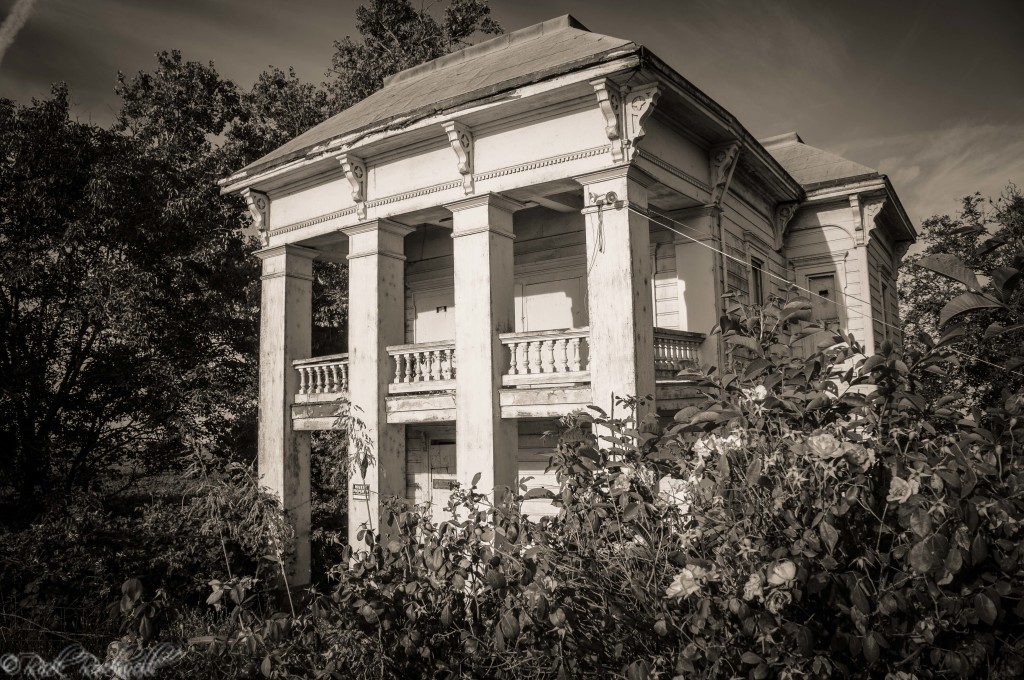
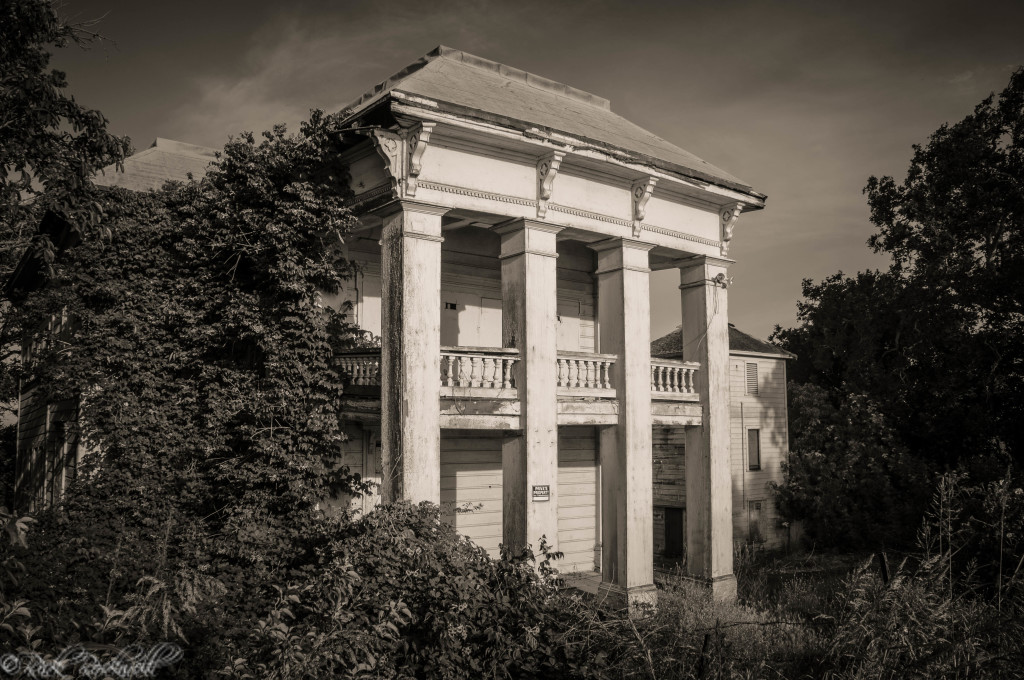
On a quiet road outside Clarksburg, the Cornish House rises from the Sacramento River Delta landscape like one of those places you notice before you know its name.
Weathered, imposing, and surrounded by the rural calm of Yolo County farm country, the old house has the kind of presence that makes you slow down and wonder who lived there.
That story leads to George F. Cornish, a Civil War veteran, Andersonville prisoner of war, California settler, and early Clarksburg figure whose life stretched from battlefield survival to Delta farming and local prominence.
The house connected to his name is not a public museum or restored historic attraction, but it remains one of the most memorable historic homes in the Clarksburg area.
This guide explains where the Cornish House is, what visitors should know before trying to see it, and why George F. Cornish’s story gives the old Delta house far more meaning than its timeworn exterior alone.
Cornish House Quick Facts
- Historic name: Cornish House / George Cornish House
- Location: Clarksburg, Yolo County, California
- Region: Sacramento River Delta
- Associated figure: George F. Cornish
- Known for: A weathered historic Delta home tied to one of Clarksburg’s early figures
- Property status: Private property
- Public access: Exterior viewing only from the public road
- Interior access: Not open to the public
- Parking: No formal visitor parking
- Best for: History lovers, Delta explorers, roadside-history fans, and readers interested in George F. Cornish’s story
Where Is the Cornish House?
The Cornish House is located near Clarksburg in Yolo County, within the Sacramento River Delta just south of Sacramento. It sits in a rural area of farmland and levee roads, rather than in a formal historic district or tourist site.
According to Visit California Delta, early Clarksburg residents were sometimes known as “rimlanders” because the community developed along a natural levee between Sutter Slough and Elk Slough. That small detail helps explain the setting around the Cornish House: this was a Delta landscape shaped by waterways, levees, farmland, and the long work of making river country livable.
Can You Visit the Cornish House?
The Cornish House can only be viewed from the public road. There is no public interior access, no formal visitor parking, and no museum-style setup.
Do not enter the property, walk up to the house, cross gates or fencing, approach outbuildings, or block driveways and farm access points. The roads around Clarksburg are rural and narrow, so treat the Cornish House as a brief roadside history stop.
The Cornish House in Clarksburg
The Cornish House is tied to George and Mary Cornish’s years in Yolo County, though the exact construction date needs careful wording. Some accounts connect the house to the Cornish family’s arrival and settlement in the late 1860s, while later cultural-resource documentation identifies the house itself as dating to about 1880.
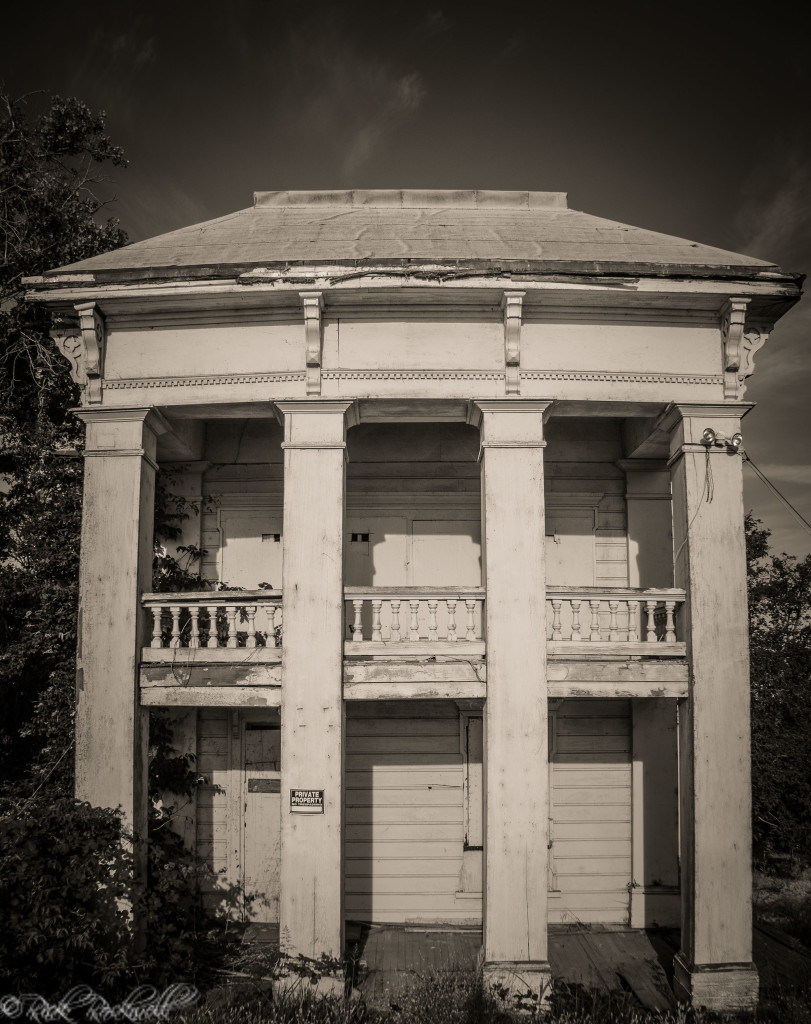
According to the Bay Delta / California WaterFix cultural-resource documentation, the George Cornish House was described as an Italianate-style residence with a 1915 Greek Revival portico addition. The same documentation found the property locally eligible for the National Register of Historic Places and California Register of Historical Resources for its connection to Clarksburg reclamation and agriculture, its association with George Cornish, and its architecture.
However the date is framed, the home became the physical center of the Cornish family story in Clarksburg. Built with what has been described as a Southern feel, the house apparently stood on a brick foundation with a full ground-floor basement.
Inside, the first floor included a kitchen, double parlor, dining room, and a staircase connecting the first and second floors. The home was once furnished with elegant walnut furniture, and the front of the property included a garden. Within a decade, Cornish had expanded his holdings to 165 acres.
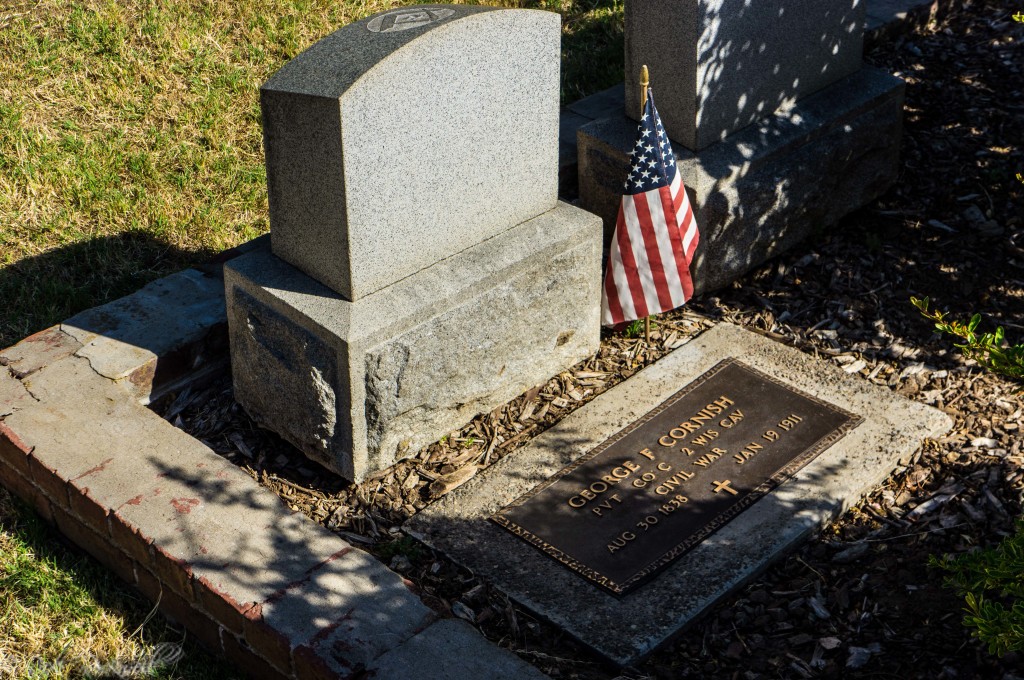
After George Cornish died in 1911, half of his estate went to his wife, Mary, while the other half went to his children Letitia, Elsie, and Mabel. Their son George had already died after being sent to the Stockton Asylum in 1905.
Once the estate was resolved, the home was sold to the Wyre family. Tragedy followed when Wyre died in a Model T Ford accident not long after purchasing the property.
The house later passed to Archibald Yell, a Sacramento attorney who added the prominent square front pillars in 1915. Yell originally bought the home for his mother, then sold it a few years later to Charles and Joseph Shiebigg, who were also purchasing it for their mother.
From there, the Cornish House passed down to a nephew and through several more owners. Today, it remains one of the most striking old homes in the Clarksburg area, weathered by time but still closely tied to the story of George F. Cornish and his family.

Who Was George F. Cornish?
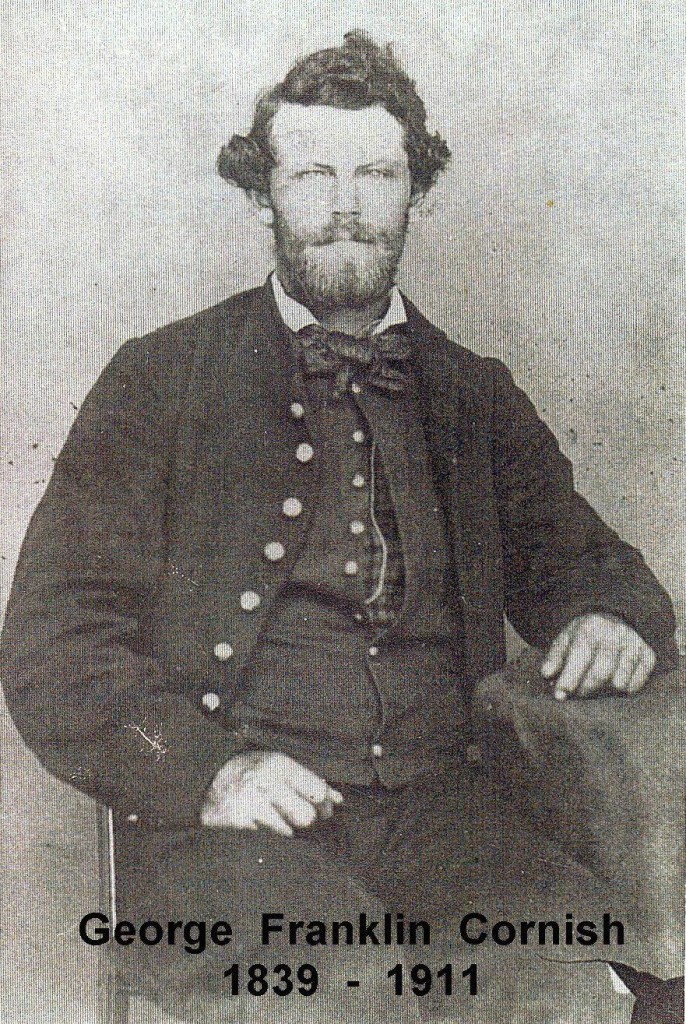
George was born to Ephraim and Elsie Cornish on Aug. 30, 1838, in McHenry, Illinois. At six months old, his family moved to Iowa, where George spent most of his youth. It’s said that George’s earliest friends were Native American kids of that region.
At about the age of 15, two years after his father died, George reportedly moved back to Illinois and embarked on his own path in life. He attended school during the winter at Elgin.
About two years later, in 1855, a young George made his way to Wisconsin and found work on a farm in Grant County. George would continue this physical labor for the next few years and resided in the town of Tafton with the Henry Lord family.
During this time, the country was about to birth the most devastating war ever to take place on American soil: the Civil War. With the political atmosphere in a frenzy, George, who sympathized with the Union, decided to enlist into the Union Army.
George Cornish and the Civil War
In the fall of 1861, the War Department authorized the Second Wisconsin Cavalry, in which 23-year-old George Cornish would enlist and join Company C.
According to SecondWI.com, the regiment was under the superintendence of Colonel Cadwallader C. Washburn at Camp Washburn in Milwaukee. After nearly five months, Cornish and the rest of the regiment would leave the state of Wisconsin on March 24, 1862, and head to Chicago, where they took a train to St. Louis, Missouri.
After St. Louis, Company C went to Jefferson City, Springfield, Memphis, and eventually to Vicksburg. At Vicksburg, George proved to be very lucky when a cannonball knocked him off his horse without seriously injuring him. Unfortunately, his luck would not last.
On March 8, 1864, Private George F. Cornish and seven other men were captured. According to a book on the Second Wisconsin Cavalry, “eight men were taken prisoners March 8, while getting cotton for Mrs. Pettit across the Big Black River near Hall’s Ferry.”
The Andersonville Prison records state that George was captured on March 8 at Big Black River in Mississippi. So, it’s a logical step to believe that George was one of the eight men captured. Another account describes George being surrounded by 44 Confederate soldiers and being forced to surrender near Vicksburg.
The next 13 months of George’s life were the most torturous and grueling any man could face during that era.

Cornish Is a POW at Andersonville
George was first sent to Crystal Springs, Mississippi, which was most likely a place where he was held until being transferred to an actual prison camp. From there, he was transferred to Canton, Mississippi, which I believe was just another temporary holdover.
Eventually, George made his way to Selma, Alabama, and was held prisoner at the Cahaba Prison. This place opened in June 1863 and had the lowest death rate of any Civil War prison camp. Unfortunately, Cornish was once again transferred, this time to Andersonville, which originally opened in February of 1864.
Located in Macon County, Georgia, Andersonville was quite possibly the worst prison camp the United States has ever known. Of the nearly 45,000 Union soldiers who were held prisoner at this black hole of humanity, nearly 13,000 of them died.
Some reports claim upward of 14,000 deaths. To put things in perspective, the prison camp was only opened for roughly 14 months. That’s nearly 1,000 deaths per month or over 30 deaths per day.
After six months, Cornish was sent to Savannah, most likely Camp Davidson. This prison camp was located at a former U.S. Marine hospital, according to the New Georgia Encyclopedia. The camp, and George’s time there, were short-lived as he was then sent to Blackshear.
This prison camp was an open camp believed to be in a safe, remote location. However, by late 1864, prisoners were transferred out of there due to General Sherman’s march through Georgia. Cornish and another 1,500 soldiers were sent to Thomasville.
The prison camp in Thomasville was another short-lived camp and not even fully completed when nearly 5,000 Union soldiers were held in this 5-acre tract. The Confederate Army, in almost a state of panic, had to once again transfer prisoners due to General Sherman’s march.
So, Cornish, along with roughly 5,000 other prisoners, was sent back to Andersonville. It’s unknown if George suffered from the deadly smallpox outbreak in Thomasville during the camp’s two-week existence.
It’s been reported by the New Georgia Encyclopedia that the prisoners had to march 60 miles from Thomasville to Albany, Georgia. They were then placed onboard the Southwestern Railroad and transported back to Andersonville. And guess what, they arrived back in hell on Christmas Eve of 1864.
Can you imagine that? He’s in a proverbial hell for six months, is transferred out to less severe camps, only to be sent back to hell on earth just in time to celebrate Christmas.
Blackshear was a campground compared to Andersonville. Camp Davidson was enclosed in an orchard on a former hospital. Even Thomasville provided opportunities for makeshift shelter out of timber and more food.

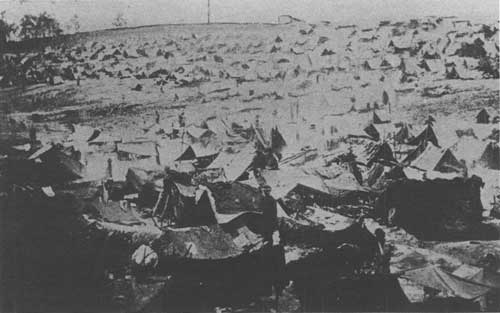
Andersonville in August 1864. Credit – NPS.gov
Description of Andersonville
Over the years, diaries and letters from Union soldiers painted the inhumane environment found at Andersonville.
One soldier wrote, “As we entered the place, a spectacle met our eyes that almost froze our blood with horror…” The same account described starving men reduced to walking skeletons, covered with filth and vermin.
Another historical account talks about how doctors would come in to examine the soldiers, only to leave within a few hours vomiting and contracting influenza. This prison camp was the perfect storm of brutality, inhumanity, politics, and lack of supplies. It was never intended to hold that many prisoners.
Cornish Is Left for Dead
On two separate occasions, Confederate doctors washed their hands of George and left him for dead. They thought he was too far gone as he suffered from rheumatism, scurvy, and other calamities. But George, by miracle and a will to live, survived and was paroled on April 17, 1865. The Andersonville Prison records state he was exchanged in Vicksburg on April 12, 1865.
Upon his release, George weighed 116 pounds. When captured, George was a solid 200 pounds of Wisconsin farm toughness.

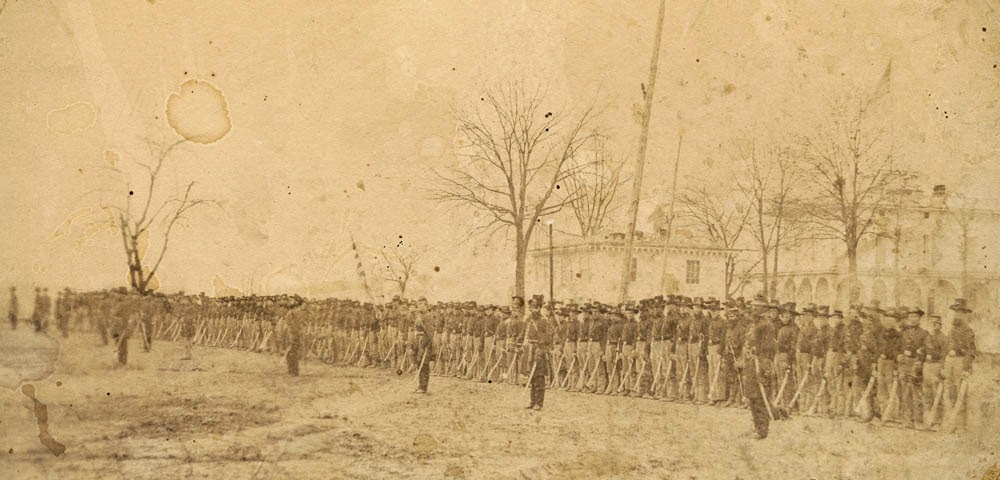
2nd Wisconsin Cavalry at Benton Barracks, St. Louis, Missouri. Credit – Chubachus
Freedom and Marriage
Two months after George was paroled from Andersonville, he received his honorable discharge in June 1865. From there, Cornish would head back to Wisconsin and the Lord family farm.
Cornish’s fortunes would soon change after meeting Mary Eliza Wright and marrying her on February 8, 1866, according to Joseph Edward Cornish’s The History and Genealogy of the Cornish Families in America.
A few months after their marriage, they moved from Grant County to Jackson County, where George acquired some land. However, Cornish quickly sold off his land and set course for California.
George Cornish’s Journey to California
In September 1866, George and his newlywed wife set out for California. Family lore states that they went to California to find Mary’s biological mother. Some historians believe their journey was due to Cornish receiving land as a result of his service in the Union Army.
The couple traveled across the Nicaragua route, which was quicker than traveling overland or via the Panama route. Popular ports of departure were New York, Philadelphia, Boston, and New Orleans.
As of now, I’m unsure which port George and Mary left from. An educated guess would put their journey’s duration at three to four weeks, with plenty of obstacles along the way.
A historical account of the average trip via Nicaragua states that travelers would sail down to Greytown, Nicaragua, take a smaller boat up the San Juan River to Lake Nicaragua, cross the lake most likely to the town of San Juan del Sur, and then continue up the Pacific Coast.
In 1867, Mark Twain took this trip and famously joked about the sameness of the food, writing, “There is nothing like variety.”
The Cornish Legacy in Clarksburg
George and Mary had five children: Henry, Letitia, Elsie, Mabel, and George Andrew. Sadly, baby Henry died at 9 months old. As of now, I could only find four grandchildren through Letitia. Eventually, George’s grandkids and great-grandkids would mostly end up in Sacramento and toward the Bay Area.
During George’s 45 years in California, he held many positions including justice of the peace for two terms, according to J. M. Guinn’s History of the State of California and Biographical Record of the Sacramento Valley, California. Cornish also became affiliated with the Masons, was a staunch Republican, a successful farmer, a revered businessman, and a prominent figure of Yolo County.
Another small glimpse of Cornish’s farming life appears through his nephew, Charles Adolphus Arvedson. According to History of Colusa and Glenn Counties, California, Arvedson came to California as a teenager, worked for his uncle George Cornish near Clarksburg, and rented his uncle’s farm in 1871.
George F. Cornish died on January 19, 1911, from stomach cancer. The Find a Grave memorial lists him as buried at the Sac City Cemetery in Section 17, Lot 1295. His wife Mary and infant son Henry are also buried alongside him.
Nearby Stops Around The Cornish House
The Cornish House is best paired with a broader Clarksburg or Sacramento River Delta drive rather than treated as a standalone destination. If you are already in the area, these nearby stops can help round out the trip.
Old Sugar Mill
One of the easiest nearby pairings is the Old Sugar Mill, a historic former sugar-refinery property that now serves as a Clarksburg wine-country destination with multiple tasting rooms.
Ryde Hotel
For another layered Delta landmark, read my guide to the Ryde Hotel. The hotel sits along Highway 160 near Walnut Grove and has its own mix of riverfront history, Prohibition-era lore, and old California character.
Locke
Locke is one of the most important historic communities in the Delta and a natural stop for readers interested in architecture, immigration history, and the region’s Chinese American past. Its preserved wooden buildings and compact historic district make it one of the strongest history stops to pair with a Delta drive.
Walnut Grove
Walnut Grove is another legacy Delta community with deep agricultural, commercial, and cultural history. It works well as a companion stop because it helps connect the Cornish House to the broader network of river towns that shaped life along the Sacramento River.
Isleton
Farther south along the Delta, Isleton adds another layer to the region’s story. Its Main Street, Asian American historic districts, agricultural background, and river-town setting make it a worthwhile stop if you are turning the Cornish House visit into a longer Delta history drive.

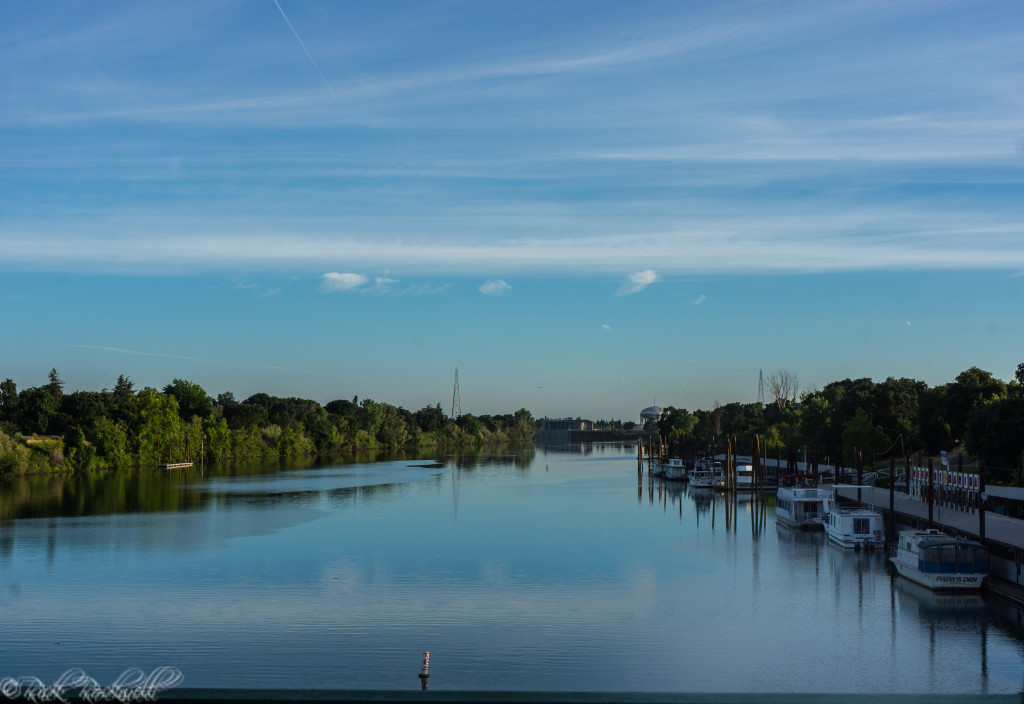
Sacramento River on the way to Cornish House
Is the Cornish House Worth Visiting?
Absolutely. I can’t help but feel proud when gazing upon the Cornish House. To me, it symbolizes the perseverance of George F. Cornish and the sacrifices he made for his country. It symbolizes strength and courage in the face of uncertainty.
It’s a story and history that I proudly wish to play a part in preserving and sharing with others. After spending months researching George F. Cornish, and speaking to one of his distant ancestors, I feel like I’ve become a small part of the Cornish family.
If this kind of forgotten Delta history catches your attention, you might also enjoy my look at the Spirit of Sacramento, another weathered Sacramento River landmark with its own intriguing past.
Cornish House FAQ
Where is the Cornish House?
The Cornish House is located near Clarksburg in Yolo County, within the Sacramento River Delta south of Sacramento. It sits in a rural area of farmland and levee roads rather than in a formal historic district or tourist area.
Can you go inside the Cornish House?
No. The Cornish House is private property and does not have public interior access. It should only be viewed from the public road.
Is the Cornish House private property?
Yes. Visitors should not enter the property, walk up to the house, cross gates or fencing, approach outbuildings, or block nearby driveways and farm access points.
Who was George F. Cornish?
George F. Cornish was a Civil War veteran, Andersonville prisoner of war, California settler, and early Clarksburg figure. His life story connects the Cornish House to a much larger history of war, survival, migration, farming, and Delta settlement.
When was the Cornish House built?
The construction date needs careful wording. Some accounts connect the house to George and Mary Cornish’s arrival and settlement in the late 1860s, while later cultural-resource documentation identifies the house itself as dating to about 1880.
What is near the Cornish House?
Nearby stops include the Old Sugar Mill, Clarksburg wine-country roads, and broader Sacramento River Delta history destinations such as Locke, Walnut Grove, Isleton, and the Ryde Hotel.

Sources
Bay Delta Conservation Plan / California WaterFix, Public Draft EIR/EIS Appendix 18B: Identified Resources Potentially Affected by the BDCP Alternatives
https://www.waterboards.ca.gov/waterrights/water_issues/programs/bay_delta/california_waterfix/exhibits/exhibit4/docs/Public_Draft_BDCP_EIR-EIS_Appendix_18B_-_Identified_Resources_Potentially_Affected_by_the_BDCP_Alternatives.sflb.pdf
California Department of Water Resources, Sacramento-San Joaquin Delta Cultural Resources Research Design and Context Statement
https://water.ca.gov/-/media/DWR-Website/Web-Pages/Programs/Environmental-Services/Compliance-Monitoring–Assessment/Files/RDCS_2019_Final.pdf
Second Wisconsin Cavalry, Second Wisconsin Cavalry Regimental History
https://www.secondwi.com/second_wisconsin_cavalry.htm
Wisconsin Historical Society, Second Wisconsin Cavalry reference from the Quiner Collection
https://content.wisconsinhistory.org/cdm/ref/collection/quiner/id/43324
Civil War Prisoners, Andersonville Prisoner Records
https://www.civilwarprisoners.com/searchresults.php?database=andersonville&fname=&lname=cornish®iment=
National Park Service, Camp Sumter / Andersonville Prison
https://www.nps.gov/ande/learn/historyculture/camp_sumter.htm
New Georgia Encyclopedia, Civil War Prisons
https://www.georgiaencyclopedia.org/articles/history-archaeology/civil-war-prisons/
Keith Skinner, Nicaragua: Expressway to California Gold
https://keith-skinner.com/nicaragua-expressway-to-california-gold/
Joseph Edward Cornish, The History and Genealogy of the Cornish Families in America
https://books.google.com/books?id=CV1HAAAAMAAJ&printsec=frontcover
M. Guinn, History of the State of California and Biographical Record of the Sacramento Valley, California
https://cagenweb.org/capioneer/sacv1906.htm
Frank T. Gilbert, The Illustrated Atlas and History of Yolo County, California
https://archive.org/stream/illustratedatlas00sanf/illustratedatlas00sanf_djvu.txt
History of Colusa and Glenn Counties, California, Charles Adolphus Arvedson biography
https://cagenweb.org/glenn/bios/Col-Glenn.757-805.955-1074.htm
Find a Grave, George Franklin Cornish Memorial
https://www.findagrave.com/memorial/73792689/george-franklin-cornish
Old Sugar Mill, Visitor Info
https://oldsugarmill.com/visitor-info.html
Old Sugar Mill
https://oldsugarmill.com/
Visit California, Sacramento Delta Tour
https://www.visitcalifornia.com/road-trips/sacramento-delta-tour/
Visit California Delta
Visit California Delta, Legacy Communities: Clarksburg
Visit California Delta, A History of Travel and Transport
Visit California Delta, Sacramento-San Joaquin Delta National Heritage Area
Delta Legacy Communities
https://www.deltalegacycommunities.org/
Sacramento-San Joaquin Delta National Heritage Area Management Plan Appendices
https://delta.ca.gov/wp-content/uploads/2024/02/7Feb2024-SSJDNHA-mgmt-appndcs.pdf
National Park Service, Locke Historic District
https://www.nps.gov/places/locke-historic-district.htm
Visit California Delta, Locke Historic District
National Park Service, Locke and Walnut Grove: Havens for Early Asian Immigrants in California
https://www.nps.gov/articles/000/locke-and-walnut-grove-havens-for-early-asian-immigrants-in-california-teaching-with-historic-places.htm
Visit California Delta, Legacy Communities: Walnut Grove
National Park Service, Walnut Grove Japanese American Historic District
https://www.nps.gov/places/walnut-grove-japanese-american-historic-district.htm
National Park Service, Isleton Chinese and Japanese Commercial Districts
https://www.nps.gov/places/isleton-chinese-and-japanese-commercial-districts.htm
California Office of Historic Preservation, Isleton Chinese and Japanese Commercial Districts
https://ohp.parks.ca.gov/ListedResources/Detail/N1674
CalExplornia, The Ryde Hotel: A Delta Landmark Rooted in History, Mystery and Controversy
CalExplornia, The Abandoned Spirit of Sacramento
https://www.calexplornia.com/the-abandoned-spirit-of-sacramento/