


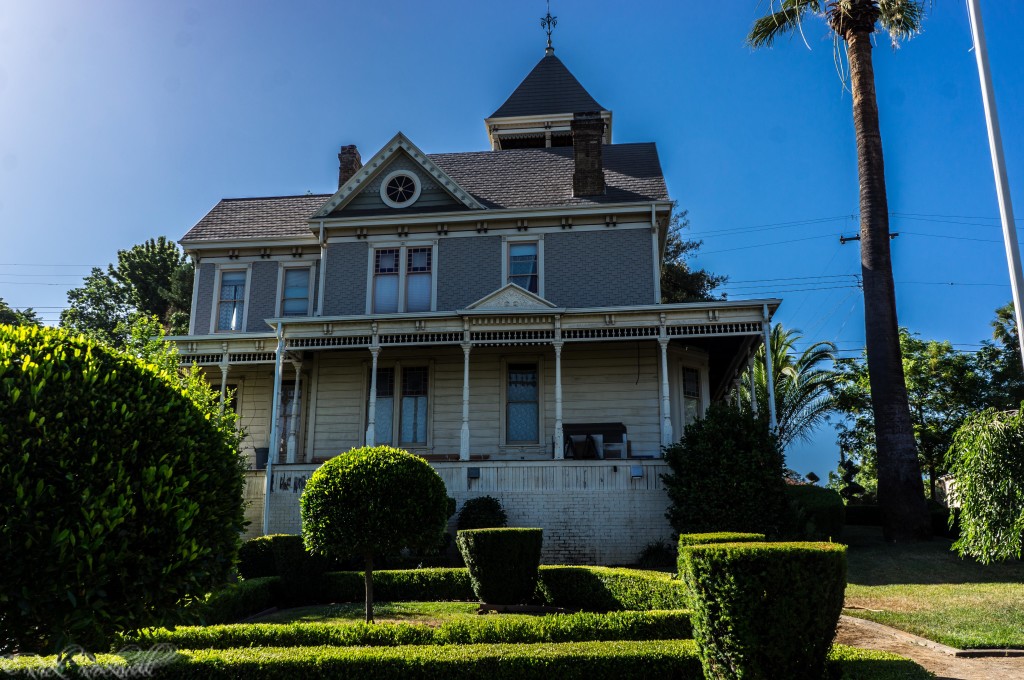
The Cohn House in Folsom sits at 305 Scott Street, high above the city’s historic core, with a tower, wraparound porch, and layered Victorian profile that make it hard to miss. This part of town was once known as Folsom’s “Nob Hill,” and the Cohn House, often called the Cohn Mansion, is one of the homes that gives that name some weight.
The larger mansion was built in the mid-1890s for the Cohn family, whose story runs through Folsom’s early business life, local Jewish history, and later civic development. But the property is older than the mansion itself. Behind the showier Queen Anne house are earlier working structures tied to Simon Adolph Cohn, one of Folsom’s pioneer merchants.
The Cohn House also has a “reputation” of being a haunted place. Over the years, it has been tied to local ghost stories, a buried-infant urban legend, and online claims that do not hold up well under closer historical scrutiny. That does not make the house any less interesting. If anything, the real history of the Cohn family, the architecture, and the mansion’s place in Historic Folsom is far more compelling than the rumors.
Quick Facts About the Cohn House
Cohn House Detail | What to Know |
Historic name | Cohn House, also known as the Cohn Mansion or Cohn-Fait Mansion |
Location | 305 Scott Street in Folsom, Sacramento County, California |
Historic structures | Original house and barn from the early 1860s, later incorporated into the larger mid-1890s mansion |
Property layout | Large Queen Anne house, original house, barn, and small garden outbuilding |
Architecture | Queen Anne with Stick, Shingle, and Classical Revival influences |
Historic status | Listed on the National Register of Historic Places on January 21, 1982 |
Associated families | Simon Adolph Cohn, Alice Cohn, Philip/Phillip C. Cohn, and later the Fait family |
Access | Private historic residence; view respectfully from public areas only |
Haunted reputation | Local legend, not verified fact |
Where Is the Cohn House in Folsom?
The Cohn House stands at 305 Scott Street in Folsom, near the city’s historic core. This part of town was once known as Folsom’s “Nob Hill,” a small cluster of prominent homes set above the older commercial streets below.
For anyone walking around Historic Folsom or Sutter Street, the mansion sits close enough to be part of the larger old-town story.
Can You Visit the Cohn House?
The Cohn House should be treated as a private historic residence, not a public attraction. Visitors should not enter the grounds, walk up onto private areas, disturb residents or owners, peek into windows, or treat the house like a haunted-house stop.
If you photograph it, do so from public areas and keep the visit low-key. This is one of those places where the best approach is simple: admire the architecture, understand the history, and move on respectfully.
Why the Cohn House Is Historically Important
The Cohn House is not just one impressive Victorian mansion. The National Register nomination describes the property as containing essentially four structures: the large 1890s house, the original 1860s house, the barn attached to the later residence, and a small outbuilding in the garden north of the house.
That layered property layout is one of the reasons the house matters.
The original house and barn were built in the early 1860s by Simon Adolph Cohn, one of Folsom’s best-known pioneer merchants. Those older buildings were later incorporated into the larger Queen Anne house and used as kitchen and service areas. The nomination specifically points to them as rare surviving remnants of early working-class housing in Folsom.
From the street, it is easy to focus only on the decorative mansion. But the older house and barn tell a different story: smaller, practical, utilitarian buildings from the city’s earliest decades, still physically connected to the later, grander residence. Together, they show the shift from pioneer-era function to Victorian-era status.
The later mansion was built in the mid-1890s next to the original house and barn. Instead of erasing the older structures, the larger home grew around them. That gives the Cohn House more depth than a typical historic mansion. It preserves several eras of Folsom’s development in one property: early settlement, late-19th-century prosperity, and 20th-century preservation.
The National Register nomination describes the property as locally significant for both architecture and history. Architecturally, it is a strong local example of late-19th-century residential design. Historically, it connects to Simon Cohn’s early Folsom business life and to Philip Cohn, a prominent businessman who served in the California State Senate.
The City of Folsom has also described the mansion as the first property in Folsom placed on the National Register of Historic Places. Its official National Register listing date is January 21, 1982.

The Cohn Family and Folsom’s Early History
A native of Poland, Simon Adolph Cohn was born in March of 1830. When he was only about 11 years old, he moved to Prussia and became a journeyman tailor for six years. By 1852, he came to the United States by passage across the Atlantic aboard the vessel “Samuel Lawrence.”
The eight-week journey was the first step toward a new life. Once in the United States, Simon traveled to California by way of the Nicaragua route.
Simon’s story is also part of Folsom’s early Jewish history. Western States Jewish History notes that he settled in Folsom in the 1850s and was connected to the Hebrew Benevolent Society of Folsom, which helped establish what was then the Folsom Jewish Cemetery, now part of Lakeside Cemetery.
Cohn Overcomes His Early Misfortunes
In San Francisco, Simon began working for a gentleman known as Mr. Krichavski, earning $50 per month. After saving $1,800, Simon took his money and went to buy out the interest in the St. Charles Hotel on Davis Street. Just as soon as he invested his money in that venture, the unthinkable struck.
The hotel burned to the ground that very night.
Although devastated, Simon pushed on. After returning to his former employer to save money again, he eventually took $2,000 to purchase a store near Michigan Bar with his new business partner, Mr. Frankee.
That business also burned to the ground shortly after he purchased it.
After two brutal losses, Simon tried again in Folsom, opening Cohn’s general store in 1856. This time it would be a great success, and it would last for the rest of his lifetime.
By the early 1860s, Simon Cohn had built the first house and barn on the Scott Street property. The sources do not spell out exactly why he chose that hilltop location, but the timing makes sense: after opening his Folsom general store in 1856 and establishing himself in town, Cohn built a modest residence and working household property during Folsom’s early growth years.
A later Folsom Telegraph ad and business-notice shows the Cohn name still tied to local groceries, merchandise, and town business activity around the turn of the 20th century.
From Simon to Philip Cohn
Simon continued to live in the home with his family, and eventually his daughter Alice married another businessman named Philip Cohn. Philip was not Simon’s son, despite the shared last name. He became Simon’s son-in-law after marrying Alice Martha Cohn.
Historical sources spell his name both ways: Philip and Phillip. This article mainly uses Philip, while preserving Phillip where older source language uses that spelling.
Philip Charles Cohn was born in New York in 1854. A 1905 biographical history says he came to California in 1874, worked in Sacramento, later became a traveling salesman, and arrived in Folsom in March of 1884. That same year, he married Alice.
After marrying Alice, Philip went to work with Simon Cohn. In 1893, they filed a certificate of co-partnership with the county for the business S. Cohn & Co.
The partnership continued until Simon’s death in 1895. After that, Philip purchased the widow’s interest in the business and continued operating the store. The 1905 source also describes Philip as having real estate and mining interests, including work connected to a gravel mine on the American River above Folsom.
That detail helps explain why Philip Cohn was more than just the man connected to a large house. He was part merchant, part investor, and part civic figure in a growing town.
Philip’s business and civic life eventually extended far beyond the family store. The City of Folsom notes that he became the only Folsom resident elected to the California State Senate, served on the State Highway Commission, helped represent Sacramento County at the Panama-Pacific Exposition, and was involved with the Bank of Folsom, the Orangevale Water Company, and several fraternal organizations.
Philip was elected to the California State Senate in 1912 and served during the 1913 and 1915 sessions. That matters because his business record was not just part of his private life. It became part of his public identity as he moved into state politics.
Family Life, Social Events, and the Mansion Years
The Cohn House was not just a beautiful residence. It was the home of one of Folsom’s most prominent families.
In 1895, the newspapers noted that Simon Cohn passed away from an attack of apoplexy. His obituary described him as one of the “leading citizens” of Folsom and a “pioneer merchant,” and noted that his death was “deplored” by the community.
He was survived by his wife, Henriette, and their two daughters, Rosa and Alice. He was remembered by the A.O.U. Workmen, Odd Fellows, and Natoma Lodge No. 64.
A 1960 Sacramento Daily Union feature listed seven Cohn children in the household: Dora, William, Mabel, Selma, twins Charles and Simon, and Henrietta.
The mansion also became a social setting. According to the National Register nomination, the Cohn House hosted gala events attended by prominent Northern Californians, including members of San Francisco’s famed Bohemian Club.
The same 1960 Sacramento Daily Union article gives that social history more texture. It described the Cohn House as a meeting place for society in the 1900s and remembered the home as a constant center of activity.
The article also drew on memories from Charles P. Cohn, Philip and Alice Cohn’s son, which helps explain why later accounts remembered the mansion less as an empty haunted house and more as a lively family home.
The home stayed in the Cohn family until the 1960s, completing what the nomination describes as a six-generation span of Cohn residence in the house.
Western States Jewish History also described it as the Cohn family home for more than 70 years, and family memories collected from Dora Cohn Jacobs help give the old house a warmer human side: children climbing into the cupola, family holidays in the dining room, and small memories of the porch and garden that make the mansion feel lived in rather than frozen behind a historic plaque.
The house eventually passed out of the Cohn family and into the care of later owners. Its modern preservation story is closely tied to Glenn and Sharon Fait, who purchased the property in the 1960s. At the time of the National Register nomination, the Faits owned the property and were rehabilitating the house with plans to restore its original appearance without exterior changes.
In 2024, the City of Folsom considered a bronze plaque recognizing the Cohn-Fait Mansion, the Cohn family as builders, and the Fait family as preservers.

Architecture and What Makes the House Stand Out
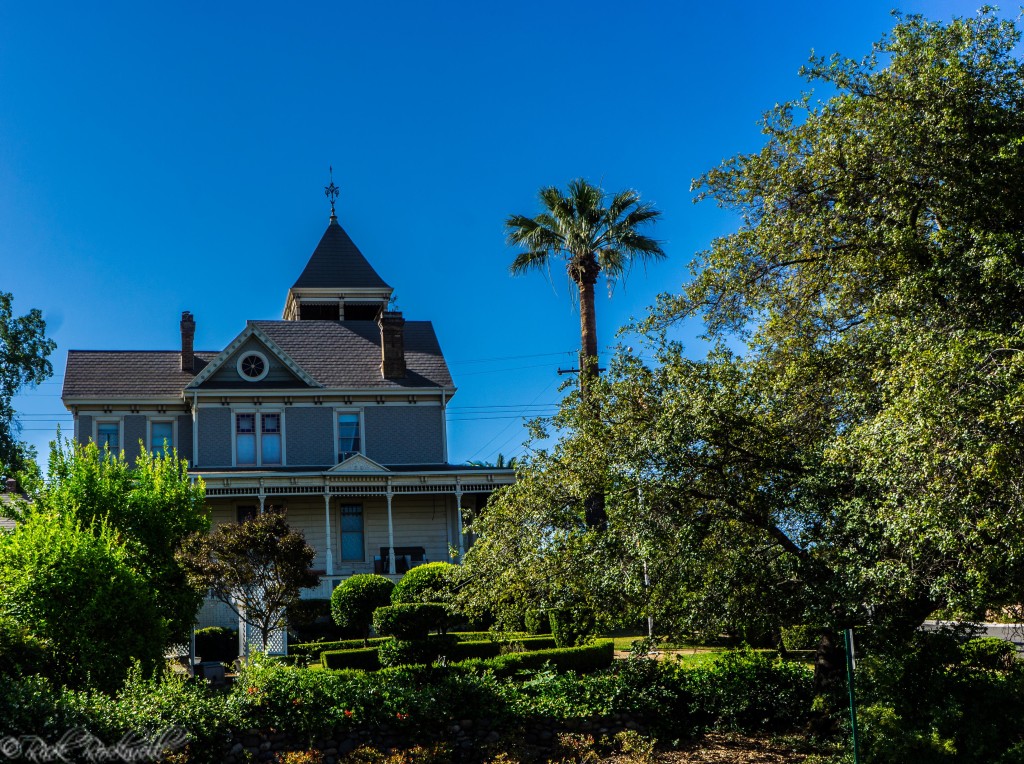
The larger Cohn House was built in the mid-1890s, and its design is one of the main reasons the mansion still stands out in Historic Folsom. It is primarily a Queen Anne-style house, but it does not follow one clean architectural formula. That mix is part of its character.
The National Register nomination describes the mansion as a two-and-a-half-story Queen Anne house with a full-story basement at the rear and a tower that rises above the second floor. The building is formed mainly from two intersecting gables, with the tower projecting from the inside corner where those rooflines meet. That gives the house a shifting profile from different angles instead of a flat, symmetrical look.
Like many Western homes from the mid-to-late 19th century, the Cohn House appears to have been based on a published pattern-book design rather than the work of a formally trained architect. Pattern books gave builders standard house plans that could be adapted locally, which helps explain why the Cohn House feels both familiar and unusual at the same time.
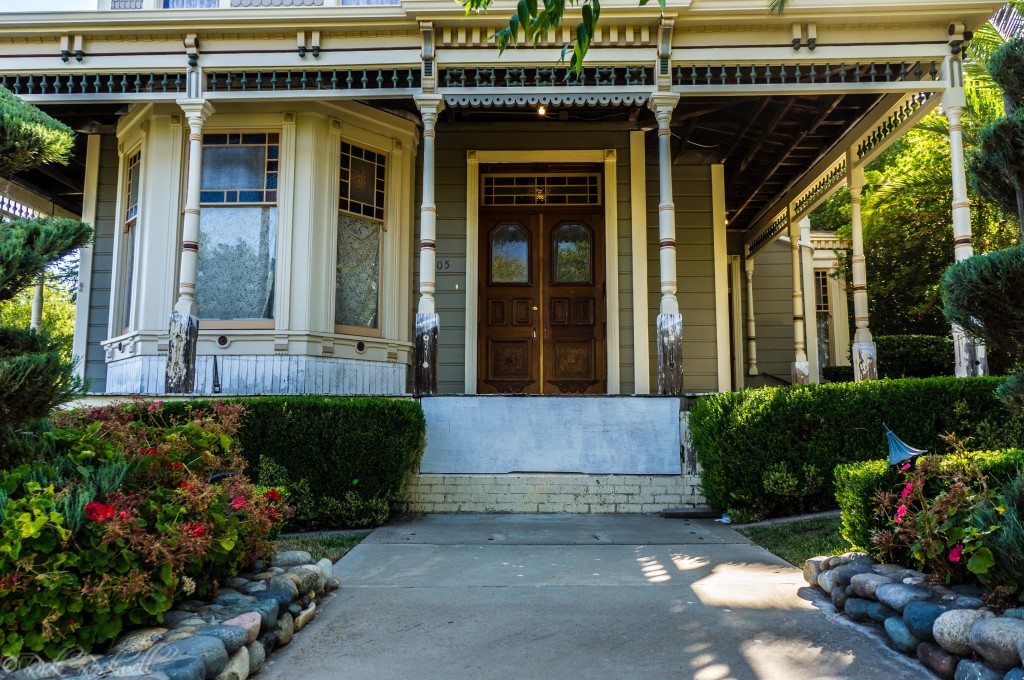
The details are what make it memorable: a granite-block foundation that forms the rear basement, a porch wrapping around nearly three sides of the house, delicate spindle work below the porch canopy, small pedimented gables, turned columns, shiplap siding on the first floor, and fish-scale shingles above. The tower adds arched multipaned openings, smaller rectangular windows beneath a pyramidal roof, and a finial at the top.
Although Queen Anne is the dominant style, the National Register nomination also notes Stick, Shingle, and Classical Revival influences. You can see that mixture in the textured siding, decorative trim, porch details, tower, and formal touches that keep the house from feeling like a simple Victorian template.
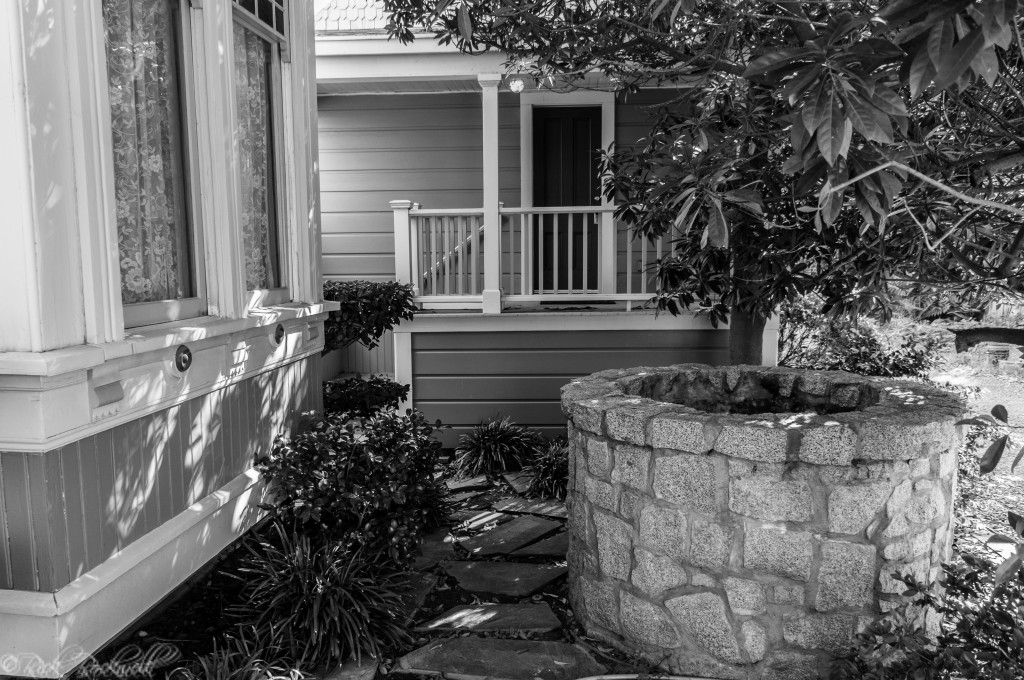
The property’s older structures are just as important as the mansion itself. The original house and barn were later worked into the larger residence and used as kitchen and service areas. That is one of the best details on the property because it shows how the grander mansion grew around the family’s earlier working household instead of simply replacing it.
A 2024 City of Folsom plaque report describes the mansion’s covered porch on three sides, a cupola with a 360-degree view of the surrounding countryside, and a full-story basement built with thick granite blocks quarried at Folsom Prison.
The National Register nomination also notes old photographs showing a landscaped garden and gazebo northwest of the house, along with a small outbuilding that may have served as a servant or garden cottage.
Interior details from Western States Jewish History make the house feel even more lived-in: a dining room with a mahogany-beam ceiling, built-in china storage, Victorian furniture, Turkish carpets, and a square grand piano. The home had only two fireplaces, one in the first-floor double parlor and one in the upstairs master bedroom.
The result is not just a pretty old mansion. The Cohn House stands out because it shows Folsom history in layers: early utilitarian buildings, a grand Queen Anne expansion, family life, social status, and later preservation all tied together on one hilltop property.
Is the Cohn House Haunted?
The Cohn House has been the subject of local ghost stories and online haunted-house claims for generations. The Mansion has all the atmosphere people expect from a haunted-house story, which helps explain why the following ghost claims have attached themselves to it:
The Buried Infant Urban Legend
One of the most repeated stories connected to the Cohn House involves a claim that the remains of an infant were found buried beneath the front porch during remodeling.
The story appears to have gained more traction after a regional ghost-story book circulated the claim. According to that version of the legend, an infant burial was discovered under the porch, and the story was connected to someone said to have once worked at the Folsom History Museum.
Unlike haunted cemeteries where there’s an actual historic person or place at the root of the legend, there is no factual evidence backing up this claim.
That makes the buried-infant story best treated as an urban legend, not documented history. It has more in common with Sacramento-area folklore like the May Hollister Woolsey story than with a verified burial or criminal-history record.
Additional Ghost Stories Connected to the Cohn House
There are a few online sources that claim the Cohn Mansion is haunted by ghosts. Some go as far as to say that Philip Cohn and his family were inconvenienced in the late 1800s or early 1900s by loud footsteps, knocked-over items, and other unexplained annoyances.
The house’s haunted reputation was appearing in print by at least 1960. A Sacramento Daily Union feature titled “Ghostly Mansion” opened with children asking whether the old Cohn House on Scott Street was haunted. The article pointed to the home’s spires, cupola, overgrown gardens, and missing shingles as details that gave it a ghostly look by then.
But the piece did not treat the Cohn House as a verified supernatural site. Instead, it suggested that if the house had ghosts, they were warmer ghosts of memory: the parties, family stories, mementoes, and social life connected to the people who once lived there.
That fits the safest way to handle the Cohn House today: as a historic mansion with a haunted reputation.
Is the Cohn House Worth Visiting?
Growing up in Sacramento County, I have been to Folsom thousands of times. I enjoy strolling through Old Folsom and looking at the historic buildings. Additionally, I love visiting Nob Hill to photograph these beautiful mansions.
I think many people pass by these homes without realizing their true historical significance and charm.
The Cohn Mansion is a captivating structure with a unique architectural blend that will catch your eye: the hilltop setting, tower, wraparound porch, decorative trim, and layered building history all make it stand out.
Sometimes those visual details prompt the imagination to create fascinating stories. And sometimes those stories turn into urban legends and get accepted as fact. But just because the legends of buried infants and ghosts do not hold up as documented history, that does not make the home any less enthralling.
The history, architecture, landscape, Cohn family story, early working-class structures, and Fait restoration make the Cohn House worth seeing if you are already exploring Historic Folsom. It is not a place to tour, enter, or treat like a public haunted attraction. It is a private historic home that deserves respect.
Admire it from public areas, enjoy the architecture, and let the real story of the Cohn House be enough.
Frequently Asked Questions About the Cohn House in Folsom
What is the Cohn House also called?
The Cohn House is also commonly called the Cohn Mansion. Some modern preservation references use Cohn-Fait Mansion because of the later Fait family restoration connection.
When was the Cohn House built?
The original house and barn date to the early 1860s. The larger Queen Anne mansion was built in the mid-1890s and incorporated those older structures into the expanded home.
Is the Cohn House on the National Register?
Yes. The Cohn House was listed on the National Register of Historic Places on January 21, 1982.
Who lived in the Cohn House?
The house is most closely tied to Simon Adolph Cohn, his daughter Alice Cohn, and Philip Cohn, Alice’s husband. The property remained connected to the Cohn family for generations before later preservation work by the Fait family.
What is the buried-infant legend?
One local legend claims infant remains were found beneath the porch during remodeling. I have not found reliable newspaper, museum, or public-record evidence supporting that story, so it should be treated as folklore rather than documented history.


Sources and Further Reading
National Register of Historic Places Inventory/Nomination Form: Cohn House
https://npgallery.nps.gov/GetAsset/1ad6ab53-1014-48f8-9244-44a57d72d795
California Office of Historic Preservation: Cohn House listing
https://ohp.parks.ca.gov/listedresources/Detail/N1001
California State Senate: Record of State Senators and Officers, 1849-2020
https://secretary.senate.ca.gov/sites/secretary.senate.ca.gov/files/Senators_%20and_%20Officers_%201849_2020.pdf
City of Folsom: Names About Town, Senator Philip Charles Cohn
https://www.folsom.ca.us/residents/names-about-town
City of Folsom staff report: Cohn-Fait Mansion plaque, March 26, 2024
https://mccmeetingspublic.blob.core.usgovcloudapi.net/folsomca-meet-114bdffa68044cd9b2faf0f20972022c/ITEM-Attachment-001-cbfd99afc7fc47d38a1974232be5333a.pdf
Western States Jewish History: Wray Barrows, “The Cohn Mansion,” October 1969
https://wsjhistory.com/cohn_mansion_folsom_ca.htm
A History of the New California, Its Resources and People, Volume II, 1905
https://archive.org/details/historyofnewcali00irvi
A History of the New California, Its Resources and People, Volume II, 1905 – full text
https://archive.org/stream/historyofnewcali00irvi/historyofnewcali00irvi_djvu.txt
An Illustrated History of Sacramento County, California, 1890 – Simon Cohn biography / S. Cohn & Co. context
https://archive.org/stream/illustratedhisto00davis/illustratedhisto00davis_djvu.txt
NoeHill Travels in California: National Register #82002228, Cohn House
https://noehill.com/sacramento/nat1982002228.asp
The Telegraph 110th Anniversary Edition: “Simon Cohn Came to Folsom 1856,” August 1966, p. 52 –
Sacramento Union: “Ghostly Mansion,” May 15, 1960, p. 17 –
Sacramento Bee: “Restoration Project Challenges Couple,” March 19, 1967, p. L26 –
Folsom Telegraph, October 17, 1896, p. 3 – S. Cohn & Co.
https://cdnc.ucr.edu/?a=d&d=FT18961017.1.3
Folsom Telegraph, January 16, 1904, p. 2 – P. C. Cohn
https://cdnc.ucr.edu/?a=d&d=FT19040116.1.2
Folsom Telegraph, June 9, 1906, p. 1 – P. C. Cohn / Sunday closure notice
https://cdnc.ucr.edu/?a=d&d=FT19060609.1.1