


Echo Lakes Trailhead is one of the most scenic gateways into Desolation Wilderness. Located on Echo Summit near South Lake Tahoe, it provides access to the Pacific Crest Trail, Tahoe Rim Trail, Tamarack Lake, Ralston Lake, Lake of the Woods, Lake Aloha, and other backcountry destinations.
It is also one of the busier and more complicated trailheads in the area. Parking fills early, the final road is seasonal, Desolation Wilderness permits are required beyond the wilderness boundary, and many visitors need to decide whether to hike beside the lakes or use the seasonal Echo Chalet boat taxi.
This guide focuses on those practical details while preserving the experience that drew me to Echo Lakes in the first place: granite ridges, off-grid cabins, clear mountain water, and a trail that quickly feels much farther from Highway 50 than it really is.
Echo Lakes Trailhead Quick Facts
- Location: Echo Summit near South Lake Tahoe
- Elevation: Approximately 7,400 feet
- Main trails: Pacific Crest Trail and Tahoe Rim Trail
- Vehicle-access season: Usually mid-May through mid-October
- Parking: Very limited; Echo SNO-Park is an alternative
- Trailhead fee: No Forest Service use fee
- Wilderness permits: Required for day and overnight wilderness entry
- Facilities: Seasonal toilets; no potable water
- Boat taxi: Seasonal; $25 per person each way
Where Is Echo Lakes Trailhead?
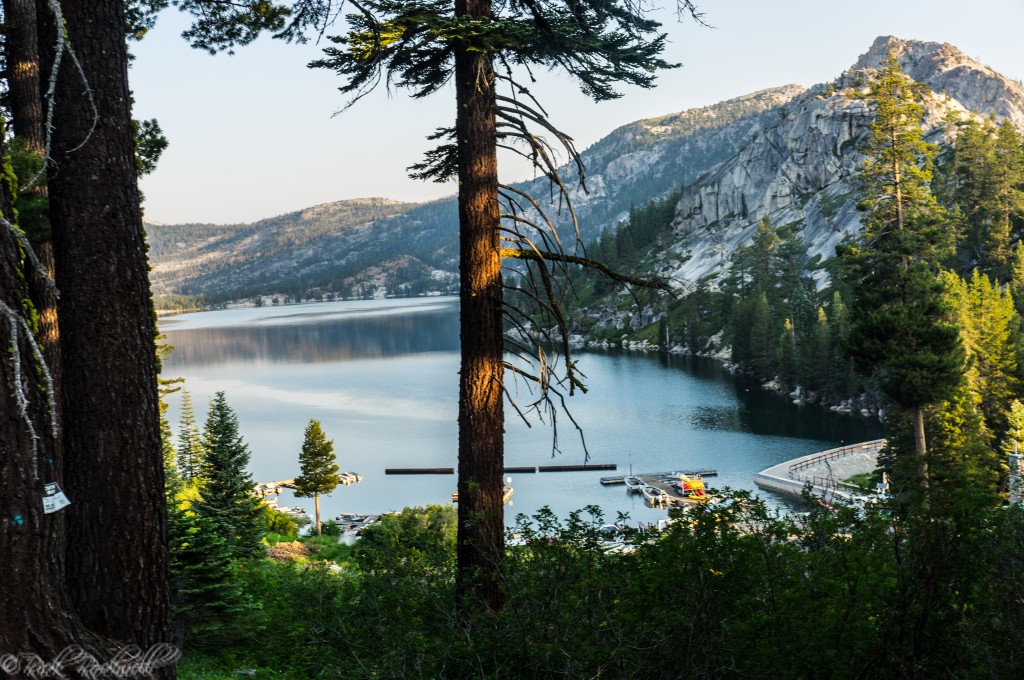
Echo Lakes Trailhead is on Echo Summit near the southwest side of the Lake Tahoe Basin. It sits at the end of Echo Lakes Road beside Echo Chalet and Lower Echo Lake, roughly 10 miles from South Lake Tahoe and 49 miles east of Placerville.
The Forest Service lists the trailhead coordinates as 38.83393, -120.04372. The street address commonly used for navigation—9900 Echo Lakes Road—belongs to Echo Chalet, which is next to the trailhead rather than the trailhead’s formal mailing address.
Directions to Echo Lakes Trailhead
From Sacramento or Placerville, follow U.S. Highway 50 east toward Echo Summit and South Lake Tahoe. After passing the Sierra-at-Tahoe area, watch for the signed turn toward Berkeley Camp and Echo Lake. Turn left onto Johnson Pass Road, continue about one-half mile, then turn left onto Echo Lakes Road and follow it to the parking areas near the end.
From South Lake Tahoe, take U.S. 50 west to Echo Summit and turn right onto Johnson Pass Road. Traffic can move quickly on the highway, so approach the turn carefully and watch for vehicles crossing the opposing lane.
Seasonal Road Access
The Forest Service says Echo Lakes Trailhead is typically open from mid-May through mid-October, but snow and weather determine the actual opening and closing dates. Echo Lakes Road is not plowed to the trailhead during winter.
Parking at Echo Lakes Trailhead
Parking is often the hardest part of an Echo Lakes visit. The Tahoe Rim Trail Association describes parking as extremely difficult, and the Forest Service warns that the area can become especially crowded on weekends.
Lower Parking Near Echo Chalet
There are a limited number of spaces near Echo Chalet and the end of the road. Some are day-use only, and some are reserved for Chalet employees or local residents. Read every sign before leaving your vehicle. Parking overnight does not mean that sleeping or camping in the vehicle is allowed.
Upper Parking Areas
Additional parking is available along the approach before the final descent to the Chalet. During my visit, the commonly used upper area was roughly a quarter mile from the lake, but parking layouts and restrictions can change. Treat that distance as a firsthand historical observation and follow current signs.
Echo SNO-Park
The Tahoe Rim Trail Association recommends Echo SNO-Park on Johnson Pass Road as an alternative for trail users, particularly for overnight parking. The TRT can be reached approximately 0.3 mile west by following Johnson Pass Road, and a completed connector provides access toward the Echo Lakes area without requiring hikers to compete for the limited spaces beside the Chalet.

Echo Lakes Desolation Wilderness Permits and Rules
Echo Lakes Trailhead is outside Desolation Wilderness, but the main trail soon crosses the wilderness boundary. A permit is required year-round once you enter Desolation Wilderness.
Day-use permits are free and are normally available from the trailhead kiosk during summer. Overnight permits must be obtained before the trip. From the Friday before Memorial Day through September 30, overnight entry is controlled through destination-zone quotas.
Current overnight fees are $5 per adult for one night or $10 for two to 14 nights, plus a $6 reservation fee for permits reserved online.
Important wilderness rules include:
- Hard-sided bear canisters are required for overnight trips.
- Campfires are prohibited.
- Portable stoves with an on/off valve are permitted, subject to current restrictions.
- Dogs must remain leashed and under control.
- Bicycles and other mechanical transportation are prohibited.
- Maximum group size is 12.
Check Recreation.gov and the Forest Service permit page before your trip because fees, issuing locations, quotas, and restrictions can change.
Restrooms, Water, and Other Facilities
Vault toilets and trash service are available only during the trailhead’s operating season. Winter visitors should expect no restroom or trash service.
The Forest Service says potable water is not available at the trailhead. Echo Chalet sells drinks and supplies when open, but its seasonal business hours should never be a hiker’s only water plan. Bring enough water from home and carry a reliable method for treating lake or stream water.
Do not rely on having cell service. Download maps before arriving and tell someone your route and expected return time.
Echo Chalet
Echo Chalet is a seasonal High Sierra resort beside the trailhead at the south end of Lower Echo Lake. Established in 1939, it operates under a Forest Service special-use permit and provides a store, fountain, post office services, marine services, rustic rental units, and the Echo Lakes boat taxi.
The store can be useful for snacks, drinks, limited groceries, hiking supplies, fishing items, and small necessities. The Chalet currently lists eight rustic rental units with a three-night minimum, although lodging policies should be confirmed directly.
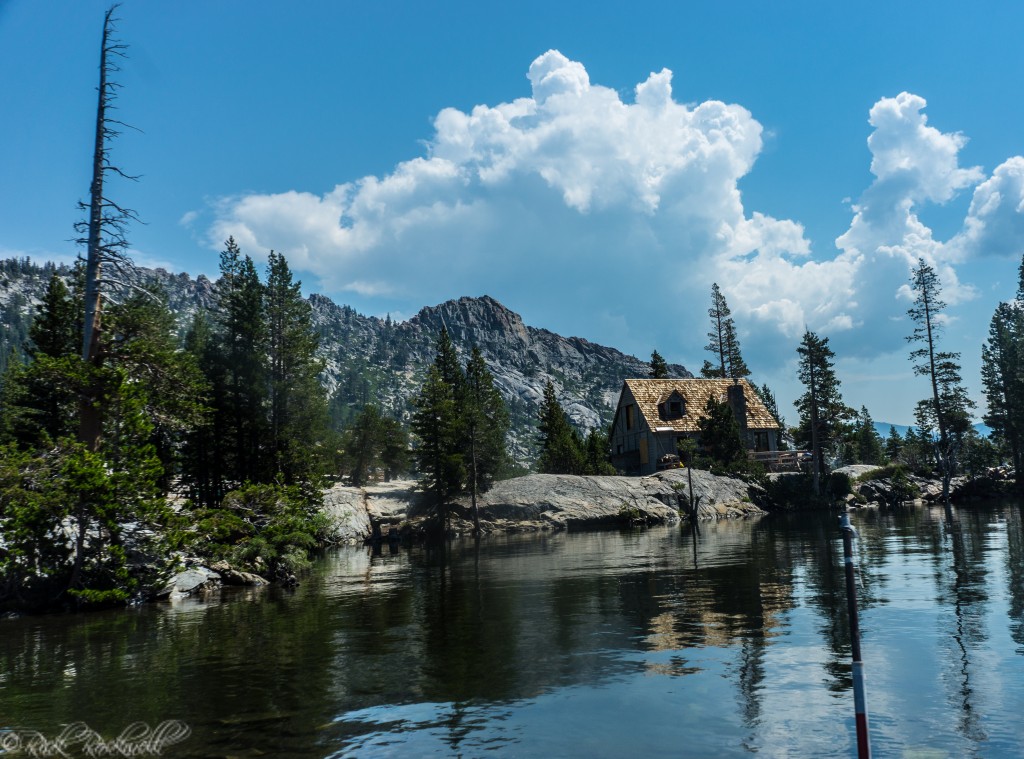
The cabins scattered around Lower and Upper Echo Lakes are part of the area’s character. The Echo Lakes Association describes generations of seasonal cabin use around the lakes. Many cabins are accessible primarily by boat or trail, and hikers should respect private property, docks, and shoreline access.
Echo Lakes Boat Taxi
The seasonal boat taxi is one of the trailhead’s most useful services. It carries hikers between the Chalet and the dock near the far end of Upper Echo Lake, substantially shortening the lakeshore portion of a hike.
Echo Chalet currently lists the following operating details:
- $25 per person, one way
- Four-person minimum for a trip
- Smaller groups may pay the $100 minimum
- Store, ramp, and taxi hours of 9 a.m. to 5 p.m. daily when operating
- No fixed departure schedule
The taxi normally operates during the summer season, and the Tahoe Rim Trail Association describes its scheduled season as Memorial Day through Labor Day. Snow, wind, water levels, staffing, and other operating conditions can affect service.
Confirm current taxi service with Echo Chalet at 530-659-7207 before relying on the boat for your return.
The PCTA reports a telephone at the Upper Echo Lake dock connected to the Chalet by an underwater cable. Do not assume that it will be operational. Confirm the current pickup procedure and carry enough food, water, daylight, and energy to hike back if necessary.
Echo Lake is one of four storage reservoirs in El Dorado Irrigation District’s Project 184 hydroelectric system. Its managed water level fluctuates and may influence boating conditions, but hikers should obtain current taxi information directly from the Chalet rather than trying to predict service from reservoir data.
Hiking From Echo Lakes Trailhead
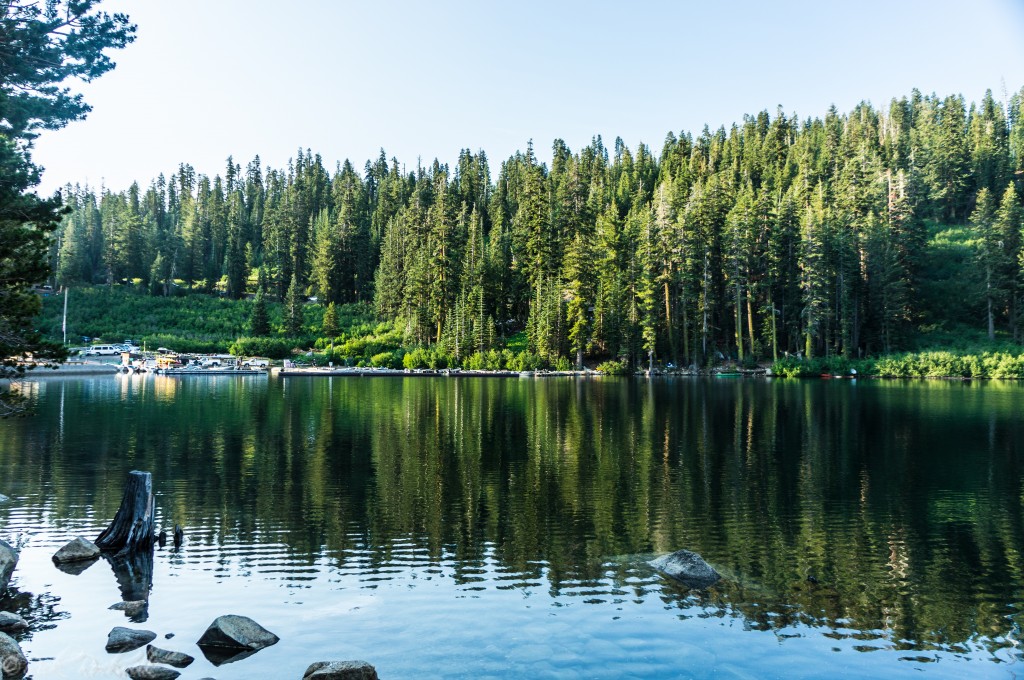
The PCT and TRT pass directly in front of Echo Chalet. From the trailhead, cross the dam and follow the rocky trail along the east side of Lower Echo Lake. The route continues past Upper Echo Lake, then climbs away from the water toward the Desolation Wilderness boundary and a network of lake trails.
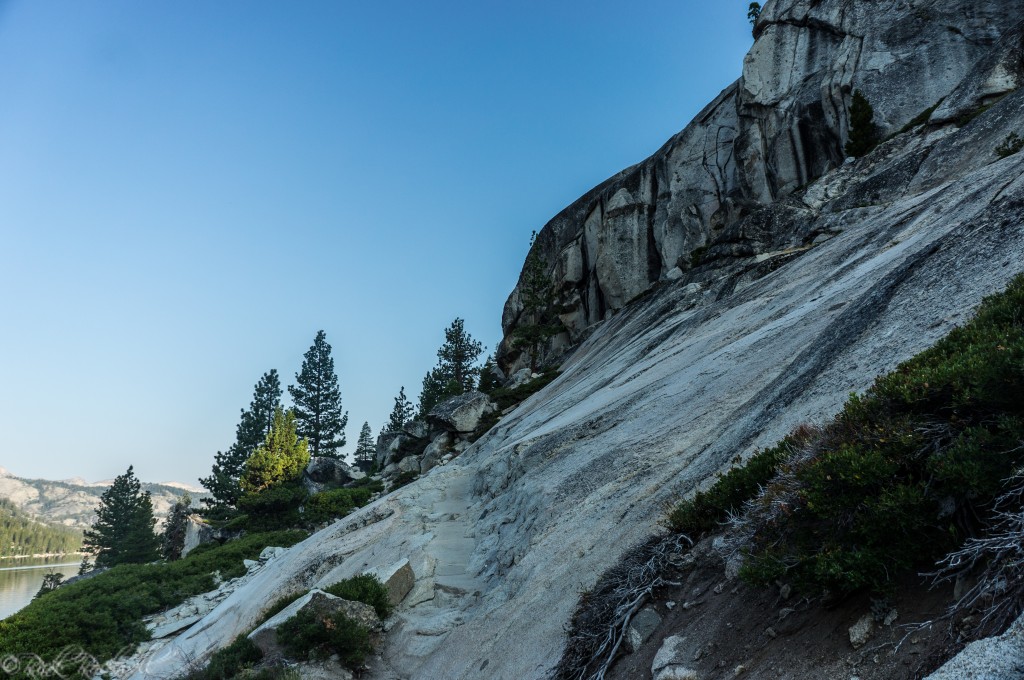
The first portion is scenic but rougher than it can appear from the Chalet. Expect granite, uneven footing, exposed stretches, and repeated short elevation changes. After leaving Upper Echo Lake, the trail becomes steeper and more exposed to the sun.
The lakeshore route to the Upper Echo Lake dock is generally moderate, but longer trips to Tamarack Lake, Lake of the Woods, and Lake Aloha become increasingly strenuous because of distance, elevation, exposed granite, and the return hike.
The PCTA’s mapped Echo Lake-to-Tamarack Lake outing is approximately 7.9 miles round trip with 935 feet of elevation gain. Longer destinations such as Lake of the Woods and Lake Aloha require more time, navigation, and backcountry preparation.
Echo Lakes Trailhead Hiking Distances
Destination | Approx. Distance | Notes |
Upper Echo Lake boat dock | 2.5 miles | Seasonal taxi pickup and drop-off point; verify service |
Tamarack Lake | 3.8–4 miles | Approximately 7.9 miles round trip on the mapped PCTA outing |
Ralston Lake | 4.1–4.3 miles | Side trip beyond Tamarack Lake |
Cagwin Lake | 4.2 miles | Reached by the Tamarack/Ralston side-trail network |
Lake of the Woods | 5.3 miles | Longer day hike or backpacking destination |
Lake Aloha | 6.1 miles | Long day hike; better suited to strong, prepared hikers or backpackers |
Lower Echo Lake
Lower Echo Lake is where the trailhead, Echo Chalet, boat dock, dam, and first portion of the hiking route are located. Hikers cross the dam near the Chalet before following the trail along the lake’s eastern side toward Upper Echo Lake.
Upper Echo Lake
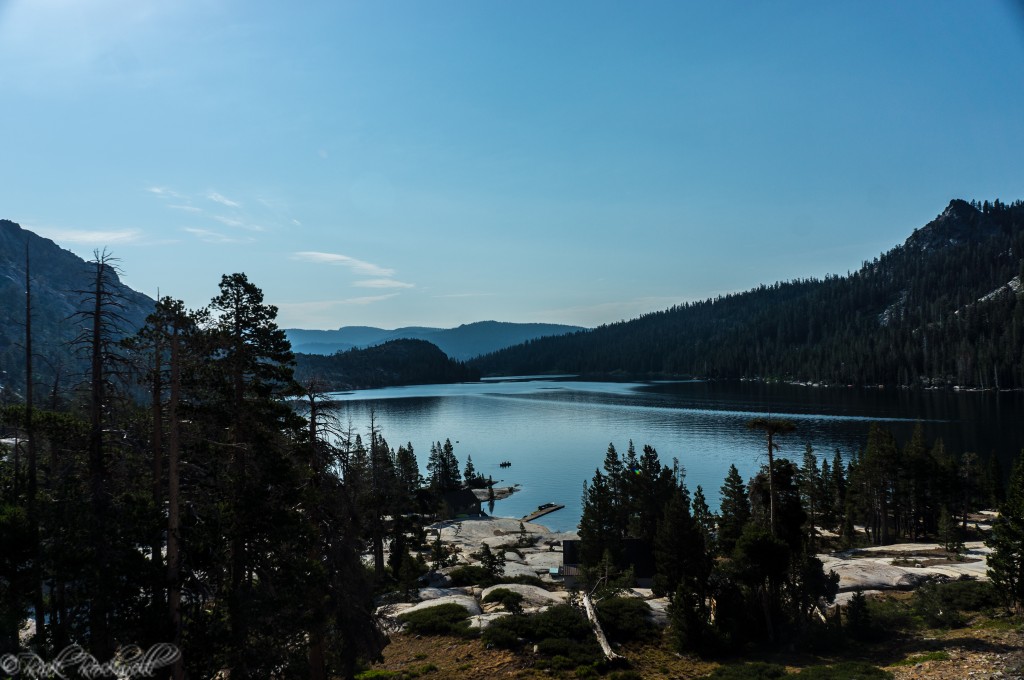
Upper Echo Lake is the last of the two Echo Lakes encountered before the trail begins climbing toward Desolation Wilderness. The seasonal boat-taxi dock is near the far end of the lake, making it an important turnaround point and transportation stop for hikers.
Tamarack Lake
Tamarack Lake is approximately 3.8 to 4 miles from Echo Chalet and is one of the most practical day-hike destinations from the trailhead. Its setting beneath Ralston Peak is especially memorable when the mountain reflects across the water.
Ralston Lake
Ralston Lake sits near the base of Ralston Peak, less than a half mile beyond Tamarack Lake. It is a small, inviting alpine lake that can be added to a Tamarack Lake hike without committing to the longer route toward Lake Aloha.
Cagwin Lake
Cagwin Lake is another small lake reached through the Tamarack and Ralston Lake trail network. Visiting it adds distance and route-finding complexity, so hikers should carry a reliable map rather than depend entirely on cairns across the granite.
Lake of the Woods
Lake of the Woods is a longer destination reached by continuing deeper into Desolation Wilderness. At approximately 5.3 miles one way from Echo Chalet, it works best for prepared day hikers or backpackers with enough time for the return trip.
Lake Aloha
Lake Aloha is approximately 6.1 miles one way from Echo Chalet and is one of the best-known destinations accessible from Echo Lakes Trailhead. Its granite islands, irregular shoreline, and location deep within Desolation Wilderness make it a demanding day hike and a popular backpacking destination.
Best Time to Hike Echo Lakes Trail
Summer through early fall is the most practical season for most hikers. The road, toilets, Chalet, and boat taxi are normally operating during part of this window, although their exact dates do not always match.
Early summer can bring lingering snow, high water, mosquitoes, and difficult stream crossings farther inside Desolation Wilderness.
Mid- and late summer usually provide drier trail conditions but also the greatest parking pressure, afternoon heat on exposed granite, and possible wildfire smoke. Early fall can offer cooler weather and fewer insects, but days are shorter and seasonal services may already be closed.
Winter access requires snow-travel skills and equipment. The trailhead road is not plowed, facilities are unavailable, and avalanche or severe-weather hazards may exist in the surrounding backcountry.
Check the current Sierra Avalanche Center forecast before attempting winter travel in the Echo Summit area.

Is Echo Lakes Trailhead Worth Visiting?
Yes. Echo Lakes Trailhead offers an unusually scenic beginning to everything from a short walk along the water to a longer trip into Desolation Wilderness.
However, what makes it worth visiting is not simply the number of trails accessible from here. Echo Lakes has its own character, history, and atmosphere that feel surprisingly removed from nearby Lake Tahoe.
When the water appears during the final descent toward the Chalet, it immediately feels as though you have discovered something hidden behind the familiar highway.
Because I arrived early on a weekday, I secured one of the few lower parking spaces and was on the trail by 7 a.m. If you are like me, and don’t care for crowded trails, then I suggest getting out to the trailhead early.
The path from the trailhead followed the lakes past rustic cabins, granite ridges, and repeated views across the water. Some of the rock formations gave the hike the atmosphere of an old Western. I half expected bandits wearing handkerchiefs to appear from behind the granite.
From here, the trail continues past Lower Echo Lake, Upper Echo Lake and beyond. It’s really up to you as to how far you want your journey to be. For me, I chose Ralston Lake as my destination. Yet, I have full intentions to check out Lake of the Woods and Lake Aloha on my next Echo Lakes hike.
Another important decision to make in your pre-hike planning, is whether you want to take the Echo Lakes taxi or not.
The approximately 15-minute boat ride provides a different view of the cabins, lakes, and surrounding ridges. On my visit, I took the taxi back and met several other hikers along with talking with the driver.
Everyone seemed to reach the same conclusion that I had already come to realize: Echo Lakes is a special place.
Frequently Asked Questions
Is Parking Free at Echo Lakes Trailhead?
The Forest Service does not charge a use fee at the main Echo Lakes Trailhead. Parking is limited, and individual spaces may have day-use, overnight, employee, resident, or other restrictions. A California SNO-Park permit is required at designated SNO-Parks from November 1 through May 30.
Do I Need a Permit to Hike From Echo Lakes?
You do not need a wilderness permit simply to visit the Chalet or walk before the Desolation Wilderness boundary. Once entering Desolation Wilderness, a free day-use permit or paid overnight permit is required year-round.
Can I Sleep in My Car at the Trailhead?
No. The Forest Service prohibits camping and overnighting at Echo Lakes Trailhead. Overnight parking in a designated space does not authorize sleeping in a vehicle.
How Much Is the Echo Lakes Boat Taxi?
Echo Chalet currently lists a one-way fare of $25 per person. The taxi runs without a fixed schedule when there are at least four passengers, or when a smaller group pays the $100 minimum. Confirm current prices and operations directly with the Chalet.
Are Dogs Allowed at Echo Lakes Trailhead and in Desolation Wilderness?
Yes, but keep dogs leashed and under control. Pack out their waste or dispose of it according to current wilderness guidance. Dogs should not disturb wildlife, other hikers, cabins, or private docks.
Sources
U.S. Forest Service — Echo Lakes Trailhead: PCT Access
https://www.fs.usda.gov/r05/laketahoebasin/recreation/echo-lakes-trailhead-pct-access
U.S. Forest Service — Echo Chalet
https://www.fs.usda.gov/r05/laketahoebasin/recreation/echo-chalet
U.S. Forest Service — Desolation Wilderness
https://www.fs.usda.gov/r05/laketahoebasin/recreation/desolation-wilderness
U.S. Forest Service — Desolation Wilderness Permits
https://www.fs.usda.gov/r05/eldorado/permits/desolation-wilderness-permits
Recreation.gov — Desolation Wilderness Permit
https://www.recreation.gov/permits/233261
Echo Chalet — Services, Hours, and Boat Taxi
https://echochalet.net/
Echo Chalet — Boat Taxi and Marine Services
https://echochalet.net/echo-chalet-services/
Tahoe Rim Trail Association — Current Trail Conditions
https://tahoerimtrail.org/current-trail-conditions/
Tahoe Rim Trail Association — Trailhead Parking
https://tahoerimtrail.org/parking/
Tahoe Rim Trail Association — Echo SNO-Park and Trailhead Link
https://tahoerimtrail.org/projects/echo-sno-park-and-trailhead-link/
Pacific Crest Trail Association — Echo Lake Trailhead
https://explore.pcta.org/trailheads/echo-lake-trailhead
Pacific Crest Trail Association — Echo Lake to Tamarack Lake or Lake Aloha
https://explore.pcta.org/trips/echo-lake-to-tamarack-lake-or-lake-aloha
Pacific Crest Trail Association — Echo Lake to Tamarack Lake Route Map
https://m.pcta.org/exploreMedia/Explore_Echo%20Lake%20to%20Tamarack%20Lake%20or%20Lake%20Aloha.pdf
Visit Lake Tahoe — Echo Lakes Trail
https://visitlaketahoe.com/things-to-do/hikes/echo-lakes-trail/
California State Parks — SNO-Park Permits
https://ohv.parks.ca.gov/?page_id=30735
Caltrans — Upper Meyers Grade Historical Brochure
https://dot.ca.gov/-/media/dot-media/district-3/documents/environmental/historic-echo-v7-a11y.pdf
El Dorado Irrigation District — Hydroelectric Project 184
https://www.eid.org/our-services/hydroelectric
Echo Lakes Association — Echo Lakes History
https://www.echolakenews.org/echo-lakes-history
Sierra Avalanche Center — Central Sierra Nevada Avalanche Forecast
https://www.sierraavalanchecenter.org/forecasts/avalanche/central-sierra-nevada
Original Reporting
Rick Rockwell — July 2014 Echo Lakes hike, photographs, parking observations, route notes, Tamarack and Ralston Lake visit, cross-country return experience, and boat-taxi ride.
Individual destination distances are approximate and draw from the original 2014 route notes, supported where possible by current PCTA and official Lake Tahoe trail information.