


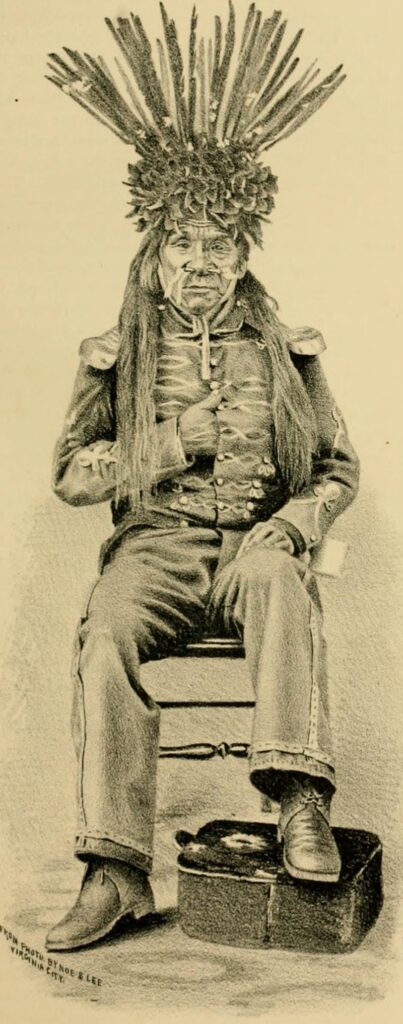
Truckee is best known today as a Sierra Nevada mountain town near the California-Nevada border, but the name reaches deeper than ski trips, Donner Summit, or the Donner Party. It is also tied to Chief Truckee, a Northern Paiute leader remembered as Old Winnemucca and Captain Truckee.
Long before emigrant trails, wagon routes, and Truckee-area railroad history, like China Wall, became attached to this region, the area was part of a much older Native landscape. From the Martis tribe and their ancient rock art to the Northern Paiute and other Indigenous peoples of the Great Basin and Sierra region, Truckee’s story belongs within a much deeper layer of Native American history.
Chief Truckee was a guide, medicine man, prophet, and peacemaker connected to the Great Basin, Pyramid Lake region, John C. Frémont, emigrant routes into California, and the disputed origin stories behind the name Truckee.
His story comes through a mix of Sarah Winnemucca’s family account, local historical sources, settler recollections, newspaper coverage, and later retellings. Some details, especially around the exact origin of the name Truckee and his military service with Frémont, remain debated. This article treats those claims with caution while still honoring his importance in California and Nevada history.
Quick Facts About Chief Truckee
- Also known as: Old Winnemucca, Captain Truckee, Winnemucca, Wuna Mucca, One Moccasin; name spellings vary by source
- People / region: Northern Paiute; Great Basin and Pyramid Lake region
- Known for: Leadership, diplomacy, emigrant guidance, Frémont connection, Truckee namesake
- Family connection: Grandfather of Sarah Winnemucca
- Historical period: Early California and Nevada migration era, especially the 1840s-1860
Winnemucca and the Northern Paiutes
Old Winnemucca, also known as Chief Truckee, Captain Truckee, Wuna Mucca, the Giver of Spiritual Gifts, One Moccasin, and other variations of Winnemucca, was not just a leader of the Northern Paiute. He was also remembered as a medicine man and prophet.
He held an important place among the Northern Paiute people of the Great Basin, a vast region of mountains, dry valleys, desert basins, rivers, lakes, and seasonal resources.
The Great Basin demanded deep knowledge of land, water, food, movement, and survival. The Paiute fished in rivers and lakes, hunted wildlife like deer and jackrabbits, and gathered pine nuts and other seeds to store for harsher seasons.
They also took part in trade and exchange throughout the region, dealing with neighboring Indigenous peoples such as the Washoe, Maidu, and Shoshone.
Winnemucca and his people were deeply rooted in the Great Basin. That regional knowledge is one reason later accounts place Chief Truckee in such an important role during the era of emigrant travel into California.

Origin of the Name Truckee
Few California place names seem to produce as many competing explanations as the origin of the word Truckee.
The following are a few of the widely chronicled theories, compiled from the sources listed at the end of this article. They do not all agree, but together they show why the name Truckee sits at the intersection of Indigenous history, settler memory, local legend, and regional storytelling.
Theory | Source / Account | What It Says |
Truckizo theory | Some historical accounts | The Old Chief’s name may have been Truckizo, which settlers shortened or heard as Truckee. |
Baptiste Truckee theory | Illustrated History of Plumas, Lassen & Sierra Counties | The river may have been named first after a Canadian trapper named Baptiste Truckee, with the chief later associated with the name. |
Matt Harbin account | Truckee-Donner Historical Society / Truckee Republican reference | A member of the Stephens-Townsend-Murphy Party reportedly said an Indigenous guide came into camp, was employed as a guide, and called himself Truckee. |
“Tro-kay” theory | Widely repeated local explanation | The name may come from a Paiute word or phrase meaning “all right” or “very well.” |
Sarah Winnemucca account | Life Among the Piutes | Sarah Winnemucca wrote that Frémont named her grandfather Truckee and also named the river after him. |
A few sources believe that the Old Chief’s name was Truckizo, and that when shortened, it sounded like Truckee to settlers.
In the 1882 book Illustrated History of Plumas, Lassen & Sierra Counties, the authors credit the river with being called Truckee first, and then settlers naming the Old Chief after the river. According to that account, there was a Canadian trapper named Baptiste Truckee who discovered the river in the 1830s.
According to the Truckee-Donner Historical Society, a May 5, 1875, article in The Truckee Republican quoted one of the members of the Stephens-Townsend-Murphy Party, Matt Harbin, as saying that an “Indian came into their camp,” was employed as a guide, and called himself Truckee.
Perhaps the most widely repeated origin of the word Truckee comes from stories of how the Old Chief would repeatedly use a Paiute word or phrase for “all right” or “very well,” often rendered as “tro-kay.”
One last important theory comes from Truckee’s granddaughter Sarah Winnemucca. In her book Life Among the Piutes: Their Wrongs and Claims, published in 1883, she credits General Frémont as the source for naming her grandfather Truckee.
Sarah wrote that Frémont named him Truckee when promoting the chief to captain of his army. She described it as an “Indian word” that meant “all right” or “very well.” She also said that Frémont named the river after her grandfather.
Guiding Emigrants and the Route to California
For roughly the last decade of Chief Truckee’s life, he preferred to be called Captain Truckee. According to Sarah Winnemucca’s account, he was steadfast in his commitment to peace with the white settlers who were coming “like a lion, yes, a roaring lion.”
His granddaughter quotes Truckee as saying the following when he first heard about whites entering their lands: “My white brothers, my long-looked for white brothers have come at last!”
There are historical accounts of Truckee guiding and instructing parties traveling toward California. Some later histories credit him with helping emigrants understand routes through the Sierra Nevada and toward Sutter’s Fort.
The National Park Service’s California Trail material also notes that in 1844, Paiute Chief Truckee guided emigrants along the route and river that they named after him.
One of the more notable parties connected to his story was the Stephens-Townsend-Murphy Party of 1844. They became the first successful group to bring wagons over the Sierra Nevada, and local histories often credit Truckee’s guidance as part of that story.
Even when the Old Chief was away from tribal lands, Sarah Winnemucca wrote that he instructed his son Young Winnemucca to keep the peace and help the white brothers.
His commitment to helping emigrants was not always popular with tribal members. Yet according to Sarah’s account, they honored and followed the wise chief’s vision and instructions.
This part of his legacy is one of the most complicated. Truckee is often remembered as a guide and peacemaker, but his choices unfolded during a period of colonization, migration, violence, and enormous pressure on Indigenous communities. Seeing him only as a helper of settlers misses part of the story. Seeing him only through a modern lens of criticism can also flatten the difficult position he and his people faced.
Meeting Captain Frémont
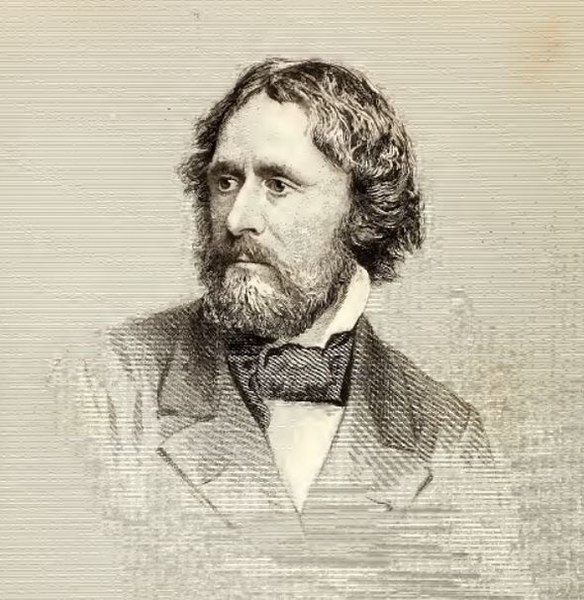
Perhaps the most significant relationship Truckee established in the 1840s was with John C. Frémont.
At the time, Captain Frémont, who later became a controversial general, was mapping the West through several expeditions. Several accounts connect part of Frémont’s success in the region to Indigenous assistance, including the help associated with Chief Truckee.
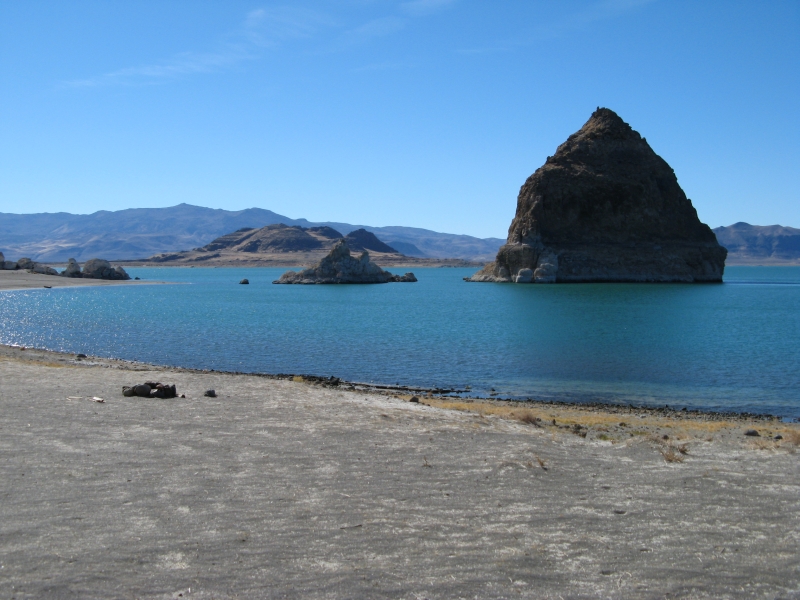
Frémont’s first three expeditions ran from 1842 to 1845. During his second expedition, from 1843 to 1844, Frémont traveled through the greater Lake Tahoe and Pyramid Lake region. Local history also connects this expedition period to the naming of Fallen Leaf Lake and Pyramid Lake, along with Frémont’s encounter with Chief Truckee or his people.
The encounter between Frémont and Truckee is often credited to Kit Carson, who joined Frémont on his second expedition and reportedly knew of a village where friendly Paiute lived. The Paiute’s sacred Pyramid Lake got its English-language name from Frémont on this journey.
Some accounts also say that Truckee and his tribe helped take care of Frémont’s troops after they suffered from harsh conditions and hunger.
This act of kindness was not lost on Frémont. Later histories often present it as the beginning of a friendship or alliance that continued into the Mexican-American War period.

From Chief to Captain
In 1846, when word of war between Mexico and the United States reached California, Frémont became involved in efforts to challenge Mexican control in the territory. At first, Frémont operated behind the scenes in the events surrounding the Bear Flag Rebellion.
Eventually, he was tasked by Commodore Robert F. Stockton with taking over various Mexican strongholds in California. Before this military task, Frémont put out the call for more soldiers.
This may have been when Chief Truckee answered the call to join his friend in fighting alongside the U.S. Army, though the exact timing of his connection to Frémont’s military efforts is not fully clear.
In 1846, Frémont fought and helped take Santa Barbara from Mexico. In her book, Sarah Winnemucca detailed a time when the Old Chief returned from being away for a few years and told the tribe about his battles against Mexico:
“People opened their eyes when my grandfather told of the many battles they had with the Mexicans, and about their killing so many of the Mexicans, and taking their big city away from them, and how mighty they were.”
Could that “big city” have been Santa Barbara? Possibly, but it is best treated as an interpretation rather than a settled fact.
Few surviving details explain Chief Truckee’s time serving with Frémont. However, several accounts state that he earned a brevet for bravery and was given the title of Captain, which he proudly went by for the rest of his life.
Local historical accounts also state that Truckee was given command of a company made up of Native Americans. The Truckee-Donner Historical Society states that it was Company H and that it also included members of the Delaware tribe who came west with Frémont. Additionally, some accounts say Truckee’s brother Pancho received a medal for his participation in the war.
Following his service, when Captain Truckee returned to his tribe, Sarah Winnemucca wrote that he sang soldier roll-calls, taught people the Star-Spangled Banner, and proudly showed off his military uniform.
Sarah also repeated this version of her grandfather’s story beyond her book. In 1880s newspaper coverage of her lectures and advocacy work, Captain Truckee was repeatedly described as Frémont’s guide into California and as someone connected to the Mexican War, though those reports still trace largely through Sarah’s public account and later retellings.
This section of his life is important, but it should be read with caution. The broad connection between Truckee, Frémont, and military service appears in multiple retellings, but the exact details of rank, command, and wartime activity are harder to verify with the same confidence.
A Peacemaker or a Survivalist?
Unfortunately for the Paiute, not all white settlers were “brotherly” to the tribe. Sarah Winnemucca’s account describes violent encounters and moments when settlers fired upon Paiute people without provocation. One of Truckee’s sons was killed during this period.
Despite members of the tribe calling for revenge and war, Captain Truckee remained steadfast in keeping the peace.
Some historians and later readers have questioned Truckee’s motives or intentions for choosing peace over war with whites.
Before Captain Truckee’s experience with the U.S. Army, Sarah’s account presents him as joyous in meeting white settlers and helping them. He treated them like brothers and not enemies.
After seeing the power of the U.S. Army, however, Truckee also would have understood the danger his people faced if conflict escalated against a nation Sarah described as a roaring lion.
Additionally, Captain Truckee took relatives and members of his people into California, where he continued to learn more about American ways.
Whether it was a heart for peace, a pragmatic mindset that saw friendship with whites as the best path for survival, or some combination of both, Captain Truckee continued to preach unity with white settlers until the day he died.
That peace legacy also became part of Sarah Winnemucca’s later public advocacy. In an 1883 petition printed in the Daily Courant of Hartford, she identified herself as the granddaughter of Captain Truckee, who had promised friendship to Frémont, guided him into California, and served through the Mexican War.
That is where his legacy becomes most human. He was not making choices from a position of comfort. He was navigating a dangerous and fast-changing world where Indigenous communities faced disease, violence, land loss, military pressure, settler expansion, and uncertain futures.
The Death of Old Winnemucca
Captain Truckee died near Como, in the Palmyra District of Lyon County, Nevada, on October 8, 1860. What we know about his final days can be pieced together through historical accounts, but the most intimate details come from his granddaughter Sarah Winnemucca’s book.
According to Sarah, in his final days, Captain Truckee sent for his white brother named Snyder and asked him to look after his family and carry out his wishes regarding their futures.
He told his son to do his duty as he had done, not only for his people but for the white brothers as well. Even in his last moments, the Old Chief continued to push for peace and unity with his white brothers.
One later account from John Nelson, preserved by the Truckee-Donner Historical Society, says Truckee visited a nearby camp shortly before his death with a bad swelling on his neck. Those at the camp thought it might have come from a tarantula sting or another poisonous bite, though the exact cause of death remains uncertain.
When Truckee died, Sarah described the scene as everyone throwing themselves on him and wailing, with “their cries” heard for many miles.
Sarah Winnemucca also wrote:
“I could hardly believe he would never speak to me again. I knelt beside him, and took his dear old face in my hands, and looked at him quite a while… I felt the world growing cold; everything seemed dark. The great light had gone out.”
Prior to his death, Captain Truckee requested that his cherished belongings be buried with him, including his Bible, some other important documents, and his “rag friend.” Local history also says that Frémont’s Bible, along with other papers treasured by Truckee, was buried with him.
After his death, signal fires reportedly blazed on surrounding mountains to call people from nearby areas.
The Paiute carried out two days of tribal customs for their departed leader. Per his request, Truckee was then buried like his white brothers, with a crude cross that reportedly had the following inscription:
“Here lies Captain Truckee, the faithful guide and true friend to the white man.”
Chief Truckee’s Life in Brief
Period | Event |
Early life | Known as Old Winnemucca, a Northern Paiute leader, medicine man, and prophet |
1840s | Associated with emigrant guidance and routes into California |
1843-1844 | Connected in some accounts to John C. Frémont’s second expedition |
1844 | Linked to the Stephens-Townsend-Murphy Party story |
1846 | Associated with Frémont and Mexican-American War accounts |
Later years | Remembered as Captain Truckee and a peace-seeking leader |
1860 | Death near Como, in the Palmyra District of Lyon County, Nevada |
The Light Still Shines
Although the Old Chief had passed on to the Spirit-Land, I believe his light still shines more than 165 years later.
The legacy of Captain Truckee is taught every time someone asks or learns about the meaning of the town’s name. It also means his people are talked about, as well.
Chief Truckee’s story belongs within a broader Indigenous history of California and the Great Basin, where Native leaders, place names, sacred sites, and surviving cultural memory still shape how these landscapes are understood.
Chief Truckee’s story also fits within a broader pattern of Native leaders and Indigenous legacies attached to California places and public memory. That includes figures like Chief Marin, whose name became tied to Marin County, and Quintin, the Coast Miwok figure connected to the name San Quentin.
His granddaughter’s book helped capture the Captain’s desire to embrace white settlers as brothers and live in harmony with them. It is easy to be skeptical of Sarah’s book or some of the other historical documents and claim that they romanticized Captain Truckee’s life. I disagree, though I do think some later sources simplified his story and parts of the record need caution.
But that should not erase the importance of Chief Truckee’s aid, diplomacy, leadership, and difficult choices during one of the most disruptive eras in California and Nevada history.
Where some might look back on his decisions with a lens of criticism, I believe Truckee made the best of a difficult situation. Where other tribes were devastated by Frémont, settler violence, disease, land loss, and the mass influx of miners into California, Chief Truckee tried to keep his tribe and family relatively safe.
His legacy is complicated, but it remains important: a Northern Paiute leader remembered for diplomacy, survival, guidance, family memory, and a name that still marks the California-Nevada landscape.
Like other California Native American statues, place names, landmarks, and public memorials, the story of Chief Truckee reminds us that the names on California maps often carry older histories than many travelers realize.
Saving lives, choosing peace, protecting his people, and navigating a world being rapidly transformed around him are all reasons Chief Truckee’s name belongs in the history pages of California and Nevada.

FAQ About Chief Truckee
Who was Chief Truckee?
Chief Truckee, also known as Old Winnemucca and Captain Truckee, was a Northern Paiute leader, medicine man, prophet, guide, and peacemaker connected to the Great Basin, Pyramid Lake region, emigrant routes into California, and the debated history behind the name Truckee.
Was Chief Truckee the same person as Old Winnemucca?
Yes. Chief Truckee is commonly identified with Old Winnemucca, though his name appears in several forms across different sources, including Winnemucca, Wuna Mucca, Captain Truckee, and One Moccasin.
What does the name Truckee mean?
The meaning of Truckee is debated. One widely repeated explanation says it came from a Paiute word or phrase often rendered as “tro-kay,” meaning “all right” or “very well.” Other accounts connect the name to older spellings, settler recollections, the Truckee River, or Sarah Winnemucca’s account of Frémont naming her grandfather Truckee.
Was the town of Truckee named after Chief Truckee?
Chief Truckee is deeply connected to the name Truckee, but the exact origin is debated. Some accounts say the river or region was named after him, while others suggest the river name may have come first. The safest answer is that Chief Truckee became strongly associated with the name, even though historians and local sources do not all agree on the exact origin.
How was Chief Truckee connected to John C. Frémont?
Several accounts connect Chief Truckee to John C. Frémont’s western expeditions and later Mexican-American War-era activity in California. Sarah Winnemucca wrote that Frémont named her grandfather Truckee and gave him the title Captain. Local and newspaper accounts also describe Truckee as a guide connected to Frémont, though some military details remain difficult to verify.
Was Chief Truckee related to Sarah Winnemucca?
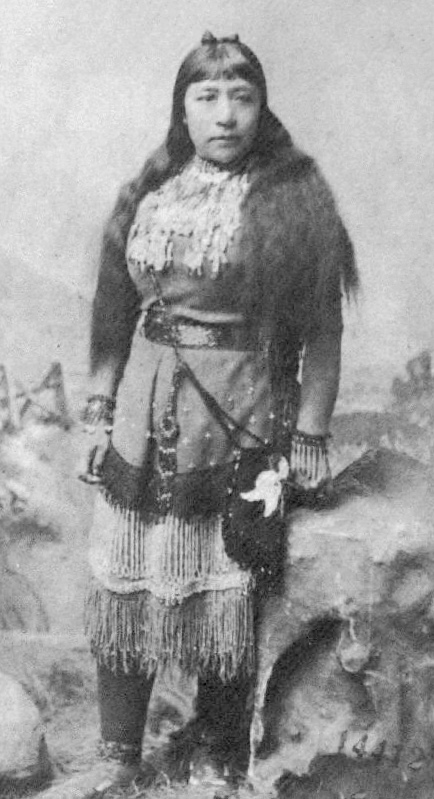
Yes. Sarah Winnemucca was Chief Truckee’s granddaughter. Her 1883 book, Life Among the Piutes: Their Wrongs and Claims, is one of the most important sources for his life, family memory, beliefs, and final days.
When and where did Chief Truckee die?
Chief Truckee died near Como, in the Palmyra District of Lyon County, Nevada, on October 8, 1860, according to local historical accounts preserved by the Truckee-Donner Historical Society.
Sources
Sarah Winnemucca Hopkins. *Life Among the Piutes: Their Wrongs and Claims*. Boston: Cupples, Upham and Company, 1883.
https://archive.org/details/lifeamongpiutes00manngoog
Truckee-Donner Historical Society. “Chief Truckee.”
https://www.truckeehistory.org/chief-truckee.html
Carpenter, Cari M., and Carolyn Sorisio, editors. *The Newspaper Warrior: Sarah Winnemucca Hopkins’s Campaign for American Indian Rights, 1864–1891*. University of Nebraska Press, 2015.
https://library.oapen.org/handle/20.500.12657/105191
National Park Service. “California Trail Junior Ranger.”
https://www.nps.gov/articles/000/california-trail-junior-ranger.htm
National Park Service. “Young Man Alone: Snowbound in the Sierra Nevada, 1844.”
https://www.nps.gov/articles/000/young-man-alone-snowbound-in-the-sierra-nevada-1844.htm
Lindström, Susan. “Cutting a Trail: Northern Paiutes in the Pioneering Sierras.” *Nevada Historical Society Quarterly*, 49(3), 181–214, 2006.
Pyramid Lake Paiute Tribe. Official site.
U.S. Capitol Visitor Center. “Sarah Winnemucca.”
https://www.visitthecapitol.gov/sarah-winnemucca
Angel, Myron. *History of Nevada: With Illustrations and Biographical Sketches of Its Prominent Men and Pioneers*. Oakland, CA: Thompson and West, 1881.
Fariss, S., and Smith, C. D. *Illustrated History of Plumas, Lassen & Sierra Counties*. San Francisco: Fariss & Smith, 1882.
Cleland, Robert Glass. *A History of California: The American Period*. New York, NY: Macmillan, 1951.