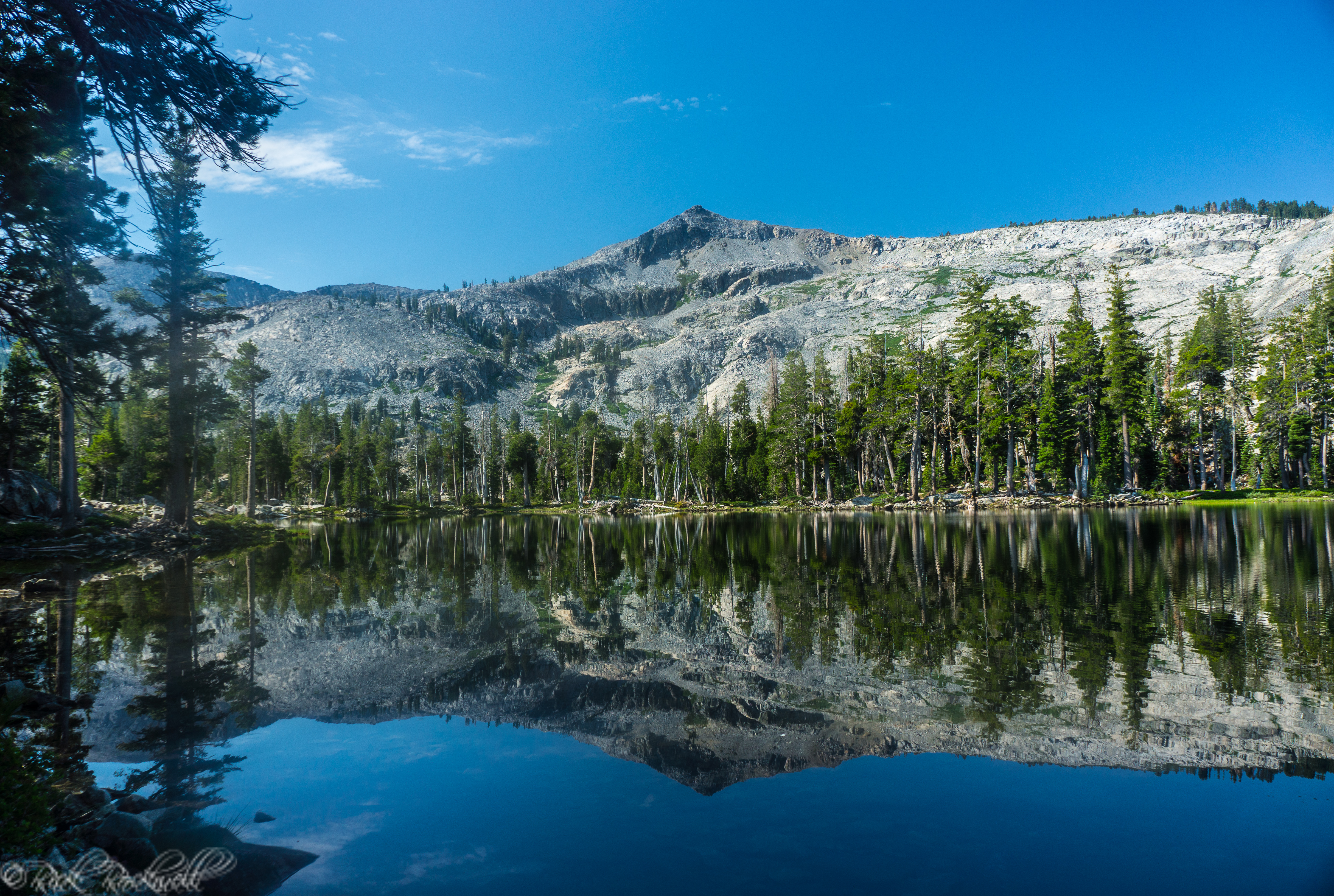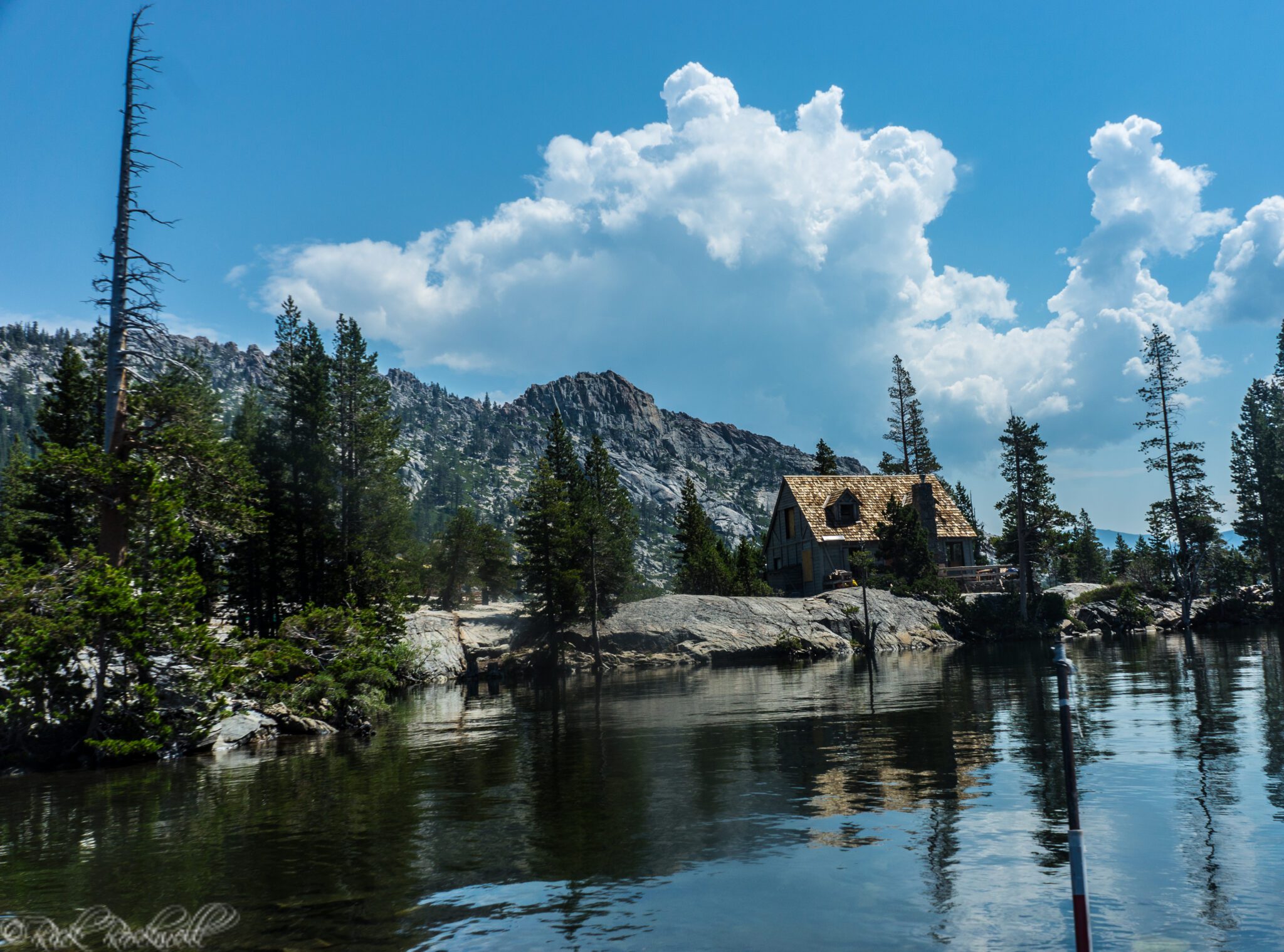
Echo Lakes in El Dorado County, California, is a connected pair of alpine lakes near Echo Summit and South Lake Tahoe. The two lakes combine granite scenery, rustic cabins, boating, swimming, fishing, and a long history as a summer retreat.
Lower Echo Lake provides the most accessible introduction, with Echo Chalet, the dam, docks, and the beginning of the shoreline trail. Upper Echo Lake feels quieter and more isolated, with cabins scattered beneath granite slopes and transportation that has long depended on boats and foot travel.
The lakes also sit as a doorway into Desolation Wilderness, making them a natural transition between an established mountain community and the largely undeveloped country beyond it.
Echo Lakes Quick Facts
- Location: El Dorado County near Echo Summit and South Lake Tahoe
- Elevation: Approximately 7,400 feet
- Main lakes: Lower Echo Lake and Upper Echo Lake
- Setting: Sierra Nevada granite, forest, cabins, and mountain ridges
- Known for: Boating, swimming, fishing, cabins, photography, and wilderness access
- Main visitor season: Summer through early fall
- Services: Seasonal operations at Echo Chalet
- Public access: Shoreline trail, boat transportation, and lake recreation
- Wilderness access: Desolation Wilderness begins beyond the developed lake area
What Are Echo Lakes?
Echo Lakes consists of Lower Echo Lake and Upper Echo Lake, two connected bodies of water in the Sierra Nevada west of Lake Tahoe.
Both lakes occupy a granite basin shaped by glaciers. The water level is also managed as part of a hydroelectric and water-storage system, giving Echo Lakes characteristics of both natural alpine lakes and a seasonal reservoir.
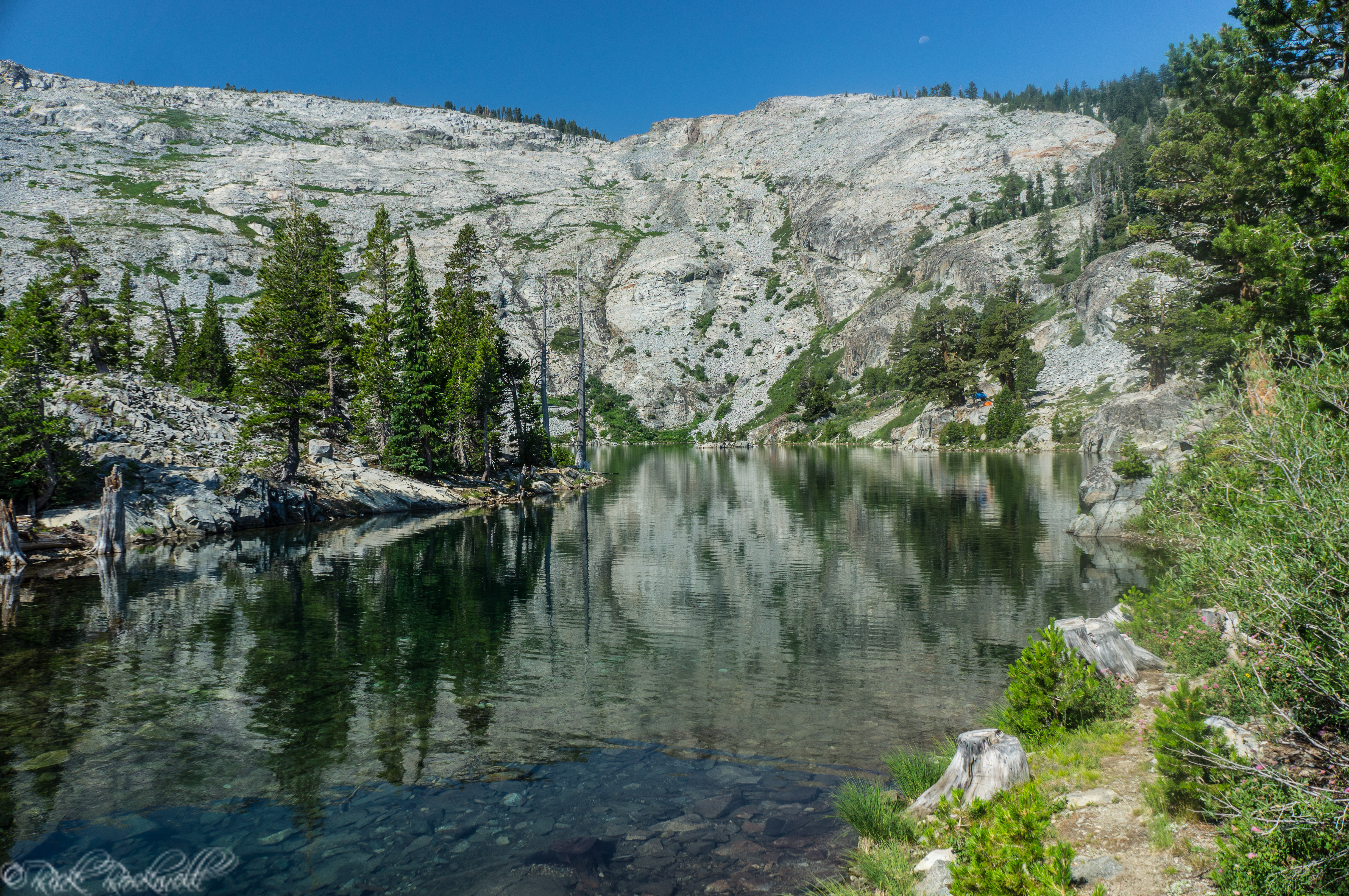
The combination of blue water, exposed granite, conifer forest, cabins, boats, and surrounding peaks gives the lakes a distinctly Sierra Nevada character.
Echo Lakes is sometimes treated primarily as the starting point for hikes into Desolation Wilderness. However, the lakes are worth seeing as a destination of their own, even for visitors who are not planning a long hike.
Where Are Echo Lakes?
Echo Lakes is in El Dorado County near Echo Summit, a short distance from Highway 50 and southwest of South Lake Tahoe.
Echo Lakes Road descends from the highway toward Lower Echo Lake, Echo Chalet, the dam, and the lower parking areas. Vehicle access is seasonal because the road receives heavy winter snow.
Lower Echo Lake and Upper Echo Lake
Although connected, Lower and Upper Echo Lake offer different experiences.
Lower Echo Lake
Lower Echo Lake is the more developed and accessible of the two lakes. Echo Chalet, the dam, marina facilities, boat docks, and the beginning of the Echo Lakes trail are concentrated near its eastern end.
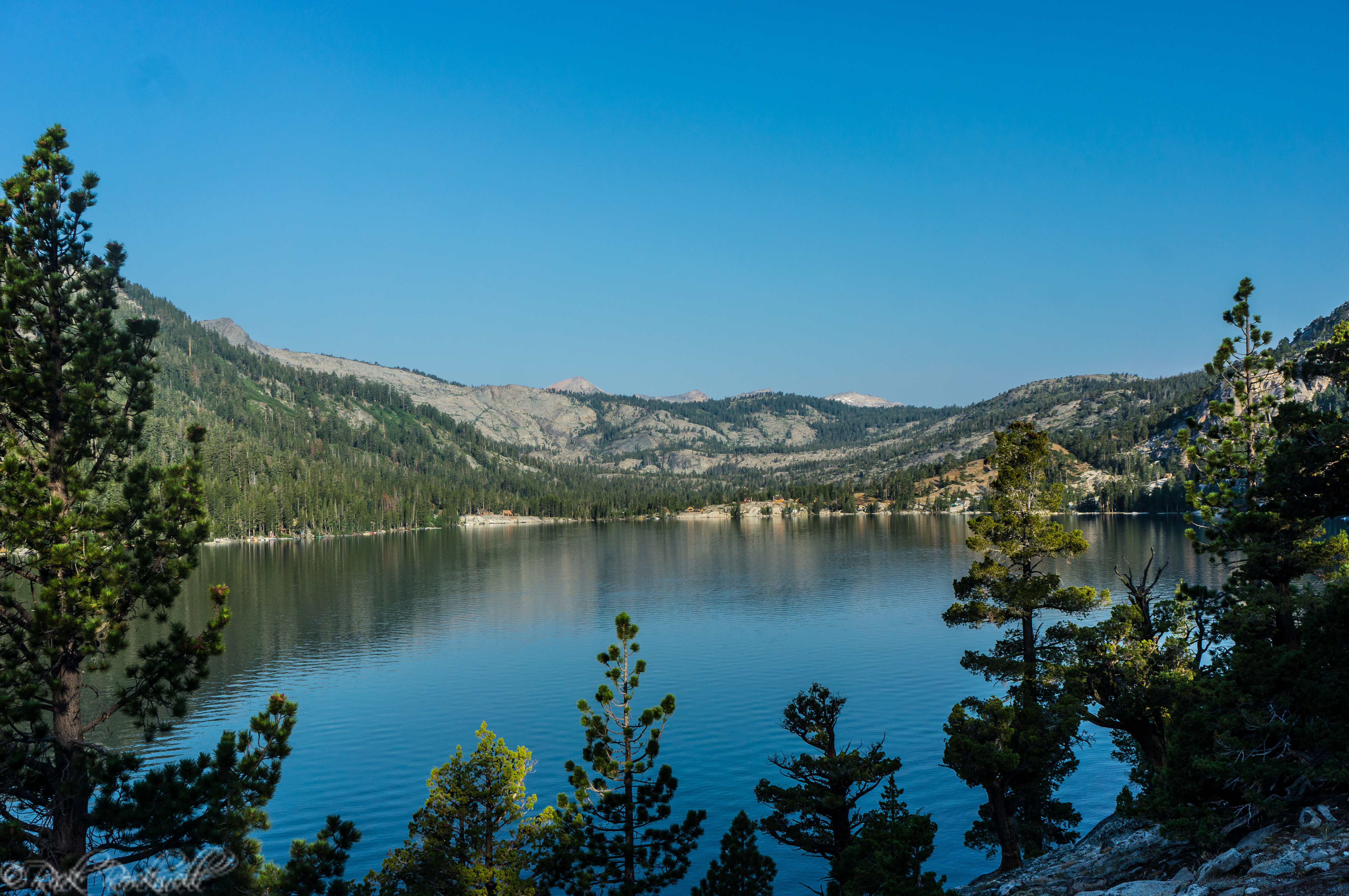
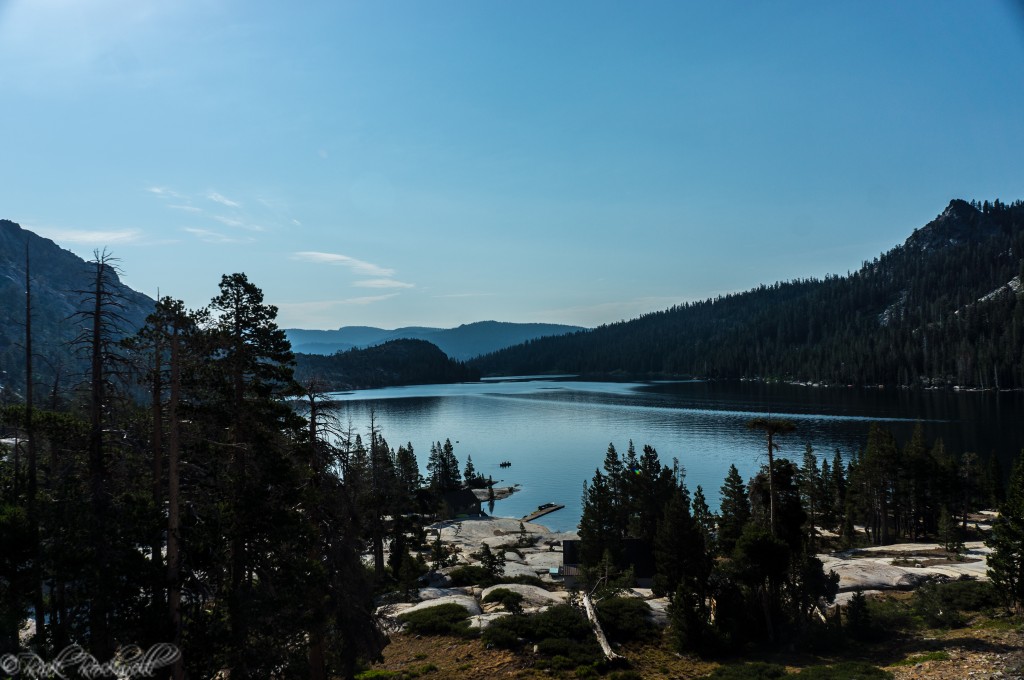
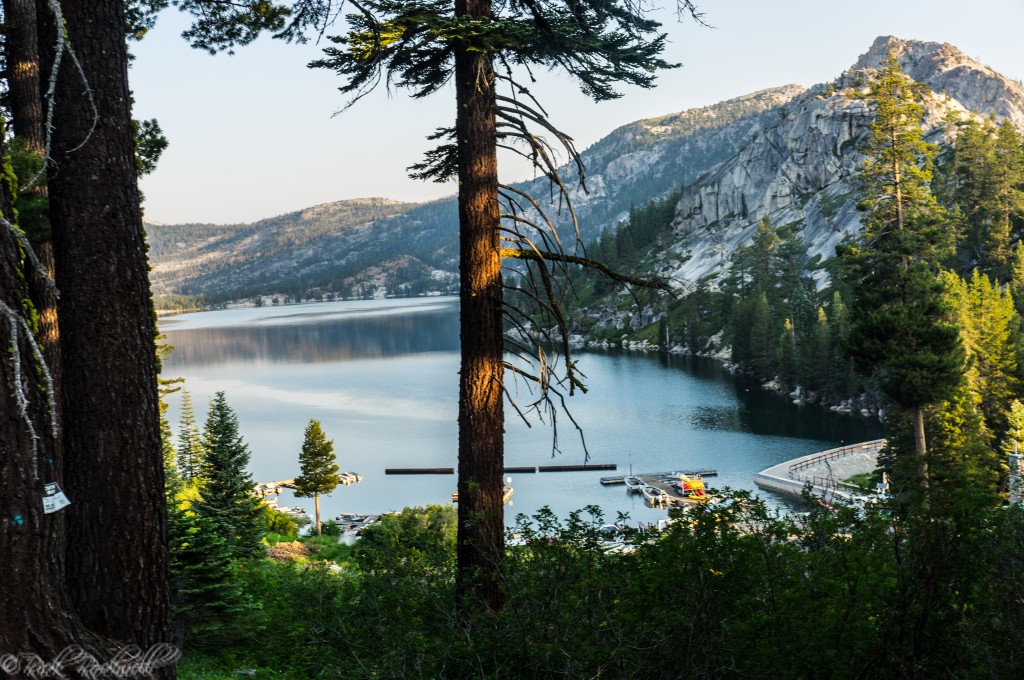
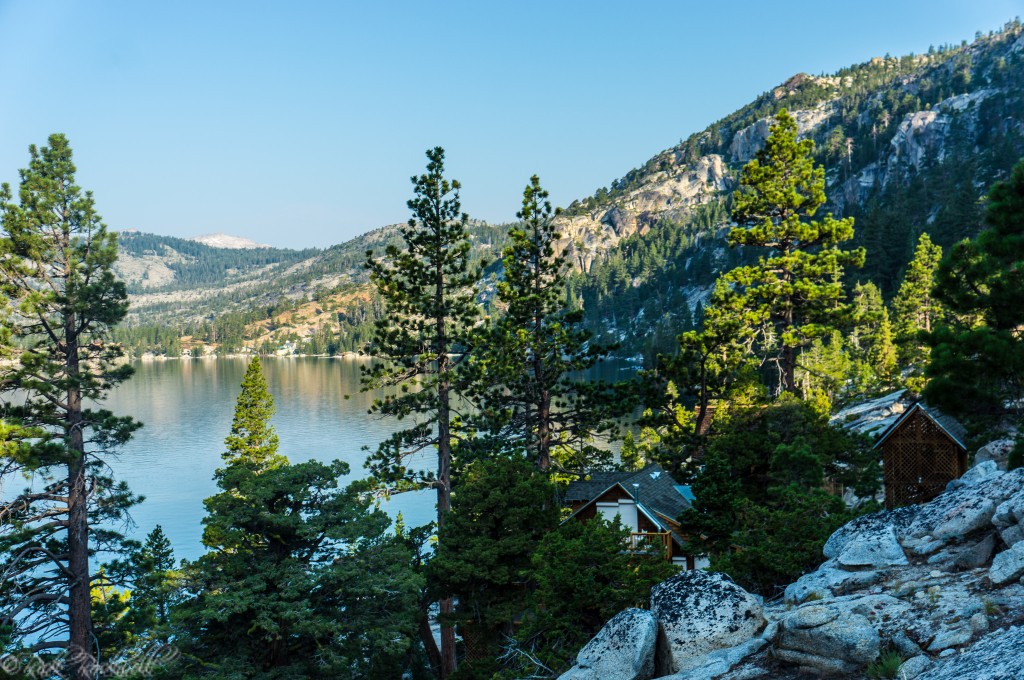
This is where many visitors receive their first clear view of Echo Lakes. From the dam and surrounding shoreline, the water stretches west beneath granite ridges and scattered cabins.
Lower Echo Lake also serves as the transportation center for the lake community. Boats carry residents, visitors, supplies, and hikers across water that would otherwise require a much longer trip on foot.
Upper Echo Lake
Upper Echo Lake begins beyond the narrow connection between the two lakes. It feels more remote, even though it remains part of the same cabin community.
The upper lake is bordered by granite slopes, conifers, small coves, and privately owned cabins. Many properties are reached primarily by boat or trail rather than by road.
From the water or shoreline trail, Upper Echo Lake provides some of the area’s best views of the surrounding scenery and mountain ridges. It also brings visitors closer to Desolation Wilderness.
How the Two Echo Lakes Became Connected
Lower and Upper Echo Lake originated as separate glacial lakes. Water-management changes eventually raised and regulated the system’s summer water level, allowing the lakes to connect through the narrow passage seen today.
The channel can feel like a natural transition from one lake to the other, but it also reflects the long history of dams, water storage, and diversion at Echo Lakes.
Water levels vary seasonally. The appearance of the shoreline, channel, docks, and exposed granite can therefore change considerably between early summer and fall.
A Short History of Echo Lakes
Echo Lakes has been used for travel, subsistence, recreation, water storage, and seasonal residence for generations. However, its history is more complex than the cabins and summer boats might suggest.
Washoe Use of the Area
The Lake Tahoe region and surrounding Sierra Nevada are part of the ancestral homeland of the Washoe people.
Long before permanent vacation cabins appeared at Echo Lakes, this Native American tribe traveled through the mountains seasonally to fish, hunt, gather plants, obtain materials, and maintain connections between the Tahoe Basin and surrounding lands.
The modern roads, trails, property boundaries, and wilderness designations were imposed much later on a sacred landscape that already had established cultural importance and travel routes.
Early Travel, Fishing, and Recreation
By the late nineteenth century, newspapers were describing fishing, camping, hunting, and mountain travel around Echo Lake and the country later protected as Desolation Wilderness.
An 1899 newspaper report described Echo Lake as a stopping point for people heading toward the high-country lakes. Earlier reports from the 1890s also connected the area with fishing excursions and summer outings.
These accounts show that Echo Lakes had become part of Northern California’s growing outdoor-recreation culture well before modern highways, wilderness permits, or the Pacific Crest Trail.
The Dam and Water Diversion
Echo Lakes eventually became part of a larger water-storage and hydroelectric system now associated with El Dorado Irrigation District’s Project 184.
The dam at Lower Echo Lake helps regulate the water level. Water from the Echo Lakes basin has historically been directed toward the American River watershed for storage, power generation, and downstream use.
This infrastructure changed the relationship between Lower and Upper Echo Lake and continues to influence seasonal water levels.
Ham Cagwin and the “Echo Hermit”
Hamden El Dorado Cagwin lived year-round on a small island at the far end of Echo Lake. His home was a rough shack pieced together from old boards and decorated with driftwood, surrounded by cold water, granite, and months of deep Sierra snow. The setting earned him the nickname “Echo Hermit.”
The name stuck, but it concealed how active his life was. Cagwin became caretaker of the Echo Lake dam in 1887, operated a boating and fishing business, and trapped throughout the surrounding mountains. The Echo Lakes Association remembered him as “actually a friendly man” who regularly dealt with residents, workers, anglers, and travelers.
Winter added another role. Cagwin strapped on snowshoes and carried U.S. mail over Echo Summit and toward Carson City. The journey took him through a mountain corridor where storms could bury the route, erase tracks, and leave a traveler exposed for miles. Cagwin kept making the crossing with the mail on his back.
His shack eventually disappeared, but its outline remained visible on the island. One Echo Lakes descendant remembered childhood cookouts there, walking around the smooth rectangle of earth where Cagwin’s cabin had once stood.
Families continued telling his story during summer evenings and the location became known as Hermit Island.
Today, Cagwin’s name remains embedded in the surrounding landscape. Hermit Island preserves his famous nickname, while nearby Cagwin Lake was named after the man himself. Together, they commemorate the fisherman, boatman, dam keeper, trapper, and winter mail carrier who built an extraordinary life at Echo Lakes.
Early Trails and Transportation
Echo Lake was connected with regional mountain trails before the construction of the present trail system.
A 1915 newspaper report mentioned a trail between Glen Alpine and Echo Lake as part of a broader Sierra trail network. Its exact historical alignment should not be assumed to match a modern trail, but the reference confirms Echo Lake’s early importance as a link between mountain destinations.
Boats also became essential transportation. A 1935 Tahoe Tattler description emphasized the motorboat-dependent character of the upper lake, where road access did not reach the cabins.
In 1964, an Oakland Tribune outdoor article noted that hikers could hire a speedboat rather than add several miles of walking around Echo Lake. The same basic decision—walk beside the lakes or cross them by boat—remains part of the Echo Lakes experience.
The 1955 Avalanche
Winter conditions around Echo Lakes can be severe. Deep snow, steep surrounding slopes, and limited winter access have always shaped life in the area.
In 1955, an avalanche struck the Echo Lakes community and damaged or destroyed cabins. The event became an important part of the community’s history and demonstrated how different Echo Lakes can be outside its comparatively gentle summer season.
Winter season can transform the same landscape into a much more isolated and potentially dangerous environment.
The Echo Lakes Cabin Community
The cabins are woven into the scenery of Echo Lakes. Weathered walls rise from granite shelves, docks extend into narrow coves, and boats rest beside properties hidden among the trees. They give the shoreline a character that feels distinctly different from the undeveloped wilderness farther west.
History of the Echo Lakes Cabins
According to the Echo Lakes Association, fur trappers built the first cabin at Echo Lakes in 1872. The first Forest Service summer-home lease was issued in 1907, opening the way for additional seasonal residences around the lakes.
Cabin development accelerated during the 1920s as the Forest Service encouraged applications for summer-home leases. Families began establishing rustic mountain retreats along the northern shores of Lower and Upper Echo Lake, creating the foundation of the community that remains today.
Boat transportation shaped the community from its earliest years. Building materials, furniture, food, tools, and fuel had to be carried across the water to properties without road access. Constructing and maintaining a cabin beside the lakes required patience, physical work, and careful planning.
The community eventually grew to include more than 100 seasonal residences on Forest Service and privately owned land. Despite that growth, the cabins retained the modest architecture and close connection to the surrounding granite, forest, and water that first defined the settlement.
The Cabin Community Today
Walking the shoreline trail provides a close look at the Echo Lakes cabin community. Cabins appear between the trees, above granite ledges, and beside small docks where boats serve as the primary connection with the eastern end of the lake.
Residents still transport groceries, fuel, propane, tools, luggage, and household supplies across the water. Daily life revolves around boat access, mountain weather, changing lake levels, and a limited utility system. That practical relationship with the lake is visible in nearly every dock, storage area, and footpath along the shoreline.
The cabins also bring a human presence to the mountain scenery. Decks face the water, footpaths wind through the trees, and boats move between properties during the summer. The result feels like a secluded lakeside neighborhood rather than a conventional resort development.
These are private residences and active seasonal homes. Visitors can appreciate the cabins from the public trail or water without entering cabin sites, walking onto private docks, or approaching occupied buildings.
Echo Chalet: History and Modern Details
Echo Chalet anchors the developed eastern end of Lower Echo Lake. The resort serves cabin residents, hikers, boaters, anglers, and visitors while providing the main connection between Echo Lakes Road and the communities farther across the water.
History of Echo Chalet
A 1939 Auburn Journal feature reported that Curtis Rocca had completed a Swiss-style chalet at Lower Echo Lake. The Echo Lakes Association and Echo Chalet identify the Rocca family as the builders of the present resort, which has operated since 1939.
The Chalet gave Echo Lakes a permanent center for lodging, supplies, boating, and visitor services. Its location beside the dam and harbor allowed it to support both the growing cabin community and travelers heading toward Desolation Valley.
The Fashinell family has owned and operated Echo Chalet since 1984. The rustic housekeeping cabins known as the Chaletlées were built in 1947, adding overnight accommodations on the mountainside above Lower Echo Lake.
Staying at Echo Chalet Today
Echo Chalet operates as a summer-only resort with eight rustic rental units called Chaletlées. Their knotty-pine interiors and shared decks preserve the atmosphere of an older Sierra resort while providing electricity, running water, private bathrooms, and basic kitchen facilities.
All but one of the traditional units includes a kitchenette with a two-burner stovetop, small refrigerator, coffee maker, toaster, utensils, and basic cookware. One- and two-bedroom layouts are available, while the renovated Suite Eleven provides a larger kitchen and a king-size bed.
The Chaletlées sit on the hillside above the lake and require a short walk along an unlit footpath. Guests should bring flashlights and be prepared to carry their belongings uphill.
The resort currently requires a three-night minimum, although availability, rates, pet policies, and individual unit conditions should be confirmed directly with Echo Chalet.
The resort also operates a seasonal store, fountain, marina, boat ramp, post office, boat tours, and transportation across Lower and Upper Echo Lake. These services make Echo Chalet the practical center of the lake community as well as a place to stay.
Things to Do at Echo Lakes
Echo Lakes can fill an easy morning or an entire summer day. Visitors can enjoy the view from the dam, follow the shoreline beneath the cabins, cross both lakes by boat, paddle among granite islands, fish the cold water, or find a public place to swim. A long wilderness hike is only one of many ways to experience the lakes.
Enjoy the View from Lower Echo Lake Dam
The dam provides one of the easiest and most rewarding views at Echo Lakes. Lower Echo Lake stretches toward the granite ridges, with boats crossing the water and cabins appearing along the distant shoreline.
This is a worthwhile stop even if you have no plans to hike. Walk across the dam, watch activity around the marina, and spend time taking in the scenery before returning to Echo Chalet.
Follow the Shoreline Trail
The shoreline trail begins near Lower Echo Lake and follows the northern sides of both lakes. It passes weathered cabins, wooden docks, shaded coves, granite slabs, and stretches of open shoreline overlooking the water.
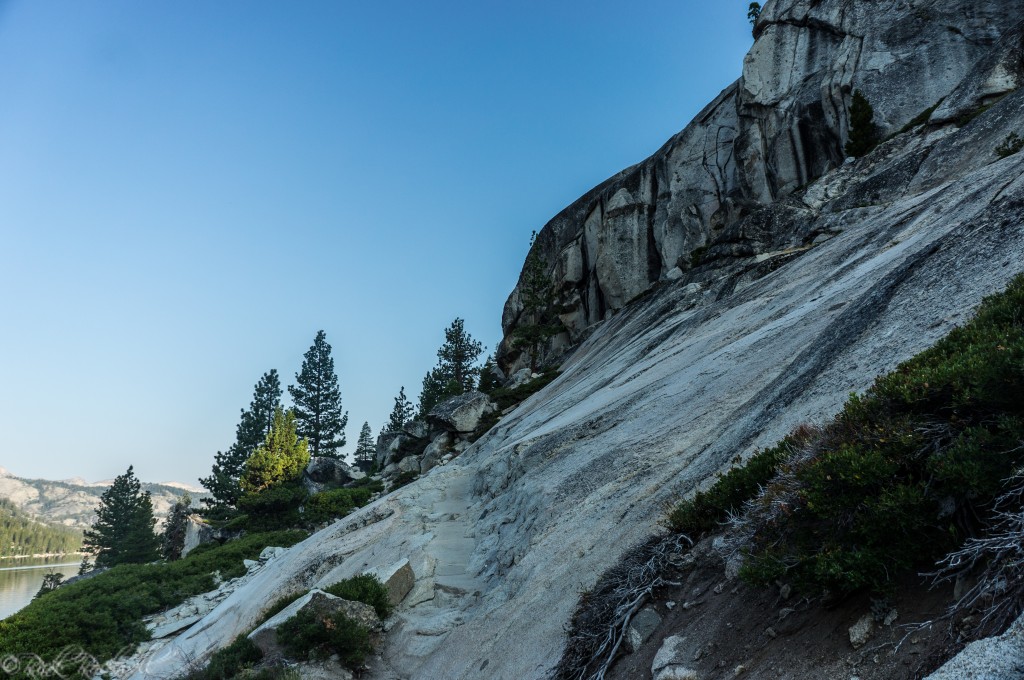
The trail continually changes character. One section passes beneath trees and cabins, while the next climbs across exposed granite with broad views of the lake and surrounding ridges. Turn around whenever you have seen enough or continue toward the quieter shoreline of Upper Echo Lake.
Hikers traveling beyond the lakes can reach Tamarack Lake, Ralston Lake, Lake Aloha, and other parts of Desolation Wilderness. Those routes require permits and additional planning.
Cross Echo Lakes by Boat
A boat ride places you directly among the cabins, docks, granite islands, and narrow coves that define Echo Lakes. The route also passes through the channel connecting Lower and Upper Echo Lake, where the shoreline closes in before opening onto the upper lake.
Echo Chalet operates seasonal boat transportation and guided lake tours. The service gives visitors a chance to see both lakes without completing the entire shoreline hike. It can also be paired with a one-way walk for a fuller day around the water.
Boat service depends on lake levels, weather, passenger demand, and seasonal operations. Confirm availability directly with Echo Chalet before making it central to your plans.
Explore by Kayak, Canoe, or Paddleboard
Kayaks, canoes, and paddleboards allow visitors to explore the shoreline at a slower pace. Small watercraft can enter coves, pass granite islands, and provide close views of cabins that are difficult to see clearly from the trail.
Calm mornings generally provide the most comfortable paddling conditions. Afternoon wind can arrive quickly, especially across open sections of Upper Echo Lake, and the water remains cold throughout the season.
Motorized boats also use the lakes. Anyone bringing a boat should confirm current launch requirements, inspection rules, operating restrictions, and marina hours before arriving.
Fish or Swim in Echo Lakes
Fishing has drawn visitors to Echo Lakes for more than a century. California wildlife officials have managed the lakes as a Lahontan cutthroat trout sport fishery, giving anglers an opportunity to pursue a trout species native to the Lake Tahoe Basin.
A valid California fishing license and current knowledge of applicable regulations are required. Conditions change with water temperature, stocking, lake levels, and the time of year, so historical fishing reports should never be treated as current guidance.
Swimming can feel refreshing on a warm summer afternoon, but this remains a high-elevation lake fed by snowmelt. The water stays cold, granite entry points can be slippery, and the shoreline may drop off sharply. Use a clearly public area and stay away from private cabin docks.
Photograph the Echo Lakes Region and Beyond
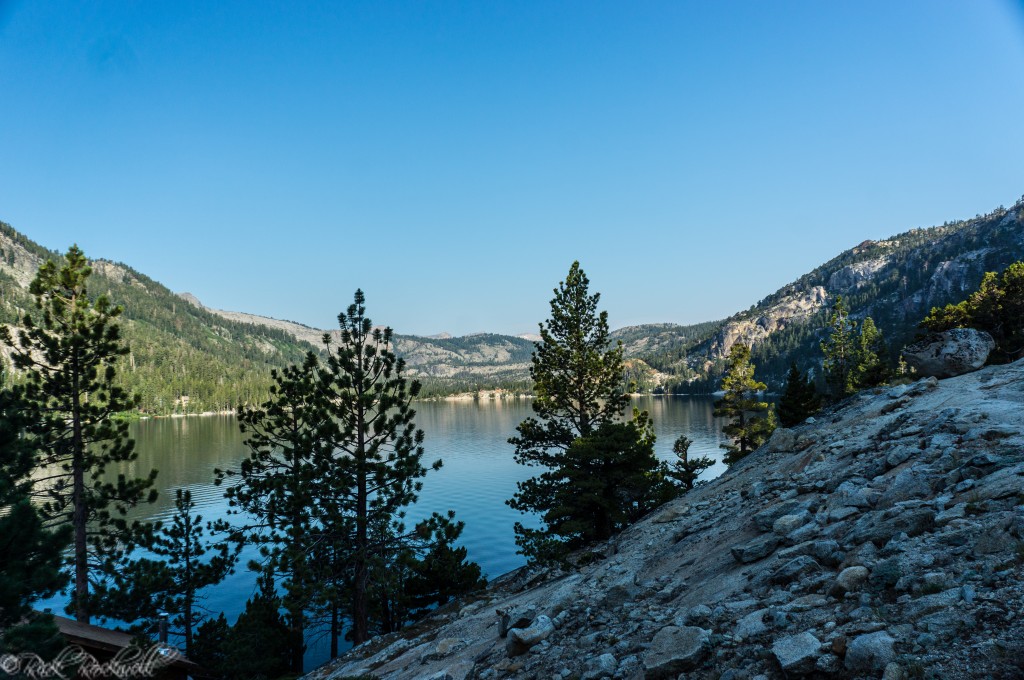
Morning often brings calmer water, softer light, and better chances of capturing reflections across Lower and Upper Echo Lake. The changing combination of cabins, docks, boats, granite, forest, and mountain ridges provides far more variety than a single viewpoint might suggest.
Best Time to Visit Echo Lakes
Summer through early fall provides the easiest access to Echo Lakes. Echo Chalet, the marina, boat transportation, cabins, and trails are most active during summer. Early-season visitors may encounter lingering snow, mosquitoes, and high water, while later summer generally brings drier trails and warmer afternoons.
Fall is quieter, although services become limited and water levels may drop. Winter and spring visits require more preparation because snow can cover Echo Lakes Road and surrounding trails long after lower-elevation destinations have opened. Always check current access, weather, and facility conditions before traveling.
Are Echo Lakes Worth Visiting?
Yes. Echo Lakes offers a wonderful combination of water, granite, cabins, mountain history, and access to the Sierra Nevada backcountry.
You can enjoy the dam and Lower Echo Lake views, walk beside the cabins, photograph the surrounding granite scenery, travel across the lakes by boat, or continue deeper into Desolation Wilderness.
The area does require more planning than its proximity to Highway 50 might suggest. Parking is limited, services are seasonal, and the lakes sit in a high-elevation environment where snow, wind, smoke, cold water, and changing weather can affect a visit.
Although often skipped for Lake Tahoe, Echo Lakes is a place with its own history, character, and connection to some of the most beautiful terrain in the Sierra Nevada. I highly recommend visiting here for a great day at the lakes, a stay at the Chalet, memorable hiking, and an incredible Sierra experience.
Frequently Asked Questions
Are Echo Lakes the same as Echo Lake near Echo Summit?
Echo Lakes refers to the connected Lower Echo Lake and Upper Echo Lake near Echo Summit. Some maps, historical records, and sources use the singular “Echo Lake” for the combined lake system or surrounding community.
Can you drive to Echo Lakes?
During the normal vehicle-access season, Echo Lakes Road leads from Highway 50 to the developed eastern end of Lower Echo Lake. Winter snow closes normal vehicle access.
Can you walk around Echo Lakes?
A trail follows the northern side of Lower and Upper Echo Lake, but it is not a simple paved loop. The shoreline is rugged, and the opposite side does not provide an equivalent continuous public trail.
Can you swim in Echo Lakes?
Swimming is possible, but the water remains cold, entry points can be slippery, and some shoreline areas are private. Visitors should evaluate conditions and access carefully.
Can you boat on Echo Lakes?
Yes. Motorboats and nonmotorized watercraft use the lakes, subject to current regulations, launch conditions, and marina operations.
Are the Echo Lakes cabins private?
The cabins and associated docks should be treated as private. Visitors can view and photograph the cabin community from the public trail and water without entering cabin sites.
Are Echo Lakes inside Desolation Wilderness?
The developed lake and cabin area is outside the wilderness, but the Desolation Wilderness boundary is nearby. Trails beyond Echo Lakes provide direct access to the wilderness.
What is the best time to visit Echo Lakes?
Summer through early fall generally provides the easiest access and widest range of services. Exact conditions depend on snowpack, weather, wildfire smoke, water levels, and seasonal operations.
Sources
Echo Lakes Association — Echo Lakes History: https://www.echolakenews.org/echo-lakes-history
El Dorado Irrigation District — Project 184: https://www.eid.org/our-services/hydroelectric/project-184
El Dorado Irrigation District — Project 184 License Documents: https://www.eid.org/our-services/hydroelectric/project-184/project-184-document-library/license-documents
Federal Energy Regulatory Commission — El Dorado Hydroelectric Project Final Environmental Impact Statement: https://www.eid.org/our-services/hydroelectric/project-184/project-184-document-library/license-documents
U.S. Forest Service — Echo Chalet: https://www.fs.usda.gov/r05/laketahoebasin/recreation/echo-chalet
U.S. Forest Service — Desolation Wilderness: https://www.fs.usda.gov/r05/laketahoebasin/recreation/desolation-wilderness
Echo Chalet — Official Website: https://echochalet.net/
Echo Chalet — About Echo Chalet: https://echochalet.net/125-2/
Echo Chalet — Rental Cabins: Chaletlées: https://echochalet.net/rental-cabins-chaletlees/
California Department of Fish and Wildlife — Fishing Licenses: https://wildlife.ca.gov/Licensing/Fishing
California Department of Fish and Wildlife — Inland Sport Fishing: https://wildlife.ca.gov/Fishing/Inland
California Department of Fish and Wildlife — CDFW Creating Lahontan Cutthroat Trout Sport Fishery at Echo Lake: https://wildlife.ca.gov/Science-Institute/News/cdfw-creating-lahontan-cutthroat-trout-sport-fishery-at-echo-lake
Library of Congress, Chronicling America — Record-Union, 1891: https://www.loc.gov/collections/chronicling-america/
Library of Congress, Chronicling America — Record-Union, 1897: https://www.loc.gov/collections/chronicling-america/
Library of Congress, Chronicling America — Record-Union, 1899: https://www.loc.gov/collections/chronicling-america/
Library of Congress, Chronicling America — San Francisco Call, 1905, 1910, and 1913: https://www.loc.gov/collections/chronicling-america/
California Digital Newspaper Collection — Auburn Daily Journal, June 18, 1915, page 1: https://cdnc.ucr.edu/?a=d&d=ADJ19150618.1.1
California Digital Newspaper Collection — Tahoe Tattler, August 30, 1935, page 4: https://cdnc.ucr.edu/?a=d&d=TTB19350830.1.4
California Digital Newspaper Collection — Auburn Journal, June 1, 1939, page 14: https://cdnc.ucr.edu/?a=d&d=AJ19390601.1.14
California Digital Newspaper Collection — Oakland Tribune, August 21, 1964, page 19: https://cdnc.ucr.edu/?a=d&d=OT19640821.1.19
Echo Lakes Association — Echo Lakes History: https://www.echolakenews.org/echo-lakes-history
Literary Hub — Reconsidering Thoreau in a Burning World: https://lithub.com/reconsidering-thoreau-in-a-burning-world/
Online Archive of California — Hamden Eldorado Cagwin Subject File: https://oac.cdlib.org/findaid/ark%3A/13030/kt6v19s0n3_ref410/hierarchy