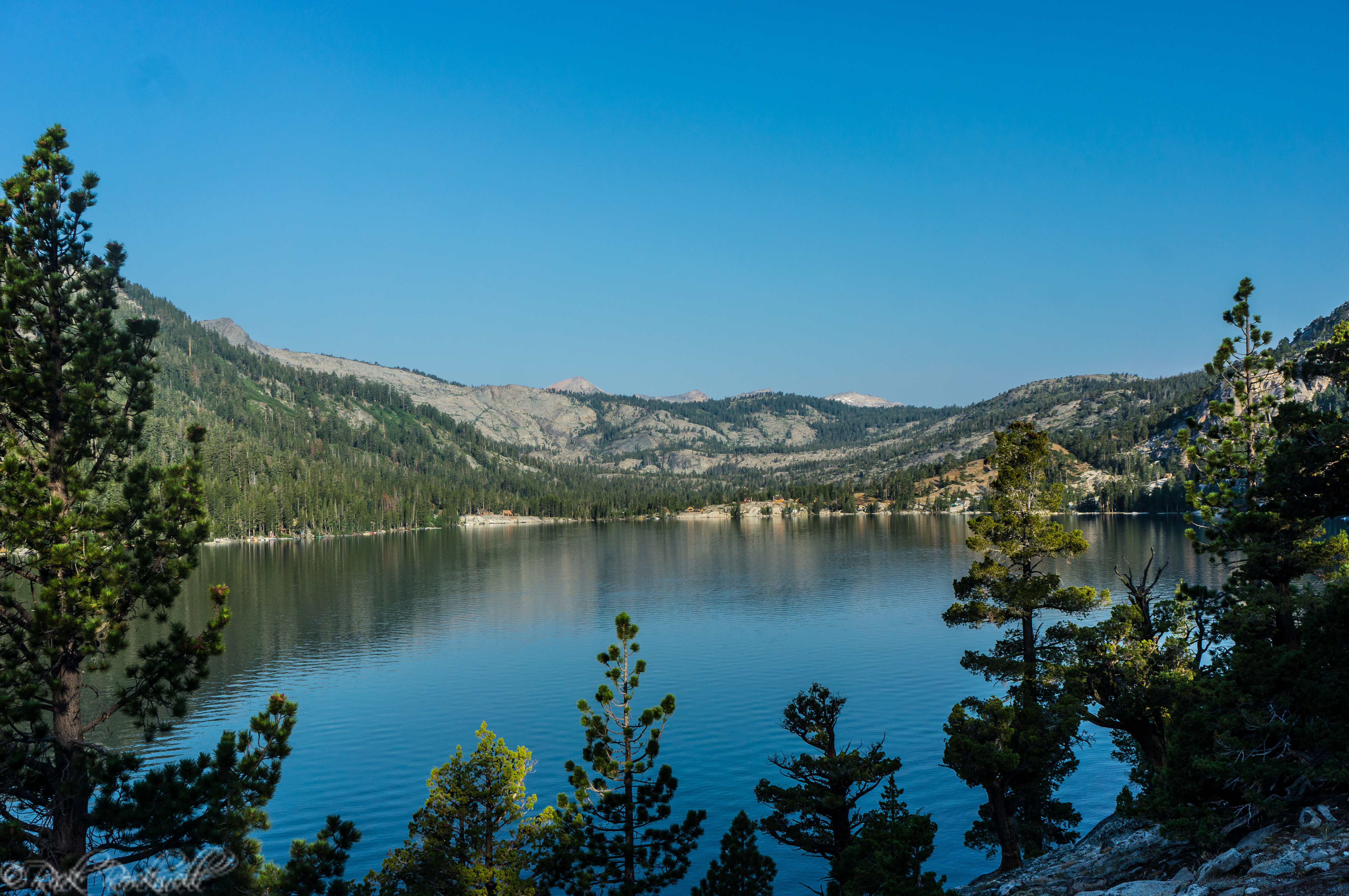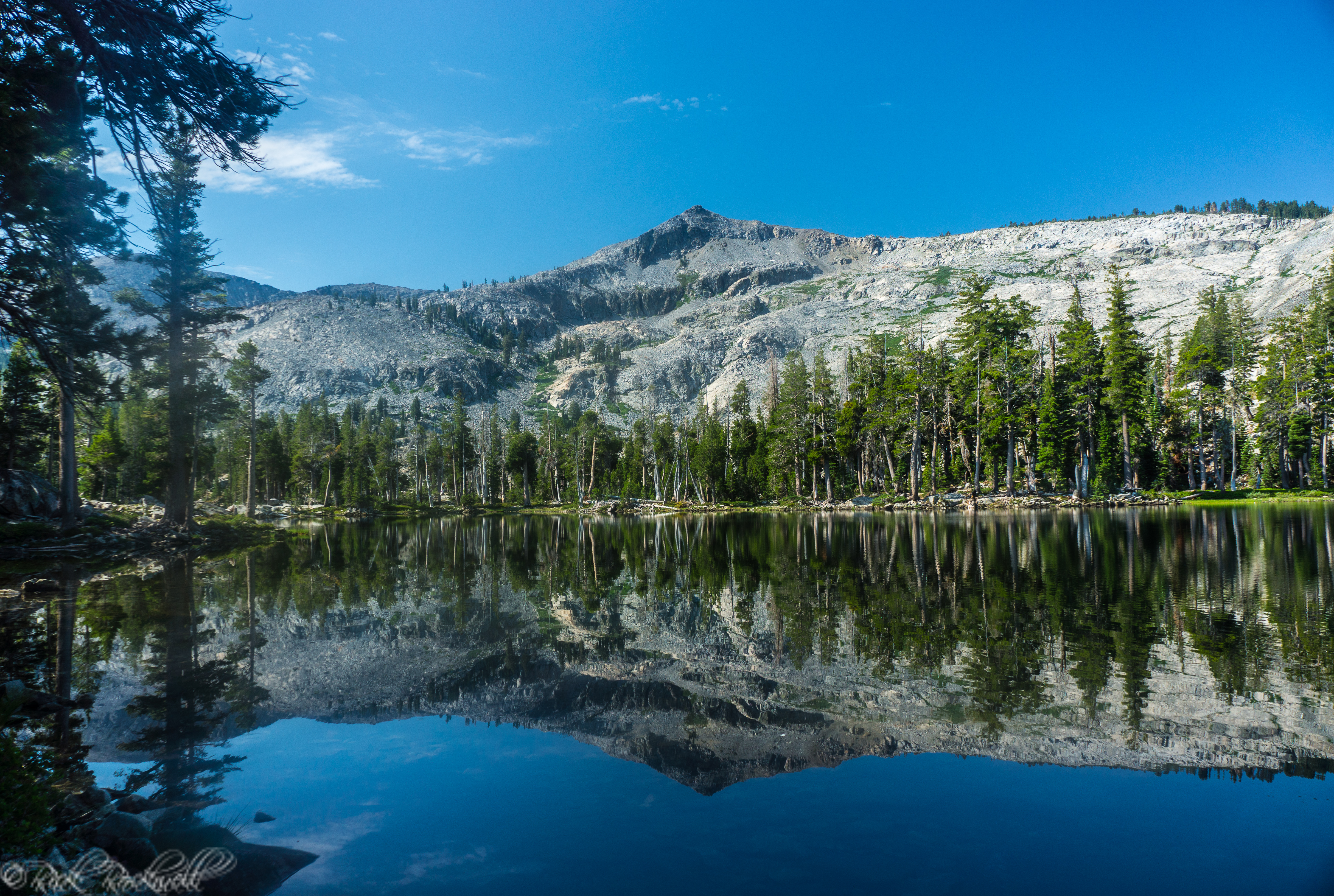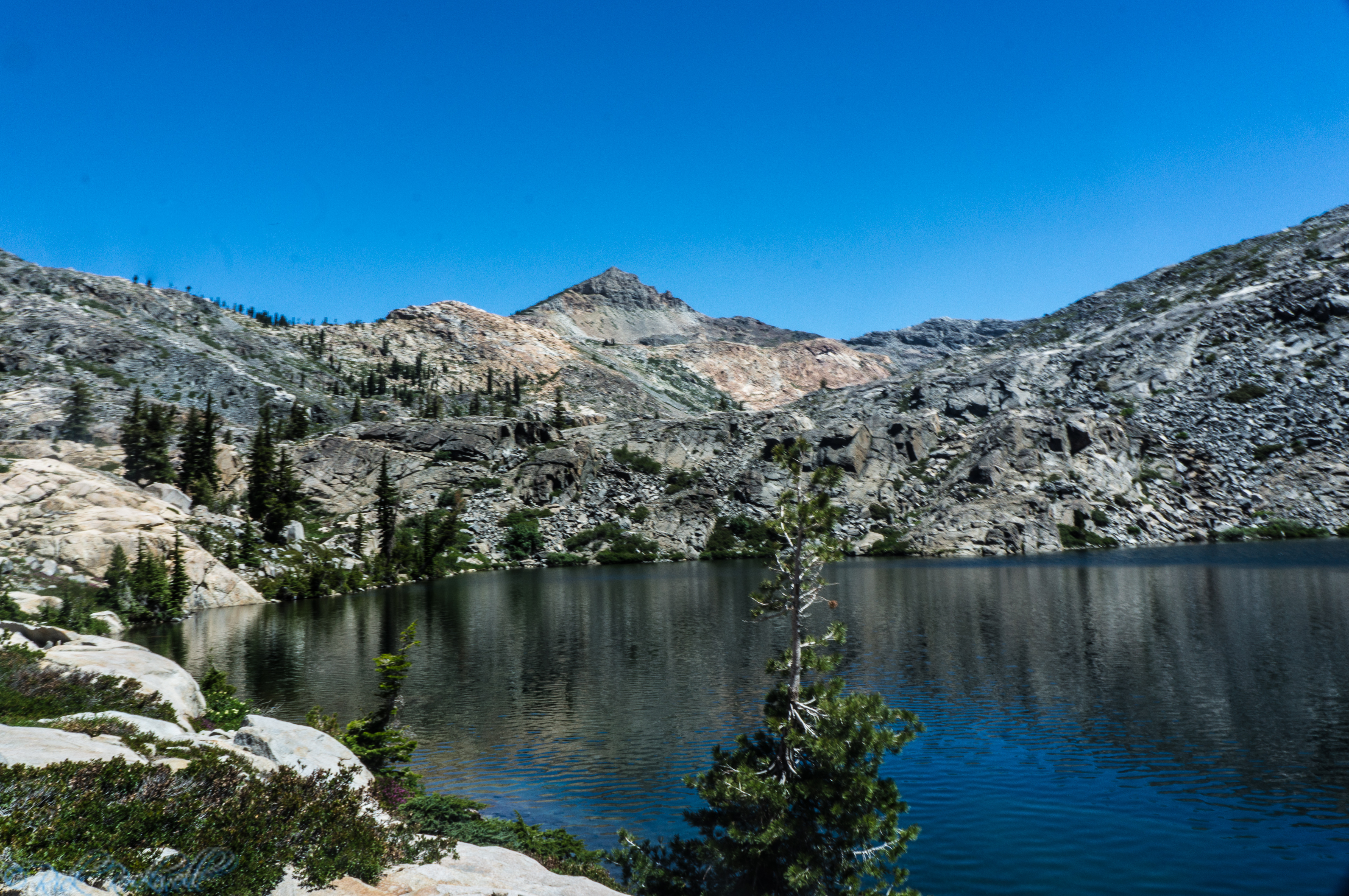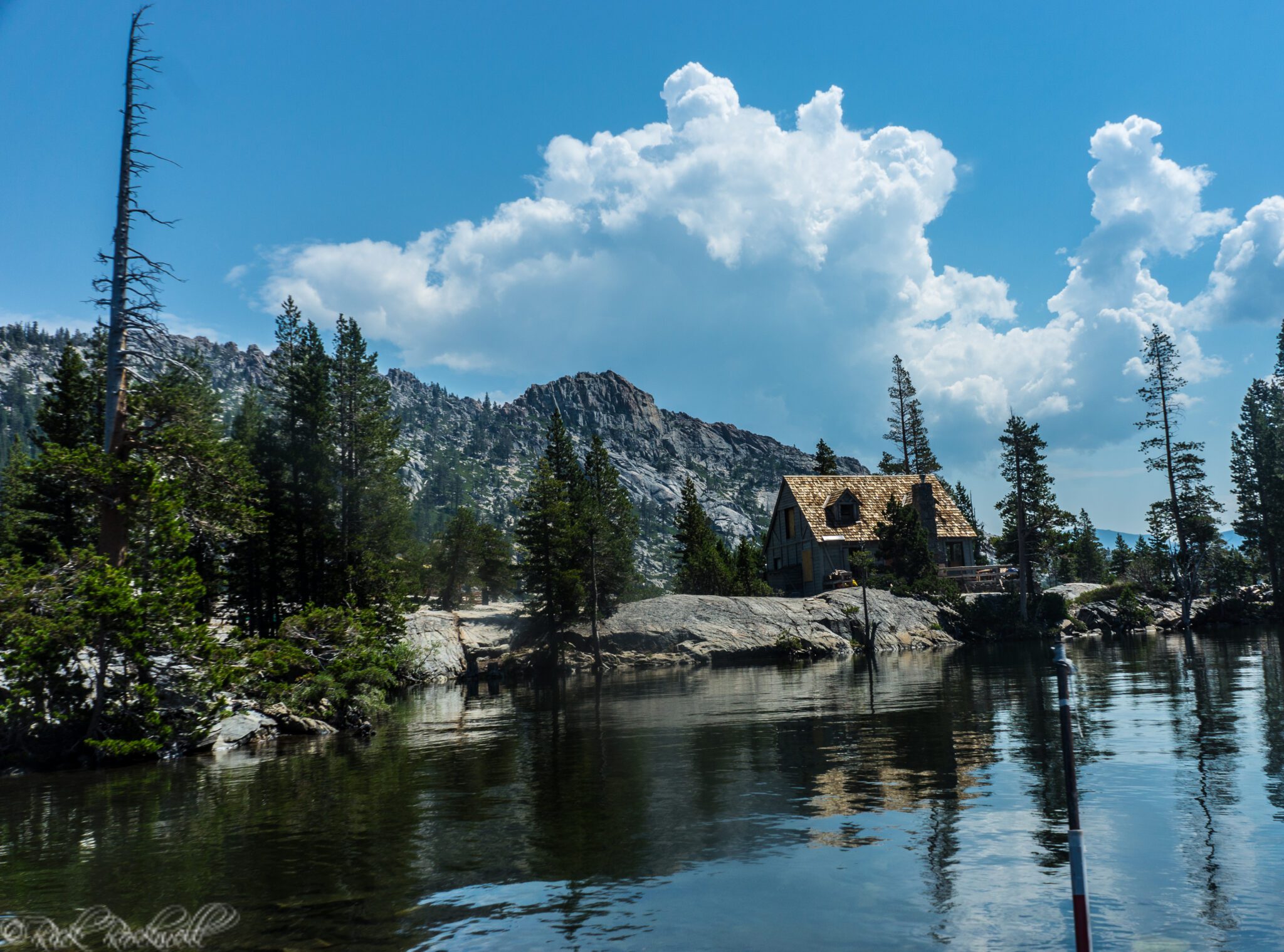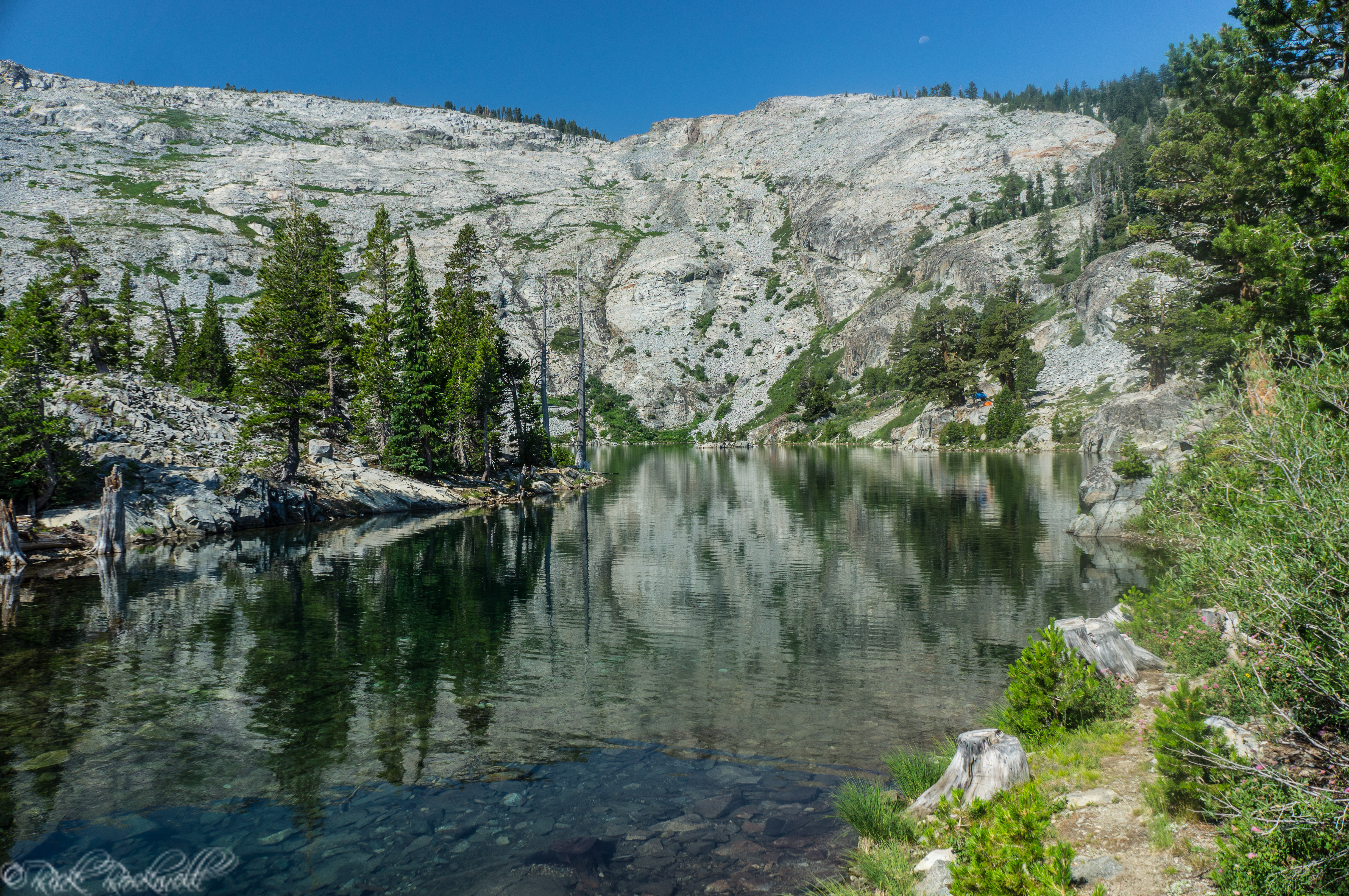
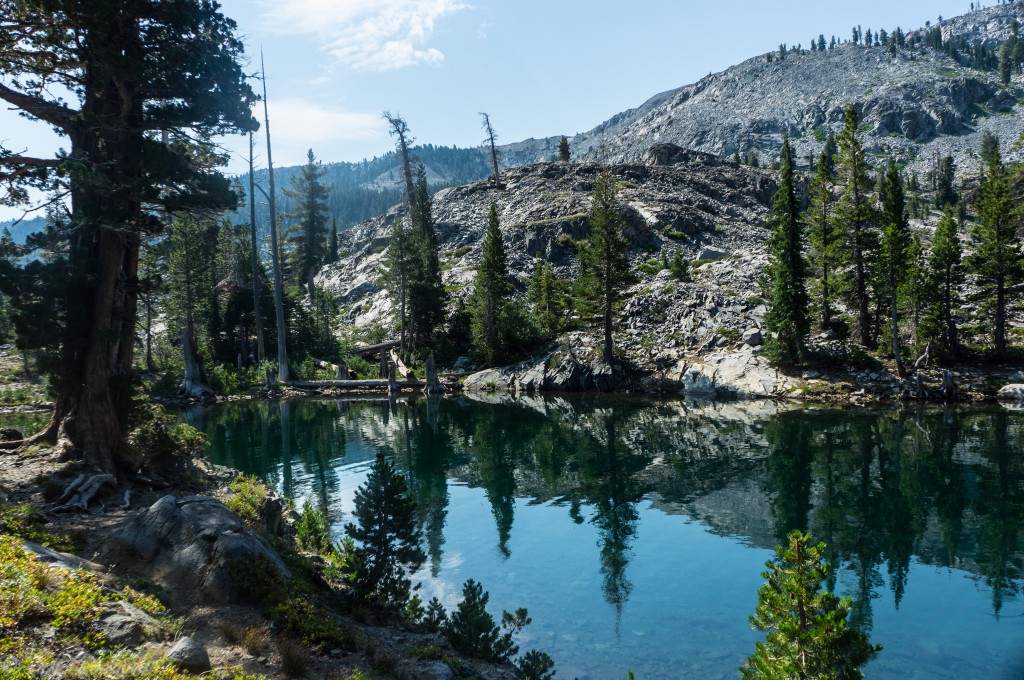
Ralston Lake feels like a little wading pool left at the feet of Ralston Peak. Smaller and more tucked away than the lakes hikers pass earlier on the route, it sits in a quiet granite-and-forest setting in Desolation Wilderness that feels distinctly different from both Echo Lakes and nearby Tamarack Lake.
Getting there requires more effort than simply hiking the Echo Lakes shoreline. The route is rocky, exposed in places, and long enough that the combination of mileage and elevation can catch up with you. But for hikers already heading toward Tamarack Lake, continuing to Ralston leads to a peaceful destination of solitude.
Quick Facts About Ralston Lake
- Location: Desolation Wilderness, El Dorado County
- Elevation: About 7,800 feet
- Starting point: Echo Lakes Trailhead
- Approximate distance: About 4.2 miles one way based on my original route notes
- Route type: Out and back, with a side route from the main Echo Lakes/PCT corridor
- Difficulty: Moderate, but the mileage, rocky terrain, sun exposure, and elevation can make it feel harder
- Nearby lakes: Tamarack Lake and Cagwin Lake
- Permit: Wilderness permit requirements apply
- Dogs: Allowed under current Desolation Wilderness rules; owners remain responsible for control and behavior
- Best season: Generally summer into early fall, depending on snow and trail conditions
- Water taxi: A seasonal option can shorten the shared Echo Lakes portion of the hike
Where Is Ralston Lake?
Ralston Lake sits in the southern portion of Desolation Wilderness, below Ralston Peak and west of the main Echo Lakes hiking corridor.
The usual approach begins near Lower Echo Lake and follows the same general route used by hikers heading toward destinations such as Echo Lakes, Tamarack Lake, and Lake Aloha. The important difference comes after leaving the shared Echo Lakes corridor and taking the side route toward Tamarack and Ralston lakes.
The route places Ralston Lake within a small cluster of alpine lakes that includes Tamarack and Cagwin. That makes it a natural extension for hikers who want to continue beyond Tamarack without committing to a much longer destination deeper in Desolation Wilderness.
Hiking to Ralston Lake
The distance alone does not tell the entire story of the hike to Ralston Lake. Much of the early route is scenic and relatively straightforward, but the character of the hike changes after passing the upper lake area. The trail begins climbing through rockier and more exposed terrain, and that section can feel harder than the mileage suggests.
The surrounding landscape was shaped by extensive glaciation. Desolation Wilderness is known for exposed granite, thin soils, and glacially scoured basins, which help explain both the rocky trail surface and the concentration of alpine lakes throughout the area.
The Trail from Echo Lakes
The first part of the hike follows the Echo Lakes corridor beginning at the Echo Lakes trailhead.
The early route offers lake views, granite slopes, forest, and private cabins scattered along the shoreline. It can be easy to take your time here because the scenery is so distracting.
After moving beyond the upper lake area, the route begins climbing over increasingly rocky ground. When I hiked it, this was where I began to feel the effort of the day.
Some sections also offer less protection from the sun. On my mid-July hike, the combination of sun, altitude, rocks, and distance made this part noticeably more tiring than the earlier lakeside miles.
The Turnoff Toward Tamarack and Ralston Lakes
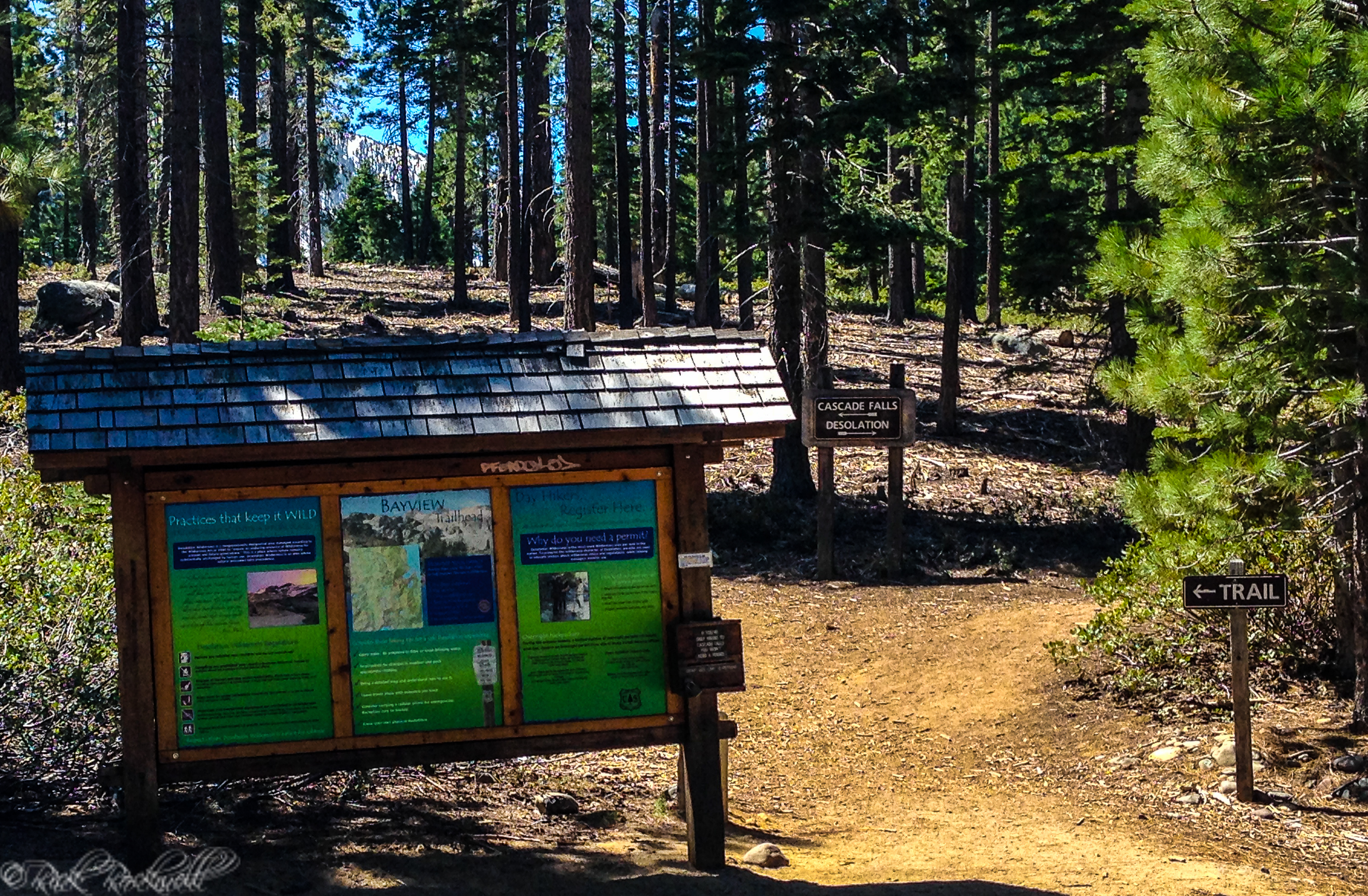
The route toward Ralston Lake leaves the main corridor and heads toward the smaller basin containing Tamarack, Ralston, and Cagwin lakes.
This is an important navigation point because continuing on the main trail takes hikers deeper into Desolation Wilderness rather than toward Ralston Lake. The PCTA identifies Tamarack as a side trip from the main route and also notes the small Ralston and Cagwin lakes loop for hikers who want to extend their time in the basin.
The local route network has a long documented history. The 1955 USGS Echo Lake topographic map labels Tamarack Lake, Ralston Lake, Cagwin Lake, and Ralston Peak while showing trails through the surrounding basin.
My experience on the side route was different from the more obvious trail along Echo Lakes. Some rocky areas demanded more attention, and I found the route less straightforward in places.
Carry a map or offline navigation tool, stay on the established route, and pay attention at junctions and across rocky stretches. On my return trip, I tried leaving the established route to shorten the hike and learned quickly that the terrain was far rougher than it appeared from above.
From Tamarack Lake to Ralston Lake
Many hikers reaching Tamarack Lake are satisfied with making it their destination for the day. I understand why. It is already a rewarding place to stop.
I continued toward Ralston Lake and was glad I did.
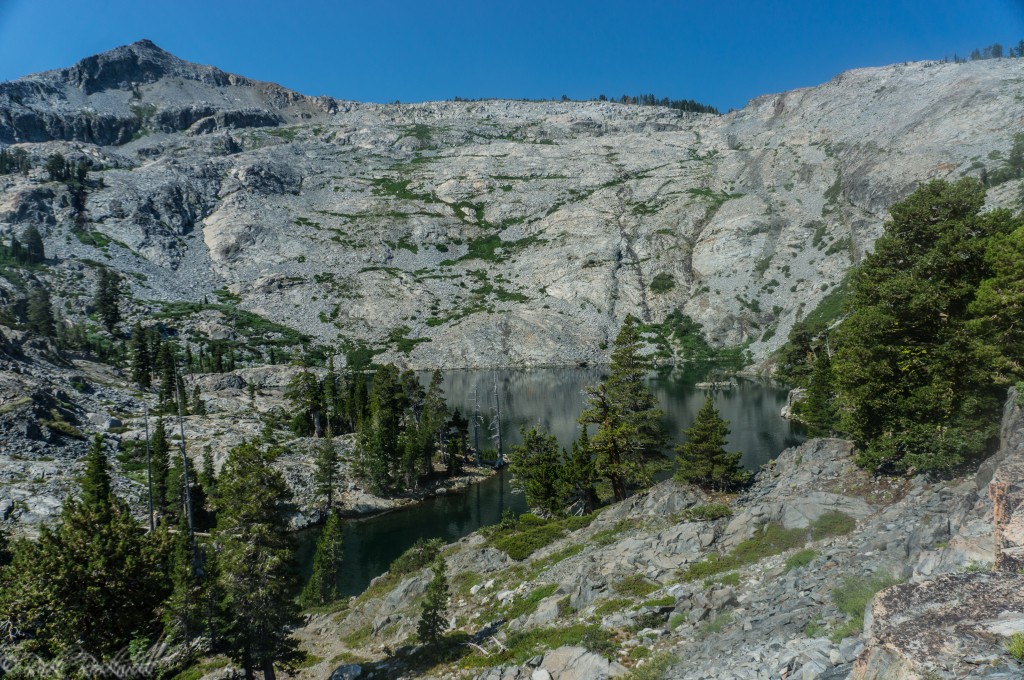
The surroundings became quieter as I moved farther into the basin, and Ralston did not feel like a repeat of Tamarack. The setting was smaller, darker, and more enclosed beneath Ralston Peak.
One of my favorite memories from the hike came just before reaching the lake. I passed between two large trees whose upper branches touched while leaving an opening between their trunks. To me, they looked like a natural doorway leading into the Ralston Lake basin.
After the longer approach through the Echo Lakes corridor and the stop at Tamarack, that simple entrance made arriving at Ralston feel like discovering a hidden location at the foot of the towering mountain.
Ralston Lake Trail Distance and Difficulty
Based on my original trip notes, the route to Ralston Lake was approximately 4.2 miles one way, making the basic out-and-back hike roughly 8.4 miles before additional wandering around the lakes or side trips.
Those figures should be treated as approximate rather than exact trail measurements.
I would rate the hike as moderate, but that rating deserves some context.
- total distance
- rocky trail surfaces
- exposed sections
- higher elevation
- accumulated fatigue on the return trip
- route finding on the less obvious side trail
This is not a technical hike, but it is more demanding than a simple lakeside walk.
On my trip, I had originally considered continuing to Cagwin Lake after visiting Ralston. By that point, however, I was tired and still had the entire return hike ahead of me. Turning around rather than forcing another destination into the day was the right decision.
That is probably the biggest practical lesson from my hike: reaching Ralston Lake is only half the trip.
Someone comfortable hiking eight or more miles over uneven Sierra terrain may find the route manageable. Someone unaccustomed to rocky trails, elevation, or longer hiking days may find the return much harder than expected.
What Is Ralston Lake Really Like?
Ralston Lake is smaller and more intimate than Echo Lakes, and its character is different from Tamarack Lake.
When I visited, the water appeared unusually dark against the surrounding trees and granite. The lake felt almost bowl-like, as though a small pool of water had collected directly beneath the mass of Ralston Peak.
That is where my original description of the lake as Ralston Peak’s little wading pool came from.
During my visit, I also found a path around part of the lake, a small dam, a small waterfall, and a little island toward the far end. Those features made the lake more interesting to explore than simply reaching the shoreline, taking a picture, and leaving.
The small dam I saw has documented history behind it. A 1968 California Department of Water Resources inventory listed a Ralston Lake dam in El Dorado County as state dam number 1-59. The inventory identified the owner at that time as the State Department of Fish and Game and classified the structure as a gravity dam.
The historical listing confirms that the structure was officially recorded, although it does not answer every question about its construction history or current condition.
What stood out most to me, though, was the atmosphere.
Echo Lakes feels like a journey. Tamarack Lake has its own forested personality and mountain reflections. Ralston Lake felt smaller, darker, and more secluded.
The little island and the mountain rising above the basin helped make the lake feel like its own destination rather than simply one more stop on a longer hike.

William Chapman Ralston and the Uncertain Naming Story
The precise origin of the Ralston Lake and Ralston Peak names remains uncertain.
William Chapman Ralston was one of the most prominent financiers and businessmen in 19th-century California.
National Park Service records describe him as a San Francisco financier who founded the Bank of California, built the Palace Hotel, and made much of his fortune through financing connected with the Comstock Lode. His financial empire eventually collapsed, and he died in 1875.
Although Ralston shares the same surname as the lake and peak, available historical records do not clearly establish that either geographic feature was named for him.
Without a primary naming record or similarly strong historical documentation, the safest conclusion is that the exact origin of the local Ralston name remains unresolved.
The Mt. Ralston Fish Planting Club
Ralston also appears in an unusual chapter of Sierra fishing history.
The California Fish and Wildlife Journal records a 1935 article titled “Restoration and Conservation Program of Mt. Ralston Fish Planting Club,” written by F. E. Brolliar. The broader history of Desolation Wilderness also documents an era when fishing clubs actively stocked high-country waters to create and improve recreational fisheries.
The scale of the Mt. Ralston Fish Planting Club’s work was substantial. A 1930 state fish-and-game publication reported that the club had planted more than one million trout in the previous year in lakes and streams of the Echo Lake region. A 1937 Folsom Telegraph article still described the club as planting more than one million trout fry annually in high-Sierra waters.
That effort required serious backcountry work. A 1934 newspaper brief reported that club members had traveled a combined 1,858 miles by pack train while carrying out their trout-planting work.
The records establish the club’s large-scale activity in the broader region, but they do not clearly document which species or specific stocking efforts were associated with Ralston Lake itself.
The history also took an interesting turn as ecological priorities changed. Decades after fishing clubs worked to establish recreational fisheries in Sierra lakes, a Forest Service restoration project targeted introduced brook and rainbow trout in Ralston, Tamarack, Cagwin, and several other Desolation Wilderness lakes.
The project used methods including gill netting and electrofishing as part of an effort to improve habitat for native yellow-legged frogs.
That later restoration work creates a striking contrast with the earlier planting era. Ralston Lake may feel like a quiet wilderness destination today, but the surrounding high country has a long history of both organized fish stocking and later efforts to restore native aquatic ecosystems.
Best Time to Hike to Ralston Lake
For most hikers, summer through early fall will be the most practical window for hiking to Ralston Lake, but Sierra conditions should guide the decision more than the calendar.
The Forest Service warns that significant snow cover and cold temperatures can continue into late June in Desolation Wilderness. Mosquitoes can also be heavy after snowmelt.
My visit was in mid-July. The route was hikeable, but sun exposure and heat added to the difficulty of the longer day.
Conditions can vary considerably from year to year. Before heading out, check current Forest Service alerts, trail conditions, wildfire restrictions, smoke conditions, and weather.
For photography, I favor an early start. Morning light, calmer conditions, and more time to explore the lake without watching the clock can make a major difference on a hike of this length.
Ralston Lake Permits and Wilderness Rules
Ralston Lake is in Desolation Wilderness, so hikers need to understand the difference between day-use and overnight permit requirements.
The Forest Service currently says summer day users may obtain a free permit from the Placerville Ranger Station or self-issue one at most major trailheads when permit boxes are installed.
Day use is not subject to a quota or permit fee. Winter day-use requirements can differ depending on the season and current Forest Service procedures, so check the latest rules before your trip.
Overnight use requires a wilderness permit year-round. During the high-use season, overnight access is managed through destination zones and daily quotas. Hard-sided bear canisters are also required for overnight visitors.
Campfires are prohibited in Desolation Wilderness under current Forest Service restrictions. Overnight visitors should also follow current campsite-location and food-storage rules.
Because regulations can change, verify current requirements with the Forest Service before leaving.
Ralston Lake Hiking Tips
Start early. This is a longer day than the mileage may initially suggest, especially when you spend time exploring Tamarack and Ralston lakes.
Do not underestimate the return. Reaching Ralston Lake is only half the hike. Fatigue can affect pace, judgment, and route decisions late in the day.
Stay on the established trail. On my return, I tried to shorten part of the route by heading off trail toward Echo Lakes. What looked manageable from above turned into a difficult scramble over rocks, ledges, brush, and downed trees. Following the proper route is safer and easier.
Carry enough water and food. Potable water is not available at Echo Lakes Trailhead, and the combination of mileage, altitude, sun, and rocky terrain can wear you down faster than expected.
Bring sun protection. Some of the rocky climbing sections are exposed.
Expect mosquitoes after snowmelt. Conditions vary, but bug spray belongs in the pack during mosquito season.
Wear footwear suited to rocks. Uneven Sierra granite can become uncomfortable over a full day even when the trail is not technically difficult.
Download navigation before the hike. Cell service may be unreliable, and the side route deserves more attention than the obvious lakeside trail.
Manage your turnaround time. Adding Ralston Lake to a longer day makes sense only when your pace, daylight, weather, and energy level allow it.
Can You Bring Dogs to Ralston Lake?
The Forest Service currently allows domestic pets in Desolation Wilderness. Owners are responsible for their pets, and the agency says they should be leashed or under direct voice control. Leash laws may be enforced when an uncontrolled dog creates a safety hazard or harasses wildlife.
The practical question is whether your dog is prepared for the mileage, rocks, elevation, sun exposure, and warm trail surfaces.

Is Ralston Lake Worth the Extra Hike?
Yes. I had already spent time at Echo Lakes and Tamarack Lake before continuing farther, and by the time I reached Ralston I was well aware that I still had a long return trip ahead of me.
Even so, I was glad I kept going.
Ralston Lake did not feel like another version of Tamarack. Its smaller scale, darker appearance, little island, mountain backdrop, and quieter setting gave the lake its own personality.
The approach also stayed with me. Passing through the natural “doorway” formed by the two trees and then finding the lake tucked beneath Ralston Peak gave the arrival a sense of discovery that I did not expect.
I would not tell every hiker near Echo Lakes that they need to continue all the way to Ralston Lake. Tamarack Lake is already a satisfying destination, and the extra distance only makes sense when you have enough time and energy for the return.
But for hikers who enjoy combining multiple alpine lakes into a longer day, Ralston Lake is worth continuing to.
By the time I returned toward Upper Echo Lake, I had enough hiking for one day. I eventually used the seasonal boat taxi for part of the return. After the miles and rocky terrain, that ride felt especially good and gave me one last look at Echo Lakes and the shoreline cabins from the water.
Ralston Lake made the longer day worthwhile. Just remember that you still have to hike back.
Ralston Lake FAQ
How long is the hike to Ralston Lake?
Based on my original trip notes, the route is approximately 4.2 miles one way from the Echo Lakes starting area, or roughly 8.4 miles round trip before extra exploring or side trips. Treat those figures as approximate rather than exact trail measurements.
How difficult is the Ralston Lake hike?
I consider it a moderate hike, but rocky terrain, elevation, sun exposure, and total mileage can make the return feel more difficult than expected.
Is Ralston Lake past Tamarack Lake?
The lakes are close neighbors in the same side-route network away from the main Echo Lakes/PCT corridor. Hikers can combine Tamarack and Ralston lakes in the same trip without continuing toward the longer Lake Aloha route.
Do you need a permit to hike to Ralston Lake?
Yes. Permit requirements apply because Ralston Lake is in Desolation Wilderness. Summer day hikers can generally obtain free self-issued permits when trailhead permit boxes are installed. Overnight trips require permits year-round and are subject to additional rules and seasonal quotas. Winter day-use procedures can differ, so check current Forest Service requirements before heading out.
Can you camp near Ralston Lake?
Overnight camping in Desolation Wilderness requires a wilderness permit year-round. During the quota season, backpackers must follow the applicable first-night destination-zone requirements. Camps should be at least 100 feet from lakeshores, streams, and trails, hard-sided bear canisters are required for overnight visitors, and campfires are prohibited.

Sources
U.S. Forest Service — Desolation Wilderness
https://www.fs.usda.gov/r05/eldorado/wilderness/desolation-wilderness
U.S. Forest Service — Desolation Day Use Permits & Parking
https://www.fs.usda.gov/r05/eldorado/wilderness/desolation-day-use-permits-parking
U.S. Forest Service — Desolation Wilderness Permits
https://www.fs.usda.gov/r05/eldorado/permits/desolation-wilderness-permits
U.S. Forest Service — Hiking in Eldorado National Forest
https://www.fs.usda.gov/r05/eldorado/recreation/opportunities/hiking
U.S. Forest Service — Echo Lakes Trailhead / PCT Access
https://www.fs.usda.gov/r05/laketahoebasin/recreation/echo-lakes-trailhead-pct-access
U.S. Forest Service — Occupancy and Use Restrictions, Desolation Wilderness Area
https://www.fs.usda.gov/r05/eldorado/alerts/occupancy-and-use-restrictions-desolation-wilderness-area
U.S. Forest Service — Ralston, Tamarack, Cagwin, and Other Lakes Fish Removal / Yellow-Legged Frog Habitat Restoration Project
https://www.fs.usda.gov/r05/laketahoebasin/projects/24336
U.S. Forest Service — Desolation Wilderness Zone Map
https://www.fs.usda.gov/sites/nfs/files/r05/eldorado/publication/desolation_wilderness_zone_map.pdf
Pacific Crest Trail Association — Echo Lake to Tamarack Lake or Lake Aloha
https://explore.pcta.org/trips/echo-lake-to-tamarack-lake-or-lake-aloha
U.S. Geological Survey — Echo Lake, California, 1955 Topographic Quadrangle
https://prd-tnm.s3.amazonaws.com/StagedProducts/Maps/HistoricalTopo/PDF/CA/24000/CA_Echo%20Lake_290208_1955_24000_geo.pdf
California Department of Water Resources — Dams Within Jurisdiction of the State of California, Bulletin 17-68
https://cawaterlibrary.net/wp-content/uploads/2019/12/Bulletin_17__1968_Redacted.pdf
California Fish and Game, 1930 — “Club Plants More Than a Million Trout”
https://cawaterlibrary.net/wp-content/uploads/2023/02/California-Fish-and-Game-1930.pdf
California Fish and Wildlife Journal — F. E. Brolliar, “Restoration and Conservation Program of Mt. Ralston Fish Planting Club,” 1935
https://wildlife.ca.gov/Publications/Journal/Contents
Folsom Telegraph — January 15, 1937, page 1
https://cdnc.ucr.edu/?a=d&d=FT19370115.1.1
Southside Virginia News — April 26, 1934, page 45
https://www.virginiachronicle.com/?a=d&d=SVNS19340426.1.45
National Park Service — William Ralston Home National Historic Landmark Documentation
https://npgallery.nps.gov/NRHP/GetAsset/NHLS/66000234_text
Echo Chalet — Boat Taxi Service https://echochalet.net/echo-chalet-services/
Original Reporting
CalExplornia firsthand hike observations
Original route notes
Original Ralston Lake photography