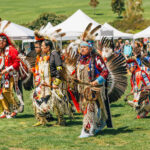
California Native American sacred sites are living bonds between the present and the past, intersections within the physical and spiritual realms, dwelling places between remembrance and the divine, and foundations for transformation and transcendence. In many cases, like with Mount Shasta, sacred sites are also origin points for creation stories among the connected tribes.
Today, these sacred Native American sites are integral parts in tribal ceremonies and rituals. They play a vital role in a tribe’s ability to keep its heritage and identity alive. Sacred sites are living ancestors and part of the tribal body. There is no beginning or end when it comes to the connection between these lands and the tribes that call them sacred.
Tips For Visiting Native American Sacred Sites
Before visiting any of these sacred sites make sure to read the following tips:
- Respect any Native American ceremonies that might occur while visiting.
- Help to protect the lands by staying in public areas or designated trails.
- Don’t take anything from the lands.
- Always make sure that photographs are allowed.
- Leave the drones at home.
- Never touch or handle any cultural items, artifacts, or rock art.
- Be mindful of the wildlife.
- Don’t leave any garbage behind.
With the Golden State boasting of more than 100 recognized tribes, there are numerous public and private sacred sites. The following is an introduction to some of the more notable California Native American sacred sites.
Sáttítla (Medicine Lake Highlands)
Sáttítla, also known as the Medicine Lake Highlands, was just named as a National Monument in early 2025, which means it will be protected by state and federal laws.
This region is not only a natural wonder, but it’s also a center for spiritual healing, renewal, and other ancient traditions of the Pit River Tribe and neighboring peoples.
The Highlands is believed to be where the spiritual and physical worlds intersect. And, if you get a chance to visit this region, it’s as if these diverse landscapes are wrapping their arms around you as they welcome and nurture your spirit.
- Website: https://www.protectsattitla.org/
- Location: Sáttítla Highlands National Monument, Mount Hoffman, CA 96022
Mount Shasta
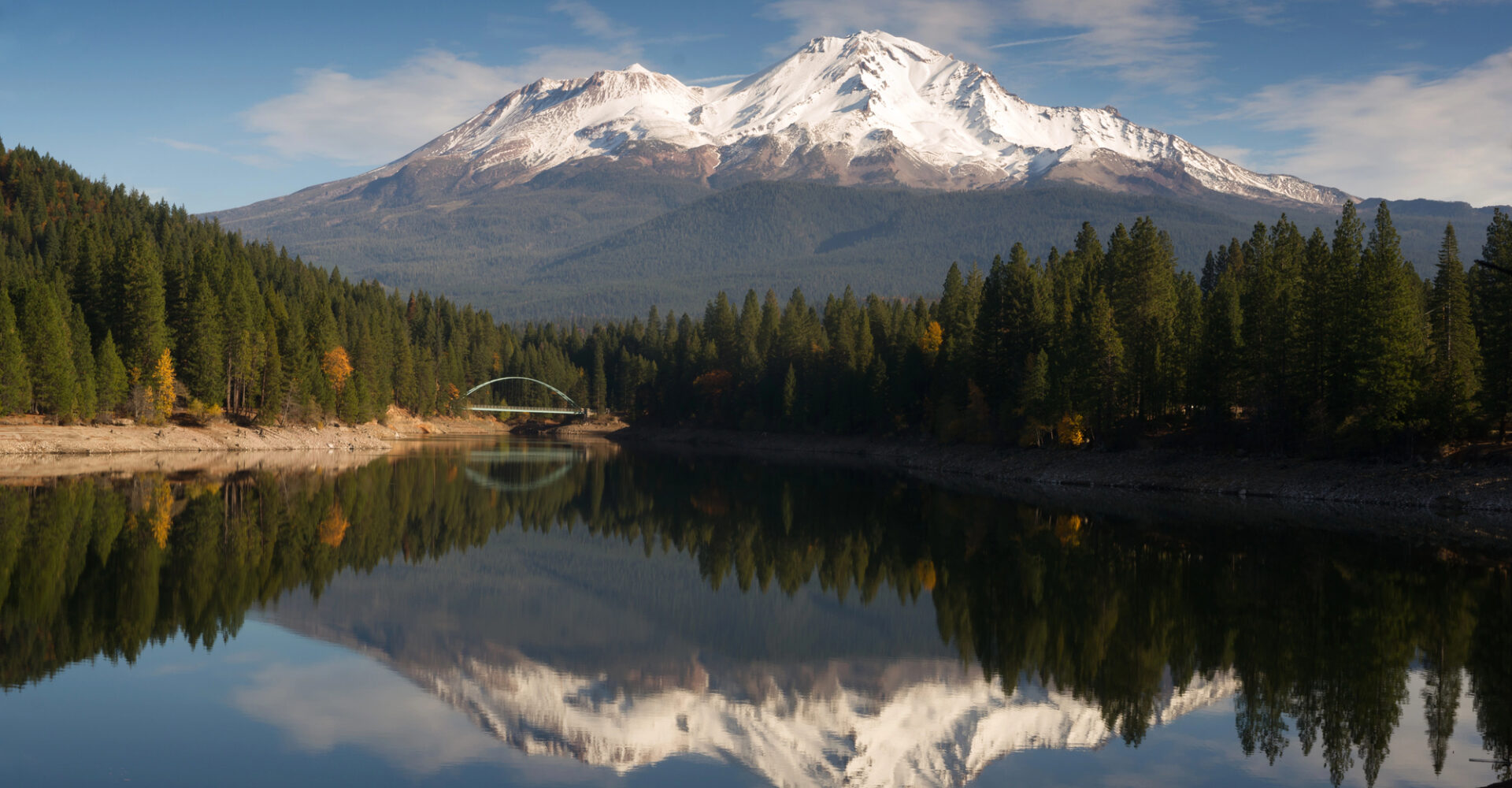
Mount Shasta is an incredible sight to behold as it stands tall on the horizon. At more than 14,000 feet, this majestic mountain is a sacred site to a number of tribes like the Karuk, Pit River, Shasta and Wintu.
Not only is this mountain a central figure in a number of creation stories, but it’s also considered a living ancestor to some tribes. Shasta is an active site to many traditions and ceremonies that are still being practiced today.
When visiting Mount Shasta, it feels as if you are receiving supernatural powers from this California mountain. It can also teach you a lesson in humility and gratitude.
- Location: Mt Shasta, California 96067
Chumash Painted Caves
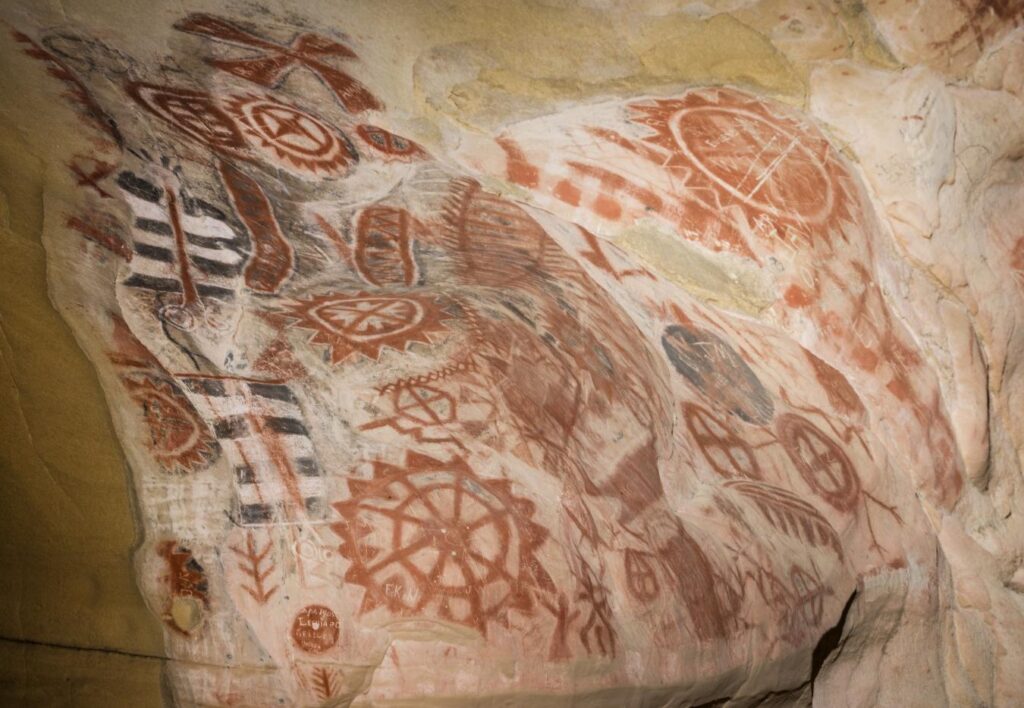
While Morro Rock is a very popular scenic landscape, and sacred site for multiple tribes including the Chumash, Painted Caves are protected landmarks due to their fragile environment and rock paintings.
Located above Santa Barbara, the Chumash Painted Cave is a wonderful reminder of the spiritual powers and practices found inside California caves. As for the drawings themselves, they are believed to indicate a vast number of spiritual beliefs and tribal legends.
There are sacred caves that remain hidden to protect from vandalism. However, Chumash Painted Cave State Park allows visitors a chance to see these wonderful rock paintings from behind a gate.
- Website: https://www.parks.ca.gov/?page_id=602
- Location: CA-154, Santa Barbara, CA 93105
Panhe
California is home to an ancient Native American site that’s estimated to be between 8,000 and 9,500 years old called Panhe. This ancient village also served as a ceremonial site for the Acjachemen tribe.
Panhe has been historically documented as a site of first sustained contact with the 1769 Portolá expedition and the first baptism in California’s colonial period.
This irreplaceable sacred site was a focal point of lengthy legal battles in the 2000s, to preserve Panhe instead of losing it to the construction of a toll road.
Located at San Onofre State Beach, Panhe remains an active site for California tribal ceremonies and community gatherings like California Pow Wows. When visiting, it feels like your are touching the past and the present at the same time.
- Location: Beach Club Rd, San Clemente, CA 92672
Sogorea Te’ (Glen Cove)
Located along the Carquinez Strait, just south of Vallejo, is a 3,500-year-old Karkin Ohlone village and burial site known as Sogorea Te’. Archaeological records from the early 1900s have documented the importance of this site with their numerous findings.
The City of Vallejo attempted to build a modern park at this location, also called Glen Cove, but were thankfully stopped by groups like The Sogorea Te’ Land Trust.
With so many burials and artifacts already documented at this site, Sogorea Te’ is an essential part of the Karkin Ohlone tribe’ past, present and future. Any usage of this area other than as a sacred site for the Ohlone people, would be an evil act of desecration.
- Website: https://sogoreate-landtrust.org/
- Location: Glen Cove, Vallejo, California, 94591
Puvungna
You might be surprised to learn that located beneath the California State University Long Beach campus lies an ancient village and ceremonial site for the Tongva nation; that still hosts intertribal ceremonies to this very day. In fact, the Chumash and Acjachemen also use this sacred site for ceremonial gatherings.
Although it’s on the National Register of Historic Places, in 2019, the university’s dumping of soil and debris on Puvungna spurred a lawsuit; a 2021 settlement barred construction or further dumping and committed the site toward a conservation easement, although implementation remains contested.
The California Native American name of Puvungna, which means “the place of the gathering” or “in the ball”, is also an essential location to the creation story for both the Tongva and Acjachemen peoples.
It’s a remarkable testament how this sacred site has persisted within a dense urban location. And, like other sacred lands, it also shows us the importance of ongoing vigilance to protect this ancient site.
- Location: CSULB, Long Beach, CA, 90840
Indian Canyon
Indian Canyon is the only federally recognized “Indian Country” along California’s coastal corridor from Sonoma to Santa Barbara, stewarded by the Indian Canyon Mutsun Band of Costanoan-Ohlone.
Historically, this sacred site has been a sanctuary for Native Americans who fled the brutalities of the Mission System. To this very day, it remains a sanctuary for all tribes needing a place to hold traditional ceremonies on a private, sacred land.
Additionally, Indian Canyon, holds programs that empower and enrich those embracing intertribal ceremonies, cultural revitalization and youth education. This truly is a wonderful place that all tribes can be a part of.
- Website: https://www.costanoan.org/
- Location: Costanoan Indian Research Inc, 1 Indian Canyon Road, Hollister, CA 95023
Tomo-Kahni State Historic Park
Located in Tehachapi, Kern County, California, is the sacred settlement of Tomo-Kahno which was established by the Kawaiisu people. It’s home to many of the tribe’s ancestral artifacts and sensitive rock art. In 1993, this location was designated a state park. However, you can only access it via guided tour.
Tomo-Kahni, which means “winter home” or “winter village”, is perched on top of a ridge in the Tehachapi Mountains and served as a seasonal home to a broader network of trade and ceremony across the southern Sierra and desert corridors. Interpretive programs (developed with tribal input) focus on lifeways and the spiritual relationships embedded in food, water, and oral traditions.
- Website: https://www.parks.ca.gov/?page_id=610
- Location: 310 S Green St, Tehachapi, CA 93561
Chaw’se – Indian Grinding Rock State Historic Park
Chaw’se, which means “grinding rock” in Miwok, refers to the bedrock mortars used to process acorns, which was the heart of a sophisticated food system linked to ceremony and song.
The sacred site features one of the largest known outcrops of mortars in North America and a modern ceremonial roundhouse used by tribal communities for gatherings and dances. Exhibits created with Native American partners emphasize continuity: acorns, songs, baskets, and ceremonial protocols are not “past,” but present.
Situated eight miles east of Jackson, California, in the foothills of the Sierra Nevada mountains, Chaw’se is an immersive experience in the Miwok culture. The park was established in 1962, and in 1971, it was listed on the National Register of Historic Places.
- Website: https://chawse.org/park/
- Location: 14881 Pine Grove Volcano Rd, Pine Grove, CA 95665
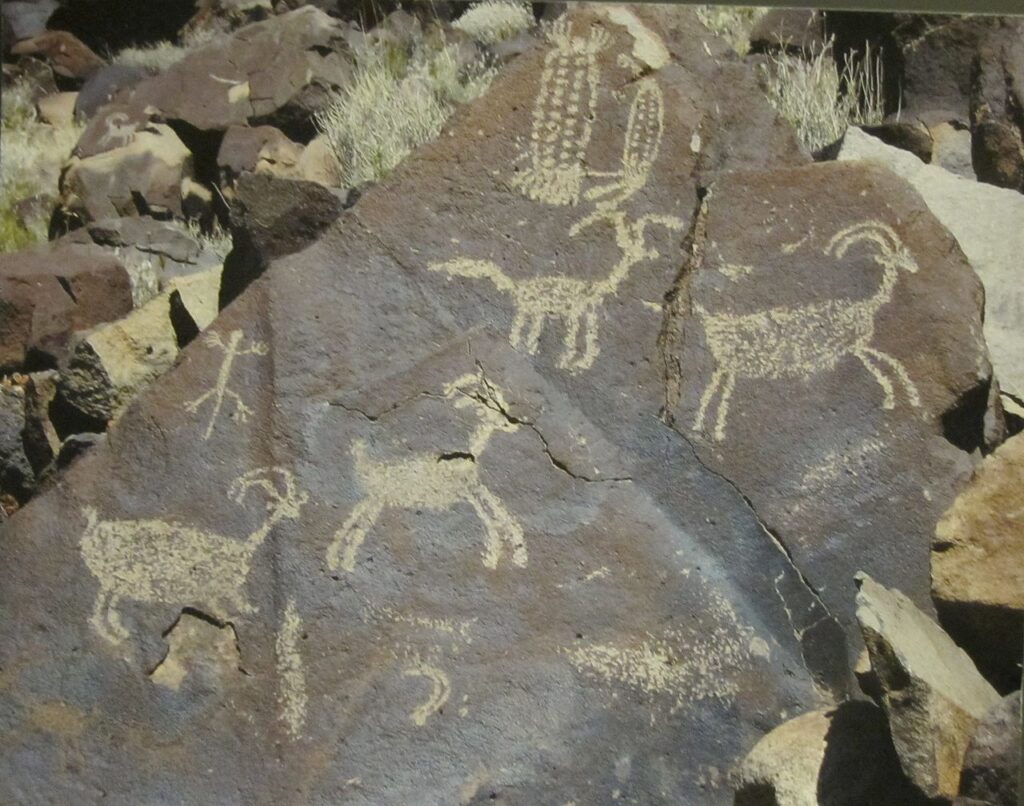
Coso Hot Springs & Coso Rock Art District
On the desert side of the Sierra, the Coso Range holds one of North America’s largest concentrations of petroglyphs alongside mineral springs used for healing. Some of the ancient panels depict bighorn sheep, anthropomorphic figures, and geometric motifs.
The sacred landscape is within the Naval Air Weapons Station China Lake; limited guided access is offered through the Maturango Museum and the Navy, in consultation with tribal elders.
The springs and surrounding canyons are protected lands listed on National Registers. Today, these Coso sacred sites continue to be used for prayer, cleansing, and instruction.
- Location: Coso Rock Art District, Inyo County, California
Tolay Lake
Though often dry at the surface, Tolay Lake sits within a Copeland Creek basin, eight miles outside of Petaluma. There has been documented evidence of long Native American habitation and ceremony at this sacred site, which is housed within a Sonoma County Regional Park.
For the Federated Indians of Graton Rancheria (Coast Miwok and Southern Pomo communities), Tolay Lake and its surrounding hills form a landscape of ritual healing and ceremonial gatherings. The tribe helps to steward the park’s cultural, natural, and historical resources.
- Website: https://parks.sonomacounty.ca.gov/visit/find-a-park/tolay-lake-regional-park
- Location: 5869 Cannon Lane, Petaluma, CA 94954
.
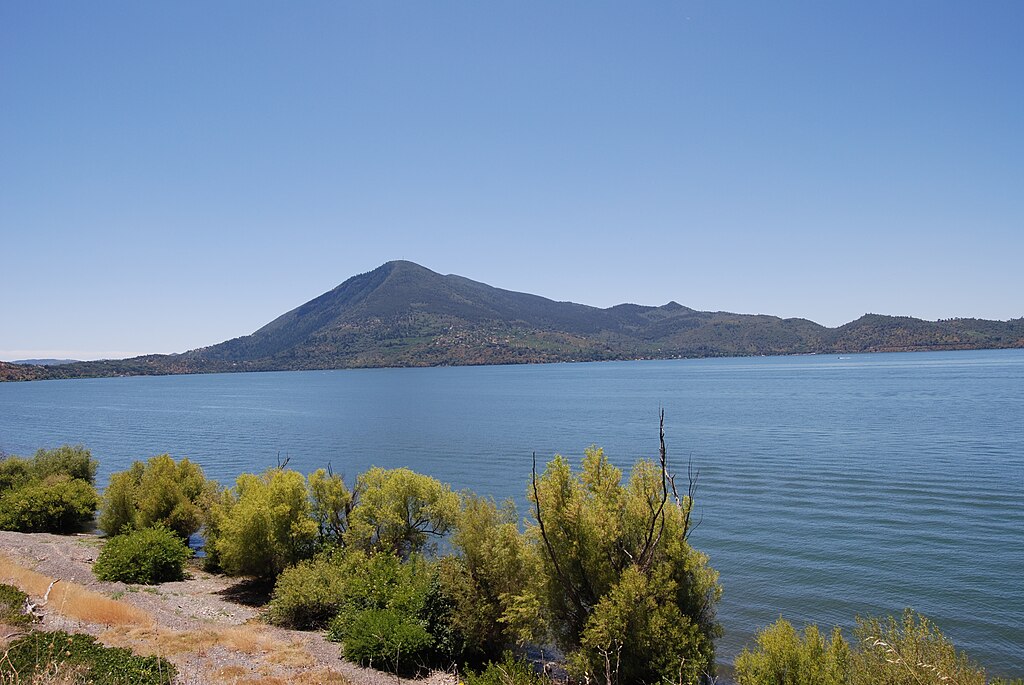
Mount Konocti & Rattlesnake Island
Like Lake Tahoe is with the Washoe, Clear Lake and its surrounding area is a sacred land for the Pomo tribe. Among the many marvelous landmarks in this region, Mount Konocti and Rattlesnake Island stand out as central aspects of the spiritual and ceremonial traditions for the Elem Indian Colony.
Oral histories have passed down various rituals and mythologies associated with Clear Lake, while archaeological studies have documented a lengthy habitation of the Pomo people.
Development pressures and access disputes have complicated protection efforts, but local tribes continue to assert stewardship and ceremonial use. When visiting Clear Lake, remember that islands and shorelines are not vacant; they are active cultural spaces.
- Location: Clear Lake, Lake County, California
Sources:
Advisory Council on Historic Preservation. (2014). Mount Shasta [Issue brief].
California Department of Parks and Recreation. (n.d.). Chaw’se—Indian Grinding Rock State Historic Park.
California Department of Parks and Recreation. (n.d.). Tomo-Kahni State Historic Park guided tours.
California State Parks Foundation. (n.d.). Save San Onofre State Beach.
CBS San Francisco. (2011, July 21). Vallejo city leaders, tribes to settle burial grounds dispute.
Indian Canyon Life. (n.d.). About Indian Canyon.
LB Post. (2023, April 26). Tribal members and allies protest CSULB’s soil treatment plan on Puvungna.
Maturango Museum. (n.d.). Tours to Coso Rock Art District (on NAWS China Lake).
National Park Service. (n.d.). Protecting Coso petroglyphs and sacred sites (NAWS China Lake).
Native American Heritage Commission (California). (2008, December 19). Acjachemen sacred site Panhe saved!
Santa Barbara Museum of Natural History. (n.d.). Cave painting: Chumash rock paintings.
Siskiyou County Office of Education / College of the Siskiyous Library. (n.d.). Legends: Native American—Mount Shasta (PDF).
Sogorea Te’ Land Trust. (n.d.). Our history—The reawakening of Sogorea Te’.
Sonoma County Regional Parks. (n.d.). Tolay Lake Regional Park: History and culture.
Stanford Law School, Environmental Law Clinic. (2019, September 24). ELC’s Ninth Circuit win protects Pit River Tribe’s sacred Medicine Lake Highlands.
State Bar/SMW Law. (2021, October 28). Settlement reached with CSU–Long Beach over Puvungna sacred tribal land.
University of California Cooperative Extension (cited via local studies). (n.d.). Mount Konocti and Clear Lake cultural resources.