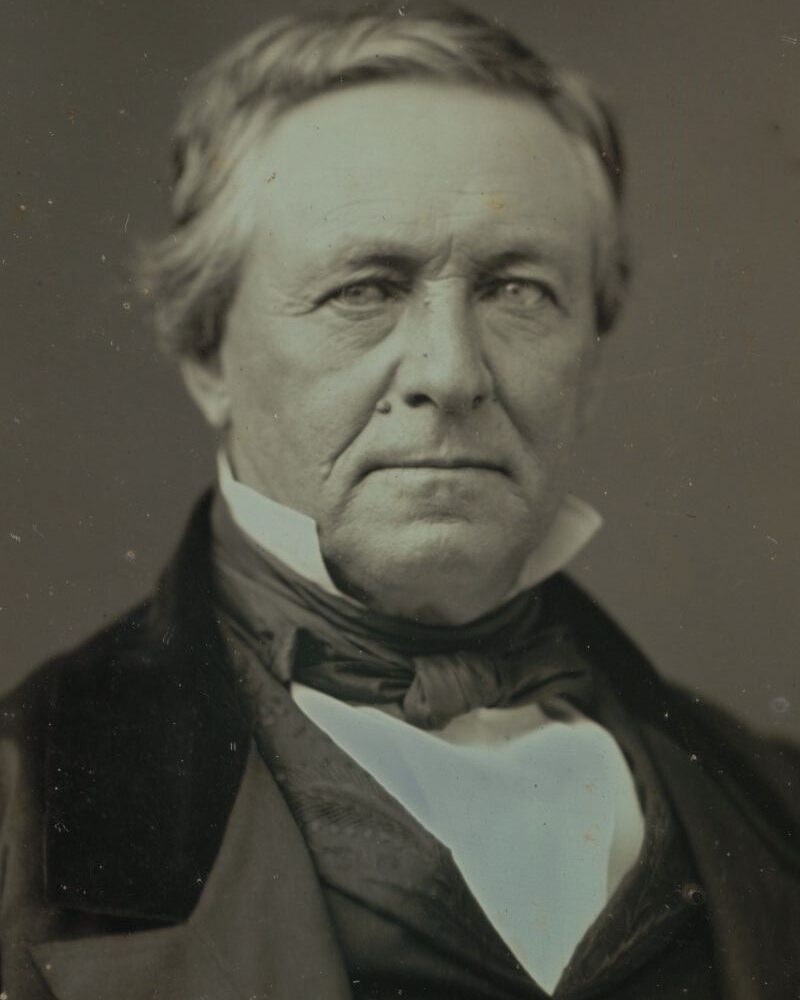
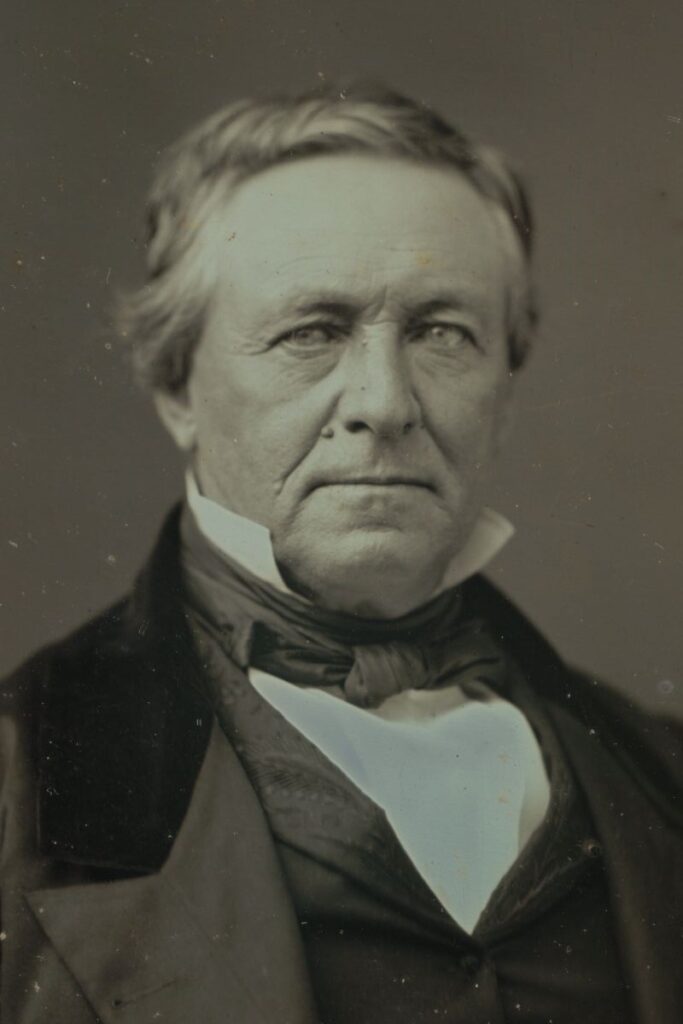
Dr. John Marsh (June 5, 1799 – September 24, 1856), later known as Don Juan Marsh, was a man of many firsts. He was the first American-born permanent settler in Contra Costa County, the first California doctor to practice Western medicine, and an instrumental figure in the movement to incorporate California into statehood.
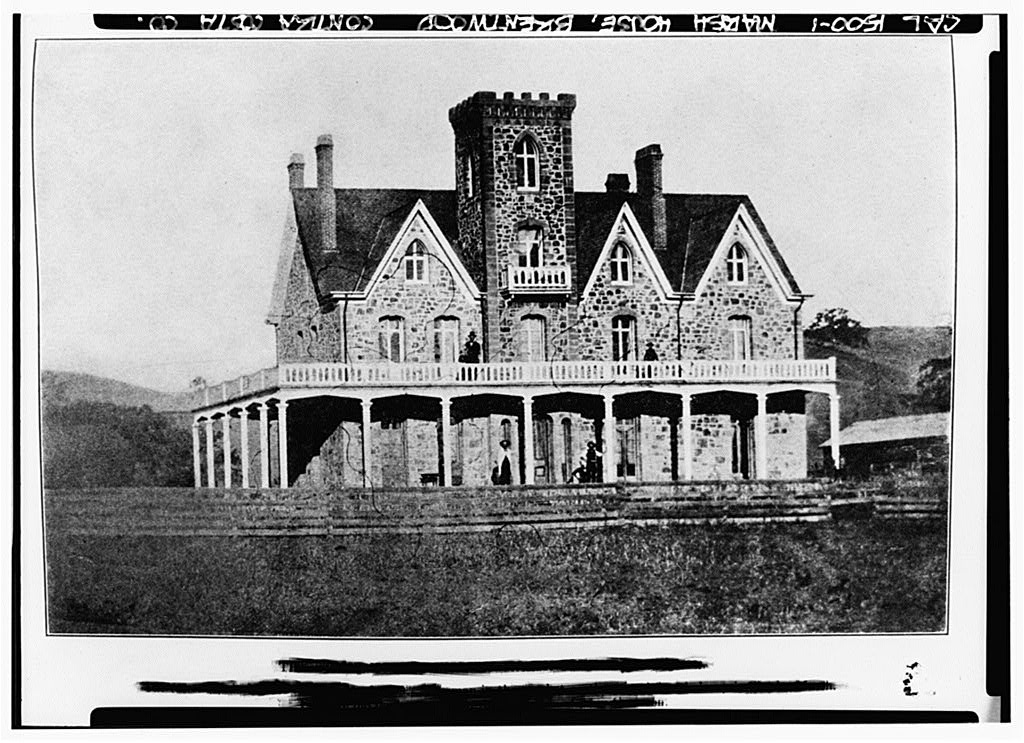
Marsh’s impact on the Golden State came before John Sutter, yet it’s often lost in the latter’s shadow. If you browse through California’s history pages, Marsh’s legacy stands tall just like his 1856 home (The John Marsh House) that remains a preserved beacon of the region’s frontier era.
Unfortunately, Marsh’s impact goes beyond his long-lasting footprint on California. Sadly, his life became a tragic tale of a wild era that was defined by lawlessness, greed and murder. The doctor was killed during a robbery just a few weeks after moving into his new home.
The death of Marsh reverberated throughout California for decades afterwards. Yet, the legend of his buried gold coins continues to echo throughout today’s landscape of treasure hunters and dreamers chasing after the same riches that Don Juan did 170 years ago.
Early Years and Adventurous Spirit
Marsh was born in Danvers, Massachusetts, nearly 100 years after the region’s most infamous incident – the Salem Witch Trials. Danvers was previously called Salem Village and directly connected with those heinous crimes. Eventually, the people would separate from its evil past by renaming the town to Danvers.
A young Marsh grew up in a Christian home. He attended Phillips Academy (1819) and Harvard College (1819–1823), shifting his studies from ministry to medicine after re-admission following a student uprising
After Harvard, he moved west into the Michigan Territory, where he reportedly opened the first school in what is now Minnesota and served as a U.S. Indian agent at Fort Snelling. There, he learned several languages and even compiled what may have been the first dictionary of the Siouan language. Marsh also became a Justice of the Peace and donned the nickname “Judge Marsh.”
Marsh’s personal life included a relationship with Marguerite Decouteaux, a Lakota-French woman, with whom he had a son, Charles. Unfortunately, Marsh had to leave the area after getting involved in the Black Hawk War.
Undeterred, Marsh ventured into commerce in Missouri and then traveled via the Santa Fe Trail to southern California in 1836, as an employee of the American Fur Company.
Tragically, Marguerite and their second child died en route to rejoin Marsh, and Charles was left in the care of another family.
California Physician and Ranchero
In California, Marsh claimed to be the only medical doctor trained in Western medicine, impressively showing his Harvard credentials, which were written in Latin, to Mexican officials unfamiliar with the language.
He was permitted to practice and became known as California’s first doctor, often being paid in cowhides, tallow, or even cattle and other livestock.
Since only Catholics could own land under Mexican law, Marsh converted to Catholicism. In 1837, he purchased the 17,000-acre Rancho Los Mèganos from José Noriega, paying approximately $500, which was all of his savings at the time.
He established himself east of present-day Brentwood and became the first non-Hispanic white settler in Contra Costa County
Over time, Marsh’s holdings grew to some 40,000 acres boasting cattle, orchards (pears, apples, plums, figs, almonds), vineyards, and grain. It really was a true agricultural empire.
Championing American Settlement
It wasn’t long before Marsh saw the instability under Mexican rule and the growing interest of Russians, English, and French in California as threats. Believing that American settlement could secure his property and California’s future, he launched a letter-writing campaign across the Midwest.
These letters, widely published in newspapers, extolled California’s favorable climate and land, offering his ranch as a waypoint and even assisting emigrants with passports.
His efforts bore fruit in 1841, when the Bartleson-Bidwell Party, the first significant wagon train overland from Missouri, arrived at his ranch. However, a misunderstanding over livestock marred the meeting: the emigrants slaughtered Marsh’s prized oxen, leading John Bidwell to disparage Marsh later as “the meanest man I ever met.”
Beyond the letters, Marsh also participated in early political organizing among foreign settlers. In 1845, he drafted the “Call to Foreigners,” inviting expatriates to a July 4 meeting to coordinate support for American interests in California. He played a mediating role in the Battle of Providencia, helping to resolve internal conflict among Americans.
Abby and The Stone House
Abigail Tuck was born in Chelmsford, Massachusetts. Nicknamed Abby, Miss Tuck was a schoolteacher by trade and living in San Jose as a principal of an all-girls school. She had arrived in California during the latter months of 1850.
Times were tough for Abby at first. Yet, the New Englander never lost her sense of grace or dignity. Although she didn’t love being a teacher in California, she knew it was better than other professions that many women were destined for.
Abigail spoke about this in a March 10, 1851, letter to her family back home:
“I am trying to make myself useful though I am not earning any thing. I am tired of trying to earn money here for it comes to hard for me to get much of it. Though I would like a few hundred. One that is ready to do any thing and every thing, can make money here but I will never stoop to do any thing that a New England lady would think degrading. I do not love to teach but as this is the most honorable of any thing that a lady can do and as useful as [any] thing, I am willing to try…”
In early 1851, Reverend William W. Smith introduced Abby to the good doctor. After a two-week courtship, they were married on June 24, 1851. Abby wrote the following to her family about meeting and marrying Dr. John Marsh:
“The bachelor has been out here sixteen years. He is about fifty years old and is a graduate of Cambridge College. I like his appearance and have since become further acquainted with him. His name is Doctor John Marsh & he is [none] other than your brother-in-law. We were married on the 24 of June. Our acquaintance was short only a little more than two weeks but I had [no] risk to [run] and is worthy in every respect, [engaging] my affections. I feel that my roaming is at an end – I have some one to love and care for me and who has enough of this [material] goods to satisfy every reasonable want. I expect to spend my days here.”
By all accounts, which were written by Abby’s own hands, Dr. Marsh was absolutely in love with her and “Without any idea of vanity, I will tell you the Doctor is proud of his wife and says he thinks the Lord sent me to him.”
In March 1852, Abby gave birth to a daughter named Alice Frances. She describes the new addition to the family in her August 29, 1852, letter to her family:
“…My time is mostly [spent] in superintending my domestic affairs. Since I last wrote you we have had a California specimen favorable to [everyone] since we last wrote you & is acknowledged by all to be one of the rarest specimen of the country and her father thinks one of the rarest in the market. We call her Alice Francis. She is more than five months old…”

With a new family, Marsh saw the need for a new home to provide safety and security for his loved ones. Abby even mentioned how the Doctor didn’t want her living in the previous home.
So, in 1853, Marsh began this extensive project by hiring a renowned San Francisco architect in Thomas Boyd. While Boyd and Marsh discussed the doctor’s vision, it was Abby who picked out the spot along Marsh Creek.
Sadly, Abby’s health declined rapidly. In the summer of 1854, she shared with her family that she had no appetite and was very weak. One year later, Abby, with the help from her husband, shared her last goodbyes with her parents and siblings as she knew her time was close to an end:
My Dear Parents,
“As I expect to be but a few more days to spend in this world I must say farewell! But do not weep or mourn for me…. I did hope to see you again in this world, but God has ordered it otherwise. He calls and I must go. I have no wish to be here longer, but have rather depart & be with my Savior.”
My Dear Brother & Sisters
“To you I must say farewell. Death is about to take one more of your little band and claim her as his own.”
Abby died in 1855 before the house was completed. Dr. Marsh wrote the following words to her parents in a letter dated August 18, 1855:
“During the long & painful sickness of my dear wife I have continually kept you advised of her condition & I have now to communicate the sad news of her decease. She died last Saturday morning at 5 o’clock. Perfectly calm and resigned and even desirous to depart & with her Savior. I have been so oppressed with grief that I have not been able to send you the sad intelligence until today & now I can hardly tranquilize myself sufficiently to write.”
Following her death, Marsh pressed on with the ambitious stone house. The home featured a 65-foot tower (to spot cattle thieves and other bandits) and cost under $20,000. Marsh moved into an upstairs room in early September 1856, only weeks before his death.
The Murder Of John Marsh
One of the many hats that Dr. Marsh wore was that of a political advisor. He was very active in politics and helped shape the early legal landscape of California.
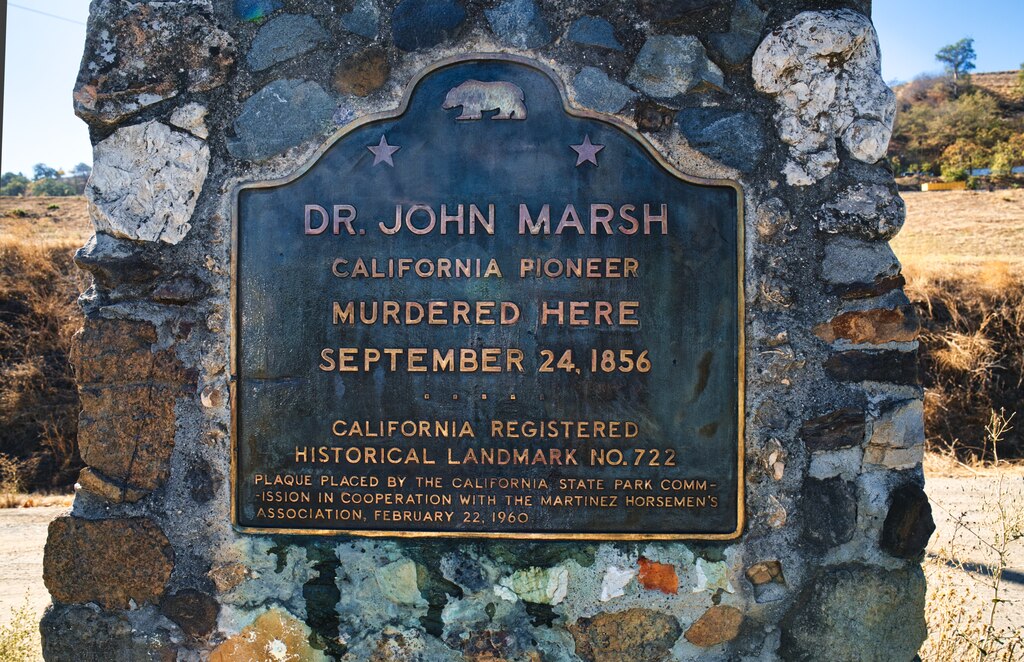
On September 24, 1856, as Marsh traveled from his ranch to San Francisco for a political endeavor, he was ambushed and murdered by three vaqueros over a wage dispute.
Dr. Marsh’s brother, James, wrote the following letter to Abby’s parents dated October 30, 1856:
“I have this day recd from my Son the sad news of the death of my brother Dr. John Marsh of California. He was murdered by two Spaniards as he was riding in his buggy to Martinez & had arrived within two miles of that place & about 1/4 of a mile of Col. Tiff’s House when he was dragged from his buggy his skull broken his throat cut from ear to ear & stabbed through the heart about 6 1/2 o’clock in the evening Sept. 24.”
The gruesome details rocked the region. In fact, as you can see, word of his murder stretched all the way to the East Coast. Two of the murderers were later captured, one of whom was convicted and imprisoned until pardoned after 25 years; the third was never caught.
Before Dr. Marsh’s death, his son Charles ultimately arrived and identified him by a scar; one of Marsh’s few moments of reconciliation before the tragedy.
After his passing, daughter Alice was raised near Antioch and later married William Walker Camron. Over time, the family lost the rancho due to a lack of finances. The stone house deteriorated until preservationists intervened in the 1990s.
A California Historical Landmark details the site of his death. And, a legendary tale of lost treasure romanticizes his life in the California frontier.
Marsh’s Lost Treasure
This tale of lost treasure states that Dr. Marsh used to bury gold coins on his ranch. Although nobody knew where, or if this was really true, many guessed that the buried gold would be near the creek and his home.
It’s believed that Marsh buried a cache of gold coins worth over $40,000 at the time. Today, this buried treasure would be worth at least a million dollars on the low end.
Since then, many have dug through the former Marsh lands to find this lost gold. Nowadays, it would be hard for anyone to feverishly dig up these grounds hoping to find the cache. This is due to the former Marsh ranch becoming a State Park.
In January 2012, nearly 155 years after his death, the state designated the former ranch as the Marsh Creek Park. And, the doctor’s house which was built for the love of his life Abby, has been a crown jewel of Contra Costa County since becoming a historic landmark in 1960.
Since the turn of the century, many archaeologists have excavated sections of the park to find and preserve Native American burial sites and artifacts.
Like many of the wild tales about lost gold still laying beneath the California soil, this one is simply not true. If there was buried gold, it’s long gone by now. What isn’t gone, is the footprint that Dr. Marsh left on this state, especially Contra Costa County.
Sources
American Cowboy Chronicles. (2011). Old California’s “Doctor” John Marsh.
California Historical Marker Database. (n.d.). Dr. John Marsh Historical Marker.
Contra Costa County Historical Society / SFGate. (2006, September 24). Remembering colorful but unpopular pioneer. San Francisco Chronicle. SFGATE
Kerr, W. M. (n.d.). Love, Life and Death on the California Frontier: A Woman’s Life in Old Contra Costa. Contra Costa County Historical Society.
Lyman, G. D. (1931). John Marsh, Pioneer: The Life Story of a Trail-Blazer on Six Frontiers. Chautauqua Press.
The Bancroft Library / John Marsh Historic Trust. (n.d.). The archives of the Marsh family. Contra Costa County Historical Society.
John Marsh Historic Trust. (n.d.). About us.