Last Updated on: May 11, 2026

Iowa Hill Bridge is one of those Placer County points of interest where a simple river crossing turns into a wonderful piece of Gold Country history.

Placed along Iowa Hill Road between Colfax and the ghost town of Iowa Hill, this crossing over the North Fork American River gives visitors a rare side-by-side look at two different eras of river-canyon travel: the old 1928 suspension bridge and the 1981 concrete bridge that now carries vehicle traffic.

The older bridge is often called the Iowa Hill Road Bridge or Mineral Bar Bridge, and it once handled traffic on one of the steepest, narrowest, and most memorable backroads in this region. Today, the modern bridge does the heavy lifting, while the old suspension bridge remains as a weathered relic that allows foot traffic to follow in the steps of eras gone by.

For travelers who like historic bridges, Gold Rush towns, scenic drives, river canyons, and overlooked corners of California, the Iowa Hill Bridge area is worth more than a quick glance from the car.

And, for those already adventuring out into the Auburn State Recreation Area, where these two bridges are located, adding them to an ASRA itinerary would provide another layer of fun.

Quick Facts About Iowa Hill Bridge

  • Location: Iowa Hill Road near Colfax, Placer County
  • River: North Fork American River
  • Historic bridge built: 1928
  • Historic bridge type: Wire suspension bridge
  • Historic bridge materials: Steel lattice towers and wood deck
  • Also known as: Iowa Hill Road Bridge / Mineral Bar Bridge
  • Modern bridge: Reinforced-concrete vehicle bridge
  • Modern bridge opened: June 2, 1981
  • Nearby recreation area: Mineral Bar / Auburn State Recreation Area

Where Is Iowa Hill Bridge?

Iowa Hill Bridge is located on Iowa Hill Road between Colfax and Iowa Hill in Placer County. The bridges cross the North Fork American River near Mineral Bar, a river-access and campground area inside the Auburn State Recreation Area.

From Colfax, the drive drops from town toward the river before reaching the bridge crossing. After the bridge, Iowa Hill Road climbs steeply toward the historic mining community of Iowa Hill.

Directions from Sacramento:

Take I-80 east from Sacramento to Colfax and exit on Canyon Way (exit 133). Take a left onto Canyon Way and travel 1.1 miles before turning right onto Iowa Hill Rd. From there, drive 3 miles until you reach the newer Iowa Hill bridge.

Why Are There Two Iowa Hill Bridges?

The reason there are two Iowa Hill Bridges is simple: the old bridge belonged to an earlier era of travel, while the newer bridge was built to handle modern vehicle traffic.

The old bridge was built in 1928 and served as the vehicle crossing over the North Fork American River. It was a one-lane wire suspension bridge that replaced an earlier wooden bridge. This type of crossing made sense for a rugged canyon road in the early twentieth century but became increasingly limited as traffic demands changed.

The newer bridge was built nearby to replace the old suspension bridge for vehicle use. The old bridge was left standing, which is what makes this site so interesting today. Instead of seeing only a modern crossing, visitors can look at both bridges together and understand how Iowa Hill Road changed over time.

Old Iowa Hill Bridge vs. New Iowa Hill Bridge

Feature

Old Iowa Hill Bridge

Newer Iowa Hill Road Bridge

Built/opened

Built in 1928

Opened to traffic June 2, 1981, according to Caltrans

Purpose

Former vehicle crossing

Current vehicle crossing

Bridge type

Wire suspension bridge

Concrete box girder / reinforced-concrete span

Traffic

No longer the main vehicle bridge

Carries Iowa Hill Road traffic

Materials

Steel lattice towers and wood deck

Reinforced concrete

Road role

Historic remnant of the old crossing

Safer modern crossing for Iowa Hill Road

Best for

Photos, history, old-road atmosphere

Understanding the modern road connection

Also known as

Iowa Hill Road Bridge / Mineral Bar Bridge

Modern Iowa Hill Road Bridge


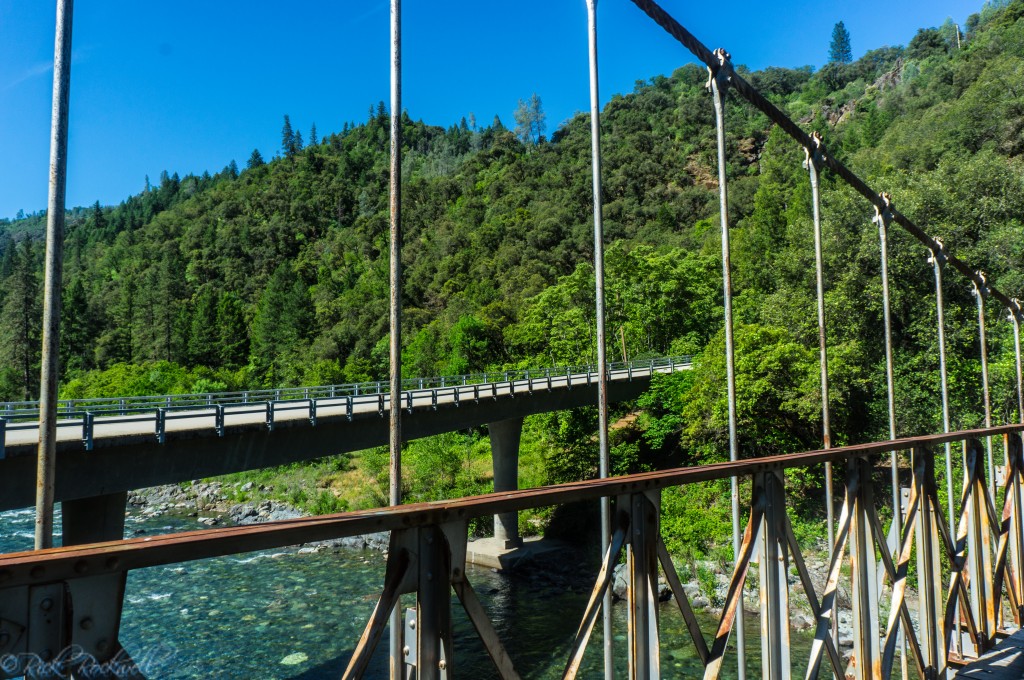
A view of the new bridge from the old bridge

A look at the new Iowa Hill bridge from the old Iowa Hill bridge


The Old Iowa Hill Bridge

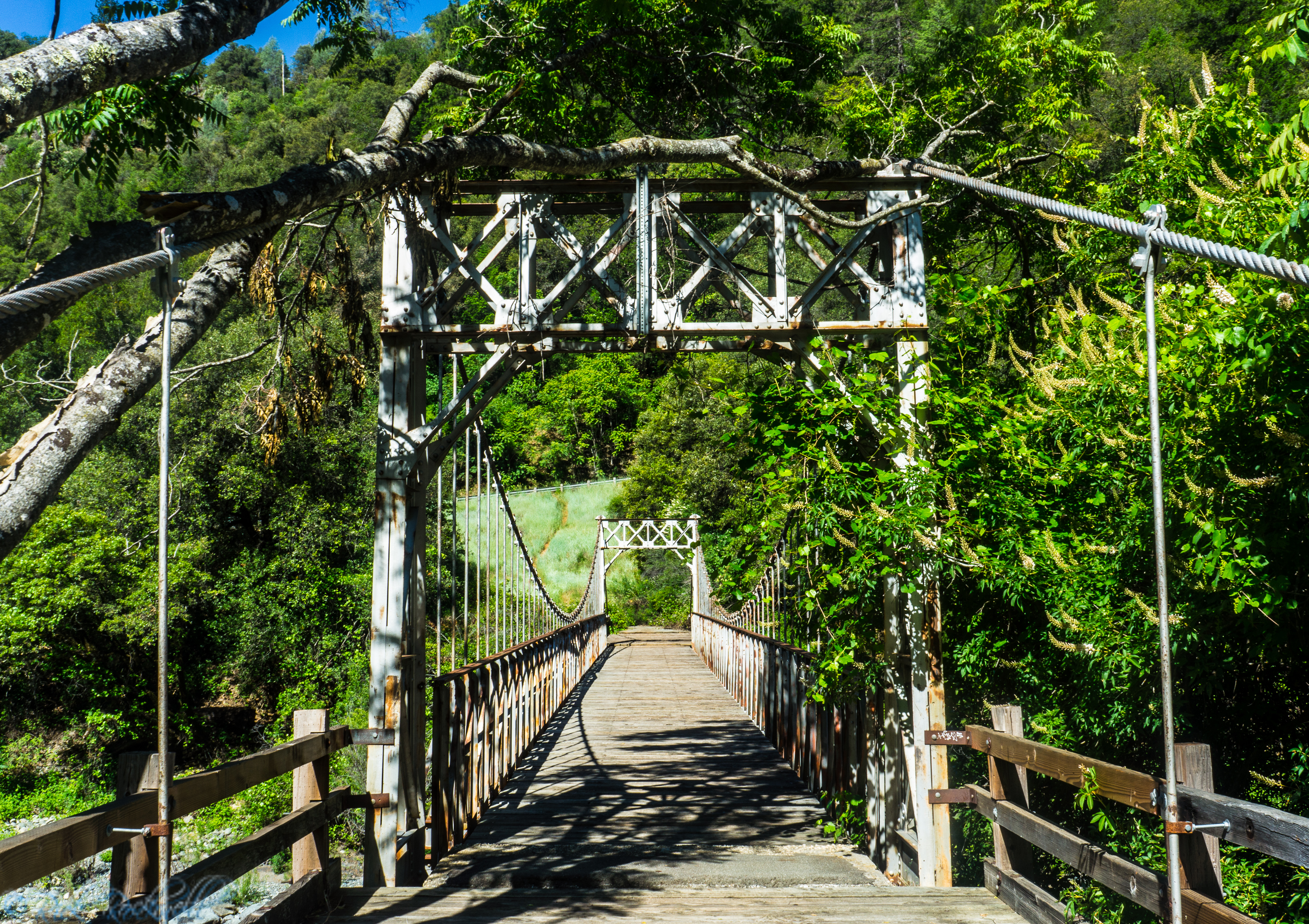
The old Iowa Hill Bridge is the more photogenic and historically interesting of the two bridges. Built in 1928, it is a wire suspension bridge with steel lattice towers and a wooden deck. It replaced an earlier wooden bridge at the same North Fork American River crossing.

While this bridge is only used for foot traffic nowadays, it remains a romantic relic of an era where one-lane bridges were common practice for traveling throughout the river canyons. It’s similar to the old Yankee Jims Bridge that’s a few miles away.

You are not just seeing an old bridge; you are seeing part of the transportation route that once connected Colfax, Mineral Bar, and Iowa Hill. And, when you walk across the bridge, you almost feel as if it’s transporting you to another time.

An interesting story about the old Iowa Hill Bridge takes place in 1963. In February of that year, a portion of the old Iowa Hill bridge was washed out due to a heavy storm that compromised the earth supporting the structures.

According to a report by the Colfax Record, the mail carrier was unable to transport mail from Colfax to Iowa Hill due to the bridge being damaged. So, a plan was developed to exchange mail between carriers of each town by rope on Tuesdays, Thursdays and Saturdays.

The Newer Iowa Hill Road Bridge

The newer Iowa Hill Road Bridge is the concrete bridge that now carries vehicle traffic across the North Fork American River. It does not have the same rustic look as the 1928 suspension bridge, but it is just as important to the story of this location.

Caltrans’ 2024 Historic Bridge Inventory Update identifies the modern Iowa Hill Road Bridge as Bridge No. 19C0176, carrying Iowa Hill Road over the North Fork American River. The report also states that work connected to the concrete box girder bridge began with approach roads in 1978, concluded in May 1981, and the bridge opened to traffic on June 2, 1981.

The replacement was not just about building something newer. It was about making the crossing safer and more practical. The CEQA record says the project replaced the one-lane timber/steel suspension bridge with a two-lane reinforced-concrete span and included work on the roadway approaches.

Over 40 years later, Placer County is taking a similar approach to the Yankee Jims Bridge by building a newer one to accommodate modern traffic.

Iowa Hill Road and the Drive to the Bridge

Part of the Iowa Hill Bridge experience is getting there. Iowa Hill Road is one of the most memorable drives in Placer County, but it is also one that deserves caution.

The road between Colfax, the bridge, and Iowa Hill is narrow, steep, and winding. It drops into the North Fork American River canyon, crosses near Mineral Bar, and then climbs toward Iowa Hill. Drivers should expect tight curves, limited shoulders, and sections that feel much more remote than the distance from Colfax might suggest.

This is not a road to rush. Drive slowly, watch for oncoming vehicles, avoid distractions, and be extra careful during rain, ice, fog, smoke, or low-light conditions.
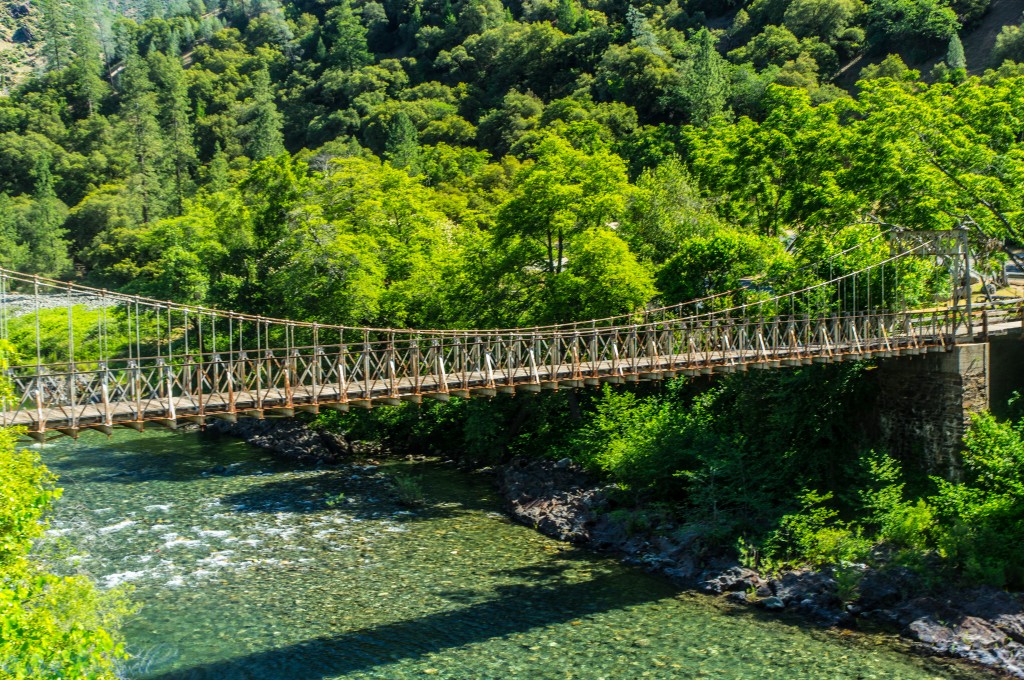
A view of the Old Iowa Hill Bridge and Mineral Bar

The Old Iowa Hill Bridge and Mineral Bar

How Iowa Hill Bridge Connects to Gold Rush History

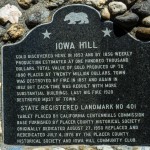
Iowa Hill Bridge matters because it is tied to one of Placer County’s most historic mining communities. Iowa Hill is California Historical Landmark No. 401, and the California Office of Historic Preservation notes that gold was discovered there in 1853. By 1856, weekly gold production was estimated at $100,000, and the total value of gold produced up to 1880 was estimated at $20 million.

Those numbers help explain why a road connection mattered. Iowa Hill was not an easy place to reach. The town sat in rugged country above the North Fork American River, and roads were essential for miners, freight, supplies, mail, stage traffic, and later residents.

Timeline of the Iowa Hill Bridges

Year

Event

Before 1928

An earlier wooden bridge crossed the North Fork American River at this location.

1928

Placer County built the wire suspension bridge to replace the earlier wooden bridge.

1978

Work connected to the modern bridge project began with approach roads.

May 1981

Work on the modern bridge project concluded.

June 2, 1981

The newer Iowa Hill Road Bridge opened to traffic.

March 25, 1982

CEQA documentation for the Colfax-Iowa Hill Road Bridge Replacement / North Fork American River project was received.

March 29-April 28, 1982

CEQA state review period.

Today

The modern bridge carries traffic, while the old 1928 suspension bridge remains nearby as a historic landmark.

Mineral Bar and the North Fork American River

The Iowa Hill Bridge area is closely connected to Mineral Bar, a river access and campground area along the North Fork American River. This gives the bridge more travel value than a simple roadside photo stop.

Mineral Bar sits near the bridge and is part of the broader Auburn State Recreation Area landscape. The area is known for river access, camping, scenic canyon views, and Gold Country atmosphere. Mineral Bar Campground, on the east bank of the river at the bridge, is one of the more popular places to pan for gold in the ASRA.

Can You Visit the Old Iowa Hill Bridge?

Yes, you can visit the bridge area, but it is best treated as a historic roadside and river-canyon stop rather than a developed attraction.

While the modern bridge carries vehicle traffic, the old 1928 suspension bridge remains nearby, but visitors should respect any posted signs, avoid blocking the road, and use caution around the bridge, riverbanks, and canyon edges. Conditions can change, and the North Fork American River can be dangerous during high flows.

Things to Do Near Iowa Hill Bridge

In addition to visiting the bridges, you might also be interested in the following nearby activities and locations:

Auburn State Recreation Area: Larger recreation region with river access, hiking, camping, rafting, historic roads, and canyon scenery.

Mineral Bar: Closest river-access area to the bridge, with camping and North Fork American River scenery.

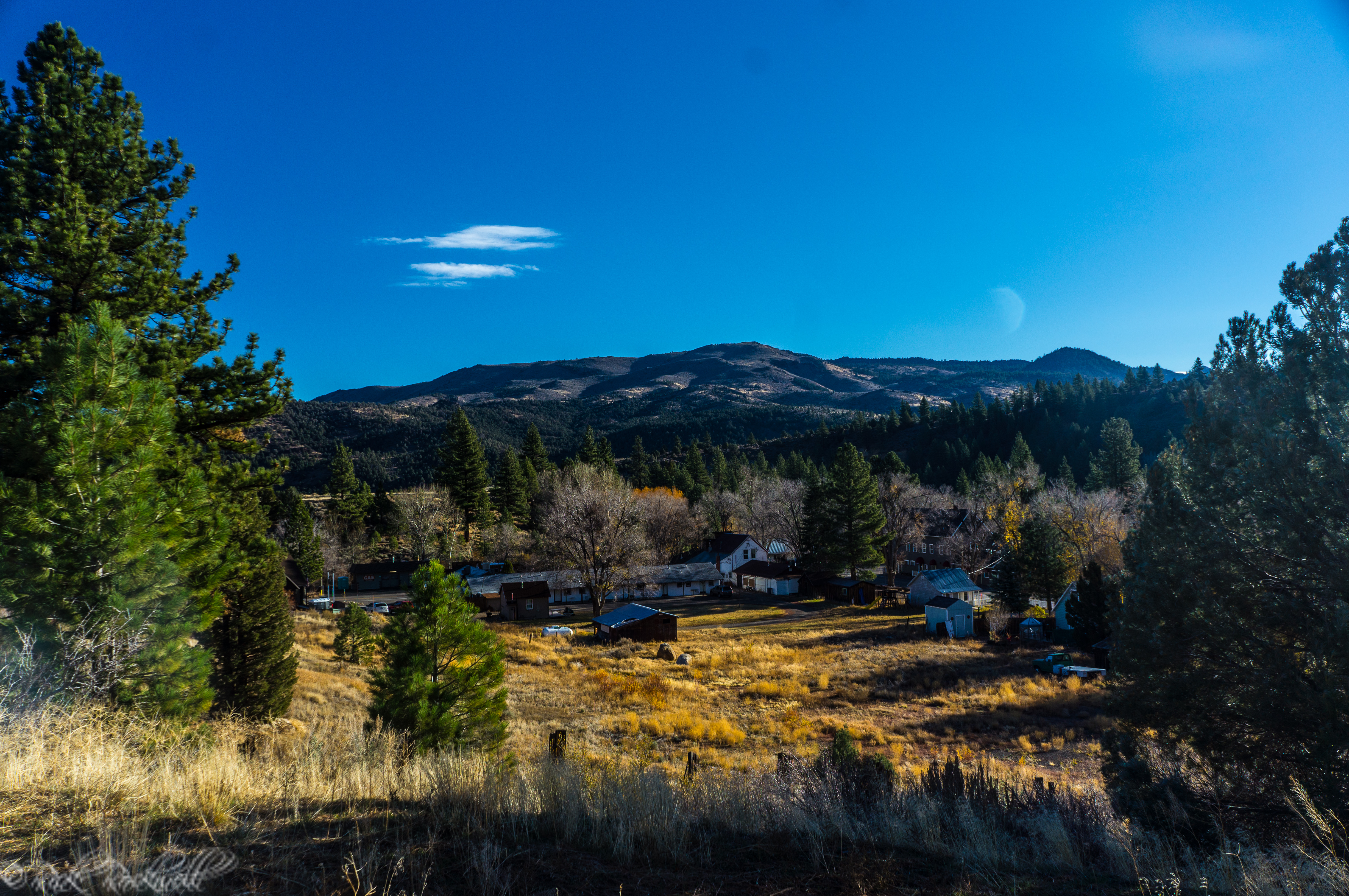
Iowa Hill: Historic Gold Rush town that boomed in the 1850s, survived a handful of fires since then, and is survived by a handful of remnants and a dedicated community.

Stevens Trail: Historic trail near Colfax with North Fork American River views and Gold Rush-era route connections.

Yankee Jims Bridge: Another historic North Fork American River bridge area, that leads to the town of Yankee Jims which is named after the California urban legend of Yankee Jim Robinson.

Pennyweight Trail: A nearby hiking trail that takes you to Pennyweight Falls.
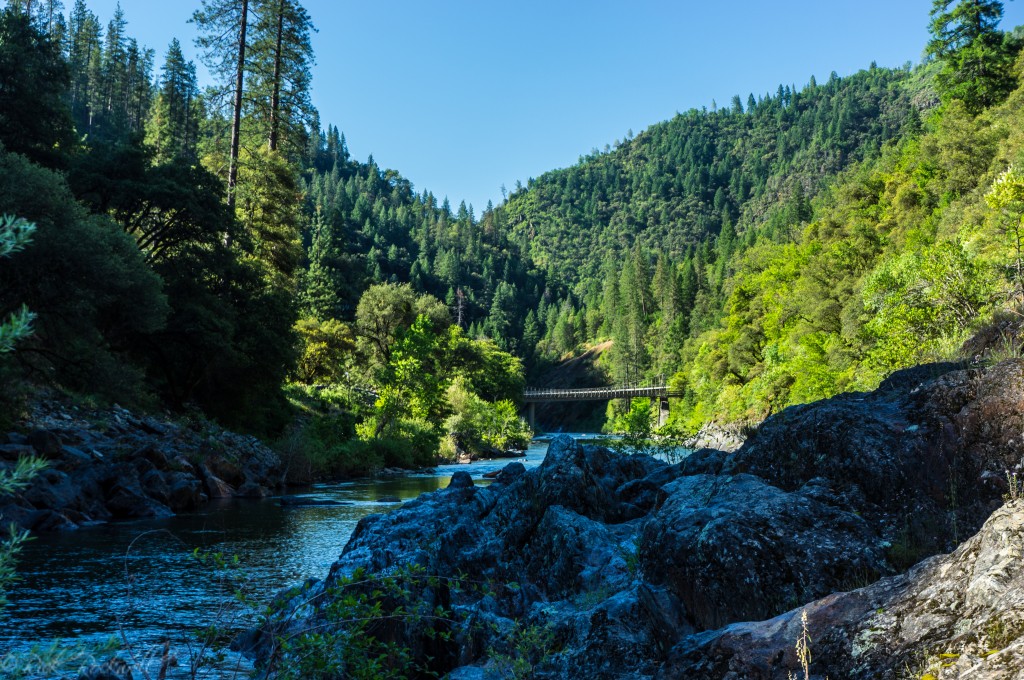
A look South down the American River at the Iowa Hill Bridges

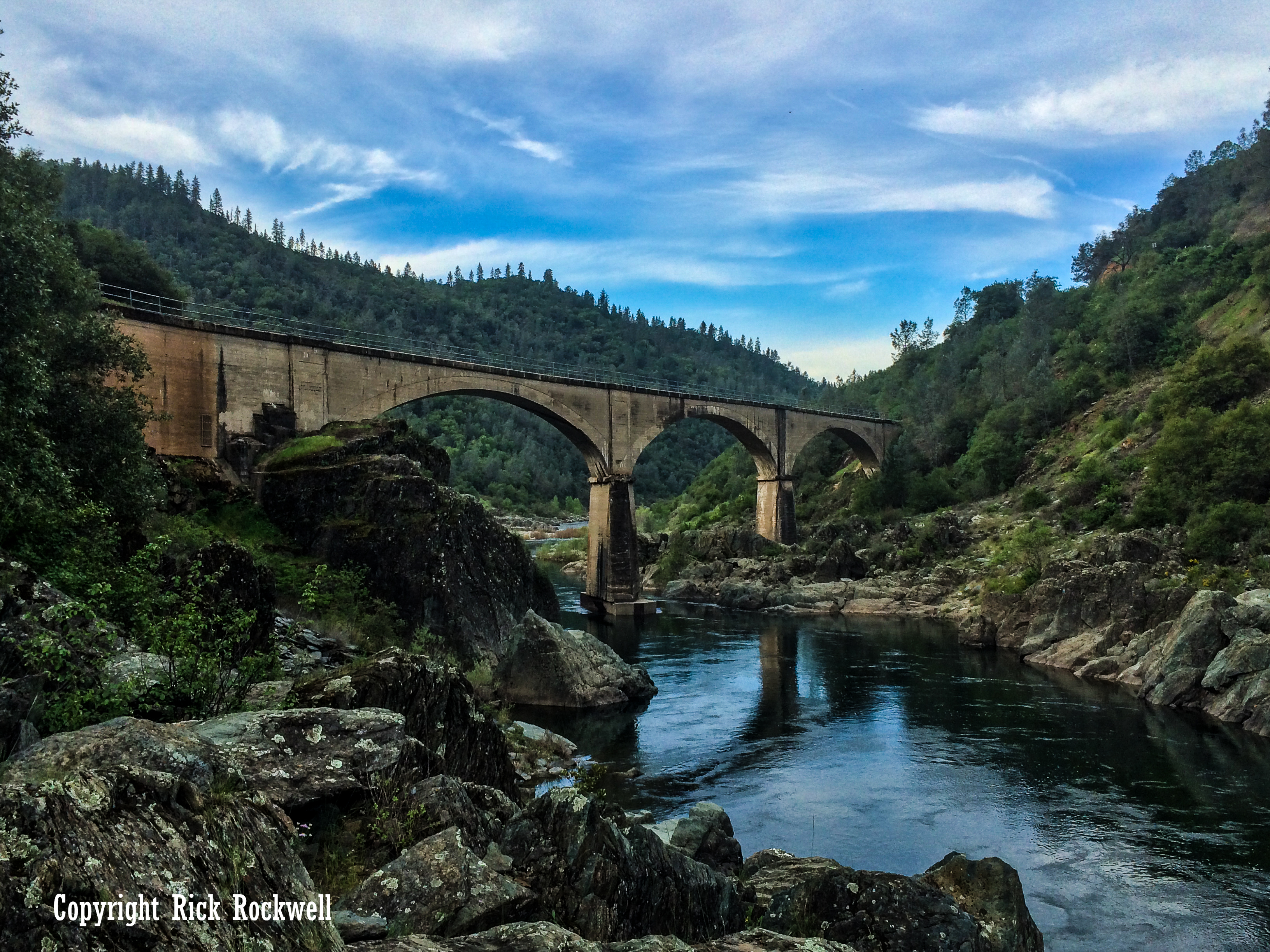
Distant view of the Iowa Hill Bridges

Why Iowa Hill Bridge Is Worth the Detour

Who doesn’t love an old bridge crossing the American River? This scenic location makes it worth the detour to check out both Iowa Hill Bridges. But it’s not the only reason to make the detour.

Additionally, you can walk across the 1928 Iowa Hill bridge, which makes for a wonderful experience as you can feel the energy of this river location along with imagining what it would’ve been like to stand here a century ago when the bridge was first built.

For historical enthusiasts, not only is this location of two contrasting bridges worth experiencing, but traveling further along the Iowa Hill Road to the living ghost town of Iowa Hill is like traveling back in time.

For adventurists, the drive from the bridges up to Iowa Hill is unlike anything else in this region. Only Yankee Jims Road can even compare.

When you combine these layers, along with nearby hiking, camping, and river access in the Auburn State Recreation area, the Iowa Hill Bridges become a must-see location and addition to any ASRA trip.

Looking across the Old Iowa Hill Bridge
The old Iowa Hill Bridge

FAQ: Iowa Hill Bridge

Where is Iowa Hill Bridge?

Iowa Hill Bridge is located on Iowa Hill Road near Colfax in Placer County, California. It crosses the North Fork American River near Mineral Bar in the Auburn State Recreation Area.

When was the old Iowa Hill Bridge built?

The old Iowa Hill Bridge was built in 1928 by Placer County to replace an earlier wooden bridge at the same location.

What is the old Iowa Hill Bridge also called?

The old bridge is also known as the Iowa Hill Road Bridge and the Mineral Bar Bridge.

When was the newer Iowa Hill Road Bridge built?

The newer Iowa Hill Road Bridge opened to traffic on June 2, 1981, according to Caltrans’ 2024 Historic Bridge Inventory Update.

Why was the newer Iowa Hill Bridge built?

The newer bridge was built to replace the old one-lane timber-and-steel suspension bridge with a safer two-lane reinforced-concrete span over the North Fork American River.

Can you drive across the old Iowa Hill Bridge?

No. Vehicle traffic uses the newer concrete bridge. The old 1928 suspension bridge remains nearby as a historic bridge.

What river does Iowa Hill Bridge cross?

Iowa Hill Bridge crosses the North Fork American River near Mineral Bar.

Is Iowa Hill Road dangerous?

Iowa Hill Road is narrow, steep, winding, and exposed in places. It can be a memorable scenic drive, but drivers should use caution, avoid trailers, and be careful in bad weather or low-visibility conditions.

Sources

  • Caltrans — Historic Bridge Inventory Update 2024: https://dot.ca.gov/-/media/dot-media/programs/environmental-analysis/documents/env/bridges-inventory-update-2024-a11y.pdf
  • Caltrans — California Historical Bridges and Tunnels overview: https://dot.ca.gov/programs/environmental-analysis/cultural-studies/california-historical-bridges-tunnels
  • CEQAnet — Colfax-Iowa Hill Road Bridge Replacement / North Fork American River: https://ceqanet.lci.ca.gov/1980110314/2
  • NoeHill — Iowa Hill Road Bridge / Mineral Bar Bridge: https://noehill.com/placer/poi_iowa_hill_bridge.asp
  • BridgeHunter — Iowa Hill Bridge: https://www.bridgehunter.com/bridges/43092
  • California Office of Historic Preservation — Iowa Hill Landmark No. 401: https://ohp.parks.ca.gov/ListedResources/Detail/401
  • California State Parks — Auburn State Recreation Area: https://www.parks.ca.gov/?page_id=502
  • Roseville Today — Placer County’s Craziest Drive: Iowa Hill Road: https://rosevilletoday.com/travel/local-travel/placer-countys-craziest-drive-iowa-hill-road/
  • Colfax Record – http://www.colfaxrecord.com/article/storm-1963-washed-out-part-iowa-hill-bridge


[mc4wp_form id="4451"]
Close
error: Content is protected !!