Eagle Falls Trail is one of the most popular hikes in the Lake Tahoe area, but it is also one of the most misunderstood. Many visitors know it as the trail to Eagle Lake, and that short alpine hike is easily the route’s biggest draw.
But the trailhead is more than just the start of a quick lake outing. It is also one of the gateways into Desolation Wilderness, with longer routes leading to additional alpine lakes and high-country destinations beyond Eagle Lake.
For beginners and casual hikers, this trail offers a relatively short and scenic hike with a beautiful lake as the payoff. For more experienced hikers, it opens the door to a deeper stretch of mountain country that includes places like Middle Velma Lake, Dicks Lake, Fontanillis Lake, and Dicks Pass.
With a Trailhead parking area across from Emerald Bay State Park, Eagle Falls Trail is both a fun day hike and a wilderness access corridor. The versatility and easy access, along with scenic views, make this Trail one of the most sought-after hikes in all of Lake Tahoe.
Eagle Falls Trail Quick Facts
- Location: Starts at the Eagle Falls Picnic Area and Trailhead near Emerald Bay on Highway 89
- Trail type: Out-and-back hike to Eagle Lake, with longer routes continuing deeper into Desolation Wilderness
- Distance: Roughly a mile one-way to Eagle Lake, over 5 miles one-way to Dicks Pass
- Difficulty: Moderate for the Eagle Lake hike, with a steady climb and rocky sections. Difficult to further destinations
- Elevation gain: About 429 feet on the out-and-back route to Eagle Lake
- Estimated hiking time: Roughly 1 to 1.5 hours round trip for beginners, overnight for advanced hikers
- Best for: Hikers looking for a short but rewarding alpine lake hike near Emerald Bay or Backpackers heading into Desolation Wilderness
- Trail highlights: Upper Eagle Falls, granite steps, creek crossings, mountain scenery, and Eagle Lake
- Best season: Typically, mid-May through mid-October, depending on snow and weather
- Good to know: This trailhead is also a gateway to longer Desolation Wilderness destinations
Where the Trail Starts
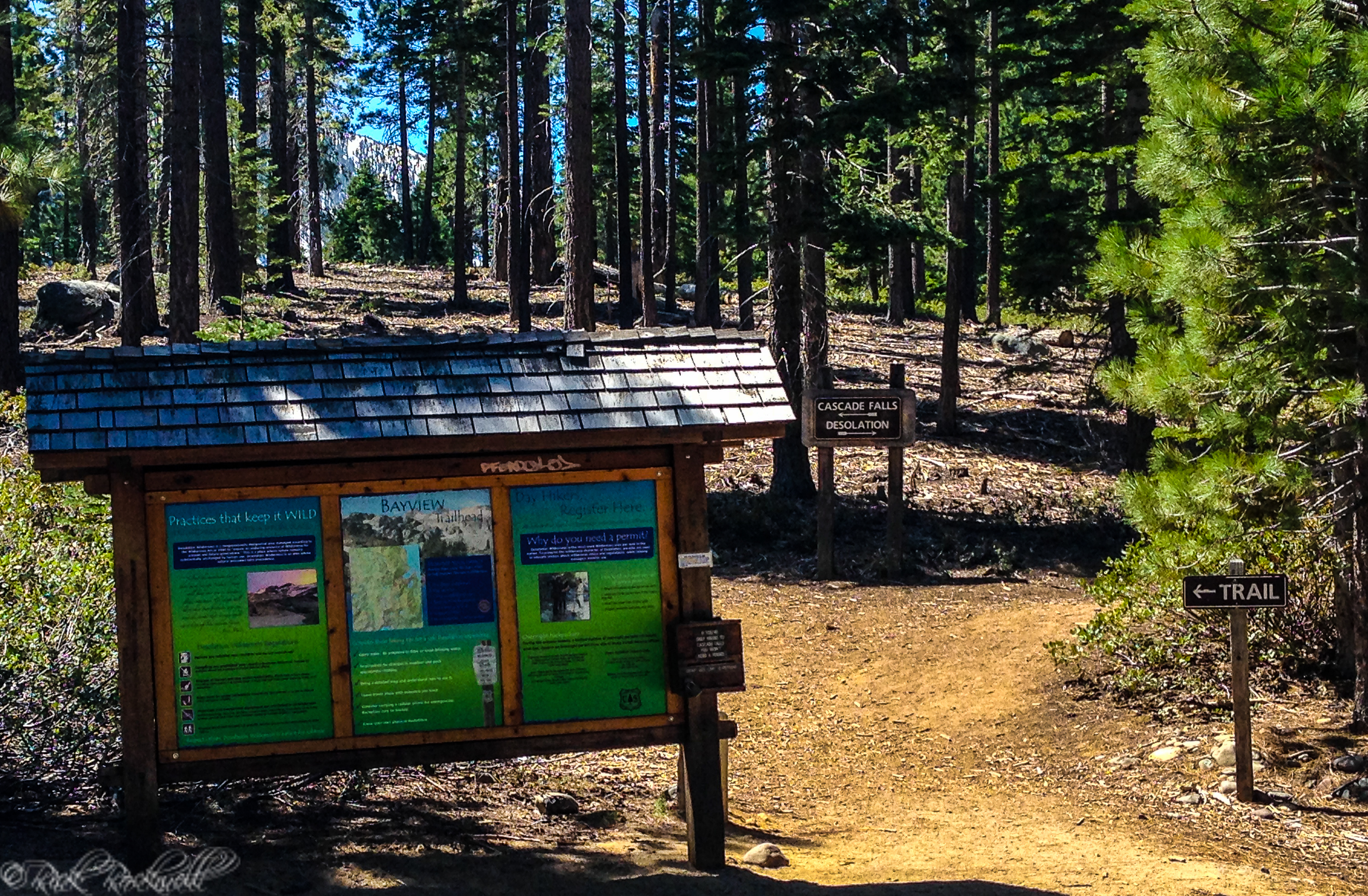
The hike begins at the Eagle Falls Picnic Area and Trailhead on Highway 89 near Emerald Bay. This is the trailhead hikers use for Upper Eagle Falls, Eagle Lake, and the deeper Desolation Wilderness routes beyond.
It is important not to confuse this trailhead with the Lower Eagle Falls access near the Emerald Bay Visitor Center. They are related experiences, but not the same starting point.
The trailhead is convenient by Tahoe standards, which is part of why it sees so much use. That convenience also means it can get crowded quickly, especially in peak season.
What the Hike to Eagle Lake Is Like
The hike starts with a steady climb. The trail begins gaining elevation almost right away, and that early effort is part of what gives the hike its character. It might be a short distance to Upper Eagle Falls and Eagle Lake, but the trail packs quite a punch.
The first section includes rocky steps, uneven trail, and a steady uphill rhythm. It is scenic, but it asks for attention and effort. This is not a paved interpretive walk. It feels like a real Sierra trail from the start.
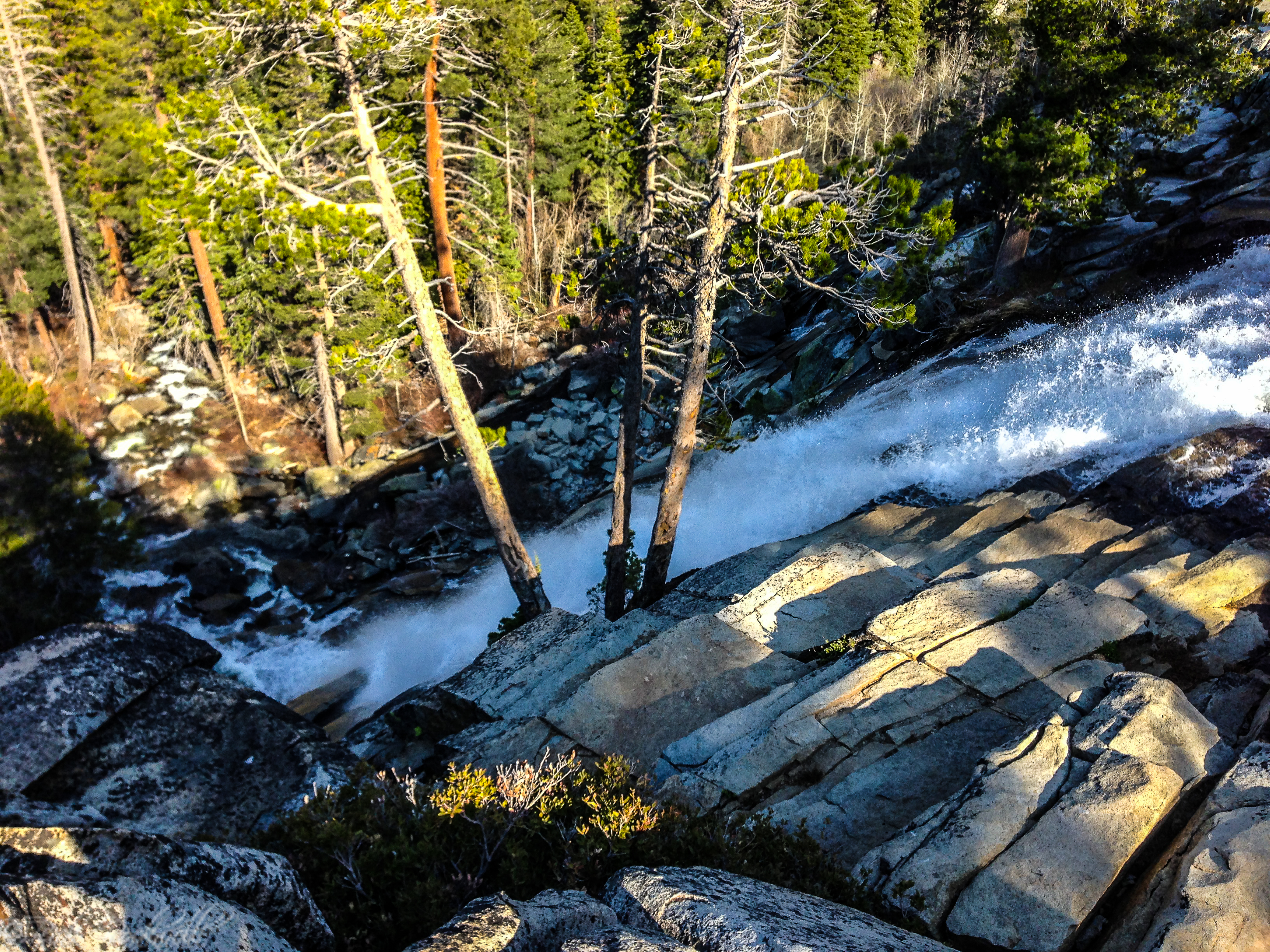
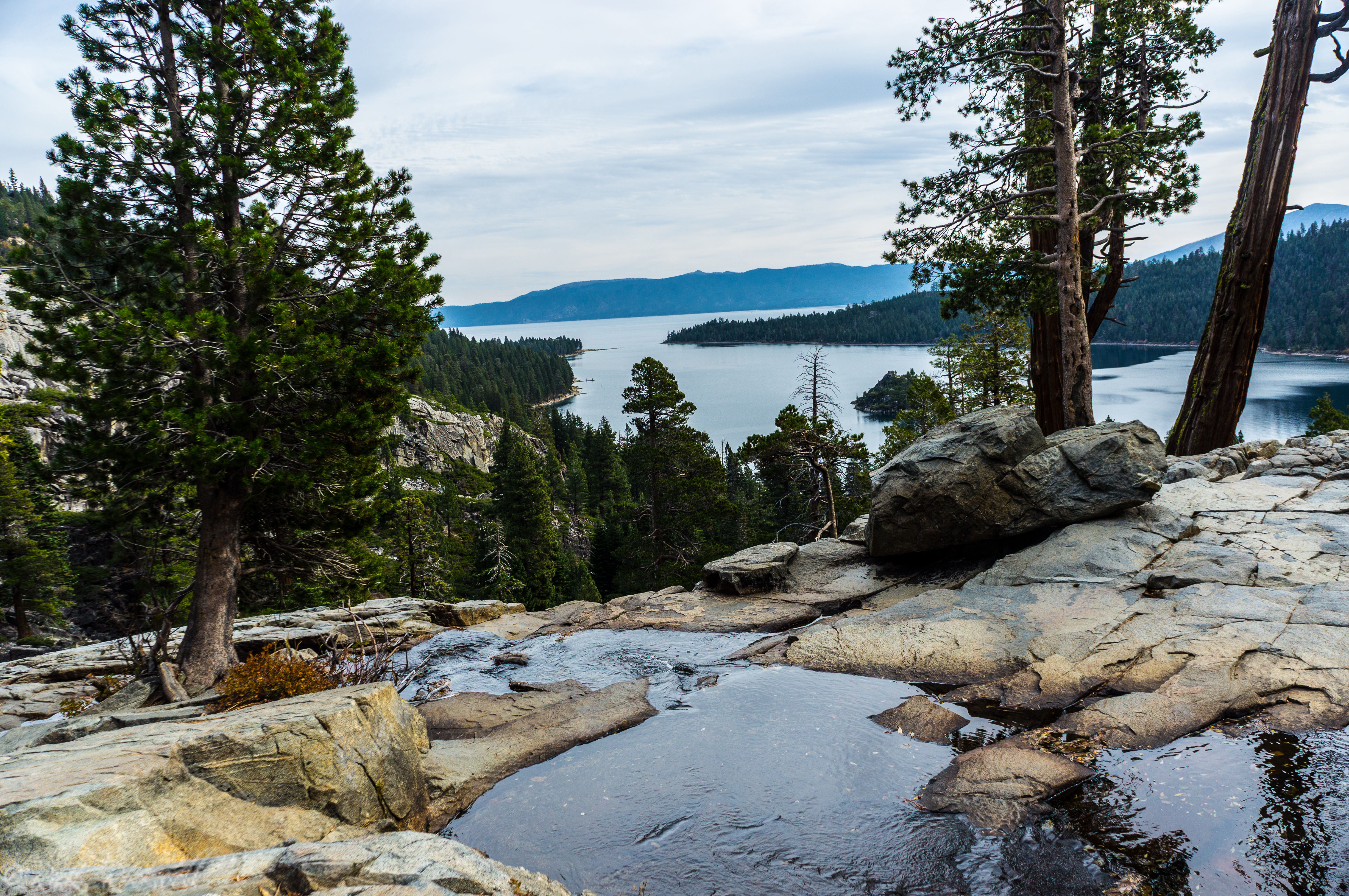
One of the early highlights is the Upper Eagle Falls area along Eagle Creek. This is where many hikers stop for photos and a short break before continuing. The creek moving through granite, along with the sound and energy of the water, gives the trail an early reward that helps balance the initial climb.
I’ve stopped here throughout the various seasons, and each trip provided a different experience both visually and physically.
Beyond the falls, the route continues through classic Tahoe high-country terrain. Granite becomes more prominent, the forest opens in places, and the trail starts to feel like it is leaving the highway and civilization behind. By the time you reach Eagle Lake, the setting feels more alpine and secluded than the trailhead below.
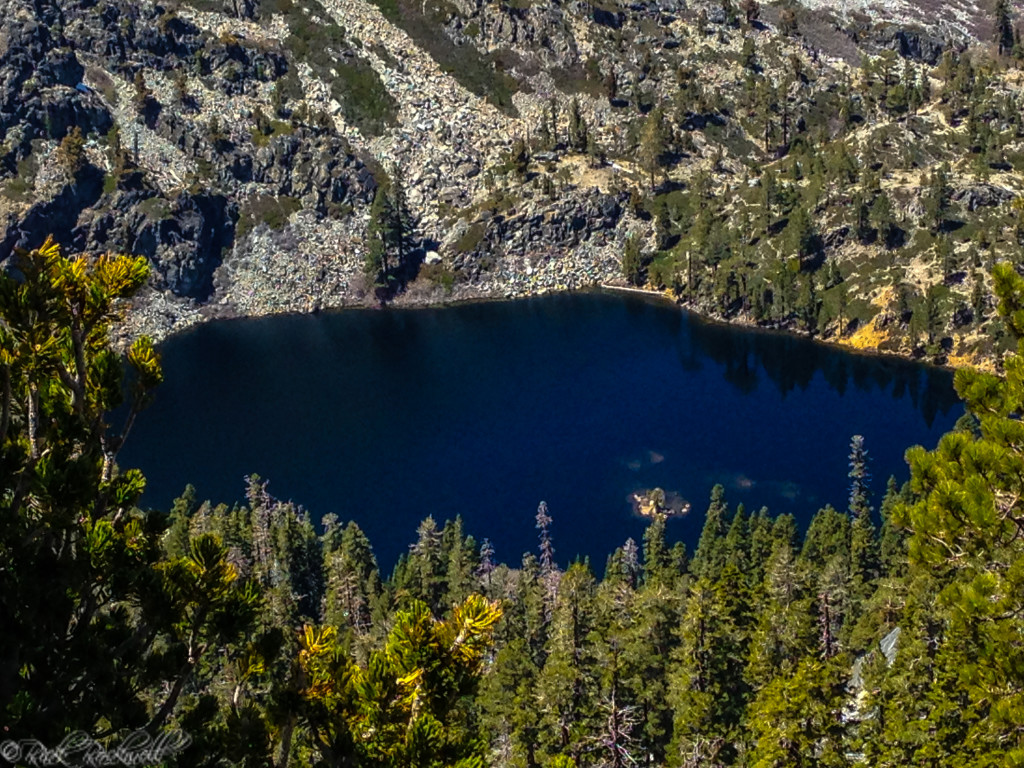
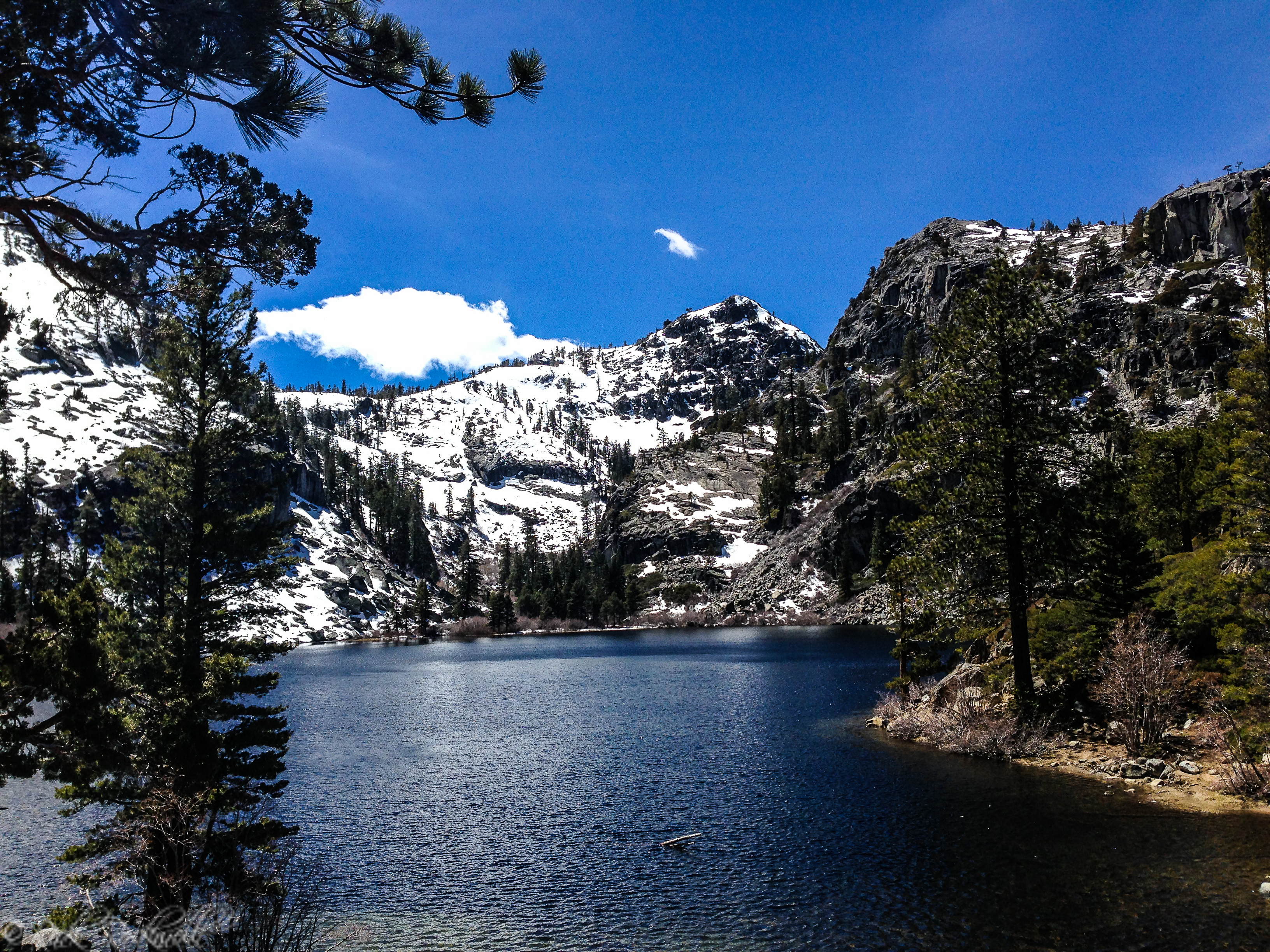
Eagle Lake is a satisfying endpoint for most visitors. It has the kind of mountain-lake atmosphere that makes the effort feel worthwhile: granite shoreline, cold clear water, and a setting that feels rugged without requiring a massive wilderness push.
And, if you are fortunate enough to visit Eagle Lake when nobody else is around, it feels like you are cheating at life by getting this beautiful location all to yourself. Take that opportunity to have a picnic, swim, and photograph the scenery.
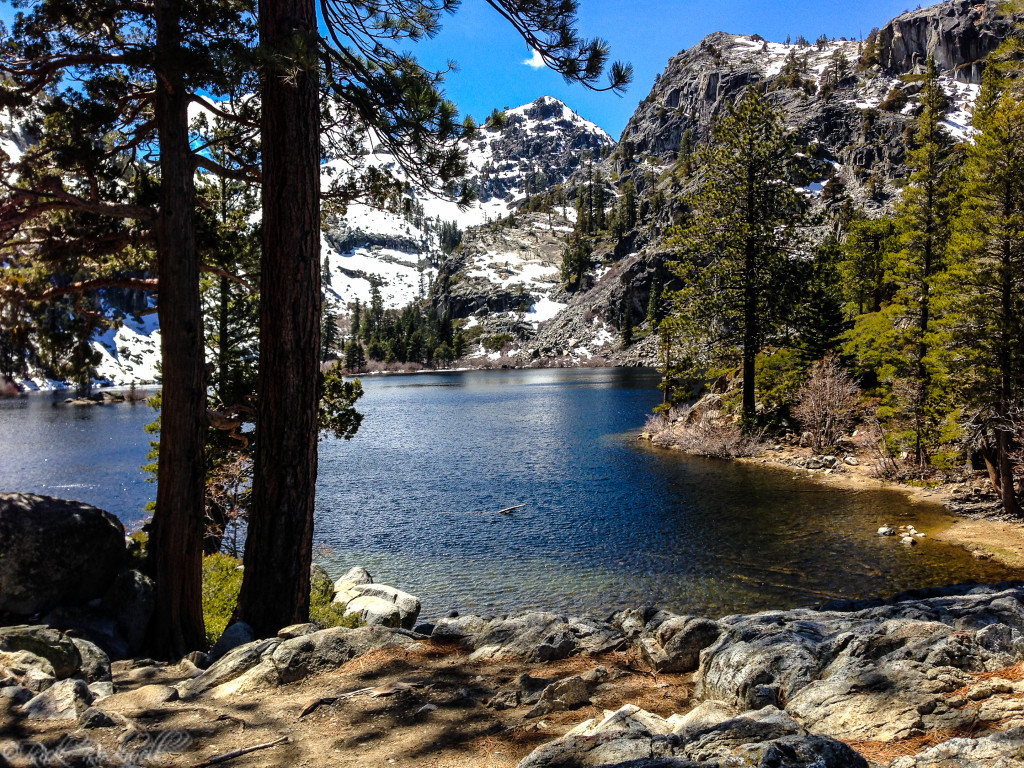
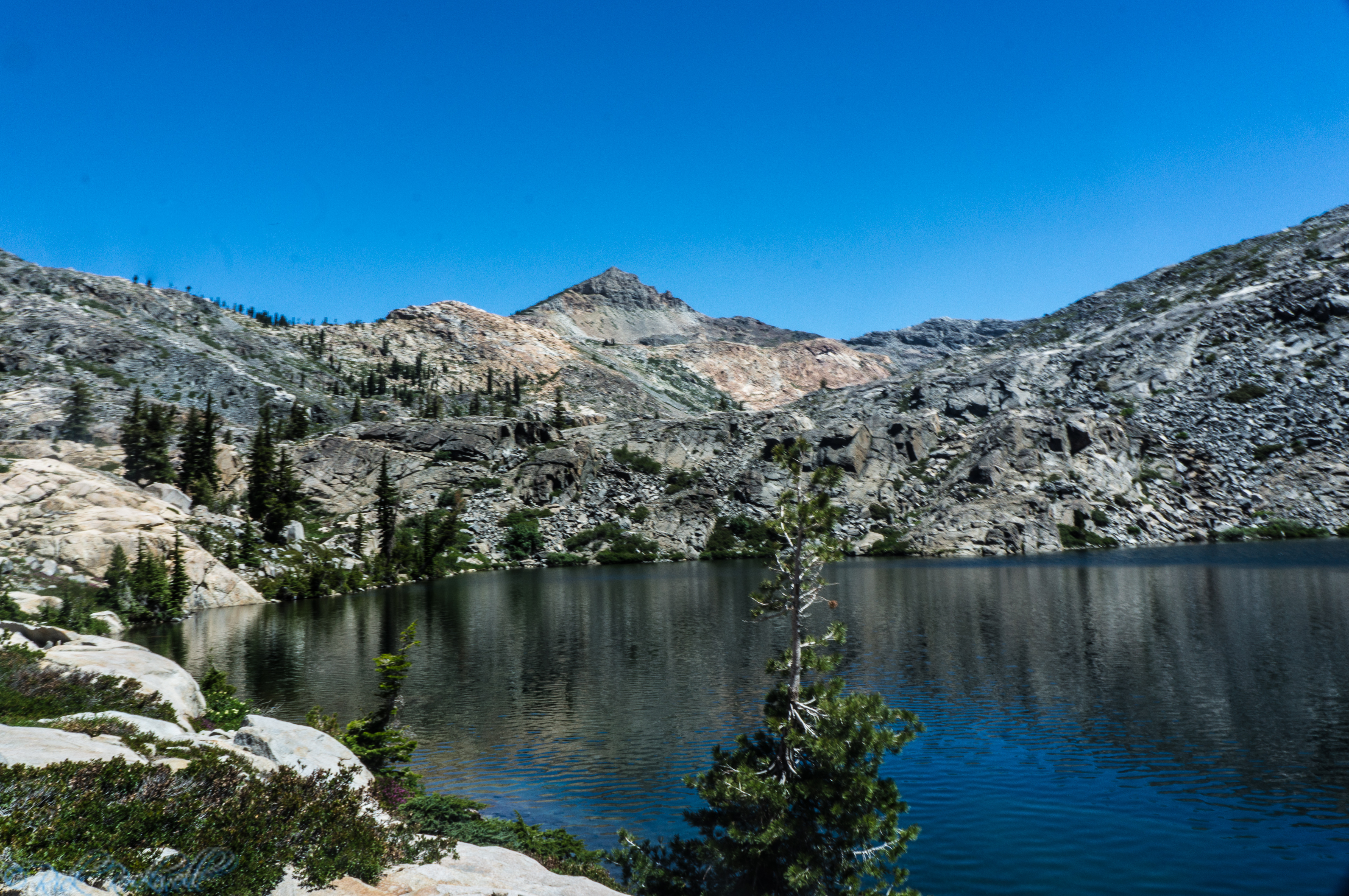
Eagle Lake with snowy mountains in background
How Difficult Is Eagle Falls Trail?
The best way to describe the hike to Eagle Lake is moderate. It’s short enough for many active visitors, but steep and uneven enough that you would be foolish to think it takes little effort.
The early climb is what catches many first-time hikers off guard. On paper, the mileage looks easy. On the ground, the combination of rock, grade, and stairs makes it feel more demanding than a casual lakefront stroll. That does not make it extreme, but it does mean visitors should come prepared for a real hike.
For advanced hikers, Eagle Lake may feel like a shorter outing. For families, beginners, or visitors adjusting to elevation, the same trail can feel more challenging.
Parking, Permits, and Trailhead Logistics
- Parking fee: $5 per vehicle per day at Eagle Falls Trailhead.
- Overnight permit waiver: The parking fee is waived for valid Desolation Wilderness overnight permit holders when the waiver is obtained with the permit.
- Restrooms: Restrooms are available at the trailhead.
- Picnic tables: The site includes picnic tables for day-use visitors.
- Potable water: No potable water is available, so bring your own drinking water.
- Permits: Permits are required for visits to Desolation Wilderness; day-use permits are typically self-issued at trailheads, while overnight permits require reservation and a fee.
- Campfires: Campfires are not allowed at the trailhead site.
- Seasonal access: The trailhead is typically open mid-May through mid-October, depending on weather and snow conditions.
- Crowds: Can be extremely crowded on weekends during peak months.
Best Time to Hike Eagle Falls Trail
Late spring through early fall is usually the main hiking season, though the exact timing can shift depending on snow and trailhead access. In spring and early summer, the upper falls are often at their most impressive, which adds even more drama and payoff to the hike.
Summer offers the most predictable access, but also the biggest crowds. That can be especially noticeable in the Emerald Bay corridor, where parking and trailhead congestion are common.
Early fall can be a very pleasant time to hike if you are willing to trade stronger waterfall flow for slightly calmer conditions. In any season, weekdays are often a better choice than peak weekends.
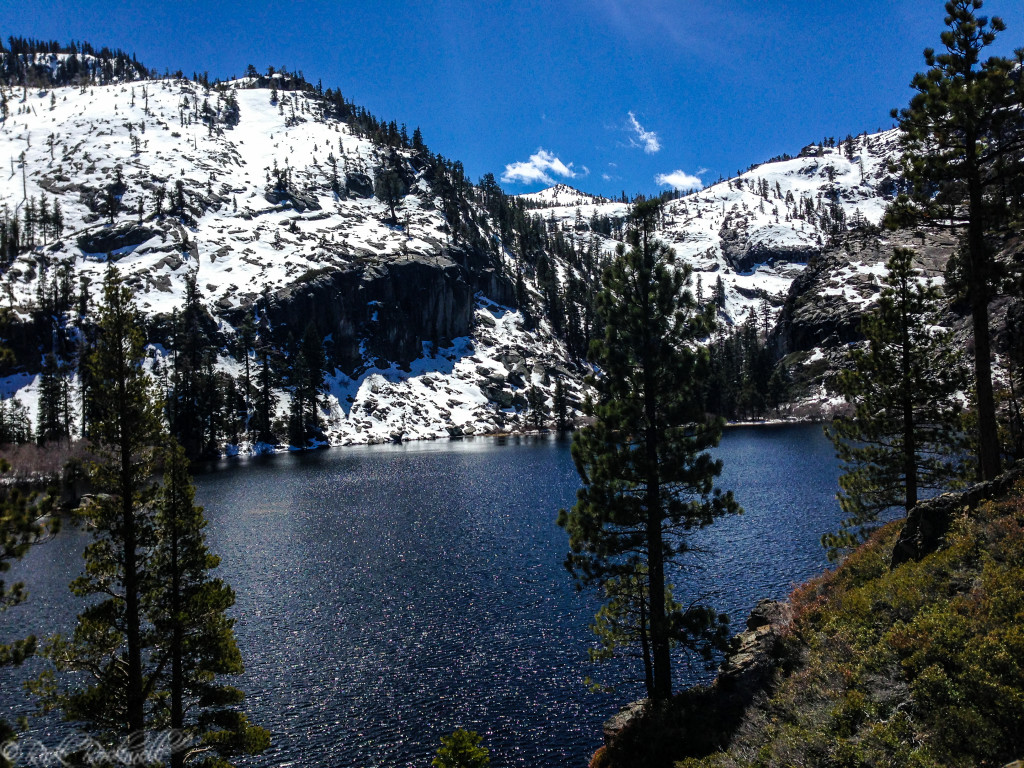
Looking around Eagle Lake
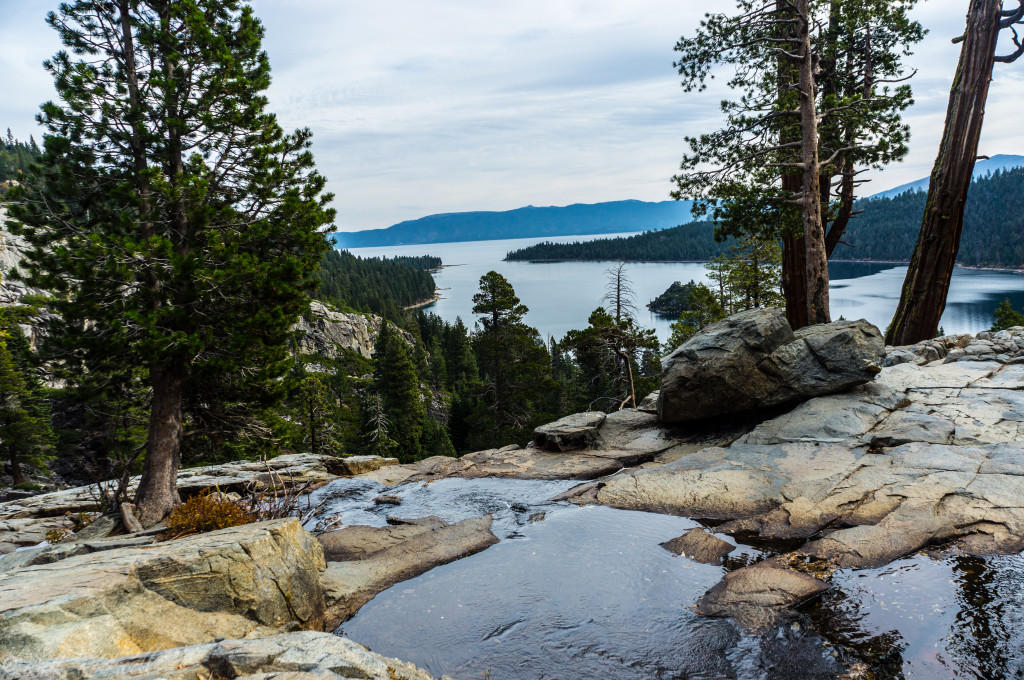
Beyond Eagle Lake: Other Destinations Along the Trail
This is where Eagle Falls Trail becomes more than just a short Tahoe hike.
Destination | Distance | Difficulty |
Eagle Lake | 1.0 miles | Moderate |
Dicks Lake | 4.3 miles | Difficult |
Middle Velma Lake | 4.4 miles | Difficult |
Fontanillis Lake | 4.9 miles | Difficult |
Dicks Pass | 5.3 miles | Difficult |
Middle Velma Lake is one of the stronger next-step destinations for hikers who want to continue deeper into Desolation Wilderness. It is a much more committed outing than Eagle Lake and makes sense for people looking for a bigger alpine lake objective.
Dicks Lake gives the trail a more serious mountain-hike identity. This is not a casual extension of Eagle Lake. It is a stronger day-hike or backpacking goal for hikers ready for a more demanding route.
Fontanillis Lake helps show that the Eagle Falls corridor is a legitimate wilderness access route rather than just a short scenic hike.
Dicks Pass represents the high-country reach of this trailhead. For experienced hikers, it is one of the more ambitious destinations from Eagle Falls Trailhead.
On a side note, Dicks Lake and Dicks Pass are said to be named after Captain Dick Barter who lived on Fannette Island in the late 19th century. His story has become a popular California urban legend that makes the island a popular haunted place in the Tahoe basin.
Tips for First-Time Hikers on Eagle Falls Trail
- Start early: Parking and crowds can shape the experience almost as much as the scenery.
- Proper footwear: Wear shoes with good traction. The route includes uneven surfaces, stairs, and rock.
- Bring water: There’s no potable water at the trailhead.
- Don’t Underestimate: Even though the mileage to Eagle Lake is not long, the trail feels steeper than some visitors expect.
- Dicide before you go: If your plan is simply to reach Eagle Lake, enjoy the scenery, and head back, this is a manageable and rewarding outing. If you are considering continuing deeper into the wilderness, treat it as a much bigger day and prepare accordingly.
Eagle Falls Trail vs. Lower Eagle Falls
Lower Eagle Falls is the shorter waterfall outing near the Emerald Bay visitor area. Eagle Falls Trail starts at the Trailhead parking area across Highway 89 and climbs toward Upper Eagle Falls, Eagle Lake, and deeper wilderness destinations.
That distinction may sound insignificant, but it greatly affects where you park, how much effort you should expect, and what kind of experience you are signing up for.
For Lower Eagle Falls, you can fill a day with Emerald Bay activities like visiting Vikingsholm and viewing Fannette Island.
Eagle Falls Trail is a legitimate hike beyond the Upper Eagle Falls to Eagle Lake and into a multi-day journey through Desolation Wilderness.
Is It Worth Hiking The Eagle Falls Trail?
Eagle Falls Trail deserves its reputation as one of the best hikes near Emerald Bay. It is scenic almost immediately, rewarding without being overwhelmingly long, and rich enough to satisfy both casual hikers and more ambitious wilderness adventurists.
For most visitors, Eagle Lake will be the main event, and it is easy to see why. But the trail’s deeper value comes from everything beyond that first destination. This is not just a hike to one lake. It is a trail corridor that opens into a much larger alpine playground.
I’ve been on this trail a number of times and it’s an enjoyable experience every time I hike it. If you can go on a weekday during peak waterfall season, then you will enjoy it even more as the Upper Eagle Falls is roaring and most people will be working.
This provides you with solitude, a less-crowded trail, and quite possibly the entire Eagle Lake to yourself. And, believe me when I tell you, an afternoon at Eagle Lake to yourself is an experience you will never forget.
FAQ: Eagle Falls Trail
How long is Eagle Falls Trail?
Most visitors think of the hike to Eagle Lake when they ask this. It is a relatively short out-and-back hike, clocking in at 1-2 hours and roughly 2 miles max.
Is Eagle Falls Trail hard?
The hike to Eagle Lake is best described as moderate. It is short, but steep enough in places to feel more demanding than the mileage suggests.
Does the trail go beyond Eagle Lake?
Yes. The trail continues into Desolation Wilderness toward longer and more difficult destinations.
Where do you park for Eagle Falls Trail?
At the Eagle Falls Picnic Area and Trailhead on Highway 89 near Emerald Bay.
Is Eagle Falls Trail good for beginners?
It can be, as long as beginners are prepared for climbing, uneven terrain, and mountain conditions.
What is the best time to hike it?
Late spring through early fall is generally the main season, with spring and early summer often offering the strongest waterfall flow.
Sources
U.S. Forest Service — Eagle Falls Picnic Area and Trailhead
https://www.fs.usda.gov/r05/laketahoebasin/recreation/eagle-falls-picnic-area-and-trailhead
U.S. Forest Service — Desolation Wilderness Trails & Trailheads
https://www.fs.usda.gov/r05/eldorado/wilderness/desolation-wilderness-trails-trailheads
U.S. Forest Service — Desolation Day Use Permits & Parking
https://www.fs.usda.gov/r05/eldorado/wilderness/desolation-day-use-permits-parking
Recreation.gov — Desolation Wilderness Permit Page
https://www.recreation.gov/permits/233261
Visit Lake Tahoe — Hike to Eagle Falls & Eagle Lake
https://visitlaketahoe.com/things-to-do/hikes/hike-to-eagle-falls-eagle-lake-a-great-beginner-hike/
PCTA — Eagle Falls Trailhead
https://explore.pcta.org/trailheads/eagle-falls-trailhead