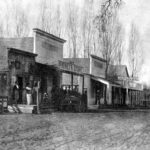
In the summer of 1901, a former refinery worker named John “Jack” Winters, also known as “Buck Taylor,” staged one of the boldest gold thefts in American history.
In the predawn hours of August 5, he penetrated the vault of the Selby Smelting Works on Carquinez Strait in Contra Costa County and made off with roughly $283,000 in bullion. That’s about 900 pounds of gold, which is worth many millions in today’s dollars.
Almost immediately, this crime was romanticized by newspapers across the country. It was hailed as a near-mythic caper.
Winters bragged that he had “committed the greatest robbery of the century.” Unfortunately for this self-boasting criminal mastermind, he was caught within days of his crime.
This story blends meticulous planning, local geography, and old-school detective work into an unforgettable moment in the annals of California crime. And, if that weren’t enough to pique your interest, legend claims that some of the stolen gold is still out there for those daring enough to find.
Who Was John Winters?
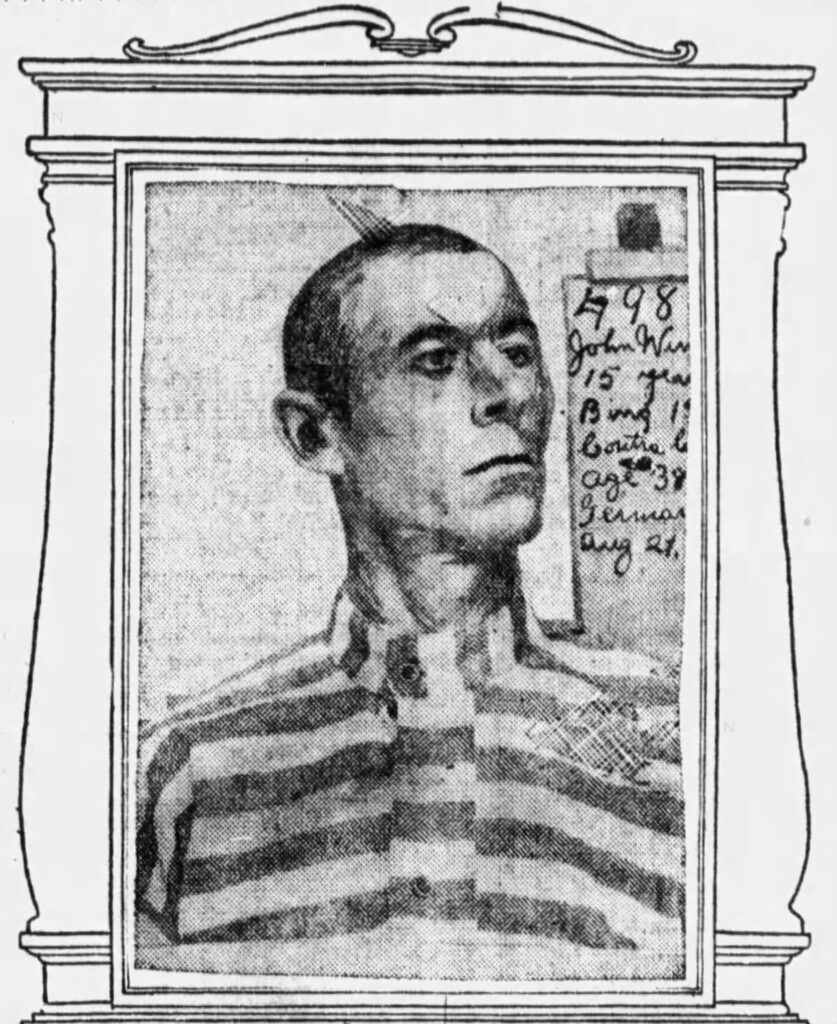
John Winters was born circa 1863-64, in Koenigsberg, Prussia, Germany. He was a slender built man, with dark hair, stood just under 5’10”, and weighed roughly 145 pounds with a size-seven shoe. This was certainly an ideal frame for crawling through a tunnel.
Winters came to the United States by 1881, and arrived in New York City where he stayed for a few days before heading to St. Louis.
After a short time in St. Louis, Winters left for Texas where he remained for the next five to six years. Various reports surfaced, after his arrest for this brazen robbery, that painted Mr. Winters in a different light.
While he claims to have herd cattle in “the panhandle” during his first stint in Texas, newspaper reports in August 1901, paint a different picture.
These accounts portray Winters as a man who lived an extravagant lifestyle while in Texas. More specifically, in Fort Worth, where he partnered with the Kilpatrick brothers in a railroad endeavor that made him wealthy.
In fact, there are some sizable claims that Winters bought up all the champaign wherever he went and would even spend $1,000 in a given night. The boldness of these reports would also go as far as to say that “he spent money like water but kept out of trouble.”
Well, that doesn’t include his time in Coryll County where he tried to sell liquor without a license and was forced to split the region before the law could catch him.
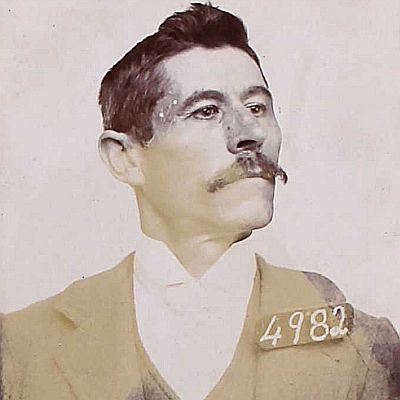
Image Found at: HistoricalCrimeDetective.com
A Memphis Rebel, Or Reble?
After Texas, Winters went to Memphis, Tennessee, where he drove a street car for nearly three years. There are conflicting reports over his time in Memphis, as well. Winters portrays himself as a hardworking man, who kept his head down and didn’t bother anyone while living there. Newspaper reports claim otherwise.
Apparently, Winters went by the name of John Winters Reble and he was described as “an absolutely fearless man.” He kept to himself but had a reputation for being a gambler. In fact, he gained a name for being “the most fearless gambler that ever faced a faro bank in Memphis.”
One popular tale of his gambling prowess claims that Winters Reble left the table with $7,000 in one night. The men that knew him believed that he left Memphis because he grew tired of it. Yet, they described him as having “all the nerve, energy, and grit to plan an execute a big robbery.”
Winters claimed that health problems had forced him to leave Memphis for a trip back to Texas. Whatever the reason was for leaving, Winters would land in Dallas where he spent time driving a street car. After a few months, Winters left the city in November 1888.
His California Arrival
Eventually, he made his way to Los Angeles, California, in the fall of 1890. Winters worked for a street contractor for a few months and then left for ranch work in San Bernadino County. He was employed by a man named Richard Gird at the Chino Ranch.
After two years of ranch work, Winters left for San Francisco where he “loafed around awhile.” Eventually, that led to another ranch job but this was in Stanislaus County for a man named Henry Hamilton.
Unwilling to settle for that lifestyle, Winters returned to San Francisco in 1894, and secured a job at the Selby Smelting Works where he was employed for seven years up until the robbery.
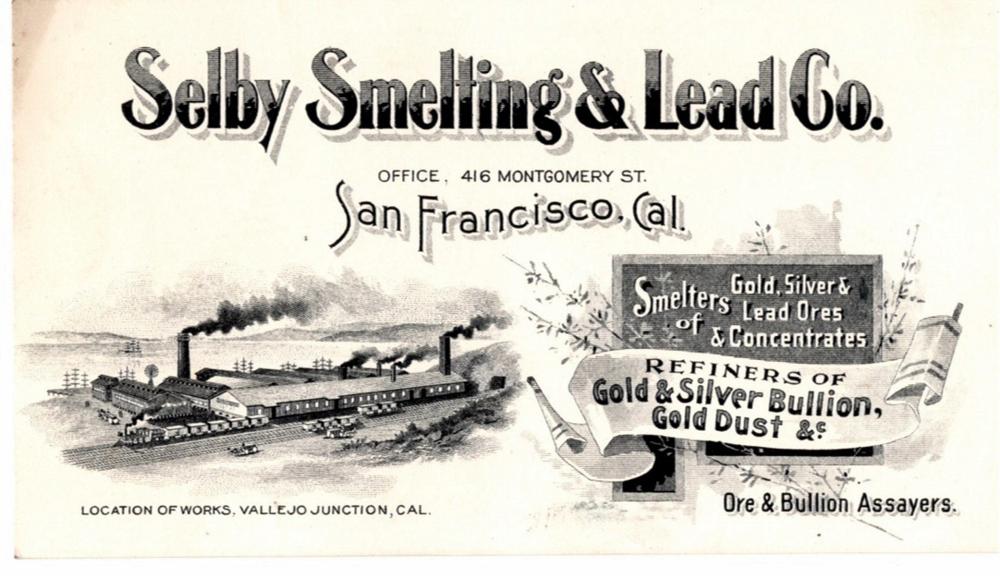
Selby Smelting Works
At the turn of the twentieth century, the Selby Smelting Works (also called the Selby Smelting & Lead Company) sat along the shoreline between Crockett and Rodeo, west of where the Carquinez Bridge stands today.
The plant refined precious metals shipped from all over the West. And, at times, it held unimaginable wealth. The facility’s location, right on the water, made shipping an efficient process.
And, as newspapers recount during that time, many of the Selby workers discussed the likelihood of the Smelting Works being robbed. Some of the men even dreamt about robbing the place. But only one man dared to try it.
“When I Plan A Robbery, I Plan A Big One”
Those very words were spoken by Winters in his confession after multiple days of interrogation. Once he accepted his fate, Winters took every chance he could to let the world know that he planned and executed this robbery all by himself.
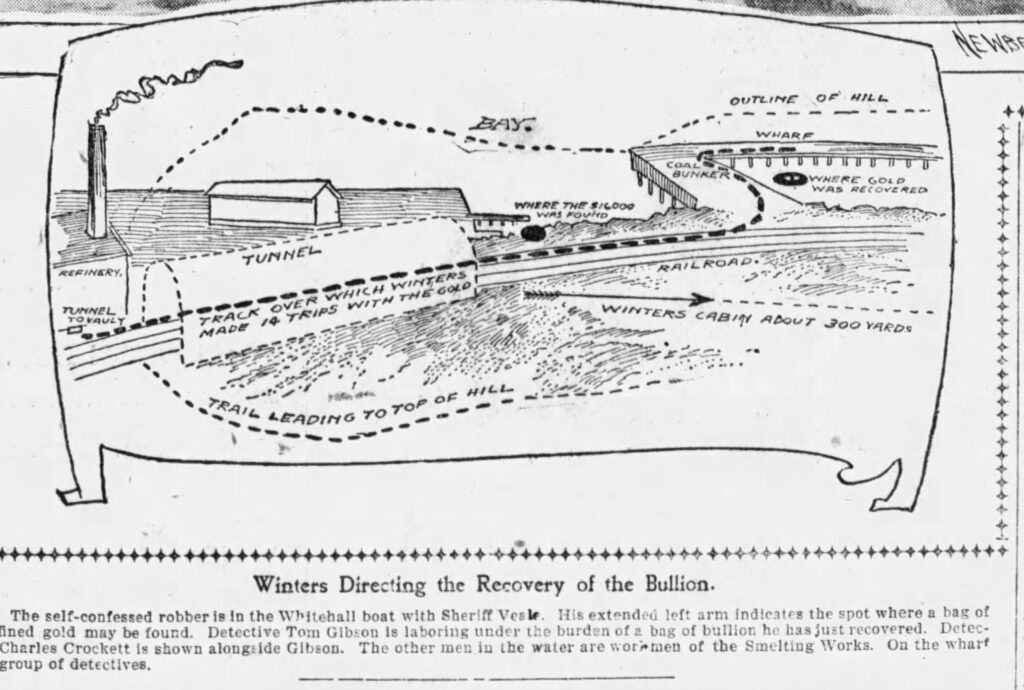
Winters spent six weeks digging tunnels (reported to be over 120 feet long) and the last two nights drilling into the vault. After finally penetrating the exterior of the treasury, Winters climbed through the hole in the floor and grabbed as much gold as he could before throwing it down into the tunnel.
From there, Winters carried the gold to the outer end of the tunnel where he piled it all up. Then, he would carry the gold, 900 pounds in total, to the wharf. Winters would go on to say that this part of the plan was “the hardest work of my life.”
According to the Sunday August, 11, 1901, edition of The San Francisco Examiner, the criminal genius shared the following details with reporters:
“I made fourteen trips from my tunnel to the wharf where I lowered the bullion into the bay. I made a mark on the wharf where I dropped each bar, so that I could readily find them.”
Before he even committed the robbery, Winters had already planned how he would get rid of the bullion without bringing suspicion on to himself:
“I planned to remove the gold from the bay a bar at a time. I had intended to melt the gold, to mix it with an alloy and to dispose of it in quantities that would bring me about $10,000… I intended to take several years in disposing of the bullion.”
When prompted about what he would do with all of that gold, Winters said he wanted to quit his job, travel to foreign countries, and that he also wanted to build an airship. In fact, while staring down the barrel of prison time, Winters was adamant about finishing his airship plans:
“It may take time, but I will complete my invention, and it will fly. I shall being work on it as I get back to Crockett.”
Winters Became An Immediate Suspect
Despite the coyness from law enforcement, Winters was an immediate suspect. In fact, Superintendent von der Ropp claimed that he knew it was Winters that robbed Selby within two hours of finding the vault had been breached.
Apparently, Winters’ behavior in the days leading up to the robbery had been “the subject of much comment,” according to von der Ropp. The Superintendent also went on to give credit to a Selby worker by the name of Peter Donaldson who was the first to come forward and accuse Winters of the crime.
At the time, Selby had put up a reward of $25,000 to catch the robber. After the arrest and confession, von der Ropp joked about who would get the reward as he took jabs at the detectives for “strutting and bragging and claiming all the honor of the capture of Winters.”
If you believe von der Ropp’s story, he also insists that he knew where the gold ended up and put a watchman at the spot to guard it just in case Winters had any accomplices.
The Authorities Stakeout His Cabin
There’s nothing like an old-fashioned stakeout to add another layer of intrigue to an already compelling story.
Winters lived about a mile from where he worked. And, when he didn’t show up for work the next day, and neighbors nor coworkers could account for his whereabouts, authorities went to his cabin. Tacked to his door was a note that said “Any one who enters here will be shot.”
Well, that only increased the lawmen’s suspicions about Winters. So, the detectives staked out his cabin all Tuesday night. When he didn’t show, they broke into his home first thing Wednesday morning.
Dispute Over Found Evidence
Over the years, it’s been debated as to what evidence was actually found in the cabin and how the authorities actually linked it to Winters. In fact, following his arrest, Winters was already refuting reports of the detectives linking these items to the crime in question.
Some of the items found in his cabin included:
- An electric incandescent bulb – it was about the size of a cherry and connected by a wire to a battery. The bulb was crusted with mud that the detectives claimed matched the clay from the tunnel.
- A paper of chalk – which was believed to be used to prevent the point of a drill from squeaking.
- Tacks – these unusual tacks were the same kind used to nail a cloth screen at the opening of the tunnel.
- Shovel – it was a short, metal coal shovel with a hollow handle. It was surmised that this shovel would be ideal to dig in the soft clay of the tunnel.
- Bolt cutter – although not used in the robbery, it was believed to be a tool of the trade.
- Burnt clothes – in Winters’ stove were burnt clothes.
- Letters – correspondence between Winters and Miss Ida Spencer. This was the clue that helped the detectives figure out where Winters would be at.
- Pistol – a Colt revolver pistol was found which had mud caked between the handle and the cylinder.
- Wooden plug – a round, wooden plug was found in the cabin and it was believed to be part of his plan to cover up the hole in the vault.
In his published confession, Winters stated that what “spoiled it all” was leaving his gun and tacks behind. Yet, in defiance and still stroking his criminal intellect, Winters would refute the claims from the detectives.
He declared that the devices used to dig the tunnel, a shovel and an unnamed tool, were both thrown into the water. Also, the light that they found wasn’t even used in the tunnel.
Winters stated that he had burned his old clothes for many years up to that point as he didn’t like the clutter or to keep old clothes. A declaration that nobody believed then, or now.
Another piece of damning evidence wasn’t found in his cabin. Instead, it was a cap found in the tunnel that fit Mr. Winters. He claimed that his hat blew away on Saturday night into the river and the discovered cap was not his.
Flees Town For A Woman
Winters didn’t flee far. Or, another way to look at it, he really didn’t plan out his getaway to the same miniscule details that he did with the robbery itself.
By August 7, two days after the heist, Detective Gibson tracked him to San Rafael, where Winters had been sweet on a young woman named Ida Spencer.
On that very day, according to reports, he had offered to buy her $5,000 worth of property, which was an extravagant gesture that drew even more attention at precisely the wrong moment. Officers promptly arrested Winters in Marin County and hustled him back to San Francisco for questioning in the “sweat box.”
Who Was Ida Spencer?
Ida Spencer, daughter of the Cosmopolitan Hotel owner in San Rafael, was believed to be the love interest of Winters. Although, Spencer would go on to publicly reject this idea, there was speculation that she received a wedding dress a few days prior to the robbery.
Spencer was ruled out as a suspect or co-conspirator. However, she didn’t believe Winters was guilty at first. Yet, in a great example of kicking a man when he is down, Spencer claims that Winters was foolish for confessing:
“I think, however, that he was very foolish to confess, as there was not much real evidence against him. If he had kept quiet he would have been all right.”
That sounds like a woman who was upset over not being wealthy, and not someone who only had a “casual acquaintance” with Winters.
A few days after Winters’ conviction and trial, the Spencers sold their Hotel and left San Rafael. Some say that they left for Alaska. Others said they left for Shasta County. The prevailing rumor of the time, was that Ida Spencer left after she received a large sum of money.
The Muddy Treasure Hunt
Before dawn on August 9, 1901, officers chartered the tug Sea Witch and pushed off to the precise location Winters had indicated. As part of his confession, Winters told them where all of the gold was tossed into the bay.
It’s also speculated that authorities and/or The Selby Smelting Works offered him money to tell them where all of the gold was located. This is something that Winters consistently stood behind.
As for the trudging, the authorities had timed the trip for low tide. Detectives Tom Gibson and Charlie Crockett stripped down and plunged into the cold water. One by one, they dug through the mud and wrestled heavy bars of gold to the surface.
By the end of the effort, they had recovered every last piece of the Selby haul. It was a triumph of practical police work and careful tidal timing. It was also the end of Winters’s short-lived legend as a criminal mastermind.
Courtroom Justice: Sentence and Parole
The legal case was resolved very quickly. Winters was brought to Martinez, plead guilty, and on August 21, 1901, received a 15-year sentence in state prison for burglary in the first degree.
A few days later, Winters claimed that he would be paroled within 18 months and to receive $50,000 for his confession. In a bit of irony, or a cruel joke, Winters’ first task in Folsom Prison was to help dig up the prison yard.
Unfortunately for Winters, convict no. 4982, neither of his claims came true. He wasn’t paroled from Folsom Prison until November 4, 1908, after serving seven years. Following his release, we find news of Winters living in Sacramento where he was working for the Utah Construction company.
At the time, summer of 1909, Winters was facing an alleged parole violation as the reports claim he was seen visiting Contra Costa County which was against the terms of his release.
.
“John Winters Is Dead Again”
Winters shows up in the 1910 census, still living in Sacramento. He was labeled as a “hired man.” Eventually, the perpetrator of the Selby heist ended up in Coalinga by 1915. He embraced the trade of an oil worker.
And, in another comedic flare to this twisting and turning tale, Winters died twice in 1923.
In September 1923, a John Winters was found dead in Sutter County with a gunshot to the head. However, that wasn’t our criminal of the century.
Instead, our John Winters ended up dying in a motorcycle accident in Coalinga on November 9, 1923. Newspaper reports covered his death and boldly mentioned that he was the Selby heist mastermind.
The report, which circulated through many of California’s major papers, said that Winters was “known as a silent and lonely man who made few friends. “
As for the Sutter County John Winters, local authorities first thought that he was the notorious Selby robber. Reports surfaced that many of the details matched up except for the age and color of eyes.
However, a few days later, our Selby mastermind was ruled out as the murder victim. The Sheriff obtained a description of the notorious criminal and compared it to the victim.
Thus, we have the newspaper headline “John Winters Is Dead Again” in the November 9, 1923, edition of the Daily Gazette-Martinez.
Did They Really Recover All Of The Gold?
More than a century later, the Selby heist still holds its grip on the imagination due to the legend that some of the stolen gold remains in the bay, on the beach, or hidden elsewhere.
Keep in mind, Winters confessed that he dropped a few bars on the sands prior to throwing the stolen gold into the water. He left those bars there, so that he could focus on the larger haul.
Also, for a man of meticulous planning, one would think that he could have a backup spot to hide some of that gold. Winters did leave town rather quickly and it’s hard to imagine that he didn’t take a bar or two with him.
There’s also the rumor of Ida Spencer receiving a large sum of money right before her family sold the Cosmopolitan Hotel and left town. If true, then where did that money come from?
Unfortunately for us daydreamers and treasure hunters, it appears that all of the stolen gold had been accounted for. Official reports claim that every bar and every dollar of the $283,000 stolen was recovered.
The bay had kept Winters’s gold only long enough to make a great story even better. And, that story ends without a treasure map or an “X” to mark the spot of the buried loot.
Sources:
Duke, T. (1910). Celebrated criminal cases of America (Pacific Coast cases). (Robbery of Selby Smelting Works by John Winters). Toronto: The Carswell Company. Retrieved from Internet Archive.
Moffitt, M. (2017, February 21). Sunken treasure? Is part of $17M Selby gold loot at bottom of the bay? SFGATE.
“LOST HIS NERVE AND CONFESSED: Winters could not maintain his innocence.” (1901, August 11). Marysville Daily Appeal/Appeal (via California Digital Newspaper Collection).
“SELBY SMELTING WORKS’ ROBBER IS CAPTURED: John Winters taken; says he acted alone.” (1901, August 10). Daily Californian/Sacramento/Contra Costa report.
“EXECUTED AN UNEXAMPLED ROBBERY: This is the remarkable confession of John Winters, Safe-Cracker.” (1901, August 11). San Francisco Examiner.
“GOLD THEFT FIGURES ARE CORRECTED.” (1901, August 14). The San Francisco Call
Historical Crime Detective. (n.d.). Robbery of Selby Smelting Works by John Winters (reprinting Thomas Duke, 1910).
“JOHN WINTERS IS DEAD AGAIN.” (1923, November 9). Daily Gazette-Martinez
“The Selby heist” (photo slideshow). (2017, February 21). SFGATE.
“BOBBER [Robber] OF SELBY BULLION TAKEN BACK TO CROCKETT.” (1901, August 16). The San Francisco Call