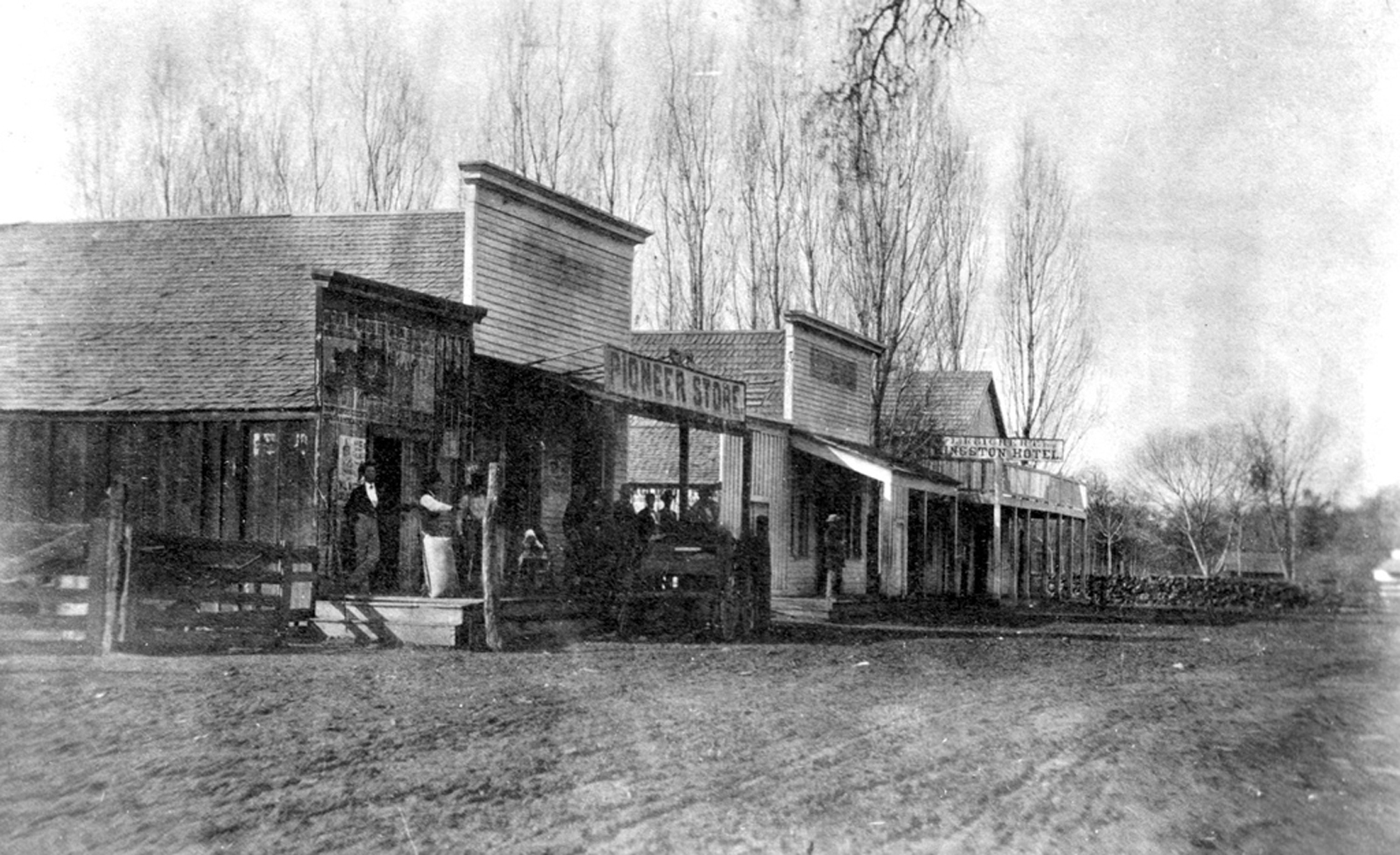
Kingston was a river town that grew out of necessity only to disappear just as quickly as it rose to prominence. Nowadays, all that’s left of this ghost town are a few trees, cement remnants of an infrastructure, a historic marker, a seasonal park and the whispers of its heyday.
However, where many California ghost towns quietly fade away into the history pages, Kingston stands apart from its ill-fated peers due to one infamous day in 1873.
A Ferry That Made A Town
The Gold Rush brought hordes of people west through every mountain pass that was accessible. From there, miners and ranchers spread throughout the San Juaquin Valley at a rapid pace. However, one thing that created an early problem for these pioneers was the Kings River.
Sometime between 1854-1856, Lucious A. Whitmore became the owner of a ferry that crossed the Kings River in the lower region. Reports are conflicting as some credit an I.P. George as the original proprietor who sold the ferry to Whitmore.
Either way, the ferry service flourished under L.A. Whitmore. His endeavor not only opened the door to transportation and expansion throughout the lower Kings region, but it also sparked a town to grow up around it.
Quickly, homes and businesses were built. The people called this place Whitmore’s Ferry after the man who conquered the lower Kings River.
In 1856, Fresno County was officially formed and Whitmore’s Ferry became part of the county. In fact, it was one of the county’s three original towns. Sadly, none of them exist today.
In 1858, due to the growing popularity of Kingston (Whitmore’s Ferry), the Butterfield Overland chose this town as a stage stop along its 2,800-mile route that connected St. Louis to San Francisco.
According to the 1892 book “A memorial and biographical history of the counties of Fresno, Tulare and Kern, California,” it was James Edward Denny who was credited with naming the town Kingston.
The name of Kingston was inspired by the Kings River, which was derived from the original Spanish name – El Rio de los Santos Reys. Once translated, this meant River of the Holy Kings.
Mr. Denny came to California in 1854, where he joined his brother in Forest City. Eventually, he made his way down to Kingston in the late 1850s.
He was said to have, in partnership with another, owned a ferry, hotel, and store. Additionally, Mr. Denny was appointed by President James Buchanan as the first postmaster of the town in 1859.
By the early 1860s, Denny had moved on to Visalia. However, some of the services that he provided for the town would end up in the hands of one O.H. Bliss, who we will go into detail below.
As Denny was departing, a new prominent Kingston citizen was firmly establishing his roots. Perry Phillips became a farmer in the Kingston area by 1860. He gained wealth through mining at Grizzly Hill in Nevada County. He was a respectable man in town and played a part in the conclusion of the robbery among other community matters.
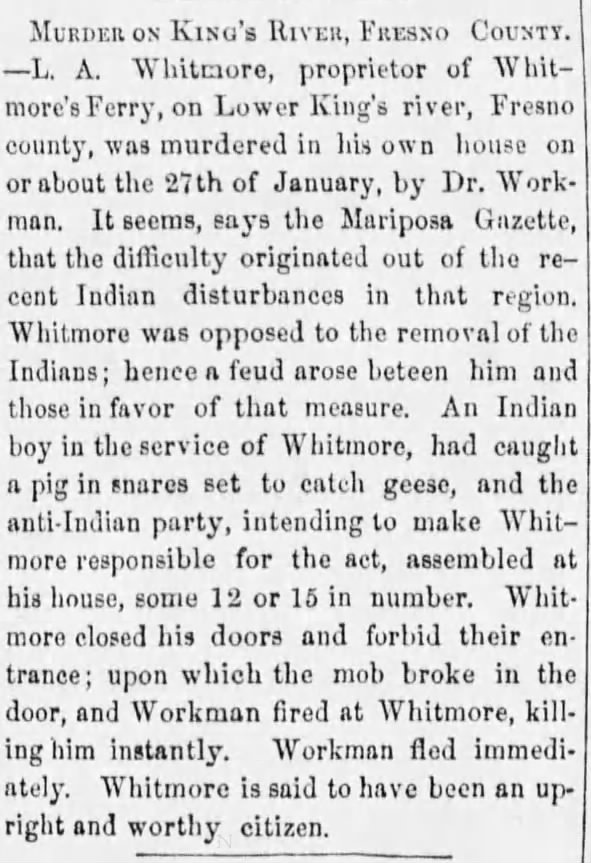
Unfortunately for Whitmore, he would not get to see his creation grow beyond this point. In early 1859, Whitmore was murdered by Dr. Workman and his anti-Indian posse. At this time, tensions with California tribes were high and groups of people were trying to eradicate them from the San Joaquin Valley.
Whitmore was married to a Native American woman (Yokut) and had children with her. So, he was a staunch opposition to the anti-Indian movement.
Things came to a head in January 1859, when Workman and a posse of men ended up at Whitmore’s house. Eventually, the mob broke into his home and killed him. Dr. Workman was said to be the man that shot Whitmore. It was estimated that upwards of 50 Native Americans were killed during the “roundup.”
Ironically, a rancheria ended up being firmly established just west of town and home to roughly 300 Native Americans. It was a common occurrence to see them swimming in the river after using their sweat houses and performing various traditional ceremonies.
By all accounts, the town of Kingston and the rancheria got along well. Clearly, the anti-Indian movement didn’t last long in this region. Sadly, it did have a tragic impact.
A Valley Oasis of Trading and Commerce
After the death of Whitmore, the community came together with a purpose to honor a founding father and friend by continuing to build on top of what he started.
Kingston became the only stop between Millerton and Visalia. It was also the only resting place between the latter and Los Banos.
Due to its location near the river, it was said that Kingston was surrounded by “some of the finest farming land.”
Whitmore’s ferry business passed hands following his murder. It was sold at a public sale a few months later, for the sum of $1,425. A Mr. Swift and Mr. Sanderson were reported as the purchasers and were described as “two enterprising gentlemen.”
The two men proclaimed that they would have new boats and make improvements to this service. Unfortunately, their foray into the ferry business didn’t last long and the services ended up in the hands of O.H. Bliss.
According to one source, Bliss charged 25 cents to cross on foot and 75 cents for horse and buggy.
Bliss was ahead of his time. The man wore many hats and was a catalyst to growth in Kingston. In addition to running the ferry, he also was a Wells Fargo agent, a public notary, and had a livery stable. Historical accounts also say that he was a postmaster among other ventures.
Bliss’ enterprise was a central hub to Kingston. In fact, it was said that people came here to get their mail, buy groceries, which were brought in from Stockton, catch up on life, and talk to the doctor.
Is There A Doctor In The House?
In 1865, Dr. J.A. Davidson arrived in Kingston and became the primary doctor in town. Davidson had a colorful history serving in the military and performing medicine in a number of foreign countries. He was also appointed surgeon in the Confederate Army during the Civil War before being assigned to the Navy department.
If ever a resident of Kingston deserved a separate article on their life, it’s Mr. Davidson. His story just leading up to Kingston was rather remarkable.
Dr. Davidson spent several years in Kingston during its peak era. Eventually, he left for Fresno and then made his home in Hanford by late 1879.
Business Is Booming
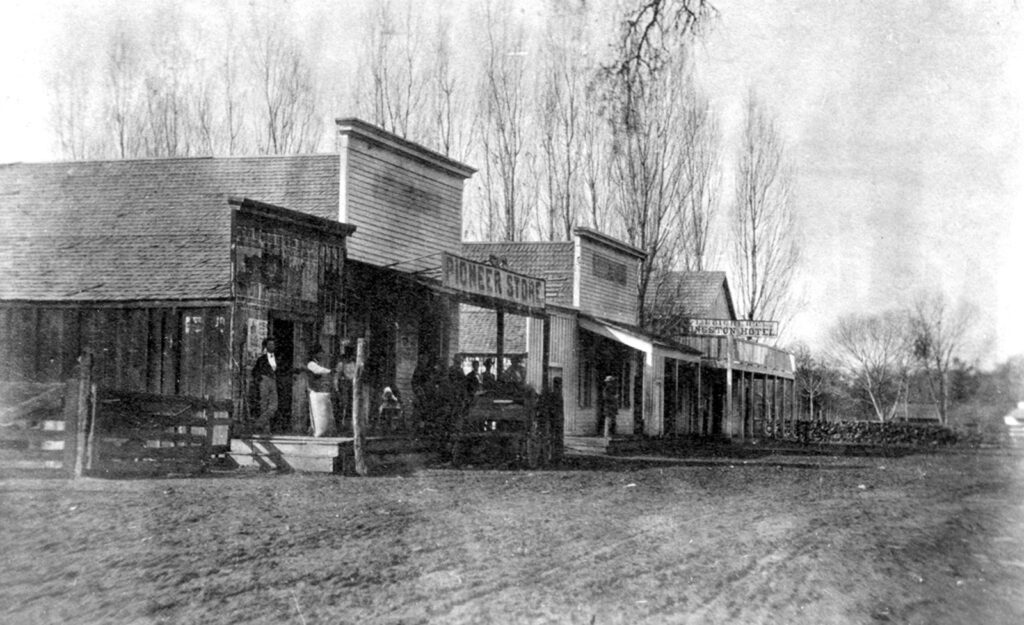
During the 1870s, Kingston was said to have three stores, a hotel, a livery stable, saloon, school, a stage depot, an old red dance hall, shoe shop, blacksmith shop, and a post office in addition to a doctor. Some reports claim that the town had a population of 300. Others claimed it was closer to 500.
The schoolhouse also doubled as a place for social fun, as town dances were also held there. The polkas and square dances were popular amongst the townspeople during this era. Additionally, the first school was on the other side of the river, so kids had to take the ferry just to get there. A second school ended up being built on the same side as the town.
Another amenity that made Kingston stand out from neighboring towns along the Kings River was the fact that it had a nearby race track.
The Kingston track was a hotbed for betting and entertainment. It was a one-mile, circular track just west of the town. Horses were brought from all over California to race at this venue. The track was on land said to be owned by Mrs. Florence Morton.
In a Hanford Morning Journal article dated Feb. 15, 1950, the track was described as follows:
“Surrounded by oak groves, the jockeys in their bright colored shirts, girls in their long full skirts and the funny little hats which are fondly remembered by San Joquin Valley residents.”
Some of the horses during that time were: Stonewall Jackson, Coal Oil Tommy, Bullet Neck and Grey Eagle. A few of the jockeys were Dick Bozeman, George Hamilton, Jimmy Slinker and George O’Connor.
Yet, the gambling wasn’t confined to just the race track. The town itself was said to be filled with heavy gambling, especially during the winter months. In fact, the action was described as “twenty-dollar gold pieces were stacked on poker tables as chips are stacked today.”
But that wasn’t all. The main street held performances, the circus came to town, the school house held square dances, and there was an annual May Day picnic that gave the ladies of the town a reason to wear their new hats and dresses.
Traveling preachers would come to Kingston on occasion and they drew large crowds from people all around.
During this era, Bliss realized that the demands of transportation and commerce required something more efficient and effective than a ferry. So, he set out to build a bridge across the river to replace his ferry service.
The Kingston Bridge
Sometime in the early 1870s, although some reports claim it was 1869, Bliss used the lumber from two ferry boats to build the first bridge across the Kings River at Kingston. However, it was only a temporary solution as a sturdier bridge was needed.
In 1873, Bliss replaced the wooden bridge with a pile bridge that had concrete footings. Well, that depends on which version of the story you believe. There were two reports as to who actually built the bridge. One report claims Bliss did, and another claimed that Jonh Sutherland was behind the construction.
I tend to lean towards Bliss building this bridge due to a few key reasons. The primary factor that has me convinced it was Bliss’ bridge was due to his name being on the applications and permits.
According to an article in the April 1, 1908, edition of The Fresno Morning Republican, Bliss gave a $5,000 bond to collect tolls across the bridge and also paid $36 for a toll-bridge license. If he were not the owner of the bridge, then why would Bliss pay that much money for a bond and license?
The second reason why I believe Bliss still owned the bridge when it first opened in late-1873, was due to what happened to him in the infamous robbery. We’ll touch on that in more detail below.
With that said, it’s clear that Bliss sold the bridge and his ferry service to Sutherland at some point after the town was robbed. Most likely, the sale was in early 1874, as O.H. Bliss ended up leaving Kingston for Los Angeles before 1875.
Sutherland was another key figure in this region as one of the first permanent settlers and a wealthy rancher. So, he had every reason to want a Kings River crossing to succeed.
Details are scarce, but it appears that the bridge underwent repairs by 1889. Unfortunately, it’s unclear as to what caused the need for these repairs. Additionally, at some point after this, ownership was taken over by the county.
In March 1908, the Kingston Bridge collapsed. Apparently, a herd of cattle were crossing the bridge and “bunched up in the center.”
A report from the Fresno Herald on March 30, 1908, had the following description of the incident:
“Suddenly, there was a cracking and swaying and without further notice a section of the structure at least forty feet in length gave way and fell into the bed of the river, carrying the stock with it.”
Since there was little water in the river, none of the cattle drowned or were injured.
By this time, Kingston had disappeared and only a few buildings along with the bridge were remaining.
The town of Laton was at a great inconvenience due to the bridge’s collapse. Apparently, a ferry had to be used again. Moving forward, it was decided to build the bridge closer to Laton instead of rebuilding the Kingston Bridge.
A Day of Infamy and Lore
Before we jump into this infamous day, I would like to point out that there are a few recorded accounts from alleged “eye witnesses” of this robbery. The reports don’t match up 100%. So, I will note some of the differences.
One report comes from the statements of Mrs. E.D. Morton who was the eldest daughter of Perry C. Phillips. Her account was published in a January 1937 article of The Fresno Bee.
The second report was by W.E. Small in his book The History of Tulare County. He recounted the story from George A. Butz who was a victim of the robbery that day. An April 1999 column in The Hanford Sentinel talked about Butz’s experience.
When Did The Robbery Take Place?
Christmas of 1873, was a joyous day for the townsfolk of Kingston. They celebrated the holiday and were thrilled with the prospects that lay on the horizon following the building of a new Kingston bridge, which was set to open within days. In fact, it was still so new, that the toll gates were not in place yet.
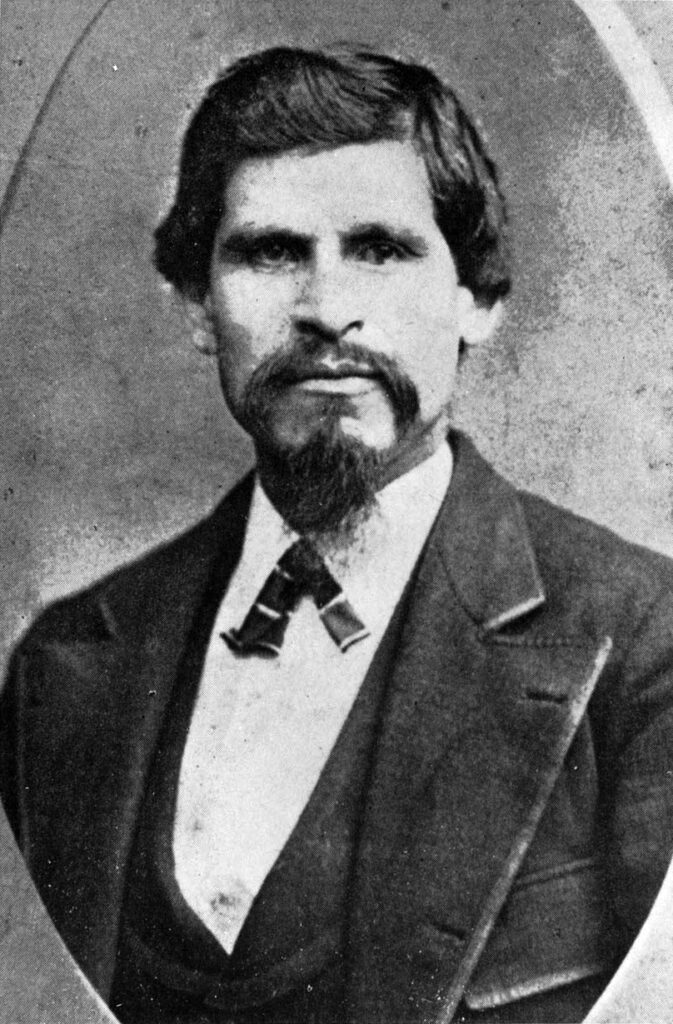
Without the toll gates, it made it easier for people to cross over on foot. And, that’s exactly what happened in the dusk hours of Friday, December 26, when the notorious Tiburcio Vasquez and his group of bandits (12 to 15 men) descended upon Kingston.
Butz’s recount said it was Christmas Eve, as did some of the initial newspaper reports. However, most historians agree that it was the 26th.
The bandits left their horses on the north side of the river and crossed the new bridge by foot. As they reached the south side of the river, they immediately came across O.H. Bliss. In Butz’s recount, Bliss wasn’t mentioned. And, he said the bandits came from the west.
Yet, it’s more than likely that Bliss was the first one attacked considering he was the proprietor of the bridge and ferry.
The bandits forced O.H. Bliss to lie down at gun point. They tied his hands and feet, then began searching him for valuables. Bliss reportedly said that his head was in an uncomfortable position, so the one of the bandits sarcastically brought him a blanket to use as a pillow.
Three Men and a New Suit
Next, they came across Pres Bozeman, Milt Brown, and John Potts. The three men were quickly subdued. Bozeman and Potts were made to lie down and searched. They found $180 on Bozeman.
Brown apparently had a new suit and didn’t want to lay down in the dirt. So, they marched him over to L. Reichert’s hotel. In Butz’s version, it was Bozeman with the new suit. Both stories agree that the bandits ended up at Reichert’s hotel next.
In Butz’s recount, he made it a point to describe how these men were hog tied with baling rope.
Chaos Inside Reichert’s Hotel
Once inside the hotel lobby, Brown was forced to lay down there. At the same time, they placed a guard outside of each nearby store which included shops owned by E. Jacobs, Louis Einstein, and Sol Sweet.
Eating inside the hotel dining room were various men including Captain Esrey, Edward Douglas (also spelled Douglass) from Visalia, Lancelot Gilroy, Andy Ducker, and Ben Ducker. If you include the saloon, there was another eight to 10 men enjoying the evening.
The bandits interrupted dinner and drinking as they ordered the men to put their hands up and give over their belongings. The men from the saloon lost roughly $100 and their watches.
Douglas refused to lie down when ordered by the thieves. So, they pistol-whipped him to the floor then took his money and watch. In Butz’s version, Douglas asked the bandits if he could keep the watch because his father left it to him after he recently passed. They didn’t believe him and took it.
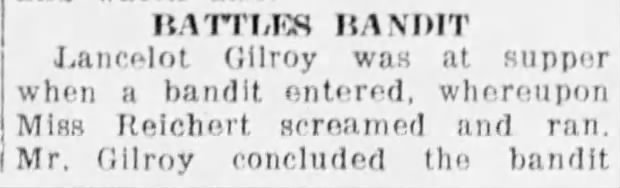
Stage operator Lancelot Gilroy, a native of Ireland, and future country clerk of Tulare, was having supper when one of Vasquez’s men entered. A Mrs. Reichert screamed when she saw the bandit and ran off.
Gilroy was angered at this as he believed that the man insulted Mrs. Reichert. So, like any Irish man by the name of Lancelot would do, he rose up from the table and smashed the bandit with a chair.
This led to Mr. Gilroy getting smacked around with a revolver. Butz’s story claims that Gilroy’s life was spared because some of Vazquez’s men knew and liked him.
At this point, Vazquez reportedly told everyone in the dining room to cooperate and they wouldn’t get hurt, according to Butz. He warned them that if any of his men were hurt or killed, that he “would not hesitate to kill his captives and burn down the town.”
Some of the bandits were said to have taken Reichert out back behind a barn and force him to give up the hotel’s money. The hotel proprietor complied as he preferred that than death.
At some point during this raucous, the cook made and escape through the back door. Mrs. Morton didn’t have these details in her statements.
After The Hotel: Nearby Stores Are Robbed
Once they finished robbing all of the people inside the hotel, the bandits moved on to the nearby stores. First on the list was a business ran by Elias Jacobs and Louis Einstein.
These two men were successful businessmen who also ran stores in Visalia, Centerville and eventually Fresno. Both would move on from Kingston soon after this robbery. Eistein & Co. ended up becoming a well-known general merchandise store throughout the county. But on this day, they were forced at gunpoint to open their safe and give up $800.
Eward Erlanger, the bookkeeper for Jacobs and Einstein’s store ran to Sol Sweet’s store to sound the alarm. Erlanger was born in Germany in 1852. He arrived in New York in 1870, and eventually made it to California in 1871.
By 1872, he settled in Kingston where he stayed until 1877. Eventually, Erlanger would end up in Lemoore where he accomplished many things like building a hotel, become a lawyer, handled real estate and was an avid lover of horses.
Unfortunately, it was a little more than a year in Kingston before he was a victim of this robbery. And, his alert to Mr. Sweet only got both of them in trouble. In fact, Butz’s statement claims that they shot at Erlanger when he ran out of the Jacobs & Einstein store.
When Mr. Sweet poked his head out to see what was going on, one of Vasquez’s men grabbed him and forced him to his store where he was robbed of $54.
Inside Sweet’s store was where Butz and a Luis Elsasser were located. They claim that Mr. Sweet was actually asleep when the robbery was going on in the hotel.
Once he woke, Sweet apparently instructed the clerk to turn off the lights and lock the doors. Soon, after this, he poked his head outside and was nabbed. Mrs. Morton’s version doesn’t have these details.
Here’s where things get a bit surreal. George Butz claims that the bandits didn’t want his money and that he wasn’t tied down like the rest of the people in the store. It’s hard to believe this part of the story but it definitely adds another twist.
The Posse Arrives
Both accounts of the Vasquez robbery claim that the posse formed and arrived in town while the bandits were cleaning out the Sweet store. Mrs. Morton talks about how the posse organized at her father’s house while the women were upstairs on the porch watching everything from a safe distance.
Butz’s recount states that the hotel cook ran and got help. The first men who were quick to grab guns and take position on the river bank were allegedly another Bozeman family member, Bob Scronce, and the esteemed John Sutherland, according to Butz.
This version goes on to say that the men by the river opened fire. Mrs. Morton said one of the unidentified men accidently fired in all of the excitement.
The shot, or shots, prompted the Vasquez gang to flee back over the bridge. It was reported that one of his men was wounded. Butz’s story says it was a bandit named Chavez who was the second in command. He had been shot in the thigh.
The Legend of The Lost Loot
In total, the gang got away with $2,500, watches, jewelry and other valuables. However, one longstanding legend claims that some of that loot was lost during the escape as the bandit who was shot, ended up tossing it before he died.
This tale of lost treasure has survived for 150 years and some treasure hunters have gone out to the former site of Kingston to look for it. Unfortunately, there’s no credible evidence to support this lore about the lost or buried loot. However, Mrs. Morton claims that the bandit was reported to have died from his wounds.
Vasquez Pays The Toll
As mentioned above, part of the Christmas excitement was that the townsfolk were looking forward to having a formal ceremony to open the bridge. So, to have bandits be the first people to cross the bridge was a proverbial “salt in the wounds” moment.
Yet, legend has it that Vasquez sent the town a couple of dollars to pay for the toll due to his men using the bridge. I can’t think of a more fitting end to such an incredible tale.
In total, 35 to 39 men were tied down and searched for valuables, multiple businesses were robbed, none of the townspeople were killed, and the Vasquez gang proved that the Kingston Bridge was safe to use.
Kingston Is Gone With The Wind
While the robbery certainly shook the foundation of Kingston, it wasn’t the reason for the town’s decline. The primary factor in the death of Kingston was the railroad.
While Kingston was the ideal location for crossing the Kings River via ferry and stage coach, it was not an optimal solution for the railroad. In 1874, the Central Pacific Railroad chose Kingsburg as a stop along their route, and the small camp flourished into a town that is still alive today.
However, that was still far enough away from Kingston for it to remain a necessity to stockmen and commerce.
Yet, the town suffered another blow when Hanford was selected for a train depot in the late 1870s. This camp went from a sheep village to a town seemingly overnight. And, when Kings County was created in 1893, Hanford became the county seat.
The death knell came when the Santa Fe Railroad created a stop in Laton, less than a few miles from Kingston on the other side of the river. This meant that goods, travelers and other services would bypass Kingston for Laton. And, by the turn of the century, Kingston lost key establishments to Laton, as well.
In 1891, the post office was moved to Lillis, which is another ghost town today. Then, in 1900, it was moved to Laton where the town received electricity in 1904. That same year, Kingston elementary students were moved to Laton and a high school was built by 1908.
All of the townspeople were gone by 1908. And what old buildings that were left behind, eventually fell during windstorms. It was definitely an unceremonious end to a community that made the lower Kings River region viable for settling, which spawned a number of towns that still exist today.
Kingston Remembered With a Plaque and a Park
In 1950, the state erected a historical marker (#250) remembering this once thriving river town. The marker is located near Laton, in Kings County. It’s on Douglas Ave., 0.3 miles west of 12 ¾ Avenue.
In addition to this plaque, the County also established the Laton-Kingston Park which is typically opened from Easter through the end of September each year.
Although there are no historical remnants to walk through or physically touch, the park does allow amateur historians and ghost town enthusiasts a chance to swim in the river and have picnics nearby, just like the residents of Kingston used to do every year, especially on May Day.
Sources:
“REMINICENCES OF UNCLE BILLY HUTCHISON: DAYS WHEN FRESNO WAS PART OF MARIPOSA.” (1911, July 23). The Fresno Morning Republican.
“KINGSTON BRIDGE AS OLD AS 1874.” (1908, April 1). The Fresno Morning Republican.
SCVHistory.com. (2014, May 17). All That Remains of Kingston, California.
“BIG BRIDGE AT LATON RUINED: Collapses, plunging band of cattle into water.” (1908, March 30). Fresno Herald.
“KINGSTON FLOURISHED FOR 25 YEARS AND THEN VANISHED.” (1954, October 13). Hanford Morning Journal.
Bandit Vaquez’ Raid That Shocked Pioneers Recalled by Spectators.” (1937, January 17). The Fresno Bee.
“Hunting Vasquez.” (1999, April 25). The Hanford Sentinel.
Menefee, E. L., & Dodge, F. A. (1913). History of Tulare and Kings counties, California, with biographical sketches of the leading men and women of the counties who have been identified with their growth and development from the early days to the present. Historic Record Company.