Many of California’s lakes and reservoirs look peaceful from the shoreline. Families camp beside them, boats skim across them, and anglers cast into water that often hides a much older landscape below.
Beneath some of those waters are the remains of former towns, mining camps, roads, bridges, cemeteries, railroad stops, ranching communities, and Gold Rush settlements that disappeared when California built dams and reservoirs.
These underwater towns in California are not all the same. Some were full communities with hotels, stores, post offices, cemeteries, and hundreds or even thousands of residents. Others were smaller mining camps, crossings, bridges, road corridors, or local place names that were covered or reshaped as reservoirs filled.
This guide looks at California’s lost communities by lake and reservoir, explains what happened to them, and shows which places may still reveal traces during drought or low-water years.
Quick Facts About California’s Underwater Towns
- California has dozens of former towns, mining camps, bridges, cemeteries, roads, and settlement sites tied to reservoir projects.
- Many of the best-known submerged communities were connected to the Gold Rush.
- Kennett beneath Shasta Lake is one of the most famous underwater towns in California.
- Some places are visible only during drought, drawdowns, or extreme low-water years.
- Some sites were moved, partly demolished, or cleared before flooding.
- Not every submerged place was a full town; some were smaller camps, roads, bridges, cemeteries, or infrastructure sites.
- This article covers major examples across Northern California, the Sierra Nevada foothills, the Bay Area, the Central Valley, and Southern California.
What Are California’s Underwater Towns?
California’s underwater towns are former settlements and historic sites that were covered when dams and reservoirs reshaped valleys, river canyons, mining districts, and transportation corridors.
Some were true towns with residents, businesses, churches, schools, hotels, post offices, cemeteries, and roads. Others were mining camps, ranching areas, ferry crossings, bridges, rail corridors, or smaller local sites that were absorbed into the same reservoir projects.
That distinction matters. A place like Kennett, Monticello, Mormon Island, Whiskeytown, or Jacksonville was a recognizable community. Smaller entries, such as bridge remnants, roadways, or lesser-known mining settlements, still add depth to the story, but they are often better understood as part of a broader drowned landscape.
Unlike many California ghost towns, these places did not simply fade away because the mines dried up or the railroad bypassed them. Many were bought out, cleared, relocated, or abandoned because California needed reservoirs for water storage, irrigation, flood control, hydroelectric power, and recreation.
Why Are There Towns Underwater in California?
Most California towns underwater today disappeared because the state’s water system expanded across older settlements.
As California grew, rivers were dammed to store water for farms, cities, industry, flood protection, and power. Those projects created many of the lakes and reservoirs people visit today, but they also covered places that had existed for decades.
Many of these lost communities were already fading by the time reservoir plans were approved. Others still had residents, cemeteries, ranches, bridges, orchards, roads, and buildings that had to be removed before the water rose.
That is what makes these places so fascinating. They are reminders that California’s modern water grid was built directly over older chapters of the Gold Rush, mining, ranching communities, timber settlements, transportation routes, and Indigenous homelands that connect to a much deeper history of California Native American sacred sites.

List of Underwater Towns in California
This table highlights the major lakes and reservoirs covered in this guide, along with the towns, sites, and communities associated with each one.
|
Lake / Reservoir |
Submerged town, site, or community |
County / Region |
What happened? |
Can you see anything today? |
|
Folsom Lake |
Mormon Island, Negro Hill, Salmon Falls, Condemned Bar, and related Gold Rush-area sites |
Sacramento, El Dorado, and Placer counties |
Gold Rush camps and towns near the American River forks were covered or affected by Folsom Dam and reservoir construction. |
During drought or very low water, foundations, roadbeds, stonework, and bridge remnants may appear in some areas. |
|
Lake Berryessa |
Monticello, Putah Creek Bridge |
Napa County |
Monticello and surrounding Berryessa Valley sites were cleared before Monticello Dam created Lake Berryessa. |
Usually submerged, though the old Putah Creek Bridge has surfaced during severe drought. |
|
Camanche Reservoir |
Camanche, Poverty Bar, Lancha Plana |
Amador, Calaveras, and San Joaquin counties |
Gold Rush communities along the Mokelumne River were removed, abandoned, or covered when Camanche Dam and reservoir were built. |
Most remains are underwater, but the towns are remembered through historical markers, relocated graves, and local history records. |
|
Don Pedro Reservoir |
Jacksonville, old Don Pedro Dam |
Tuolumne County |
Jacksonville and the earlier Don Pedro dam site were covered when the modern reservoir was created. |
Most of the old townsite remains beneath Lake Don Pedro, though low-water years may reveal pieces of the former river landscape. |
|
New Melones Lake |
Melones / Old Melones |
Calaveras County / Stanislaus River region |
Old Melones was covered when New Melones Dam created the larger modern reservoir. |
Usually underwater, though drawdowns can reveal older roads, foundations, or Stanislaus River canyon features. |
|
Whiskeytown Lake |
Whiskeytown |
Shasta County |
Whiskeytown was displaced when Whiskeytown Dam and reservoir were built in the early 1960s. |
Some foundations and traces may be visible when water levels are low and conditions are clear. |
|
Shasta Lake |
Kennett, Baird, Copper City, Delamar / Delmar, Elmore, Etter, Morley, Pittsburg / Pittsburgh, Winthrop, plus related bridges, roads, and infrastructure |
Shasta County |
Shasta Dam and the rising waters of Shasta Lake covered several mining, railroad, and river communities. |
Kennett is deep underwater, but drought years can expose some bridge remnants, roads, foundations, and shoreline features elsewhere around the lake. |
|
Lake Oroville |
Bidwell’s Bar, Hamilton, Stringtown area |
Butte County |
Gold Rush sites near the Feather River were affected or submerged when Oroville Dam created Lake Oroville. |
Rarely visible, though low-water years may expose portions of the older canyon landscape or related infrastructure. |
|
Lake Almanor |
Prattville / original Prattville site |
Plumas County |
The original Prattville area was affected when Lake Almanor filled after dam construction on the North Fork Feather River. |
Some elements were moved, while other traces of the original settlement were covered by the reservoir. |
|
Lake McClure |
Bagby |
Mariposa County / Merced River region |
Bagby declined after mining and railroad activity faded, then was flooded as Lake McClure expanded after New Exchequer Dam. |
Mostly underwater, though low reservoir levels can reveal pieces of the old townsite or surrounding Merced River landscape. |
|
Millerton Lake |
Camp Barbour, Rootville / Millerton |
Fresno and Madera counties |
Earlier settlements and river sites along the San Joaquin River were affected when Friant Dam created Millerton Lake. |
Most remains are underwater, though low-water conditions may reveal parts of the older river corridor. |
|
Searsville Lake |
Searsville |
San Mateo County |
The former lumber town of Searsville was affected by the creation of Searsville Dam and reservoir. |
Public access is restricted inside Jasper Ridge Biological Preserve, and modern sources caution that the “buildings underwater” story is more legend than fact. |
|
Silverwood Lake |
Cedar Springs |
San Bernardino County |
Cedar Springs was bought out and removed before Cedar Springs Dam and Silverwood Lake were completed. |
Most structures were removed before flooding, though local accounts connect the old community with the lake’s submerged landscape. |
|
Lake Isabella |
Old Kernville, Old Isabella |
Kern County |
Old Kernville and Old Isabella were displaced, demolished, or partly moved before Isabella Dam and reservoir filled. |
During severe drought, foundations and traces of Old Kernville can sometimes be seen. |
|
Lexington Reservoir |
Alma, Lexington |
Santa Clara County |
Alma and Lexington were covered or affected when Lexington Reservoir was created in the Santa Cruz Mountains. |
During severe drought or reservoir drawdowns, old foundations, roadbeds, and railroad-related remnants may briefly reappear. |
Underwater Towns and Lost Communities by Lake or Reservoir
The entries below are organized by lake or reservoir, not by individual town. Many of these places were part of broader river valleys, mining districts, transportation routes, and local communities that were affected together.
Folsom Lake: Mormon Island, Negro Hill, Salmon Falls, Condemned Bar, and Others
Folsom Lake covers one of the most historically important Gold Rush landscapes in the Sacramento region. Before the dam and reservoir, this area near the forks of the American River was dotted with mining camps, river crossings, cemeteries, roads, bridges, and small towns that grew quickly after gold was discovered at Coloma in 1848.
That Gold Rush setting also ties Folsom Lake’s lost communities to the same mining world behind many stories of lost gold mines in California and lost treasure in California.
Mormon Island was one of the most important of these early settlements. It was founded by members of the Mormon Battalion in 1848 after they heard about the gold discovery. The settlement grew near the American River and became a vital stop between Sacramento and the diggings around Placerville. At its peak, Mormon Island had stores, hotels, homes, and a large enough population to stand apart from a temporary mining camp.
Negro Hill, located across the South Fork of the American River from Mormon Island, is one of the more historically significant and sensitive entries tied to Folsom Lake. The town is often associated with African American miners who worked the diggings in the area, though older accounts differ on the exact origin of the name. What is clearer is that Negro Hill was a diverse Gold Rush community with a cemetery and pioneer burials later connected to the Mormon Island Memorial Cemetery relocation story.
Salmon Falls was another important Gold Rush-era settlement in this region. It took its name from the nearby falls and became a town with homes, businesses, a bridge, and a cemetery. By the time Folsom Dam was being built, remnants of Salmon Falls still remained, including foundations and the old Salmon Falls Bridge.
Condemned Bar was also part of this submerged Gold Rush landscape. It began as a mining camp and grew into a small town near the river, with one of the early bridges connecting El Dorado and Placer counties.
Prairie City appears in related Folsom-area Gold Rush history, but the strongest underwater-town entries for this lake are Mormon Island, Negro Hill, Salmon Falls, and Condemned Bar. Unless stronger sourcing directly ties Prairie City to Folsom Lake inundation, it is best treated as a related regional Gold Rush site rather than one of the primary submerged towns.
During drought or very low water, parts of Folsom Lake’s older landscape may reappear, including foundations, roads, stonework, bridge remnants, and other features. These exposed areas are one reason Folsom Lake remains one of the most searched-for underwater town locations in California.
Lake Berryessa: Monticello
Lake Berryessa is home to one of California’s most clearly documented submerged-town stories: Monticello.
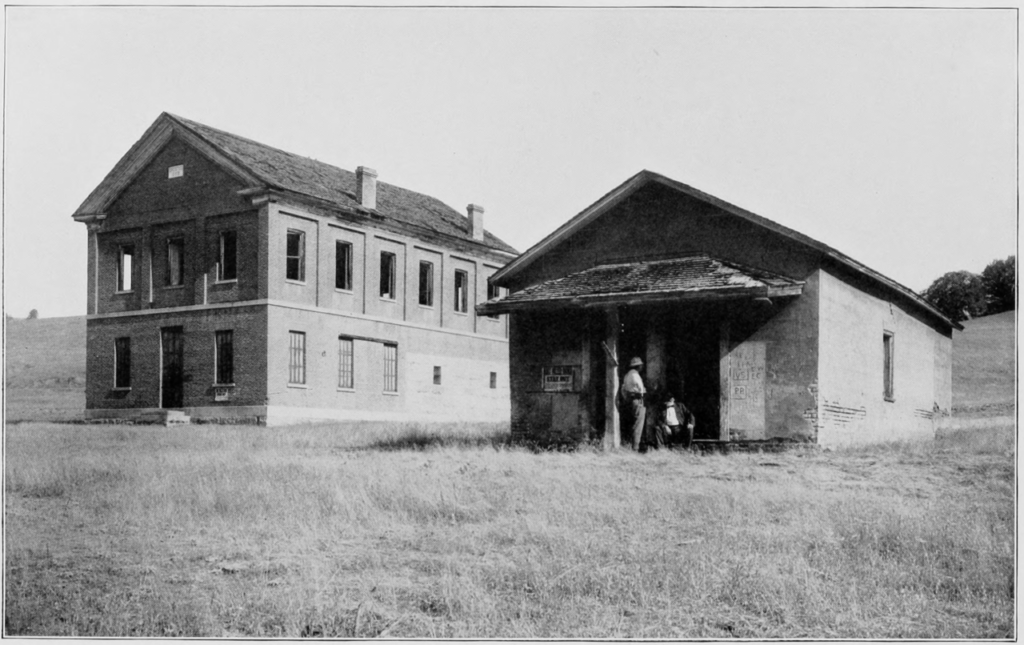
Before the reservoir, Monticello sat in Berryessa Valley, a rural Napa County community surrounded by farms, ranches, orchards, and family homes. The town had a school, cemetery, roads, bridges, and families whose roots in the valley stretched back generations.
That changed when plans moved forward for Monticello Dam on Putah Creek. The dam created Lake Berryessa, and the town of Monticello was cleared before the reservoir filled. Families were forced to leave, buildings were removed or demolished, and graves were relocated before the rising water covered the valley.
One of the most visible remnants tied to Monticello is the old Putah Creek Bridge. During severe drought, the top of the bridge has surfaced from the lake, creating one of the most recognizable images of California’s drowned communities.
Monticello works especially well in this article because it answers the search intent directly: yes, there is a town under Lake Berryessa, and that town was Monticello.
Camanche Reservoir: Camanche, Poverty Bar, and Lancha Plana
Camanche Reservoir covers a rich Gold Rush landscape along the Mokelumne River, where several communities rose during the mining years and later disappeared, relocated, or became part of the reservoir’s submerged history.
Camanche was the namesake town. It developed in the Gold Rush period and became one of the important settlements in this part of Calaveras County. Mining activity, nearby camps, and local trade helped the town grow, and historical accounts describe it as reaching a peak population of around 1,500 residents. A post office operated there for roughly a century, lasting until the early 1960s.
Poverty Bar was another Mokelumne River mining community tied to this same reservoir story. It began as a mining camp and grew as miners spread through the region looking for richer ground. Like many Gold Rush towns, it rose quickly, suffered setbacks, rebuilt what it could, and slowly declined as mining faded.
Lancha Plana, whose name means “flat boat” in Spanish, was established along the Mokelumne River during the early Gold Rush years. It became large enough to support businesses, nearby communities, and even a newspaper for a time. Poverty Bar, Camp Opra, Copper Center, and Put’s Bar were among the neighboring communities associated with the larger Lancha Plana area.
This Mokelumne River mining corridor is also the kind of Gold Rush country where stories of California lost gold caches still feel connected to the landscape.
When Camanche Dam and reservoir were built in the 1960s, remaining residents, graves, and structures tied to these older communities were removed or affected. Today, the towns are remembered through historical markers, cemetery relocations, local history, and the knowledge that much of this Gold Rush landscape now lies beneath Camanche Reservoir.
Don Pedro Reservoir: Jacksonville
Don Pedro Reservoir covers the old Gold Rush town of Jacksonville, one of the most important lost towns along the Tuolumne River.
Jacksonville was founded in 1849 by Julian Smart and named for Colonel A. M. Jackson, who opened an early trading post in the area. The town quickly became a gathering place for miners working the rich river deposits nearby. In its early years, Jacksonville was one of the principal river towns in this part of the Mother Lode.
The modern Don Pedro Reservoir was created after the New Don Pedro Project, which replaced the smaller earlier reservoir and greatly expanded the lake. As the larger reservoir became a reality, Jacksonville’s remaining buildings, graves, and historic traces were removed where possible, while the old townsite itself was inundated.
Jacksonville belongs with Don Pedro Reservoir, while Melones belongs with New Melones Lake. Keeping those two stories separate helps readers understand the difference between two major Mother Lode reservoirs and the different towns each one covered.
New Melones Lake: Melones
New Melones Lake covers the old town of Melones along the Stanislaus River.
Melones began as a Gold Rush-era settlement and river crossing. It was tied to mining, ferry traffic, later railroad activity, and the broader Mother Lode economy. The town was once known as Robinsons Ferry, connected to ferry service across the Stanislaus River, before later taking on the Melones name.
The first Melones Dam was completed in the 1920s and created a smaller reservoir. Decades later, New Melones Dam created the larger modern reservoir, covering the old town of Melones and parts of the older Stanislaus River canyon.
The reservoir also became part of one of California’s major river-preservation fights. Opposition to the construction and filling of New Melones Lake centered on the Stanislaus River canyon, which many river advocates wanted to protect.
Drought has occasionally pulled pieces of this lost river landscape back into view. During the severe drought years of the 2010s, the old Parrott’s Ferry bridge and traces connected to the Melones area resurfaced, drawing visitors who wanted to see what the reservoir usually hides. Those exposed relics also reinforced a preservation problem: historic material can be damaged or taken when low water makes it easier to reach.
Today, old Melones is usually underwater. During low-water years, older roads, foundations, and pieces of the historic landscape may become visible around the reservoir, offering a rare look at the town and river corridor that existed before the modern lake.

Whiskeytown Lake: Whiskeytown
Whiskeytown Lake hides the old community that gave the reservoir and national recreation area its name.
Whiskeytown began as one of Shasta County’s early Gold Rush mining settlements. The name is usually traced to stories involving whiskey and Whiskey Creek, though the exact origin is part history and part local legend. Before it became Whiskeytown, the settlement went through names such as Whiskey Creek Diggings, Whisky Creek, Franklin, and Franklin City.
In the 1850s, Whiskeytown grew into a busy mining community with stores, hotels, homes, and other businesses. It became one of the early places where miners, travelers, and families gathered in this part of Northern California.
The town’s fate changed when Whiskeytown Dam and reservoir were built in the early 1960s. Before the valley flooded, most property was purchased, some homes and businesses were moved, and a few structures were saved, including the post office/general store building and the cemetery.
Still, parts of the old townsite were covered by the new reservoir. When water levels are low and conditions are clear, some foundations and traces of the old community may be visible. This makes Whiskeytown one of the most direct answers to a common reader question: is there a town under Whiskeytown Lake?
Shasta Lake: Kennett and Others
Shasta Lake is one of California’s most important underwater-town reservoirs because it covered several mining, railroad, river, and local communities when Shasta Dam was built.
The best-known town beneath Shasta Lake is Kennett. Once a major copper mining town north of Shasta Dam, Kennett grew into one of the most important communities in the area outside of Redding. It had hotels, stores, a hospital, schools, saloons, and a strong mining economy tied to the surrounding copper district.
When Shasta Dam was built, Kennett’s future disappeared beneath the rising reservoir. Today, the town lies deep below Shasta Lake, often described as being under hundreds of feet of water depending on lake level. That makes Kennett one of the clearest answers to the question: is there a town under Shasta Lake?
But Kennett was not the only place affected. Shasta Lake also covered or reshaped a broader landscape of smaller settlements, mining sites, roads, rail features, bridges, and local communities. Names associated with this drowned landscape include Baird, Copper City, Delamar or Delmar, Elmore, Etter, Morley, Pittsburg or Pittsburgh, Winthrop, and others.
Some of these were true communities. Others were smaller mining, railroad, hatchery, or infrastructure-related places connected to the same river canyons and mining districts. Copper City grew out of the mining district and became a busy settlement with businesses, saloons, stores, and services. Delamar or Delmar was connected to the Bully Hill Mines and the mining families who lived near them. Baird was tied to a fish hatchery. Elmore, Etter, Morley, Pittsburg or Pittsburgh, and Winthrop help show that Shasta Lake covered more than one famous town.
Shasta Lake also has an important infrastructure story. Old roads, bridges, railroad features, and river crossings were affected as the reservoir filled. During drought years or low-water periods, some of these features may become visible around the lake.
Because people search for scuba diving and underwater towns at Shasta Lake, the wording here needs caution. Kennett and other sites are not casual sightseeing stops for most visitors. Depth, visibility, safety, access, and lake rules vary. For most people, the best way to understand Shasta Lake’s underwater towns is through shoreline low-water views, historic photos, local museums, and official interpretation rather than attempting to dive into hazardous submerged sites.
 Kennett (1910-1924), CA State Library E.F. Mueller Postcard Collection
Lake Oroville: Bidwell’s Bar
Lake Oroville covers the old Gold Rush town of Bidwell’s Bar, also known as Bidwell Bar or Bidwells Bar.
Bidwell’s Bar was founded by John Bidwell near the Middle Fork of the Feather River during the Gold Rush. The camp grew quickly as miners worked the river and surrounding diggings. Within a few years, it became a town with businesses, a post office, and one of the most important early bridges in the region.
The Bidwell Bar Bridge is a major part of this story. The original suspension bridge was completed in the 1850s and became one of the most important crossings in Northern California. When Oroville Dam and Lake Oroville changed the canyon, preservationists arranged for the bridge to be moved. Today, the relocated bridge helps keep the history of Bidwell’s Bar visible, even though the original townsite was affected by the reservoir.
Bidwell’s Bar declined as nearby Oroville grew stronger. By the time Lake Oroville was created in the 1960s, only remnants of the old town remained. The reservoir covered the original landscape, turning Bidwell’s Bar into one of California’s best-known submerged Gold Rush sites.
Readers looking for current Lake Oroville water levels, spillway information, weather, or dam conditions should check official lake and state sources before visiting. This article focuses on the historic submerged-town story, not current reservoir operations.

Prattville Hotel 1910, California State University, Chico
Lake Almanor: Prattville
Lake Almanor covers or affected the original Prattville area in Plumas County.
Before the reservoir, the area was known as Big Meadows and was part of the homeland of the Mountain Maidu. Settlers and miners later moved into the region, and by the late 1860s, Dr. William Pratt had established a hotel in the meadow. A town grew around it and took the name Prattville.
For several decades, Prattville served travelers, ranchers, miners, and residents in the Big Meadows area. That changed when Great Western Power Company began acquiring land for a hydroelectric project. By the 1910s, dam construction on the North Fork Feather River led to the creation of Lake Almanor.
The name Almanor is often said to come from the names of Guy C. Earl’s daughters: Alice, Martha, and Elinor. As the reservoir filled, the old Prattville area was affected. Parts of the original townsite were covered, while the modern Prattville area and Prattville Pioneer Cemetery help preserve the name above the lake.
Today, Lake Almanor is known more for recreation than for its underwater history, but Prattville gives the lake an important place in the story of California’s submerged communities.
Lake McClure: Bagby
Lake McClure covers the old town of Bagby along the Merced River.
The area’s early history connects to John C. Fremont’s large Mexican land grant in the region and to early mining and milling activity along the Merced River. Before the Bagby name took hold, the area was associated with Ridley’s Ferry and Benton Mills.
By the late 1800s, the town was known as Bagby, named after Benjamin Abner Bagby, an early postmaster and businessman. Bagby developed hotels, stores, a saloon, and other local businesses. The town’s fortunes rose and fell with mining, travel, and river commerce.
Bagby had a second life in the early 20th century as a stop on the Yosemite Valley Railroad. From 1907 to 1945, the railroad helped keep the town relevant for travelers and freight moving toward Yosemite and the Merced River canyon.
After railroad service ended and the New Exchequer Dam expanded Lake McClure in the 1960s, Bagby’s old townsite was flooded. Some sources describe the old site as lying beneath, or sometimes exposed beside, the backwaters of Lake McClure when reservoir levels are low.
Today, Bagby is usually underwater. In low-water years, visitors may see hints of the old townsite or surrounding roads and foundations, depending on reservoir conditions.

Bagby (1910), San Joaquin Valley Library System
Millerton Lake: Camp Barbour, Rootville, and Millerton
Millerton Lake has a layered San Joaquin River history that includes early settlement, military presence, transportation, and county government.
Before the reservoir, this part of the San Joaquin River was connected to Camp Barbour, Rootville, and Millerton. Camp Barbour was established near the river in 1850, and the nearby settlement of Rootville later became known as Millerton.
Millerton grew into an important early community and served as the first county seat of Fresno County from 1856 to 1874. In that role, it was more than a temporary camp. It was a center of local government, trade, travel, and settlement before Fresno’s later growth shifted attention away from the river town.
Friant Dam changed the landscape again. When the dam created Millerton Lake, older river sites and settlement areas tied to Camp Barbour, Rootville, and Millerton were covered or affected by the reservoir. The historic Millerton Courthouse was dismantled and moved before floodwaters reached the old townsite, which gives visitors one rare above-water connection to the lost community.
Today, Millerton Lake is better known for boating, fishing, camping, and recreation, but its underwater history gives the reservoir a deeper story. During low-water periods, parts of the older river corridor may become visible, though visitors should check current park rules and reservoir conditions before looking for exposed remnants.
Searsville Lake: Searsville
Searsville is often included in underwater-town discussions, but its story needs careful handling.
The town began as a lumber-related settlement in San Mateo County. The area developed around logging, ranching, travel, and local business rather than gold mining. By the mid-1800s, Searsville had stores, hotels, a school, a post office, saloons, a blacksmith shop, and other features of a small but active town.
The Spring Valley Water Company later acquired land in the area to build a dam and reservoir. Searsville Dam was completed in the 1890s, creating Searsville Lake. Older stories often say that the town was drowned beneath the reservoir, with buildings still hidden in the water.
Modern sources are more cautious. Much of Searsville had already declined, and many buildings or usable materials were moved before the reservoir filled. Stanford-related historical sources also caution that the dramatic “buildings underwater” version of the story is more myth than fact.
That makes Searsville a useful example of how local history can turn into an urban legend, especially when a real town, a real reservoir, and a dramatic story get blended together over time.
Searsville still belongs in the article because the town, dam, reservoir, and local legend are deeply connected. But it is best described as a former town affected by reservoir construction, with some foundations or landscape traces tied to the old settlement, rather than a fully intact town sitting beneath the lake.
The lake also became part of local memory for another reason: it later served as a recreation spot for generations of visitors before public access became restricted. That mix of real town history, reservoir change, and later recreation helped keep Searsville’s myths alive.
Public access is now limited. Searsville Lake sits within Jasper Ridge Biological Preserve, so this is not a place where casual visitors can legally wander around exposed ruins.
Silverwood Lake: Cedar Springs
Silverwood Lake covers the former community of Cedar Springs in San Bernardino County.
Unlike many of the Gold Rush towns in this article, Cedar Springs was not primarily a mining town. It was a rural farming and ranching community in the San Bernardino Mountains. By the early 1900s, families lived and farmed in the area, and small community institutions developed over time.
Cedar Springs had schools, farms, homes, local businesses, and a self-sufficient rural character. Many residents had deep ties to the land, and the community became closely connected with the Seventh-day Adventist Church.
In the late 1950s and early 1960s, reservoir plans changed the future of Cedar Springs. The state began buying property, residents pushed back where they could, and the community was eventually removed as Cedar Springs Dam and Silverwood Lake moved forward.
Newspaper accounts later captured how personal that loss was for former residents, including families who had lived in Cedar Springs for decades before the buyout process forced them to leave. That human side is what makes Cedar Springs different from some of the older Gold Rush entries: it was still remembered by people who had known it as home.
Silverwood Lake was completed in the early 1970s. Most structures from Cedar Springs were removed before the reservoir filled, while local accounts still connect the old community with the landscape beneath the lake.
Today, visitors know Silverwood Lake mostly as a Southern California recreation area, but its underwater history gives the lake a deeper story than most people realize.
Lake Isabella: Old Kernville and Old Isabella
Lake Isabella covers parts of two older Kern County communities: Old Kernville and Old Isabella.
Old Kernville was originally known as Whiskey Flat. It began as a mining settlement in the 1860s after gold discoveries drew miners into the Kern River region. According to local tradition, the Whiskey Flat name came from an improvised drinking setup involving whiskey barrels, though the town later took the more respectable name Kernville.
The Kernville name honored Edward M. Kern, the typographer and explorer associated with John C. Fremont’s expedition. Over time, the town developed hotels, saloons, a church, a school, a post office, and other features of a permanent community. Newspaper accounts of the town’s later history also connect the Whiskey Flat name to early saloon culture and the colorful identity that Kernville still celebrates today.
Old Isabella developed nearby in the late 1800s and gave its name to the later reservoir. The town was founded by Steven Barton and named for Queen Isabella of Spain. Like Old Kernville, it was affected when Isabella Dam and reservoir were built.
When the reservoir project moved forward, some buildings and the cemetery were moved, while other structures were demolished before the lake filled. During severe droughts and low-water periods, foundations and traces of Old Kernville have reappeared, drawing attention from historians, photographers, and curious visitors.
That visible connection between the modern lake and the old townsite is part of what makes Lake Isabella one of the more accessible underwater-town stories in California. Even when the foundations are hidden again, the region’s Whiskey Flat Days tradition keeps the older town identity alive above the water.
For readers already exploring this part of Kern County’s lost-place history, Silver City Ghost Town is a natural nearby pairing because it preserves a different kind of old mining-town atmosphere above ground.
Lexington Reservoir: Alma and Lexington
Lexington Reservoir in Santa Clara County covers one of the most interesting submerged-town stories in the Bay Area.
Beneath the reservoir are traces of Alma and Lexington, two former communities in the Santa Cruz Mountains above Los Gatos. These were not Gold Rush river towns like many of the Sierra entries. They were tied more closely to lumber, orchards, roads, railroads, and travel between the Santa Clara Valley and the coast.
Lexington was the older settlement and became an important stage stop in the mountain corridor. Alma later grew as a railroad stop and logging-related community. The railroad helped move timber, fruit, and travelers through the mountains, connecting the area more directly with Los Gatos, San Jose, and Santa Cruz.
Lexington’s decline was partly tied to transportation change. When the railroad route favored Alma, Alma became the more important stop, moving wood, fruit, and tourists through the mountains while Lexington faded. That shift helps explain why both names matter in the reservoir’s history rather than treating Alma as the only lost community.
When Lexington Reservoir was created in the 1950s, the area was reshaped. Alma and Lexington were abandoned or removed, and the reservoir covered the old roads, bridge areas, foundations, and town remnants.
During droughts or reservoir drawdowns, parts of this older landscape can briefly reappear. Foundations, roadbeds, railroad-related traces, and pieces of the former corridor have been visible in some low-water years. These rare glimpses make Lexington Reservoir one of the best Bay Area examples of a drowned California townsite.
Can You Visit or Dive Underwater Towns in California?
Sometimes, but not always.
Most underwater towns in California are not places you can visit like traditional ghost towns. Many are underwater year-round. Others appear only during severe drought, reservoir maintenance, or unusually low water levels.
During low-water years, visitors may be able to see:
- Foundations
- Old roads
- Bridge remnants
- Stone walls
- Exposed cemeteries or relocated cemetery markers nearby
- Railroad or highway traces
- Building outlines
- Historic debris
That does not mean every exposed site is safe or legal to explore. Lakebeds can be muddy, unstable, slippery, or full of debris. Water levels can change. Some areas may be closed, protected, or difficult to access. Historic remains should not be disturbed or removed.
Scuba diving is even more complicated. Some searches focus on Shasta Lake underwater town scuba diving, but that does not mean casual visitors should attempt to dive to submerged townsites. Depth, visibility, boat traffic, hazards, rules, and access vary by lake. Some sites are extremely deep, and submerged ruins can be dangerous.
Before attempting to visit, photograph, paddle near, or dive around any submerged historic site, check the current rules from the lake manager, park agency, recreation area, or reservoir operator.
When Do Underwater Towns Become Visible?
The best chance to see California’s underwater towns is during major drought or unusually low reservoir levels.
Late summer and early fall are often when reservoirs are lower, but visibility depends on the specific lake, rainfall, snowpack, reservoir operations, safety closures, and water-management decisions.
Some places, like parts of Folsom Lake, Lake Isabella, Lexington Reservoir, and Millerton Lake, have become visible or easier to understand during low-water years. Other places, like Kennett beneath Shasta Lake, are far deeper and are not likely to be visible to casual visitors from shore.
Those exposed townsites are different from natural underwater features like Fallen Leaf Lake’s underwater forest, where the story is less about a displaced community and more about what a California lake can preserve beneath the surface.
A good rule: treat visible ruins as a rare bonus, not a guaranteed attraction.
Why These Lost Towns Still Matter
These submerged towns are more than curiosities. They show how California’s modern water system was built over older communities, older landscapes, and older lives.
For some families, these places were home. For miners, they were camps and boomtowns. For ranchers, they were valleys and orchards. For Indigenous communities, many of these river corridors and valleys were part of much older homelands long before dams and reservoirs changed the map.
They also show the tradeoffs behind California’s growth. Reservoirs provide drinking water, irrigation, flood protection, power, and recreation. But they also covered towns, cemeteries, bridges, roads, and memories.
That tension is what makes California’s underwater towns so compelling. They sit between progress and loss, between recreation and remembrance, between the state we built and the state that existed before the water rose.
FAQ: California Underwater Towns
What towns are underwater in California?
Some of the best-known underwater towns and sites in California include Kennett under Shasta Lake, Monticello under Lake Berryessa, Mormon Island and Salmon Falls under Folsom Lake, Jacksonville under Don Pedro Reservoir, Melones under New Melones Lake, Whiskeytown under Whiskeytown Lake, Millerton-related sites beneath Millerton Lake, and Alma beneath Lexington Reservoir.
Is there a town under Folsom Lake?
Yes. Folsom Lake covers or affected several Gold Rush-era communities and sites, including Mormon Island, Negro Hill, Salmon Falls, Condemned Bar, and related camps, roads, bridges, and cemeteries near the American River forks.
What town is under Lake Berryessa?
Monticello is the best-known town beneath Lake Berryessa. The town and surrounding Berryessa Valley sites were cleared before Monticello Dam created the reservoir.
Is there a town under Whiskeytown Lake?
Yes. The old community of Whiskeytown was displaced when Whiskeytown Dam and reservoir were built in the early 1960s. Some structures and the cemetery were moved, while other parts of the old townsite were covered by the lake.
Is there a town under Shasta Lake?
Yes. Kennett is the most famous town beneath Shasta Lake. Several other mining, railroad, river, and local communities were also affected by Shasta Dam and the rising waters of the reservoir.
Is there a town under Millerton Lake?
Millerton Lake covers older San Joaquin River sites tied to Camp Barbour, Rootville, and Millerton. Millerton was an important early Fresno County community and served as the county seat before the growth of Fresno shifted the region’s center of gravity.
Can you scuba dive to underwater towns in California?
In some reservoirs, diving may be allowed in certain areas, but underwater townsites are not simple tourist attractions. Depth, visibility, hazards, boat traffic, historic-site protections, and lake rules vary widely. Check official recreation rules before diving and do not disturb historic remains.
Can you see underwater towns during drought?
Sometimes. During severe drought or low-water years, foundations, roads, bridge remnants, and other structures may reappear at places like Folsom Lake, Lake Isabella, Lexington Reservoir, and other reservoirs. Visibility is never guaranteed.
Why were California towns flooded?
Many towns were flooded because dams and reservoirs were built for water storage, irrigation, flood control, hydroelectric power, and recreation. Some towns were already declining before the projects, while others still had residents, cemeteries, buildings, roads, and farms that had to be moved or abandoned.
Are underwater ghost towns safe to visit?
Not always. Exposed lakebeds can be muddy, unstable, slippery, or full of hidden debris. Some areas may be closed or protected. Visitors should check current lake conditions, obey posted rules, and avoid disturbing historic remains.
Sources and Further Reading
Folsom Lake
California Office of Historic Preservation – Mormon Island
https://ohp.parks.ca.gov/ListedResources/Detail/569
California Office of Historic Preservation – Negro Hill
https://ohp.parks.ca.gov/ListedResources/Detail/570
California Office of Historic Preservation – Mormon Island Relocation Cemetery
https://ohp.parks.ca.gov/ListedResources/Detail/571
Lake Berryessa
Bureau of Reclamation – Lake Berryessa / Monticello Dam facts
https://www.usbr.gov/mp/ccao/berryessa/vsp/facts.html
Napa Valley Register archive – Monticello / Lake Berryessa history
https://cdnc.ucr.edu/?a=d&d=NVR19790721.1.26
Camanche Reservoir
California Office of Historic Preservation – Lancha Plana
https://ohp.parks.ca.gov/?page_id=21392
Don Pedro Reservoir
California Office of Historic Preservation – Jacksonville
https://ohp.parks.ca.gov/ListedResources/Detail/419
New Melones Lake
Bureau of Reclamation – New Melones physical resources
https://www.usbr.gov/mp/ccao/newmelones/docs/2.0-Physical_Resources.pdf
SFGATE – New Melones / Melones drought history
https://www.sfgate.com/travel/article/new-melones-sierra-lake-history-20884275.php
Stanislaus River Archive – New Melones / Stanislaus River timeline
Whiskeytown Lake
National Park Service – Whiskeytown: “Where’s the Whiskey? Where’s the Town?”
https://www.nps.gov/whis/learn/historyculture/where-s-the-whiskey-where-s-the-town-the-story-of-whiskeytown-california.htm
Shasta Lake
U.S. Forest Service – Shasta Lake / Kennett historical material
https://www.fs.usda.gov/media/134242
City of Shasta Lake – History and submerged towns
Lake Oroville
California Office of Historic Preservation – Bidwell’s Bar / Bidwell Bar
https://ohp.parks.ca.gov/ListedResources/Detail/330
Lake Almanor
Plumas County – Lake Almanor history / old Prattville note
Plumas County – Rich history of Plumas County / Lake Almanor context
Lake McClure
Mariposa Chamber of Commerce – Historical Sites / Bagby
https://www.mariposachamber.org/historical-sites
NoeHill – Bagby historical marker / townsite notes
https://noehill.com/mariposa/poi_bagby.asp
Millerton Lake
California State Parks – Millerton Lake State Recreation Area
https://www.parks.ca.gov/?page_id=587
California State Parks – Millerton Lake history
https://www.parks.ca.gov/?page_id=31606
Searsville Lake
Stanford / Jasper Ridge Biological Preserve – Searsville Lake history
https://trees.stanford.edu/JRPB.htm
KQED – Searsville Lake history and myths
https://www.kqed.org/news/11871565/the-real-history-behind-the-myths-and-mystery-of-stanfords-searsville-lake
Silverwood Lake
California State Parks – Silverwood Lake State Recreation Area planning/history material
https://www.parks.ca.gov/Pages/650/files/SilverwoodLakeSRAInterProjectPlan6-30-09.pdf
Los Angeles Times archive – Cedar Springs / Silverwood Lake resident history
https://www.latimes.com/archives/la-xpm-1997-01-10-sp-17330-story.html
Lake Isabella
U.S. Army Corps of Engineers – Isabella Lake cultural resources
https://www.spk.usace.army.mil/Portals/12/documents/civil_works/Isabella/cultural_resources/210819_Isabella_cultural_resources_pub-final.pdf
Los Angeles Times archive – Old Kernville / Whiskey Flat history
https://www.latimes.com/archives/la-xpm-2004-oct-24-me-then24-story.html
Lexington Reservoir
Santa Clara County Parks – Lexington Reservoir County Park
https://parks.santaclaracounty.gov/locations/lexington-reservoir-county-park
Town of Los Gatos historical records – Lexington Reservoir / Alma / Lexington
https://weblink.losgatosca.gov/WebLink/DocView.aspx?dbid=0&id=1643638&repo=LFTOWN
SFGATE – Alma / Lexington ghost town history
https://www.sfgate.com/obscuresf/article/brief-history-of-a-Bay-Area-ghost-town-17397657.php