Angora Fire Lookout is one of the most interesting historic viewpoints near South Lake Tahoe. Perched high on Angora Ridge above Fallen Leaf Lake, this former fire lookout combines Tahoe history, wide-open basin views, and easy access to nearby outdoor stops like Angora Lakes.

Also known as Angora Ridge Lookout, the site is no longer staffed, but it remains a memorable place to visit for its scenery and backstory. Whether you are interested in historic fire lookouts, Tahoe’s forest history, or simply want a quieter overlook away from the busiest lakefront crowds, this is one of the more rewarding stops in the area.

Angora Fire Lookout Quick Facts

  • Location: Angora Ridge above Fallen Leaf Lake near South Lake Tahoe
  • Also called: Angora Ridge Lookout or Angora Lookout
  • Elevation: 7,256 feet
  • Best for: scenic views, Tahoe history, photography, hiking, snowshoeing
  • Road access: seasonal via Angora Ridge Road
  • Nearby highlight: Angora Lakes is about 1 mile beyond the lookout
  • Historic timeline: original lookout built in 1924; newer lookout added in 1935

Where Is Angora Fire Lookout?

Angora Fire Lookout sits on Angora Ridge above Fallen Leaf Lake in the South Lake Tahoe area. The lookout stands at 7,256 feet and overlooks a large strip of the Tahoe Basin, making it both a historic site and a scenic destination.

Its location also makes it a natural stop for anyone heading toward Angora Lakes. In fact, many visitors treat the lookout as part of a larger outing that includes the lakes, ridge views, and a drive through an area still marked by the legacy of the 2007 Angora Fire.

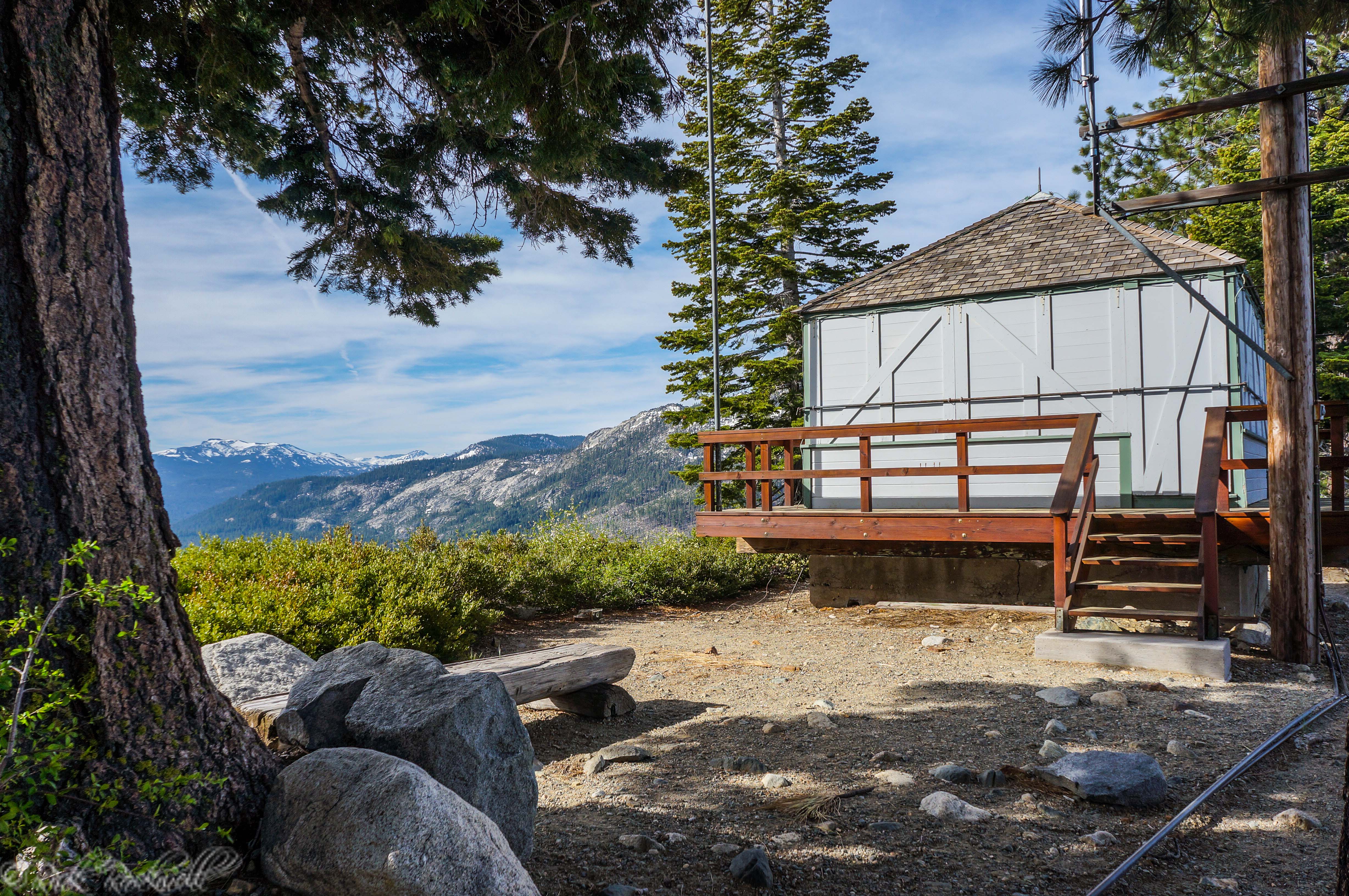
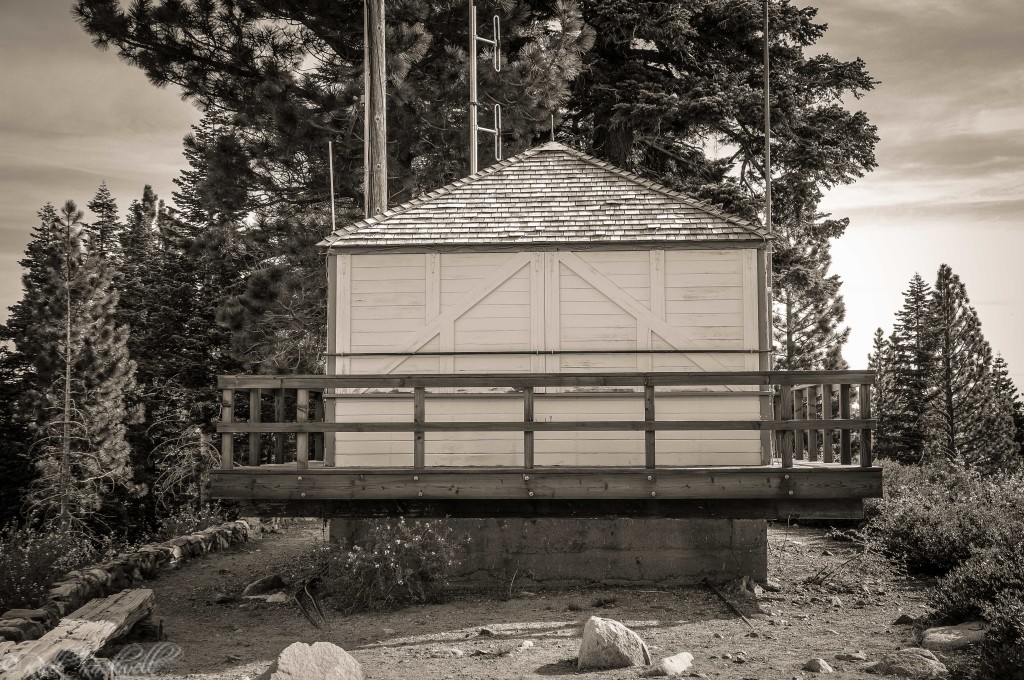
A View of the Angora Ridge Lookout
View of the Angora Fire Lookout

History of the Angora Lookout

From 1910-1914, the US Forest Service in California underwent dramatic changes. Coert DuBois was the man responsible for these changes as his disgust for the previous administration’s ineptness and his dedication to fire prevention led to a massive overhaul of forestry policies and practices.

Additionally, DuBois aided in the 1911 Congressional passing of “Weeks Law” and also helped motivate California’s State Legislature to appropriate money for fire prevention in 1919. The first state funded lookout was built in 1922, according to CalFire.

Two years later, the Angora Lookout was built on Angora Ridge in 1924. Shortly after, construction began on Angora Ridge Road, which wasn’t completed until 1929.

According to one source, the construction of the road took nearly 5 years to complete because “It was all done by hand — a pick and shovel and crowbar, a very small amount of dynamite and a very great amount of sweat.”

The lookout was a Dubois-inspired structure that some think was built in the mold of a dwelling 1D, which Dubois included in a 1917 Improvement Circular. These 1D’s were believed to cost about $112 in labor plus materials, according to Foresthistory.org.
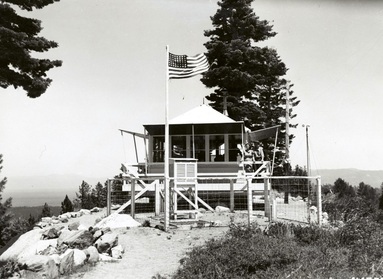
Angora Fire Lookout in 1941 Source: National Archives
Angora Fire Lookout in 1941 Source: National Archives

The CCC and the New Lookout

In 1933, FDR formed the Civilian Conservation Corps, which operated from 1933 to 1942 as a work relief program. In addition to many other projects, the CCC was tasked with building fire lookouts across the Nation. During this period, an estimated 250 lookouts were built in California.

It was in 1935 that the CCC built a new Angora Fire Lookout next to the original structure, which was converted into a small residence for those manning the lookout. You can see the lookout in the photo above. (Photo found at CaliforniaLookouts.com)

In the early 1940’s, a garage structure was built next door. Also, during this era, lookouts doubled as spotters for enemy aircrafts.

Up to this point, the Angora Ridge Rd. was a rugged, steep dirt road. It wasn’t until 1963 that the ridge portion of the road was paved. The entire road wasn’t paved until 2005.

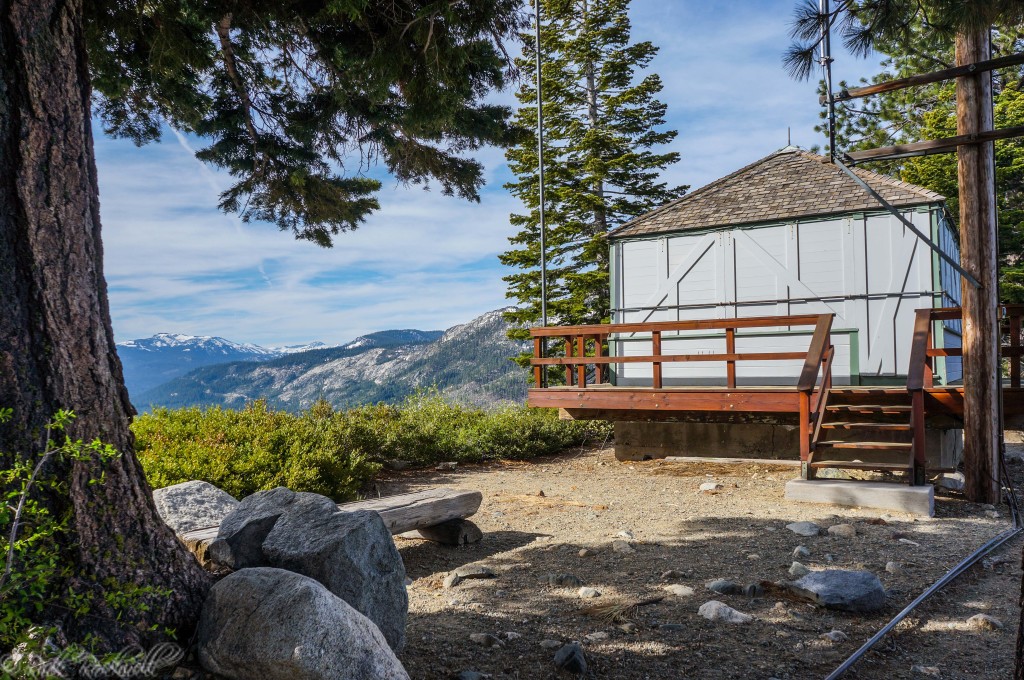
An older view of the Angora Ridge Lookout

Retirement of Angora Fire Lookout

By the early 1970’s, a large percentage of lookouts had been retired throughout California due to an increased emphasis on newer technology and prevention methods such as airplanes and helicopters. It was during this era that the Angora Ridge Lookout was decommissioned.

Angora Fire Lookout Today

Today, the Angora Fire Lookout is best understood as a scenic historic stop rather than an active facility. The buildings are generally closed and locked, but visitors can still enjoy the setting, read nearby interpretive signs, and take in the views. There is also limited parking space.

This is part of the site’s charm. You are not visiting a restored museum with regular hours and exhibits. Instead, you are seeing a surviving piece of Tahoe’s fire-prevention history in its original landscape, perched high above the basin where it once served a practical purpose.

The Angora Ridge lookout is one of only three surviving fire lookouts in the Tahoe region (Zephyr Cove and Martis Lookout). On the opposite side of Lake Tahoe, sits a marker and trail to one of the first locations to house a Fire Lookout – the Stateline Lookout Trail.

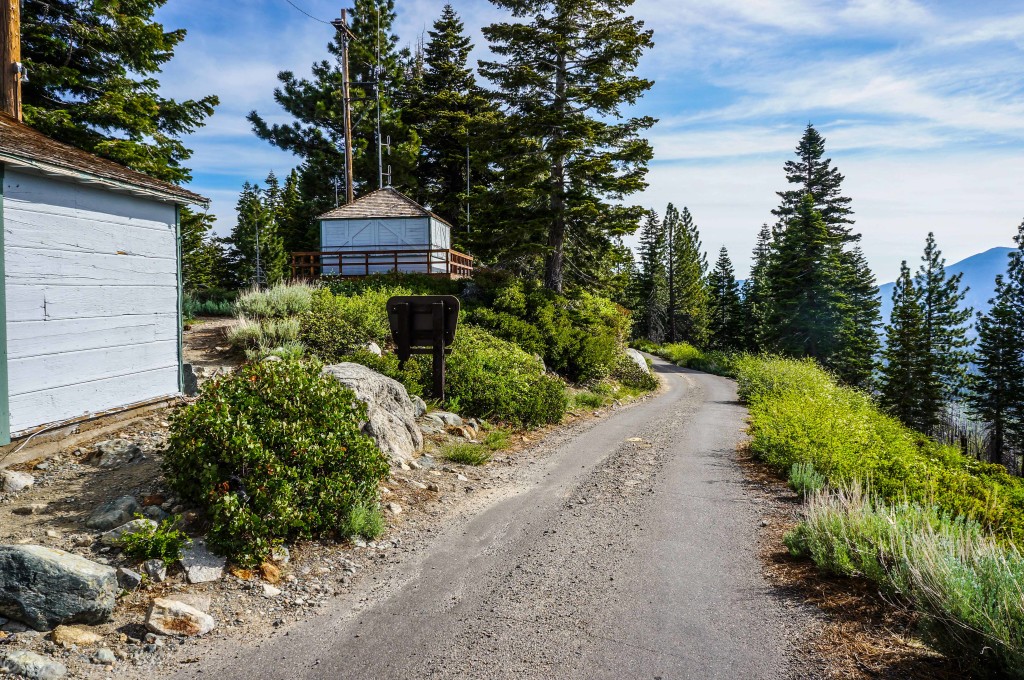
A view of the Angora Fire Lookout along the Angora Ridge. Road
Angora Fire Lookout and the Angora Ridge Rd.

Views From Angora Fire Lookout

The views are the main reward. From the lookout area, visitors can see Fallen Leaf Lake, broad stretches of the Tahoe Basin, and the surrounding mountains.

The 2007 Angora Fire and the Landscape Today

In late-June of 2007, a massive fire started north of the town of Meyers and quickly spread north-by-northeast. The fire did most of its damage within the first 8 hours as it was heading towards Lake Tahoe. Thousands were evacuated and a local emergency was declared. Soot rained down from above as the skies looked like the apocalypse was at hand.

In total, over 3,100 acres of land was burned, 254 houses were destroyed and over $150 million in damages. An investigation was launched and the origin of the fire was determined to be caused by a human.

The history of this devastating fire adds another layer of importance to the fire lookout and the perseverance of this region.

Visiting Angora Fire Lookout and Angora Lakes

This historic fire lookout is a wonderful point of interest that should be combined with a trek up to the Angora Lakes, which is located 1 mile beyond the lookout. Make sure you inquire into the road being opened before heading out this way. Even if you are uninterested in this historic structure, the views of the Tahoe Basin are definitely worth the trip up to the ridge.

Directions to Angora Fire Lookout

From the split of Highway 89 and Highway 50, head about 3 miles on Highway 89 toward Emerald Bay. Turn left onto Fallen Leaf Lake Road just past Camp Richardson and continue roughly 2 miles to a fork.

Take the left fork onto Tahoe Mountain Road, go about 0.4 miles, and then turn right onto Angora Ridge Road, where the gate is located at the beginning of the road. limited.

FAQ About Angora Fire Lookout

What is Angora Fire Lookout?

Angora Fire Lookout is a historic former fire lookout on Angora Ridge above Fallen Leaf Lake near South Lake Tahoe. It is also known as Angora Ridge Lookout or Angora Lookout.

Where is Angora Fire Lookout?

It is located above Fallen Leaf Lake in the South Lake Tahoe area at an elevation of 7,256 feet.

Can you drive to Angora Fire Lookout?

Yes, when Angora Ridge Road is open seasonally. The road is narrow and requires caution. When the gate is closed, it is about 1.85 miles to the lookout from the gate.

Is Angora Ridge Road open year-round?

No. The road is typically open from April or May into September or October, as it’s closed during the winter season.

When was Angora Fire Lookout built?

The original lookout was built in 1924, and a newer lookout was built in 1935 by the Civilian Conservation Corps.

Is Angora Fire Lookout near Angora Lakes?

Yes. The Angora Lakes is about 1 mile beyond the lookout, making the two easy to combine in one outing.

What happened in the Angora Fire?

The 2007 Angora Fire burned more than 3,100 acres, destroyed 254 homes, caused over $150 million in damage, and was determined to be human-caused.

looking out at where the Angora fire took place
view from Angora lookout at the site of the Angora fire

Sources

  • S. Forest Service, Lake Tahoe Basin Management Unit. “Angora Ridge.” https://www.fs.usda.gov/r05/laketahoebasin/recreation/angora-ridge
  • National Historic Lookout Register. “Angora Ridge Lookout.” http://nhlr.org/lookouts/us/ca/angora-ridge-lookout/
  • California Lookouts. “Angora.” http://californialookouts.weebly.com/angora.html
  • CAL FIRE. “About CAL FIRE History.” http://www.fire.ca.gov/about/about-calfire-history/
  • Forest History Society. “Architecture of the Forest Service: Chapter 1A.” http://www.foresthistory.org/ASPNET/Publications/architecture/chap1a.htm
[mc4wp_form id="4451"]
Close
error: Content is protected !!