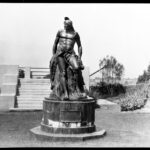
After researching Native American statues in California, it’s easy to see that there are many historical Native American men and women that deserve a fitting tribute like this.
I’m sure one could compile a list of prominent Native Americans throughout the history of California that consists of thousands of names.
However, for the sake of this article, and everyone’s time, the following is my list of Californians that should have giant Native American statues created next:
Chief Marin
Chief Marin (approx. c. 1781–March 15, 1839), also known as Huicmuse or Marino, was chief of the Licatiut, a subgroup of the Coast Miwok, in what is now Marin County, California.
Baptized in 1801 at Mission San Francisco de Asís, he later lived at Mission San Rafael Arcángel, where he served as alcalde (mayor/judge) in the 1820s. Marin County, and the Marin Islands, are named in his honor.
Chief Marin’s story, pieced together from mission records, explorers’ journals, and other historical accounts, is wonderfully chronicled in Betty Goerke’s in-depth biography.
Chief Marin is remembered as a dignified leader and excellent mariner, who resisted Spanish authority while navigating the colonial mission system; leaving a lasting cultural and geographic legacy in the San Francisco Bay Area.
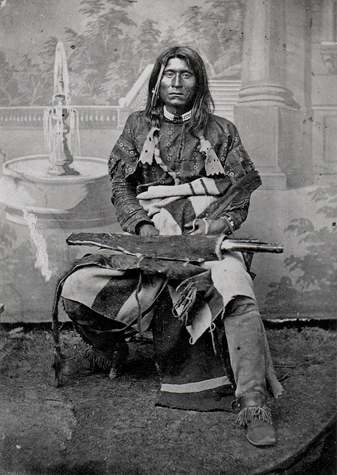
Captain Jack (Kintpuash)
Kintpuash (c. 1837–October 3, 1873), also known as Captain Jack or Kientpoos, was a principal headman of the Modoc tribe from present-day northern California and southern Oregon. He became a national figure during the Modoc War of 1872–1873, leading a determined resistance against U.S. Army forces despite being vastly outnumbered.
After Captain Jack and his people were forcibly relocated to the Klamath Reservation in 1864, he led his band of Modocs back to their ancestral homeland in 1865, due to the poor planning and inhumane treatments on the reservation. This would eventually spark a series of encounters with the U.S. Army.
During the Modoc War, he and his warriors held off U.S. troops through guerrilla tactics and intimate knowledge of the terrain, which is now preserved as Captain Jack’s stronghold.
While his life ended tragically, Captain Jack’s legacy is a proud one that reminds us of the harsh brutalities which Native American tribes faced when trying to peacefully live on their ancestral lands.
Lorem ipsum dolor sit amet, consectetur adipiscing elit. Ut elit tellus, luctus nec ullamcorper mattis, pulvinar dapibus leo.
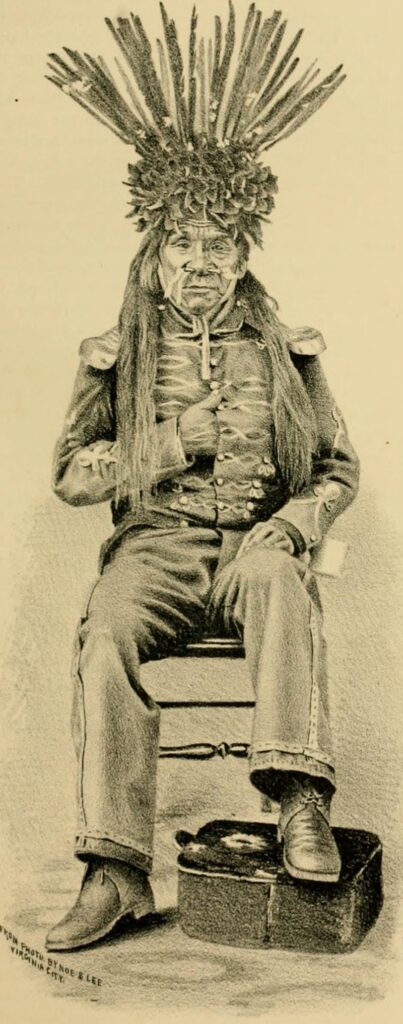
Chief Truckee
Chief Winnemucca (c. 1790s – 1860), more commonly known as Chief Truckee, was born a Shoshoni but became a Paiute leader. The Chief was widely respected by his tribe and early settlers for playing a critical role during the westward migration into California.
More specifically, he guided and assisted numerous emigrant parties through the Sierra Nevada Mountains and the Great Basin region.
It remains a historic debate over how Winnemucca got the name Truckee, but that’s a story for another day. Chief Truckee was also instrumental in the Mexican-American War which earned him widespread praise and the title of Captain from General John C. Fremont.
As a testament to the recognition he gained among early settlers and pioneers, a town, river, and valley were all California places named in his honor.
Truckee’s legacy reflects both the challenges and accommodations Native American leaders faced during the period of rapid colonial expansion. They walked a tight rope of protecting one’s tribe while creating strategic alliances with a growing, voracious nation.
Ramona Lubo
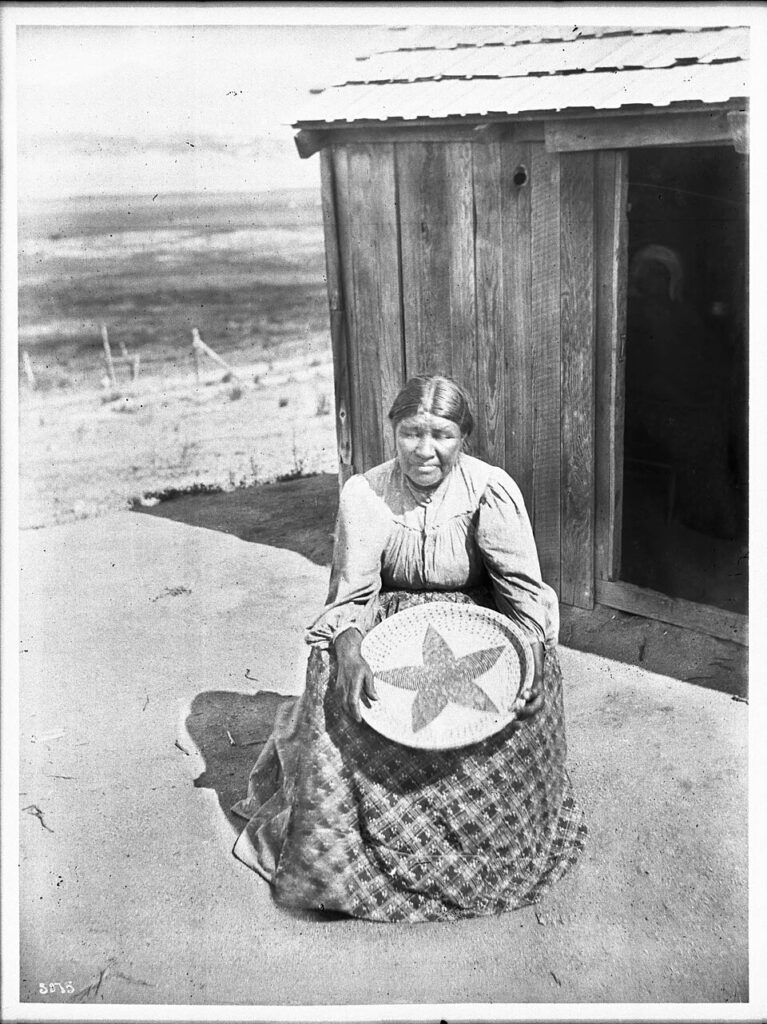
Ramona Lubo (1865–1922) was a gifted Cahuilla basketmaker, often referred to as the “real Ramona.” Her life became entwined with Helen Hunt Jackson’s novel Ramona, and she garnered notoriety as the perceived living embodiment of the fictional character.
Yet, Ramona’s real-life story was far more tragic and complex than Jackson’s novel. Her husband was unjustifiably murdered, her first children died young, and Lubo never truly benefited financially from the fame created by Jackson’s book. In fact, not only did she not receive royalties, but the media unfairly criticized her for “exploiting” her image.
By the early 1900s, Lubo’s baskets were in high demand. Although these baskets were culturally and traditionally significant to her tribe, Lubo sold them to survive.
Ramona’s story as a Native American woman was filled with hardships both during her life and after her passing. In the generations following her death, there was a renewed effort to reclaim Lubo’s authentic story and to repatriate her baskets. These efforts also shined a light on the wonderful legacy that this gifted, strong woman left behind.
Ishi
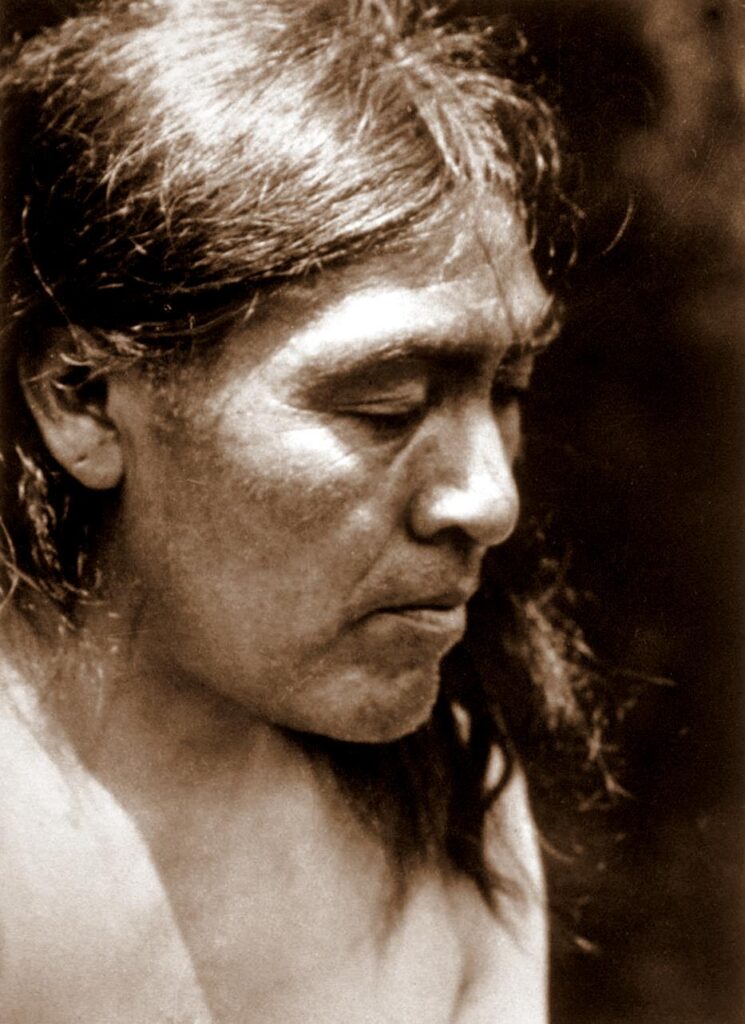
Ishi (c. 1861–March 25, 1916), which means “man” in the Yana language, is identified as the “last known” member of the Yahi people, a subgroup of the Yana in northern California, decimated during the California genocide of the 19th century.
He emerged from hiding in 1911, near Oroville and became a subject of intense public and academic interest as the so-called “last wild Indian”.
Anthropologists T. T. Waterman and Alfred L. Kroeber brought him to the University of California’s museum in San Francisco, where he taught them about his culture, traditions, rituals and the Yahi language.
Ishi died from advanced tuberculosis on March 25, 1916. His funeral included elements of Yahi tradition, though his brain was controversially retained for scientific study. His life has been memorialized in anthropological literature and media, including works by Theodora Kroeber and a 1992 television film The Last of His Tribe.
Sources:
California Indian Education. (n.d.). Captain Jack (Kintpuash).
Goerke, B. (2007). Chief Marin: Leader, rebel, and legend. Berkeley, CA: Heyday Books.
Marin Magazine. (2018, March). The story behind Marin County’s namesake Chief Marin.
Oregon Encyclopedia. (n.d.). Kintpuash (Captain Jack). Oregon Historical Society.
SoCal Historyland. (n.d.). Ramona Lubo: The “real Ramona”.
The Regents of the University of California. (n.d.). Ishi archive. UCSF Library.
Truckee-Donner Historical Society. (n.d.). Chief Truckee.
Wikipedia contributors. (n.d.). Chief Marin. In Wikipedia.
Wikipedia contributors. (n.d.). Ishi. In Wikipedia.
Wikipedia contributors. (n.d.). Kintpuash. In Wikipedia.
Wikipedia contributors. (n.d.). Ramona Lubo. In Wikipedia.
Wikipedia contributors. (n.d.). Truckee (chief). In Wikipedia.