Truckee is a quaint town located in the Sierra Nevada mountains near the border of California and Nevada. It’s surrounded by beautiful landscapes, lakes, mountain peaks, and history.
Often times, the first thing that Californians think of when hearing the word “Truckee”, is the Donner Party. That tragedy has been etched into the annals of California history books as it took place in modern-day Truckee. In fact, the region has a lake, summit, pass, road and other landmarks named after them.
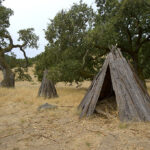
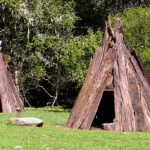
Yet, Truckee, and Donner Summit, has deeper layers of history than just the Westward migration of Americans. From the Martis tribe and their ancient rock art (petroglyphs), to the Northern Paiute and an Old Chief who helped write the early pages of California, this area is rich in Native American history, heritage and heroes.
One gallant figure to come from this region and era, was a Northern Paiute leader named Winnemucca, later to be called Truckee. Without his help, not only would there have been more tragedies like the Donner Party, but one could connect the dots to an unsuccessful upheaval of Mexico’s California governance.
Winnemucca’s assistance in the Westward migration, the Mexican-American War, and time-sensitive diplomacy, was so profound that it forever etched his name into California and Nevada maps.
Though he might not be as heralded as the Gold Rush, Sutter’s Fort or Fremont’s expeditions into the territory, none of those things would’ve occurred without the Old Chief.
Winnemucca and The Northern Paiutes
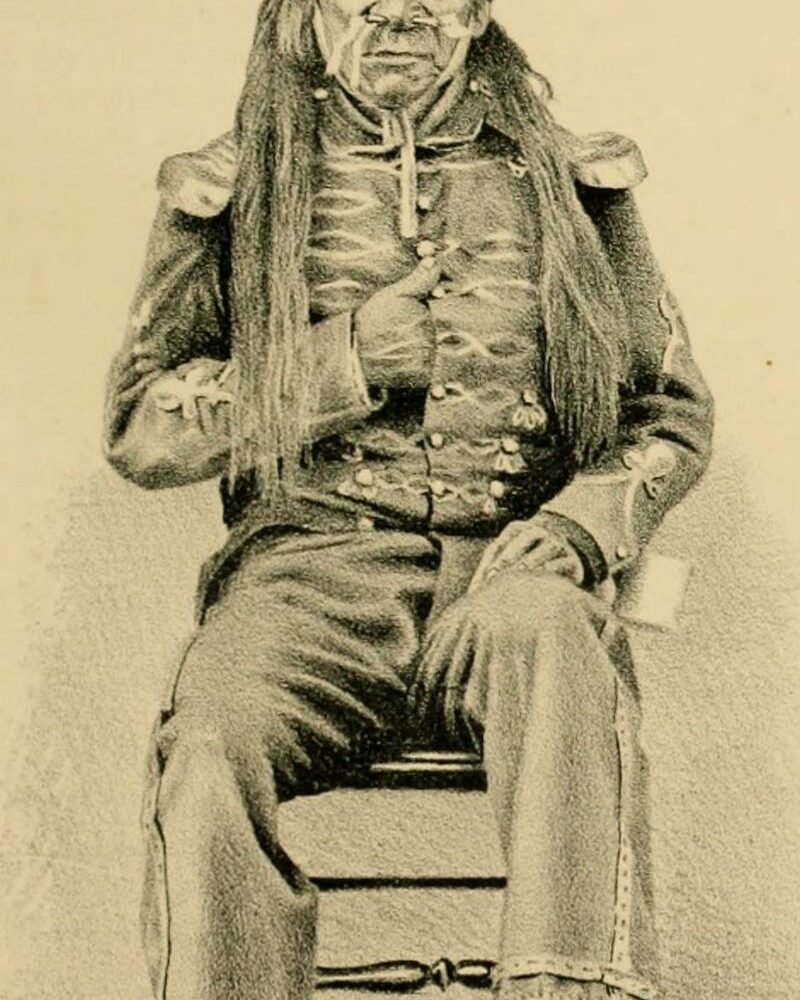
Old Winnemucca, also known as Chief Truckee, Captain Truckee, Wuna Mucca, The Giver of Spiritual Gifts, One Moccasin and other variations of Winnemucca, was not just a leader of the Northern Paiute but he was also a medicine man and prophet.
His shadow cast a mighty presence throughout the lands that the Northern Paiutes called home, which was mostly within the vast area known as The Great Basin; a land of stark differences.
It’s as if mother nature loved a good contrast, or laugh, as this region featured mountain ranges rising dramatically over dry valleys, rivers that flowed from the pristine alpine lakes into desert basins, and life-dependent resources scattered across vast lands.
Yet, it also shows us how the Paiutes were stewards of this land and created lifeways that ensured their people and traditions would survive. Typically, they fished out of rivers and lakes, hunted wildlife like deer and jackrabbits, gathered pine nuts and other seeds to store up for the harsh seasons.
They also mastered the trade commerce throughout this region as they dealt with neighboring tribes like the Washoe, Maidu and Shoshone.
Winnemucca and his people were deeply rooted in The Great Basin, so it’s easy to see why the Old Chief and his tribe were essential to the success of the Westward emigrant migration into California.
Origin Of The Name Truckee
Never have I seen more debates over the name of a California location than with the origin of the word Truckee. The following are a few of the widely chronicled theories, compiled from the sources listed at the end of this article.
A few sources believe that the Old Chief’s name was Truckizo. And, when shortened, it sounded like Truckee to the settlers.
In the 1882 book “History of Plumas, Lassen & Sierra Counties,” the authors credit the river for being called Truckee first, and then the settlers naming the Old Chief after the river. Apparently, there was a Canadian trapper named Baptiste Truckee who discovered the river in the 1830s.
According to the Truckee-Donner Historic Society, a May 5, 1875, article in The Truckee Republican quoted one of the members from the Stephens-Townsend-Murphy party, Matt Harbin, as saying that an “Indian came into their camp”, was employed as a guide, and called himself Truckee.
Perhaps, the most widely accepted origin of the word Truckee comes from stories of how the Old Chief would repeatedly use the Paiute word for alright, which was “tro-kay.”
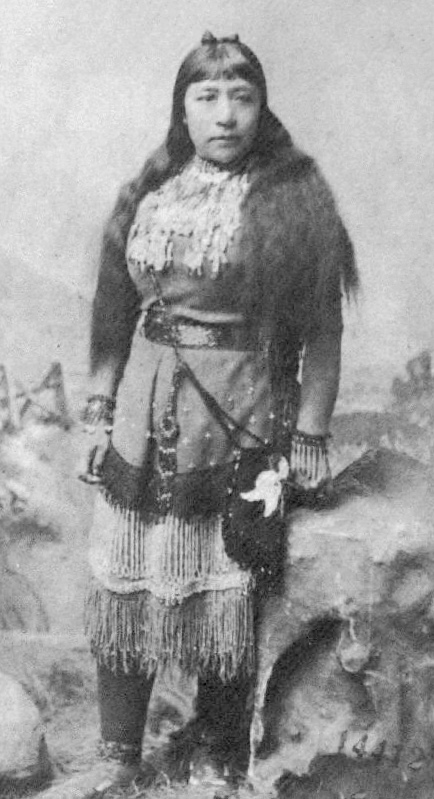
One last theory comes from Truckee’s granddaughter Sarah Winnemucca. In her book “Life Among the Piutes: Their Wrongs and Claims, published in 1883, she credits General Fremont as the source for naming her grandfather Truckee.
Sarah claims that he named him Truckee when promoting the Chief to Captain of his army. It was an “Indian word” that meant “all right” or “very well”. She also says that Fremont named the river after her grandfather, as well.
Guiding Westward Expansion
For the last 10+ years of Chief Truckee’s life, he preferred to be called Captain Truckee. And, he was steadfast in his commitment to peace with the white settlers that were coming “like a lion, yes, a roaring lion”.
His granddaughter quotes Truckee as saying the following, when he first heard about the whites entering their lands: “My white brothers, my long-looked for white brothers have come at last!”
There are historical accounts of Truckee guiding and instructing numerous parties to California. In fact, he indirectly helped to establish a new route to Sutter’s Fort.
One of the more notable parties that received his help was the Stephens-Townsend-Murphy Party (1844). They became the first successful group to bring wagons over the Sierras and it was due to Truckee’s guidance.
Even when the Old Chief was away from the tribal lands, he instructed his son Winnemucca the Younger to keep the peace and help the white brothers.
His commitment to helping the Westward migration wasn’t always popular with tribal members. Yet, they honored and followed the wise Chief’s vision and instructions.
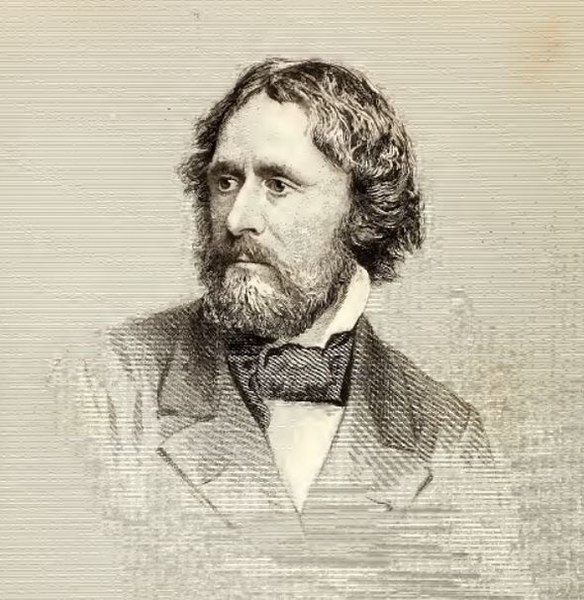
Perhaps, the most significant relationship Truckee established in the 1840s as a guide, was with John C. Fremont. At the time, Captain Fremont, who later became a controversial General, was mapping the West with his numerous explorations. A good amount of his success can be directly tied to Truckee’s assistance.
Meeting Captain Freemont
Fremont’s first three expeditions ran from 1842 to 1845. It’s believed that during his second expedition (1843-1844), Fremont and his men “discovered” Lake Tahoe, named Fallen Leaf Lake, and met Chief Truckee.
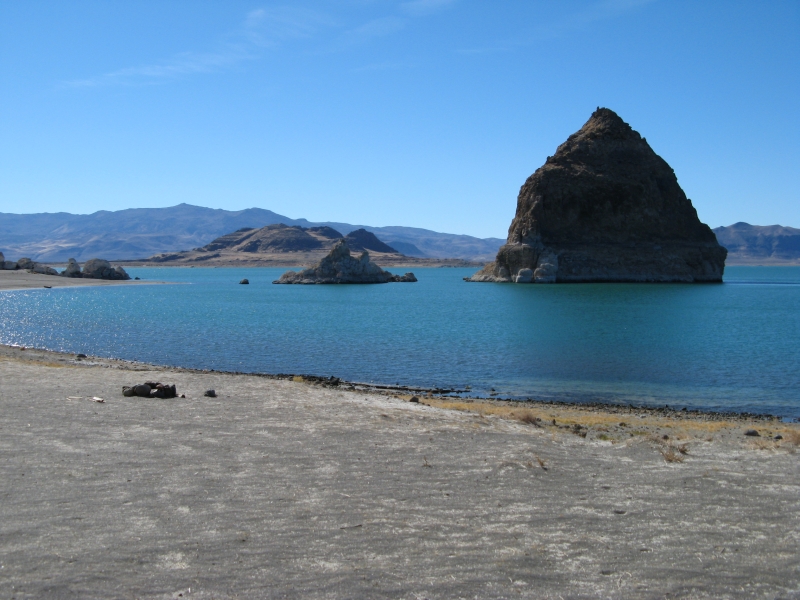
The encounter between Fremont and Truckee is historically credited to Kit Carson who joined the former on his second expedition and knew of a village where friendly Paiute lived. In fact, the Paiute’s sacred Pyramid Lake got its name from Fremont on this journey.
It’s also said that Truckee and his tribe helped take care of Fremont’s troops after they were suffering and starving from traveling through the harsh elements.
This act of kindness was not lost on the controversial Fremont. And, it most likely led to a friendship and alliance that came to the forefront in the Mexican-American War.
From Chief To Captain
In 1846, when word of war between Mexico and America reached California, Captain Fremont was all-too eager to rid the territory of the Mexican government. At first, Fremont operated as a puppet master from the shadows. He’s said to have a role in the Bear Flag Rebellion despite publicly denying it.
Eventually, he was tasked by Commodore Robert F. Stockton with taking over various Mexican strongholds in California. Prior to this military task, Fremont put out the call for more soldiers.
This could be the time when Chief Truckee answered the call to join his friend in fighting alongside him in the US Army. Or, the Paiute leader could’ve already been a part of Fremont’s ambitions prior to the Bear Flag Rebellion.
In 1846, Fremont fought and helped take Santa Barbara from Mexico. In her book, Sarah Winnemucca detailed a time when the Old Chief returned from being away for a few years and told the tribe all about his battles against Mexico:
“People opened their eyes when my grandfather told of the many battles they had with the Mexicans, and about their killing so many of the Mexicans, and taking their big city away from them, and how mighty they were.”
Could that “big city” be Santa Barbara?
Sadly, there aren’t many details about Chief Truckee’s time serving in the US Army. However, he did earn a brevet for his bravery and heroism. Truckee was given the title of Captain, which he proudly went by for the rest of his life.
Apparently, Truckee was given command of a Company that was comprised of Native Americans. The TDHS states that it was Company H and it also consisted of members of the Delaware tribe that came West with Fremont. Additionally, Truckee’s brother Pancho received a medal for his participation in the War.
Following his service, when Captain Truckee returned to this tribe, he sang them some of the soldier’s roll-calls, also taught everyone the Star-Spangled Banner, and proudly showed off his military uniform.
A Peacemaker or Survivalist?
Unfortunately for the Paiute, not all of the white settlers were “brotherly” to the tribe. A few skirmishes took place when the settlers fired upon the tribe without any provocation. One of Truckee’s sons was killed during this period. And, despite members of the tribe calling for revenge and war, Captain Truckee remained steadfast in keeping the peace.
Some students of history question Truckee’s motives or intentions for always choosing peace over fighting with the whites.
Prior to Captain Truckee’s experience in the US Army, he was joyous in meeting white settlers and helping them. He treated them like brothers and not enemies.
After he saw the sheer power of the US Army, how can one ignore that and willingly jump into battle with a nation that Sarah described as a roaring lion.
Additionally, Captain Truckee took many of his people to go live in California with him, where he continued to learn more about the American ways.
Whether it was a heart for peace or a pragmatic mindset that saw friendship with the whites as the best way for his people to survive, Captain Truckee continued to preach unity with the whites until the day he died.
The Death of Old Winnemucca
Captain Truckee died in 1860, of an infection that some accounts attribute to a spider bite. What we know about his final days, can be pieced together through historical accounts. However, the most intimate details can be found in his granddaughter Sarah’s book.
According to Sarah, in his final days, Captain Truckee sent for his white brother named Snyder and asked him to look after his family and carry out his wishes regarding their futures.
He told his son to do his duty as he had done not only for his people, but for the white brothers, as well. Even in his last moments, the Old Chief continued to push for peace and unity with his white brothers.
When Truckee’s spirit finally left his body, Sarah described the scene as everyone throwing themselves on him and wailing “their cries could be heard for many a mile.”
Old Winnemucca’s granddaughter would also go on to say “I could hardly believe he would never speak to me again. I knelt beside him, and took his dear old face in my hands, and looked at him quite a while… I felt the world growing cold; everything seemed dark. The great light had gone out.”
Prior to his death, Captain Truckee requested that his cherished belongings be buried with him like his bible, some other important documents, and his “rag friend.”
The Paiutes carried out two days of tribal customs for their departed leader. Per his request, Truckee was then buried like his white brothers, with a crude cross that reportedly had the following inscription: “Here lies Captain Truckee, the faithful guide and true friend to the white man.”
The Light Still Shines
Although his spirit was gone and the Old Chief passed on to the Spirit-Land, I believe his light still shines over 165 years later. The legacy of Captain Truckee is taught every time someone asks or learns about the meaning of the town’s name. Additionally, it means his people are talked about, as well.
Additionally, his granddaughter’s book helped to capture the Captain’s desires to embrace the white settlers as brothers and live in harmony with them.
It’s easy to be skeptical of Sarah’s book or some of the other historical documents, and claim that they romanticized Captain Truckee’s life. I disagree!
I don’t think these sources, outside of Sarah Winnamucca’s book, did a good enough job in capturing the importance of Chief Truckee’s aid in Western migration and the Mexican-American War.
Where some might look back on his decisions with a lens of criticism, I believe that Truckee made the best of a difficult situation. Where other tribes were destroyed by Fremont and the mass influx of miners into California, Chief Truckee was able to keep his tribe and family relatively safe from the genocide that took place.
Saving lives, choosing peace, protecting his people, and helping America claim California as part of the United States, are feats of heroism and his name rightfully belongs all over the maps and history pages of California.
Sources:
Angel, M. (1881). History of Nevada: With Illustrations and Biographical Sketches of Its Prominent Men and Pioneers. Oakland, CA: Thompson and West.
Cleland, R. G. (1951). A History of California: The American Period. New York, NY: Macmillan.
Lindström, S. (2006). Cutting a Trail: Northern Paiutes in the Pioneering Sierras. Nevada Historical Society Quarterly, 49(3), 181–214.
Winnemucca, S. (1883). Life Among the Piutes: Their Wrongs and Claims. Boston, MA: Cupples, Upham and Company.
Coates, G. (n.d.). Chief Truckee. Truckee-Donner Historical Society.
Wikipedia contributors. (2025, June). Truckee (chief). In Wikipedia.