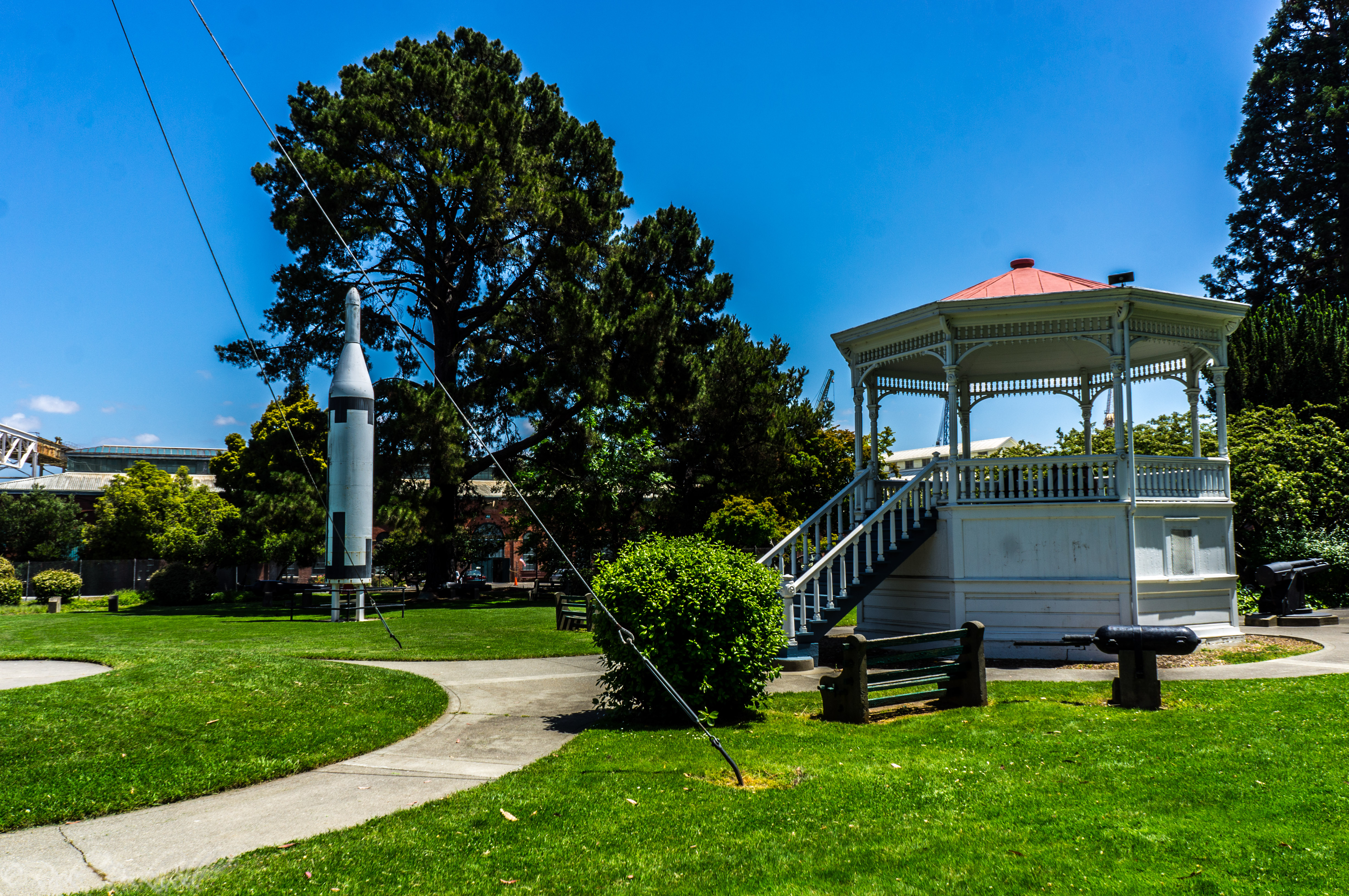
Alden Park on Mare Island looks peaceful at first: a shaded lawn, old trees, benches, and a historic bandstand in the middle of a quiet park. Then you notice the Polaris missile, the SUBROC missile, old Navy guns, concrete bomb shelters, memorials, and a wartime submarine artifact scattered through the same setting.
That contrast is what makes Alden Park such an interesting stop in Vallejo. It is not a big hiking destination or a polished museum. It is more like an outdoor naval history time capsule in the middle of Mare Island’s old shipyard district.
The park is also more important than it first appears. Alden Park was one of Mare Island’s key military open spaces, linking the formal administrative side of the old naval base with the industrial shipyard landscape nearby.
If you are already exploring Mare Island, Alden Park is an easy place to add to your route. It pairs well with many other historic landmarks on the island.
Alden Park Quick Facts
- Location: Mare Island, Vallejo, California
- Park area: Near 8th Street, between Railroad Avenue and Walnut Avenue
- Best for: Naval history, unusual roadside-style attractions, short walks, photos, picnics, and Mare Island history stops
- Main things to see: Bandstand, historic trees, Polaris A-1 missile, SUBROC missile, Navy guns, ship’s bell, ship’s anchor, bomb shelters, monuments, and a wartime submarine artifact
- Best paired with: Peter’s Chapel, Officers’ Row, Mare Island historic core, USS Vallejo Submarine Sail Memorial, Building Ways, and Dry Dock 1
- Before you go: Parking can be limited during events. Check current Mare Island traffic conditions, tour availability, and posted park rules before visiting.
Where Is Alden Park?
Alden Park is located on Mare Island in Vallejo, California, near 8th Street between Railroad Avenue and Walnut Avenue. It sits within the historic area of the former Mare Island Naval Shipyard.
Directions to Alden Park
The most common way to reach Mare Island is from Vallejo, with access from the Tennessee Street side of the city. From I-80, drivers can connect toward Mare Island by using the Tennessee Street exit area, then crossing onto the island.
Before visiting, verify the best current route, parking conditions, and any roadwork or redevelopment-related access changes. Mare Island is an active redevelopment area, and bridge or traffic patterns can change.
How Alden Park Fits Into Mare Island History
The story of Alden Park goes back to the beginning of Mare Island’s naval history. In 1854, the United States sent Commander David G. Farragut to oversee the creation of a naval base on Mare Island. Navy civil engineer W.P. Sanger designed the layout of the naval yard, and his early plan included planned green spaces within the base.
Alden Park and Irwin Park became two of the important open spaces in that early grid. Alden Park survived more intact, while other landscaped areas around Mare Island changed as the naval base grew and the shipyard became more industrial.
One of the oldest symbolic features of the park is the flagpole area, which marks the location of the original shipyard flagpole. The park later became known as Alden Park after Commodore James Alden, a former Mare Island commandant.
Over time, the park became a ceremonial landscape, a tree collection, a gathering place, and an outdoor display area for Navy artifacts.
Alden Park also had a place in major Mare Island visits. During President Franklin D. Roosevelt’s 1938 visit to Vallejo and Mare Island, his motorcade stopped at Alden Park. Local Times-Herald material preserved by the Vallejo Naval & Historical Museum described Roosevelt as impressed by the growth of Vallejo and Mare Island.
Who Was James Alden?
James Alden was a U.S. Navy officer whose career stretched across several major chapters of 19th-century American naval history. He was born in Portland, Maine, in 1810 and entered the Navy as a midshipman in 1828.
Alden served in the United States Exploring Expedition, took part in the Mexican War, surveyed parts of the West Coast, served during the Civil War, and later returned west to command Mare Island Naval Yard. The park now carries his name.
For visitors, Alden’s most visible legacy is not a ship or a weapon. It is the trees.
Alden did not command Mare Island for decades, but his influence on the landscape lasted. He challenged the idea that large trees could not grow well on the windy island and helped push Mare Island toward a more planted, shaded, and park-like environment.

Alden Park’s Historic Trees
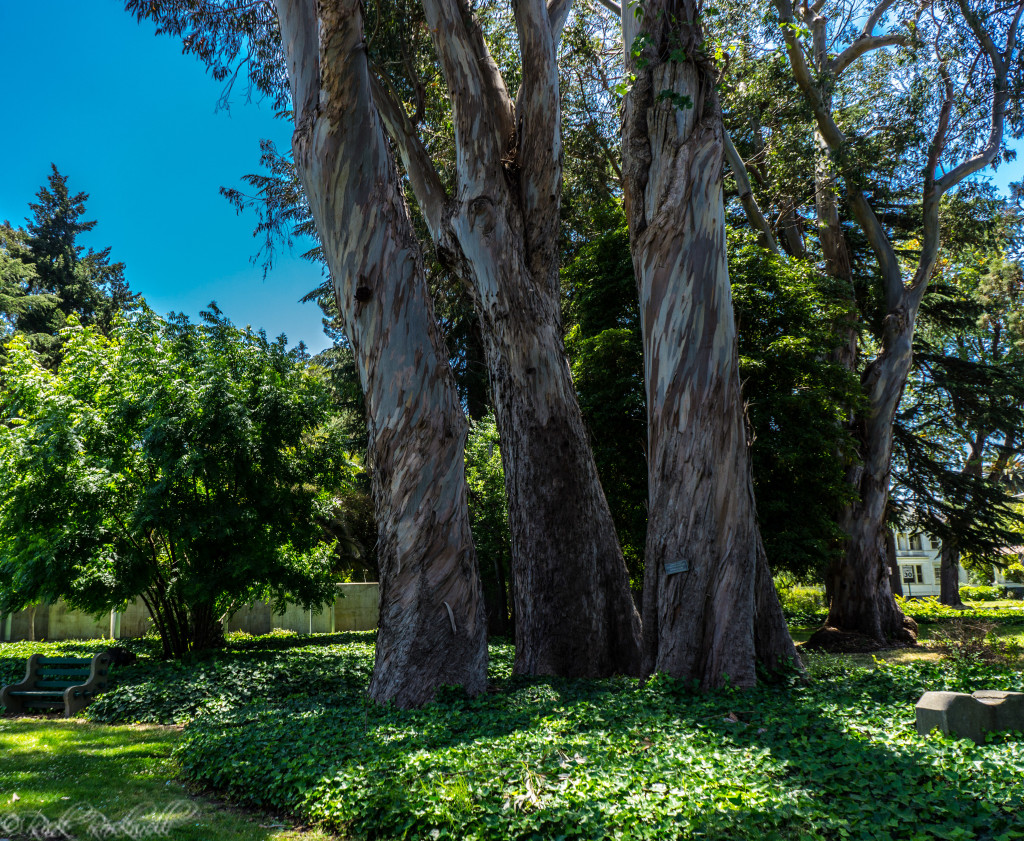
One of the best parts of Alden Park is easy to overlook if you only come for the missiles and military artifacts. The trees are part of the park’s story too.
Mare Island should not be described as a place that originally had no trees at all. The better way to understand it is that the island was once far less formally wooded than it later became. Early plantings included California walnut trees, Monterey cypress, Monterey pine, California sycamore, and other native or regional trees.
Alden helped expand that tree story. During his time at Mare Island, he encouraged captains returning to the base to bring back tree seedlings and saplings from different ports around the world. Historic landscape sources describe a schooner bringing in shade, fruit, and ornamental trees, and the tradition of bringing plants back to Mare Island continued after Alden left.
Over time, Mare Island became a kind of experimental tree landscape. Trees connected to Australia, China, Japan, the Western Pacific, and other regions became part of the island’s planted environment. Other historic references mention plantings such as pine, poplar, locust, almond, olive, bay, elm, eucalyptus, fig, and willow.
The tree history became part of Mare Island’s local identity. A 1972 Vallejo Sunday Times-Herald article focused on Mare Island flora, a 1975 Mares Tale item covered efforts by the Officers’ Wives Club to mark trees, and later tree-tour materials continued that tradition.
That makes Alden Park more than a military display. It is also part of a living landscape, where old trees, shade, and walking paths sit alongside reminders of Mare Island’s naval past.
If you visit, slow down for the trees as much as the weapons. The park’s shade and plantings are not just background scenery. They are part of the reason Alden Park still feels like a park instead of only an outdoor artifact yard.
The Bandstand at the Center of the Park
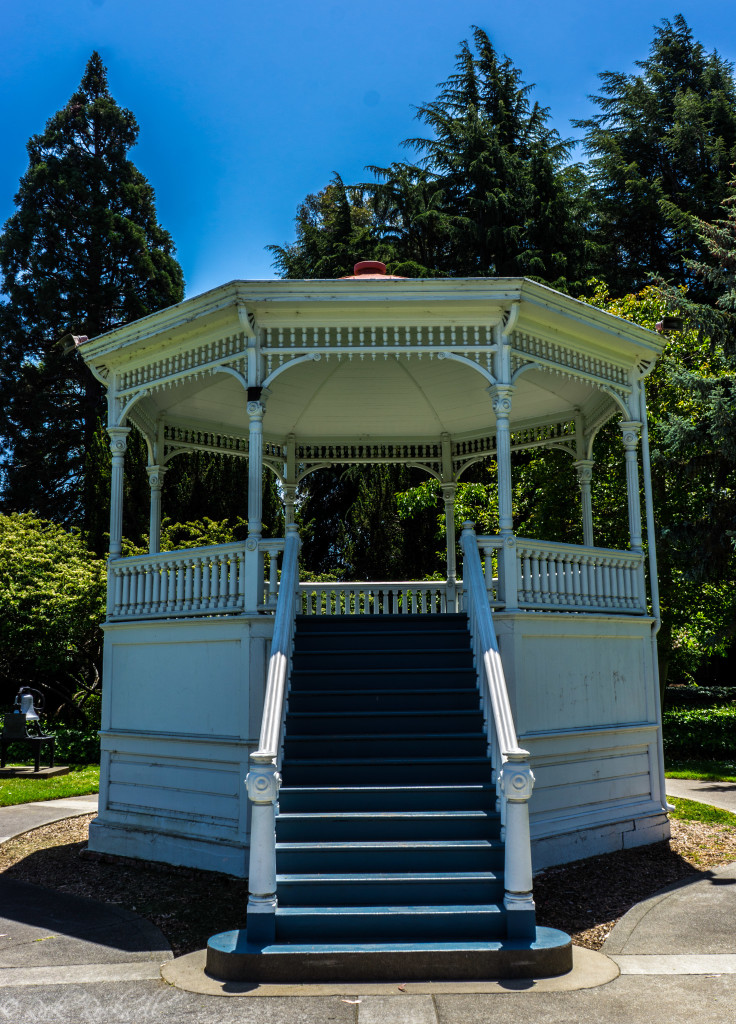
The bandstand is the visual centerpiece of Alden Park. It dates to 1895 and gives the park its old-fashioned, small-town look.
It was more than a decorative gazebo. Historic records identify the bandstand as an important ceremonial feature within the Mare Island landscape. It helped make Alden Park a gathering space, not just an open lawn. Concerts, ceremonies, and community events would have made the park feel more active than it does during a quiet modern visit. A 1986 Grapevine article described the Alden Park bandstand as a center for concerts and activities.
Without the military hardware around the edges, the bandstand and trees would make Alden Park feel like a classic community green. That is part of the charm. You can stand near the bandstand, look across the lawn, and almost forget you are surrounded by reminders of naval warfare, Cold War weapons, and World War II defense planning.
What You’ll See at Alden Park
Alden Park is sometimes described as a naval missile park, but that only tells part of the story. The displays include Cold War weapons, older Navy artifacts, World War II-era shelters, monuments, historic trees, and the 1895 bandstand.
|
Feature |
What It Is |
Why It Matters |
|
Polaris A-1 missile |
Cold War submarine-launched missile |
One of the most visible reminders of Mare Island’s submarine and Cold War history |
|
SUBROC missile |
Cold War anti-submarine rocket system |
Adds another submarine-warfare layer to the park |
|
Wartime submarine artifact |
Identified by NPS as a German Marder Suicide Submarine and Torpedo |
One of the park’s strangest military artifacts |
|
Dahlgren and other Navy guns |
Historic naval artillery pieces |
Connect the park to earlier eras of U.S. Navy weaponry |
|
Ship’s bell |
Naval artifact displayed in the park |
Adds to the outdoor-museum feel |
|
Ship’s anchor |
Historic naval anchor |
Reinforces the park’s shipyard connection |
|
Bomb shelters |
World War II-era reinforced concrete shelters |
Built as wartime protection after Pearl Harbor |
|
Bandstand |
Historic 1895 park structure |
The visual centerpiece of Alden Park |
|
Monuments |
Memorials tied to service, labor, and Mare Island history |
Help shift the park from artifact display to remembrance space |
The Cold War Missiles
The Polaris A-1 missile is probably the most obvious object in Alden Park. It rises above the park and immediately gives the place a different feel.
Instead of seeing it in a museum hall, you find it outside, surrounded by trees and open lawn. It is a Cold War weapon sitting in a quiet public park, and it connects directly to Mare Island’s submarine and naval weapons history.
The SUBROC missile adds another Cold War reminder. Together, the missiles make Alden Park feel less like a simple picnic area and more like an outdoor timeline of military technology.
The Wartime Submarine Artifact
One of Alden Park’s most unusual pieces is the wartime submarine artifact. The National Park Service identifies it as a German Marder Suicide Submarine and Torpedo from 1944.
This is the kind of artifact that makes Alden Park worth checking out. It gives the park a very different wartime layer from the Cold War missiles, older Navy guns, trees, and bandstand nearby.
The Bomb Shelters
The bomb shelters are easy to miss if you are only focused on the missiles and guns, but they are one of the most important parts of the park’s World War II story.
After the attack on Pearl Harbor, Mare Island prepared for the possibility of enemy air attacks on the West Coast. Reinforced concrete shelters were built to help protect personnel from bomb debris. The shelters in Alden Park were part of that wartime defense effort.
Today, they add a quieter but more serious layer to the park. The missiles draw the eye, but the bomb shelters say something about the fear and urgency that shaped the West Coast during World War II.
Visitors can see the World War II-era bomb shelters around Alden Park, but do not enter any shelter unless access is clearly allowed or part of a guided tour.
The Monuments
Alden Park also includes monuments connected to military service, sacrifice, labor history, and Mare Island’s long naval past. Not all of the park’s history is about weapons or war. Some of its memorials point to people who served, worked, organized, and fought for fair treatment on the island.
One important memorial honors the Mare Island Original 21ers, a group of Black shipyard workers who challenged discriminatory labor practices at Mare Island. The workers filed a discrimination complaint on November 17, 1961, and their fight later became part of a much larger civil-rights and labor-history story. A memorial stone honoring the Original 21ers was unveiled at Alden Park in 2010.
As you walk through the park, take time to read the plaques and memorials instead of treating the displays only as photo stops. Alden Park is a small place, but many of its details point to larger stories.

Nearby Mare Island Stops to Add to Your Visit
Alden Park works best when paired with other nearby Mare Island stops. A short visit here can easily become part of a bigger history loop on the island.
St. Peter’s Chapel
St. Peter’s Chapel on Mare Island is one of Mare Island’s most important historic landmarks and one of the best nearby stops to pair with Alden Park. It is known for its naval chapel history and stained glass.
Officers’ Row
Officers’ Row helps show what life around the naval base once looked like beyond the shipyard itself, with old homes and tree-lined streets tied to Mare Island’s military community.
Mare Island Historic Core
The historic core includes dry docks, industrial buildings, shipbuilding structures, and reminders of the scale of Mare Island’s naval operations. For more Mare Island history, you can also pair this stop with the historic Mare Island Naval Hospital.
Mare Island Naval Cemetery
Mare Island Naval Cemetery adds a quieter, more solemn stop to a Mare Island visit, with historic military burials and monuments that connect the island’s naval past to the people who served there.
Building Ways and Dry Dock 1
Building Ways and Dry Dock 1 show the industrial side of Mare Island and give more context to the scale of the shipyard work that once happened nearby. If you are interested in unusual wartime craft, you may also want to read about the World War II Mighty Midget ship.
Mare Island Museum, Tree Tours, or Guided Tours
Check current museum and tour status before planning around them. The Mare Island Museum has been listed as temporarily closed, while Mare Island tours have continued by appointment or through the Mare Island Historic Park Foundation.
If available during your visit, a tree tour or docent-led tour can help connect the park, chapel, dry docks, shipbuilding areas, trees, and memorials into a clearer Mare Island story.
Tips Before You Go
Alden Park is an easy stop, but it works best when you treat it as part of a larger Mare Island visit rather than a standalone destination.
Bring your camera and give yourself time to wander the park slowly. The mix of shade trees, the historic bandstand, Cold War missiles, Navy guns, bomb shelters, and old shipyard surroundings makes this one of Mare Island’s more unusual photo stops.
Parking is usually a street-parking situation, and it can be limited during events or tours, so check current conditions before heading over. If you bring a dog, keep it leashed and follow any posted rules.
The park itself does not take long to see, but Mare Island rewards extra time. Alden Park pairs naturally with St. Peter’s Chapel, Officers’ Row, the Mare Island Naval Cemetery, the historic core, and other nearby shipyard landmarks.
Is Alden Park Worth Visiting?
Alden Park is worth visiting as part of any Mare Island trip. The park adds another memorable stop to a day on the island, especially if you are already exploring its mix of history, scenery, old Navy buildings, food, drinks, and strange little surprises. In a lot of ways, Alden Park feels like the transition point between Mare Island’s quieter side and its military past.
There aren’t many parks in California where you can sit under a tree and look over at a missile. Add in the monuments, old Navy guns, cannons, torpedoes, and bomb shelters, and it is hard not to feel your inner child come out a little as you walk around. The bandstand is still the heartbeat of the park, and it immediately catches your eye, even with all the military hardware around it.
And while you are sitting in the shade, enjoying a nice day or a picnic like I did on one of my visits, take a moment to notice the trees. They are not just background scenery. Many of them are tied to Mare Island’s long history, and in a way, they grew up with the island.
FAQs About Alden Park on Mare Island
Where is Alden Park?
Alden Park is on Mare Island in Vallejo, California, near 8th Street between Railroad Avenue and Walnut Avenue.
What is Alden Park known for?
Alden Park is known for historic trees, an 1895 bandstand, Cold War missiles, Navy guns, monuments, a wartime submarine artifact, and World War II-era bomb shelters.
Is Alden Park part of Mare Island history?
Yes. Alden Park sits within the former Mare Island Naval Shipyard, the West Coast naval station that operated from 1854 to 1996.
Why does Alden Park have missiles and military artifacts?
Alden Park became an outdoor display space for Navy artifacts connected to Mare Island’s long military history.
Can you go inside the bomb shelters at Alden Park?
Do not enter any bomb shelter unless access is clearly allowed or part of a guided tour. Public entry should not be assumed.
What else is near Alden Park?
Nearby stops include St. Peter’s Chapel, Officers’ Row, Building Ways, Dry Dock 1, the Mare Island historic core, and the USS Vallejo Submarine Sail Memorial.
Is Alden Park dog-friendly?
Dogs are commonly seen around Alden Park and Mare Island, but keep them leashed and follow posted rules.
Sources
City of Vallejo, Mare Island https://www.vallejo.gov/our_city/about_vallejo/mare_island
National Park Service, Mare Island Naval Shipyard
https://www.nps.gov/places/mare-island-naval-shipyard.htm
National Park Service, James Alden
https://www.nps.gov/sajh/learn/historyculture/james-alden.htm
Mare Island Historic Park Foundation tours
https://mihpf.org/tours
Visit Vallejo, Mare Island Museum
https://www.visitvallejo.com/listing/mare-island-museum
UC ANR, Historic Trees of Mare Island / Alden Park Tree Tour
https://ucanr.edu/blog/under-solano-sun/article/historic-trees-mare-island-vallejo-alden-park-tree-tour
Mare Island Company, Mare Island Tree Tour
https://www.mareislandco.com/news-events/treetourvs
Mare Island Company, community / traffic update
https://www.mareislandco.com/news-events/community-message-october-3-2025
Library of Congress / HABS, Alden Park Bandstand:
https://tile.loc.gov/storage-services/master/pnp/habshaer/ca/ca2400/ca2497/data/ca2497data.pdf
Library of Congress / HABS, Mare Island Naval Shipyard cultural landscape / Alden Park references
https://tile.loc.gov/storage-services/master/pnp/habshaer/ca/ca2500/ca2540/data/ca2540data.pdf
Library of Congress, Mare Island Bomb Shelters
https://www.loc.gov/item/ca2438/
California Preservation Foundation, Mare Island Cultural Landscape Report materials
https://californiapreservation.org/wp-content/uploads/2015/09/ALL.pdf
EverGreene, Mare Island Alden Park Mast Arm
Mare Island Alden Park - Mast Arm
Vallejo Naval & Historical Museum, FDR visit / Times-Herald material
https://vallejomuseum.blogspot.com/2018/07/
Ernest D. Wichels, “Pages From The Past: Mare Island Flora,” Vallejo Sunday Times-Herald, October 1, 1972, Section 2, page 1, column 1. Cited in Mare Island Cultural Landscape Report materials.
“Officers Wives Club to mark trees,” Mares Tale, March 28, 1975. Cited in Mare Island Cultural Landscape Report materials.
Sue Lemmon, “Alden Park bandstand center for concerts, many activities,” Grapevine, December 12, 1986, page 7. Cited in Mare Island Cultural Landscape Report materials.
Open Vallejo, Original 21ers coverage
https://openvallejo.org/2021/11/11/how-vallejos-black-shipyard-workers-forged-nationwide-reforms/
Mare Island Brewing Co., Original 21ers history:
https://www.mareislandbrewingco.com/news-articles/history-behind-the-beer-the-legacy-of-the-mare-island-original-21ers