Where Is St. Francis of the Mountains?
St. Francis of the Mountains stands near Fallen Leaf Lake, just outside South Lake Tahoe. Its present-day chapel page lists the address as 280 Fallen Leaf Road, South Lake Tahoe, California, and the setting remains very much part of its appeal.
This chapel feels like it was shaped by the Sierra landscape around it and is closely tied to the early resort and recreation history of the Fallen Leaf area.
The broader story of the south end of the lake includes William Wightman Price, who arrived at Fallen Leaf Lake in 1897, built Camp Agassiz near Glen Alpine Springs, and later moved his operation to the south end of the lake, where it became Fallen Leaf Lodge.
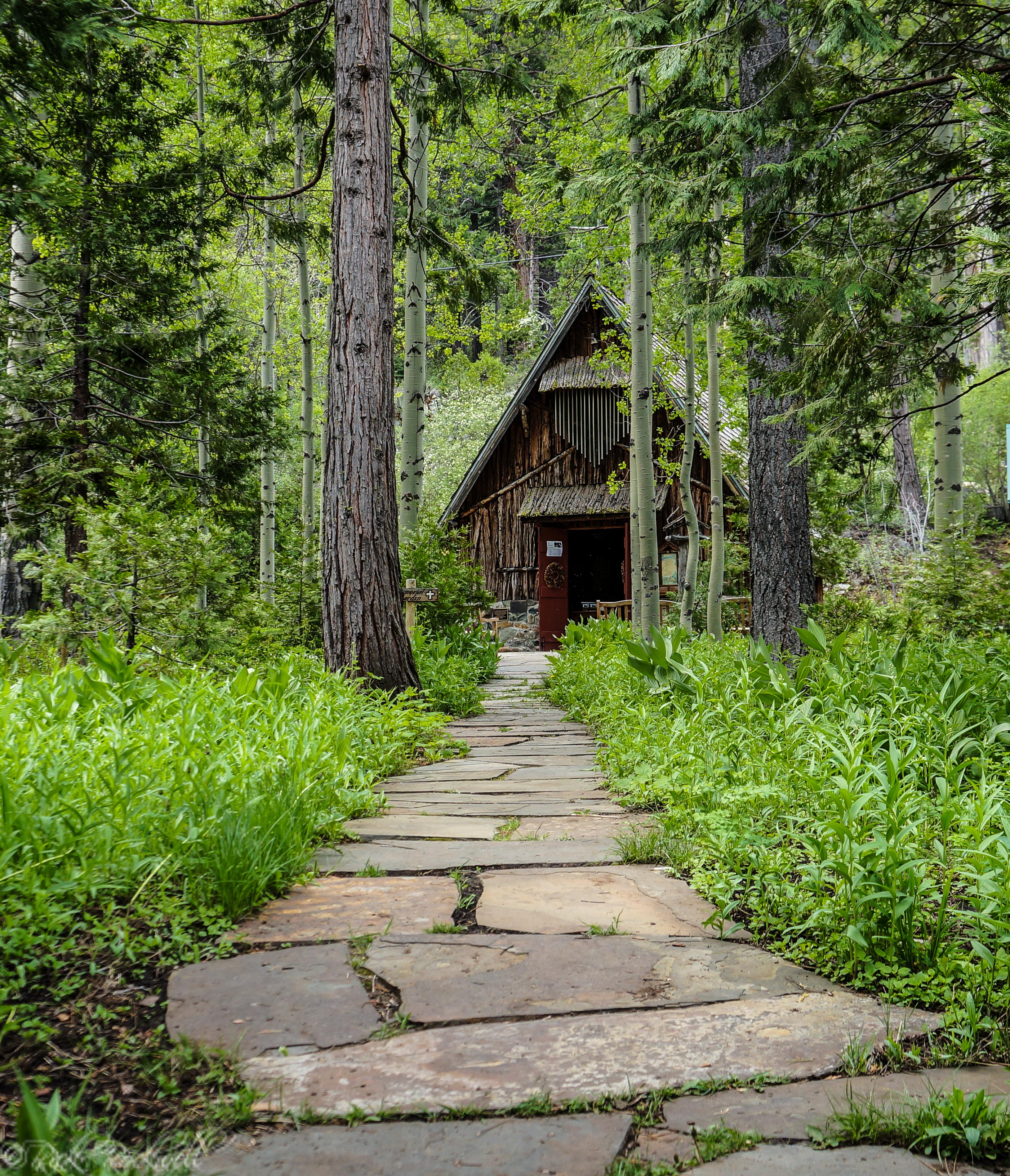
Walking up to the St. Francis of the Mountains chapel
Who Was William Wightman Price?
To understand the chapel, you really have to understand William Wightman Price. He was not just a local resident who wanted a place for summer worship. He was one of the formative figures in the early modern history of Fallen Leaf Lake.
St. Francis of the Mountains was a chapel long dreamed of by one of the region’s pioneers William Wightman Price, who developed the Fallen Leaf Lake region around the turn of the 20th century.
By all accounts, Price was a fascinating character with a deep passion for the outdoors, wildlife, nature and helping others. From childhood to his final years, Price left an indelible mark on the people he met and the regions he worked in.
Who was W.W. Price?
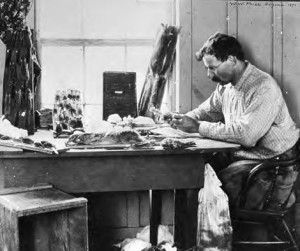
William Wightman Price – Photo Credit: The Palo Alto Historical Association
Price was born on January 20, 1871, in Milwaukee, Wisconsin. Within the first few years of his life, his mother died and he was sent to live with his grandparents who bounced around Wisconsin before heading to Nebraska.
At a young age, William got to see many different cultures and places.
At the age of 8 years old, after already showing a proclivity for the outdoors and hunting, Price ran away to live with a band of Indians so he could see what hunting was really like. He returned a few days later with an unquenchable passion for nature.
A few years after his runaway, William moved to Riverside, California, with his father. Sadly, at the age of 14, William’s father died. A young Price was now on his own in the world.
During his teenage years, Price seemed to go where the adventure took him. A restless William could never settle down in one location and spent 1 ½ years in Arizona before landing back in California.
Price’s passion for the outdoors and wildlife fueled a budding zoology career that helped him pay for his expenses and led him to enrolling at Stanford University. He would go on to graduate from Stanford and also become a leading expert in ornithology and other branches of zoology.
In the 1890’s, Price would begin spending a great deal of time in the Sierras where he developed a strong connection with the Tahoe region.
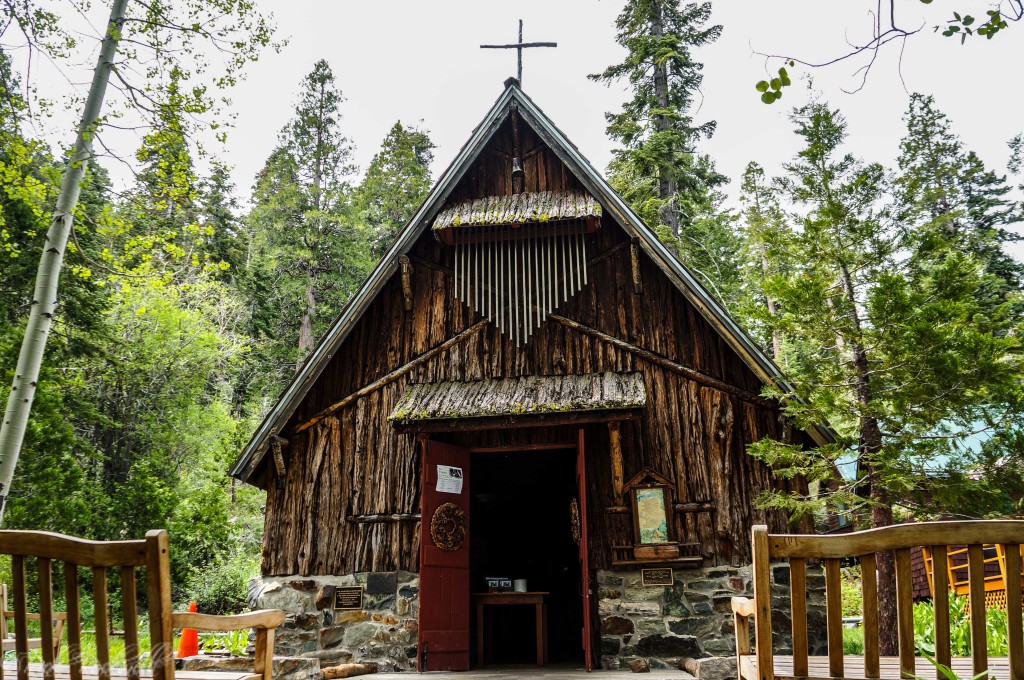
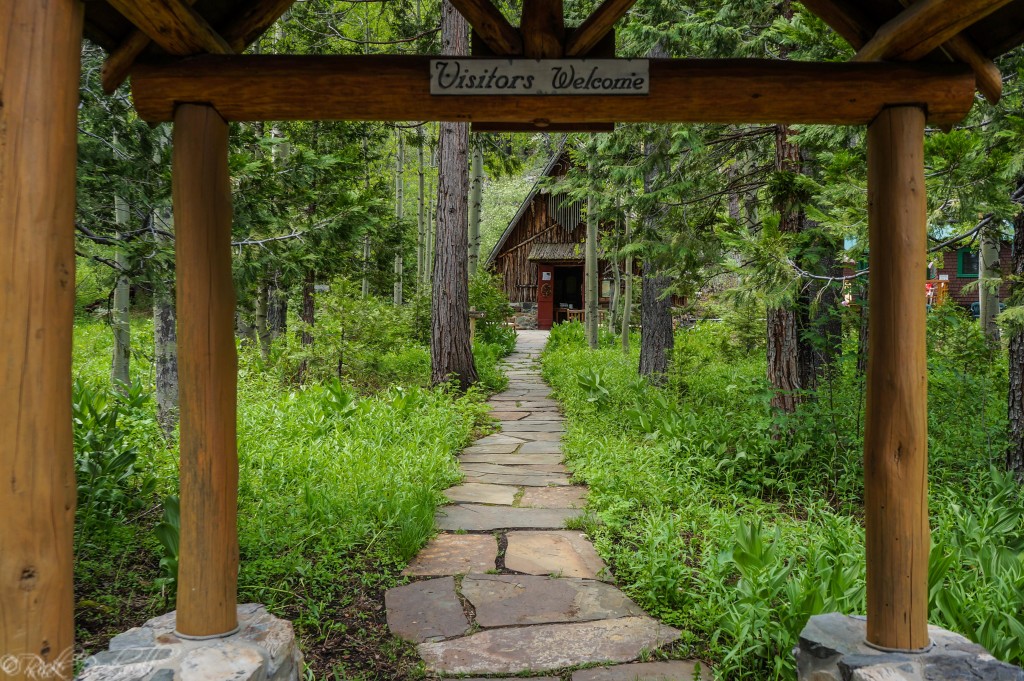
A look at the entrance to the St. Francis chapel
The Development of Camp Agazzi
In 1897, Price founded a camp for boys called Camp Agassiz in Glen Alpine near Nathan Gilmore’s Glen Alpine Springs Resort. This camp was very successful under the guidance of Price, who also opened a boy’s school in Alta, CA, called Agassiz Hall in 1901.
This school stayed in Alta until 1909 when it was then moved to Auburn, CA, before closing down in 1911 due to Price’s commitments to the Fallen Leaf Lake ventures.
In 1906, the Agassiz camp was moved down to Fallen Leaf Lake where Price built the Fallen Leaf Lake Lodge. The camp went until 1917 and then was closed down due to Word War 1. It was at this time that Price began working with the Red Cross.
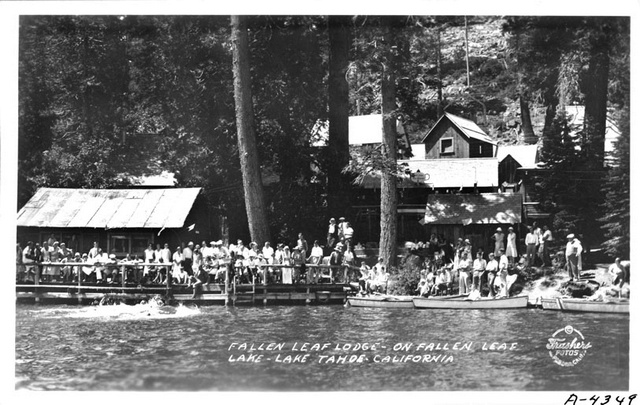
1931-1932 Fallen Leaf Lake Lodge.. Photo Credit: Pomona Public Library – Frasher Foto Postcard Collection
The lodge remained in the family until 1959 when Price’s daughter Harriet sold it to the Stanford Alumni Association who had been running a camp there since 1953. In the 70’s and 80’s, Price’s grandson managed the lodge. The Stanford Sierra Camp is still in operation at Fallen Leaf Lake.
On a side note, Pulitzer Prize winning author John Steinbeck, who frequented the Fallen Leaf Lake region, was employed at the lodge during the late 1920’s.
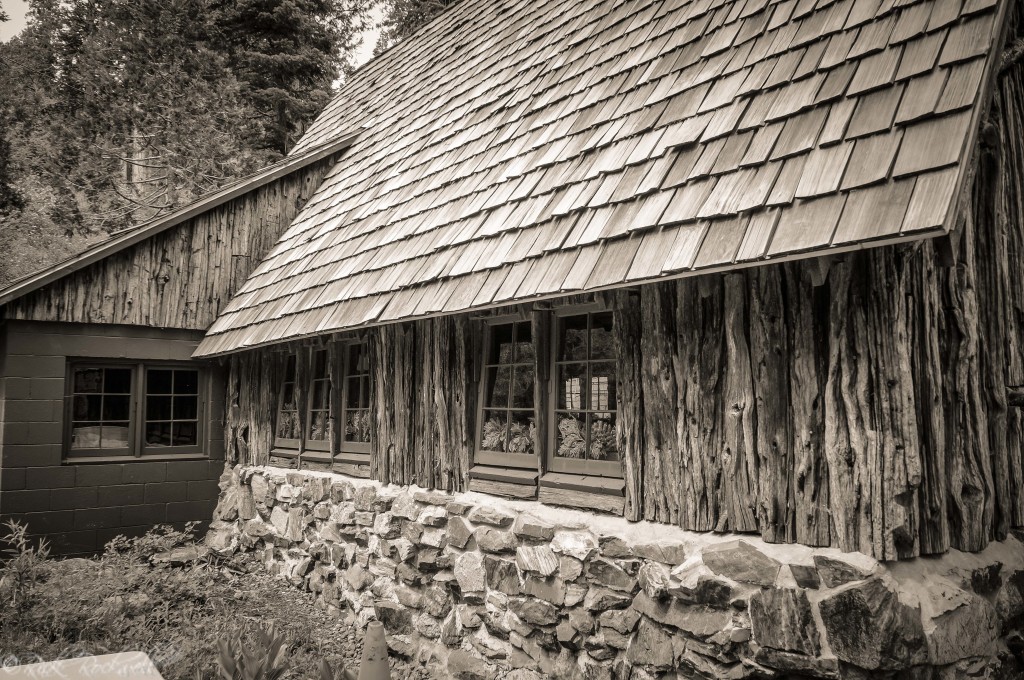
A side view of the Fallen Leaf Lake chapel
How the Chapel Was Built
In the early 1900’s, church services were held outdoors in the woods. It wasn’t until 1919, when a den was added on to the Fallen Leaf Lake Lodge, that services were held indoors. Despite this newfound accommodation, Price and his wife Bertha DeLaguna (also a fellow Stanford alum) still desired to see a chapel built.
Construction began in the summer of 1921, when Mr. Price, assisted by Walter Hansen, set about the building of the chapel. Together they completed much of the stone foundation. H. J. Blanchard, seeing them at work, generously supported the cause and had a plaque made honoring Nathan Gilmore and J. B. Richardson. They were two of the region’s pioneers.
The next phase came in 1922, when Mr. Volk completed the frame and roof. During the following winter, he also built the benches and altar. Then, after Price’s death in 1922, Volk completed the chapel in 1923 so that it would be ready for worship.
The first service was held in early June 1923, and that on the first Sunday of July 1923 the chapel was formally dedicated to the glory of God and in loving memory of Price.
Sadly, William Price would not get to see his dream chapel completed. With his health failing, and a looming battle with Brighton’s disease, Price died on November 9, 1922, in Palo Alto and is buried at Alta Mesa Memorial Park.

St. Francis statue in the Memorial Garden
The Dedication and Early Years
The formal dedication in July 1923 appears to have been a meaningful event, with tributes from Rev. Hugh C. Montgomery of Menlo Park, Dr. D. Charles Gardner, and Benjamin Winslow “Uncle Ben” Handy of Riverside.
The chapel continued to grow in significance after that first season. According to a local source, the first christening at the chapel took place in September 1924. Two years later, the first wedding followed in 1926.
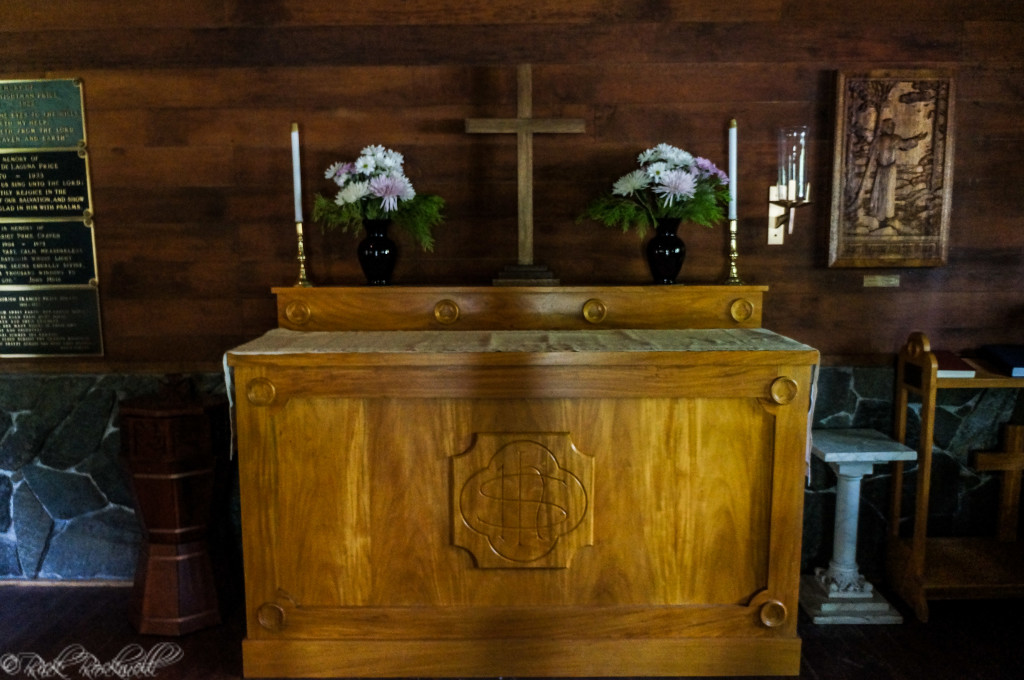
A view of the cross in the St. Francis chapel
Gifts, Furnishings, and Memorial Details
One of the most compelling parts of the chapel’s history is how personal its furnishings were as the community came together to make this chapel the spiritual heartbeat of the region.
Copies of the “Fallen Leaf” poem, written by Horace B. Clifton and illustrated by C. P. Latimer, helped raise some of the money used to build the chapel. It also notes that the first prayer books and hymnals came from Agassiz Hall, linking the chapel directly back to Price’s earlier camp life in the area.
Other furnishings carried equally specific histories. The chalice, paten, and ciborium were gifts of Rev. Hugh Montgomery.
The altar cross, had been used in the temporary chapel of Grace Church in San Francisco after the 1906 earthquake and fire, and was later given by Rev. David Evans.
A mosaic head of Christ came through Dr. D. Charles Gardner, chaplain of Stanford University, and the marble credence table was formed from the only unbroken pillar of the communion rail of the old Stanford Chapel after the 1906 earthquake.
The reed organ was purchased from accumulated offerings in 1924, and that in 1925, additional furnishings and memorial pieces were given, including a carved plaque showing St. Francis and the birds.
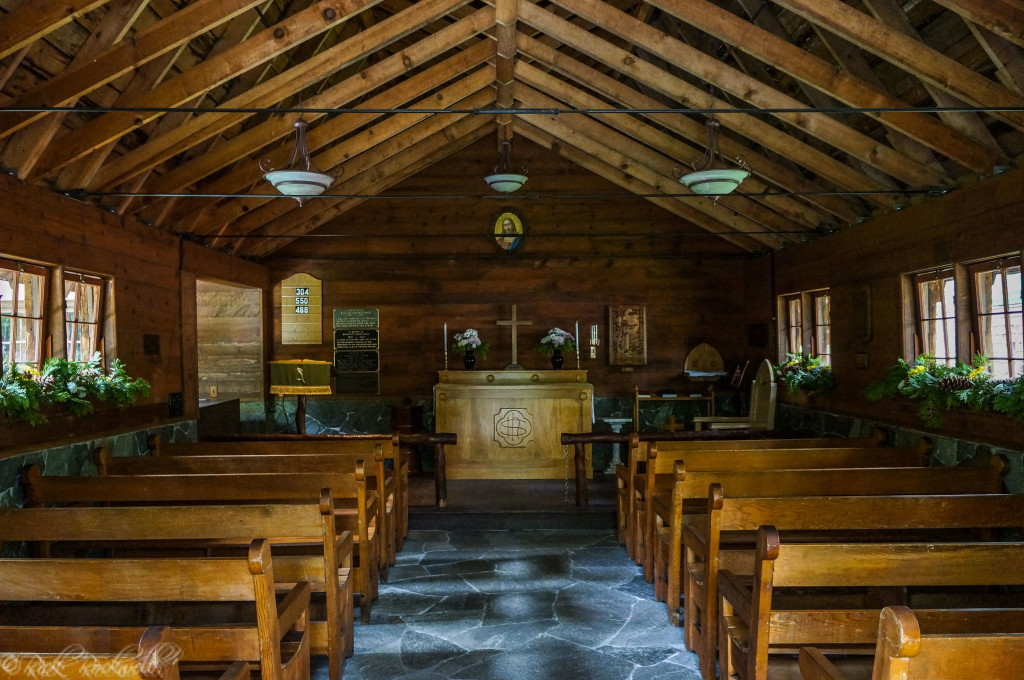
Inside the chapel looking toward the front
Can You Visit St. Francis of the Mountains Today?
Yes. The chapel remains active, and the Episcopal Diocese provides current location and seasonal worship information.
Things to See Nearby
A visit to St. Francis of the Mountains fits naturally into a broader Fallen Leaf Lake outing, especially since the chapel shares the same historic landscape tied to William Wightman Price, the early lodge community, and the south end of the lake.
Fallen Leaf Lake history: Fallen Leaf Lake has a rich past shaped by Washoe presence, early settlement, resort development, and the growth of a close-knit summer community.
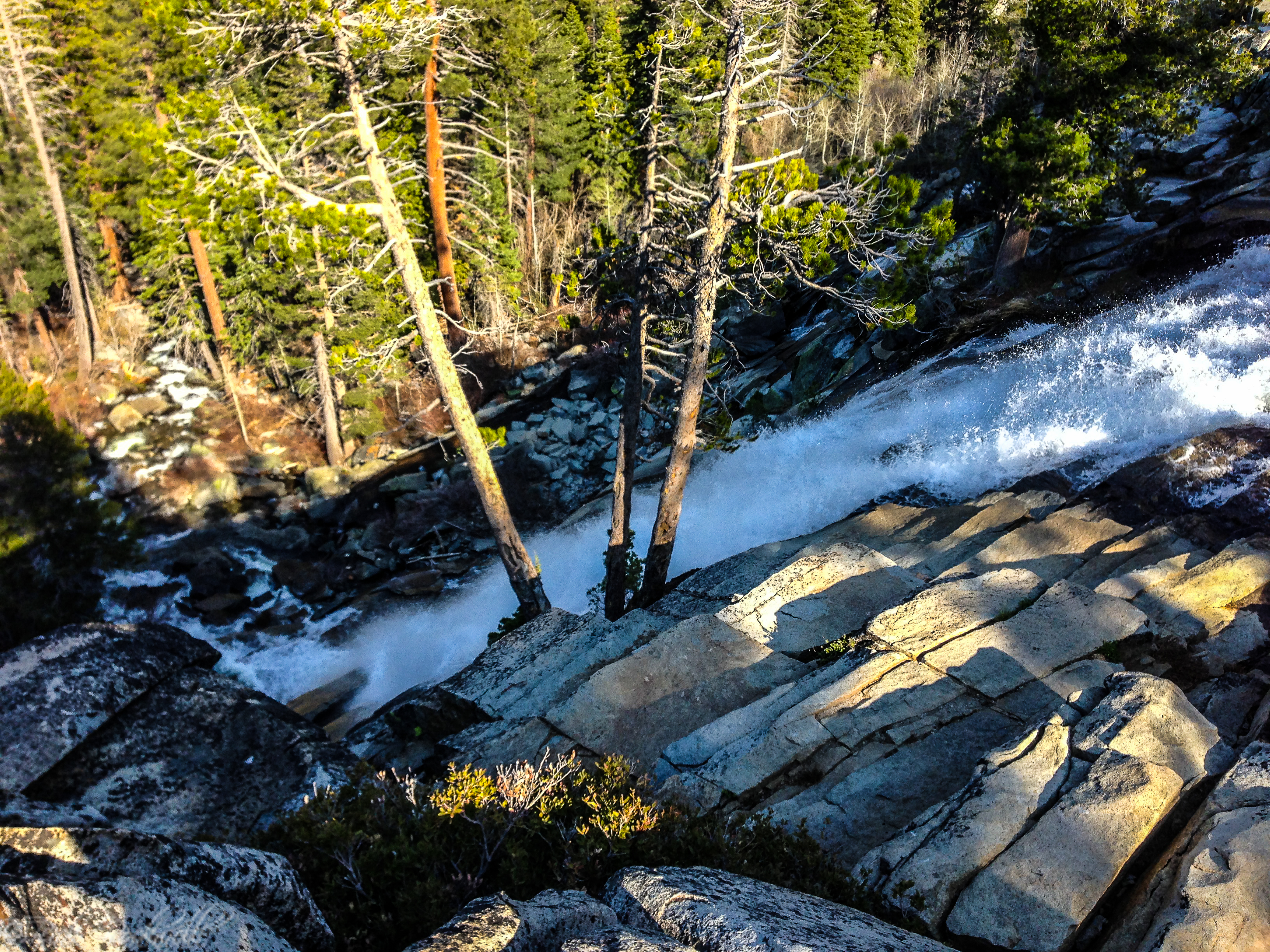
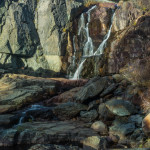
Glen Alpine Falls: Glen Alpine Falls (Lower Falls) is one of the easiest scenic stops near Fallen Leaf, with cascading water and quick roadside access that make it popular for visitors exploring the area.
Modjeska Falls: The Upper Glen Alpine waterfall that requires a half-mile hike up the trail. Named after a famous 19th century actress.
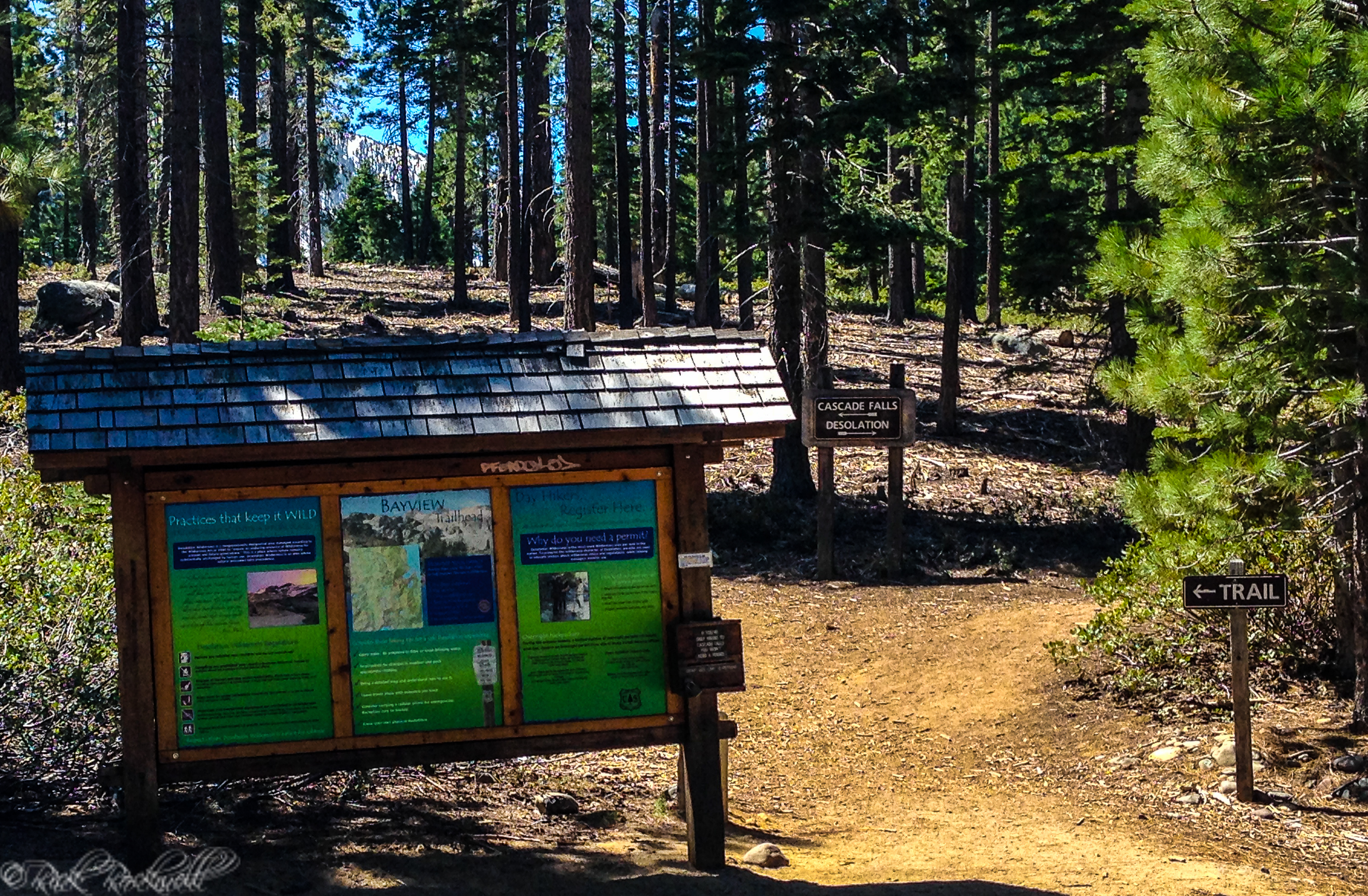
Glen Alpine Trailhead: Glen Alpine Trailhead serves as a gateway to some of the region’s best hiking, including routes into Desolation Wilderness and toward alpine lakes.
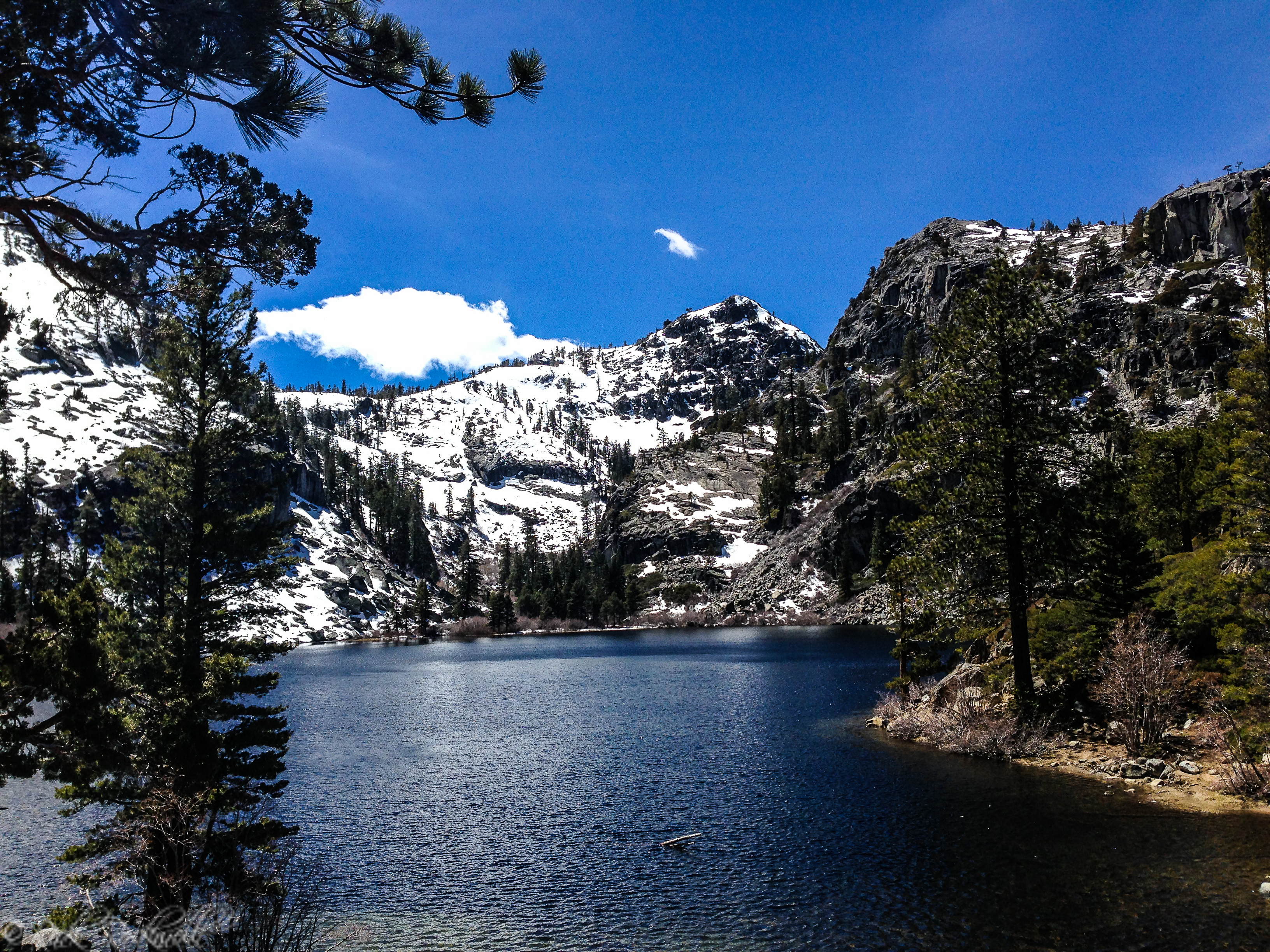
Angora Lakes: Angora Lakes offers a mix of historic resort charm, clear mountain water, and a short but rewarding hike to one of the prettiest lake settings near South Lake Tahoe.
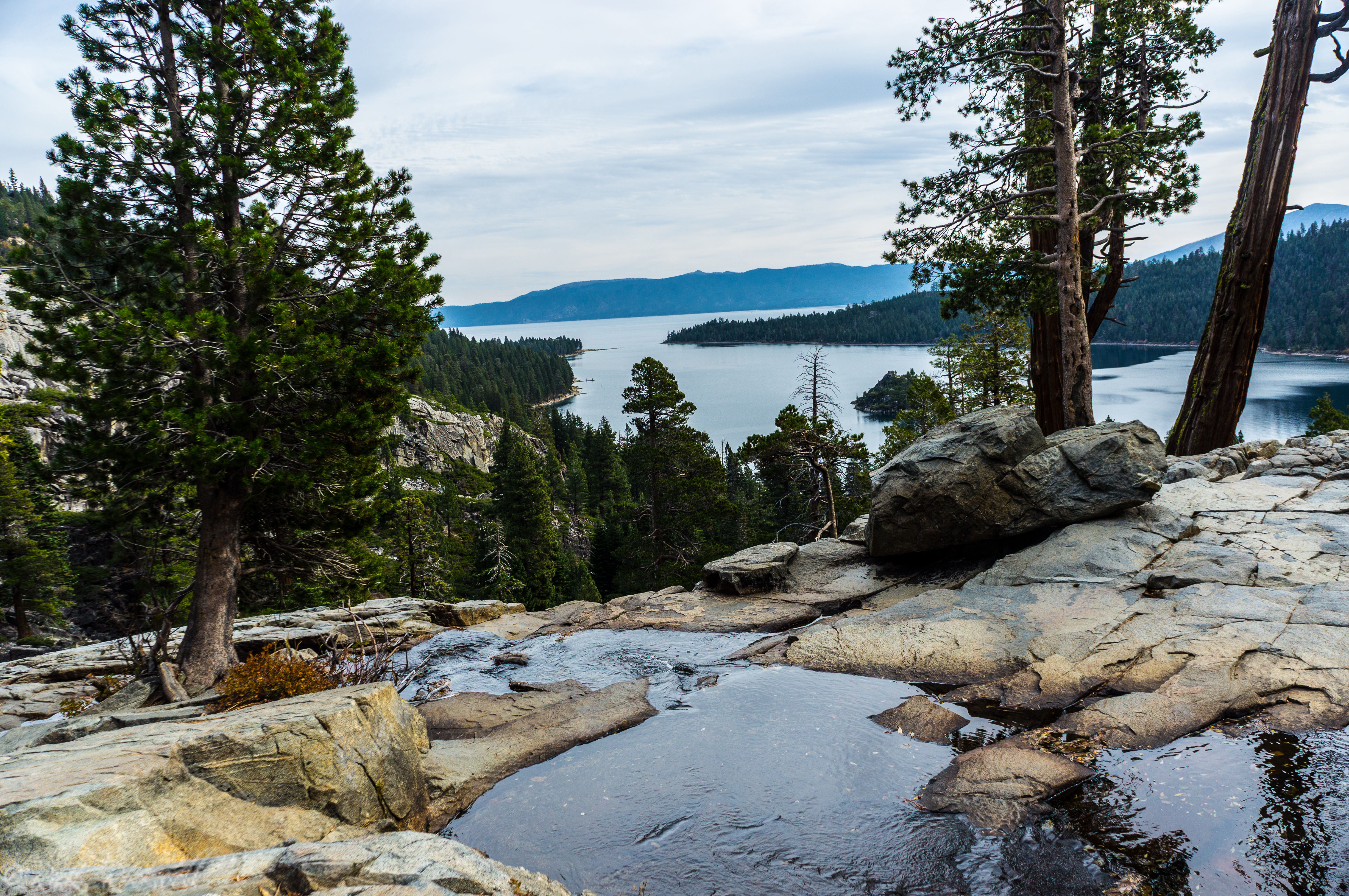
Angora Fire Lookout: Angora Fire Lookout rewards visitors with sweeping views over Fallen Leaf Lake, Lake Tahoe, and the surrounding Sierra Nevada.
Glen Alpine Springs Resort: Glen Alpine Springs Resort reflects an earlier era of Tahoe travel and helps tell the story of how this part of the basin developed as a mountain retreat.
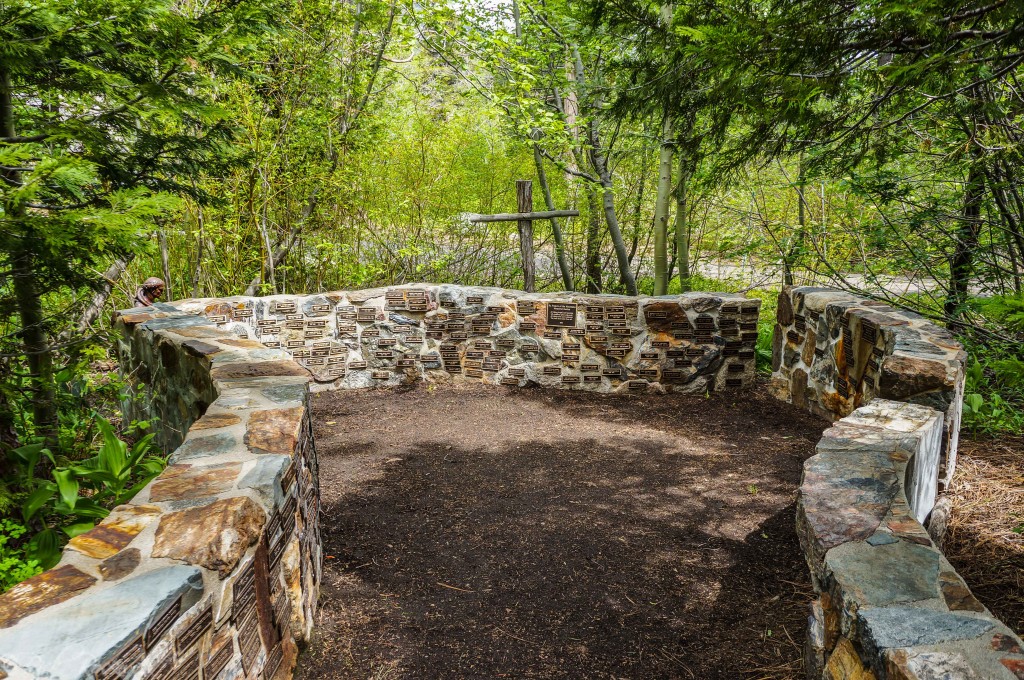
St. Francis memorial garden to the left of the chapel
FAQ About St. Francis of the Mountains
What is St. Francis of the Mountains?
St. Francis of the Mountains is a historic chapel near Fallen Leaf Lake in the South Lake Tahoe area. It was begun in 1921, held its first service in 1923, and remains active today as a summer chapel.
Who built St. Francis of the Mountains?
The chapel was begun by William Wightman Price with the assistance of Walter Hansen. Much of the stone foundation was built in 1921, and Mr. Volk later completed the frame, roof, benches, altar, and final construction.
Why is it called St. Francis of the Mountains?
The name was suggested in response to the wish for a saint associated with the mountains and with birds and animals.
Was the chapel always Episcopal?
No. The chapel originally remained independent of any denominational affiliation.
Is St. Francis of the Mountains still active?
Yes. The Episcopal Diocese of Northern California currently lists the chapel, provides its address, and posts a seasonal worship schedule.
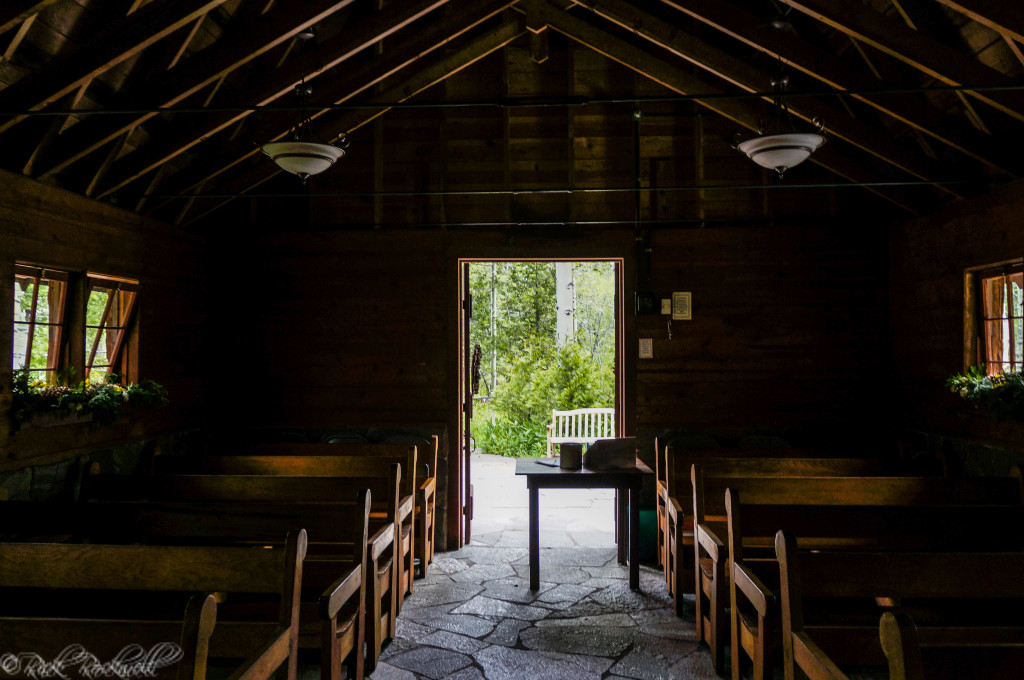
Inside the chapel looking out the back