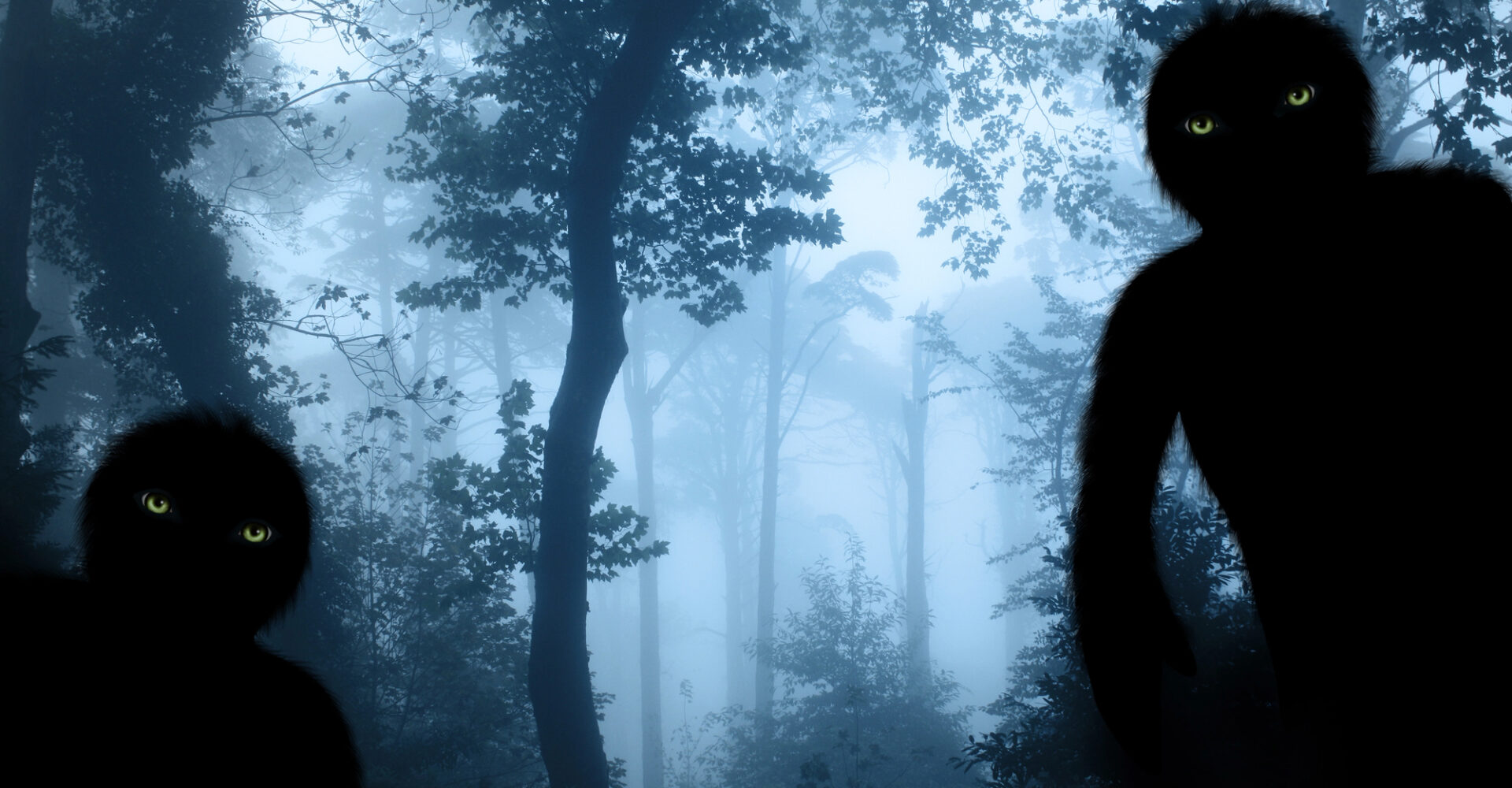
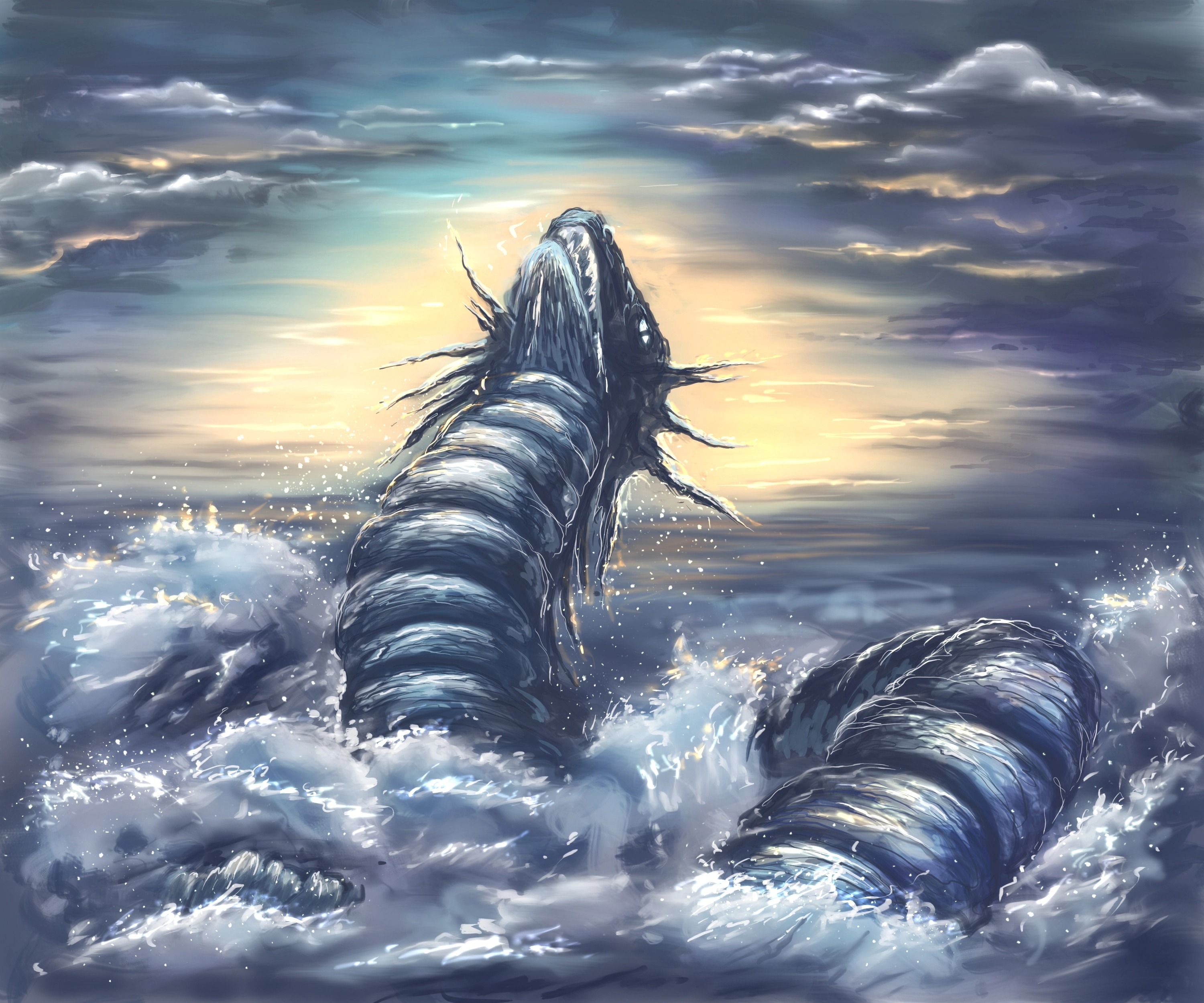
California is home to some of the most terrifying Urban Legends about blood-thirsty monsters. In fact, only the state’s diversity of landscapes can match the assortment of legends detailing man-eating, blood-sucking, and soul-devouring creatures. It’s as if each tale is creepier and more bizarre than the last.
California’s monster legends are more than just entertaining campfire stories or rite of passage dares, these cryptid tales are rooted in local stories of real-life events, first-hand encounters, news reports, and Native American oral traditions.
Here are some of the most chilling Urban Legends of monsters and creatures that use California as their feeding grounds.
The Billiwhack Monster
The Billiwhack Monster is a notorious cryptid of Ventura County, California, centered around the abandoned Billiwhack Dairy in Aliso Canyon near Santa Paula. Which many believe this is a deeply disturbed and haunted California location.
First emerging from local lore dating back to the World War II era, the creature is commonly described as a towering humanoid—approximately 8 to 10 feet tall—with a shaggy, grey or white fur coat, a goat- or ram-like head with curved horns, long claws, and a muscular build
Eyewitness accounts—often from local high school students—tell of the monster hurling large rocks at vehicles, pounding on car hoods, and brandishing a large club
In 1964, the LA Times reportedly covered sightings of a “snarling, hairy man in a hole” near the dairy, further cementing its place in regional folklore
Legend attributes the monster’s origin to purported secret experiments by the Office of Strategic Services (OSS), suggesting that a hybrid super soldier escaped from underground tunnels beneath the dairy.
However, there remains no physical evidence of this monster. And, unlike Bigfoot, there are no photographs, biological remains, or footprints hoax or otherwise.
Cactus Cat
The Cactus Cat, also known by the fanciful term Cactifelinus inebrius, is a legendary “fearsome critter” rooted in frontier folklore of the American Southwest, including California’s Mojave and Sonoran Deserts.
The earliest documented existence of the Cactus Cat appears in William Thomas Cox’s 1910 collection Fearsome Creatures of the Lumberwoods, which cataloged various North American mythical creatures. It’s a highly recommended read for anyone that has a cryptid fascination.
Described as roughly the size of a bobcat, its most remarkable traits are a coat made up of sharp, thorn-like hair, a branched tail and sharp, knifelike blades of bone above its front feet.
These blades slash open the cactus trees, so that the thirst-stricken cat can “lap up” the nectar. Some reports claim that too much of this cacti sap can lead to an intoxicating, aggressive behavior from the ferocious felines.
Variations of this Urban Legend claims that this inebriated state can lead to the cat becoming territorial and morph into a desert killing machine.
Unlike other legendary monsters on this list, the Cactus Cat lacks any real-world corroboration. Skeptics often attribute sightings to misidentifications or myth-making.
Char Man
The legend of Char Man is one of Southern California’s most deeply rooted urban myths, originating in the wooded slopes and winding roads of Ojai Valley. More specifically, along Creek Road and near Camp Comfort County Park.
Described as a grotesque, charred humanoid with melted skin and scorched clothing, Char Man is frequently associated with the catastrophic wildfires of 1948.
One version claims he is the ghost of a firefighter who was consumed by flames and vanished into the forest, while another recounts the story of a man who survived a fiery car crash but was so disfigured that he fled into the hills, only to be seen haunting the bridge over San Antonio Creek.
Numerous accounts tell of drivers who pull over at night, exit their vehicles to call out “Char-Man!”, and are met with the smell of burnt flesh before the apparition appears, approaching or even rattling their vehicle.
Folklorist Charlie Seemann emphasizes how such terrifying tales foster “legend tripping,” where teenagers venture to these remote locations as a rite of passage, perpetuating the myth.
Whether it’s a rite of passage or a case of wrong place, wrong time, Char Man’s legacy endures in local lore as a campfire warning, a spooky dare, and a symbol of nature’s anger ensuring that even on the quiet roads of Ojai, terrifying fear still burns bright.
Chupacabra
It was on a 1996 episode of Art Bell, that I first heard about the Chupacabra. This mysterious flying creature first popped up in Puerto Rico as a bloodsucking monster that decimated livestock.
Spanish for “goat sucker,” as it reportedly took a liking to killing goats, far-fetched tales of the Chupacabra lit the world on fire with descriptive testimonies of an alien-like monster, reptilian in nature but shaped like a kangaroo with spines running down its back.
As the legend migrated north into places like California, descriptions shifted. In Riverside and other southwestern regions of the state, sightings began to depict a hairless, dog-like creature: pink or gray-skinned, with sharp fangs, triangular ears, and glowing eyes. This was much more unsettling than a reptilian kangaroo.
While some investigations into the Chupacabra have produced more support for skeptics than believers, sightings of these mangy, demonic looking creatures continue to pop up around the country. In fact, highly-debated video footage exists of cryptids that eerily fit early accounts of the Chupacabra.
The Dark Watchers
High atop the misty ridges of California’s Santa Lucia Mountains, lurks one of California’s most haunting legends: the Dark Watchers.
These towering, shapeless silhouettes are often described as standing 10 feet tall, clad in wide-brimmed hats and leaning on walking sticks.
These Dark Watchers tend to appear when the daylight is dim and remain perfectly motionless or silent until noticed. Then, they simply vanish like mist in the air.
This Urban Legend reaches back centuries. The Spanish colonists who explored the area in the 1700s called them Los Vigilantes Oscuros (“the dark watchers”), and local lore suggests that even the Chumash people spoke of such shadowy figures long before Spanish arrival.
These mysterious beings first made their way into California’s literary consciousness in the early 20th century. Poet Robinson Jeffers described them as “forms that look human to human eyes, but certainly are not human,” while John Steinbeck included a caution about them in his short story Flight (1938), warning travelers not to draw near.
While skeptics point to hallucinations or optical illusions, like the Brocken spectre, as plausible explanations for what people have seen, the enduring mystery of the Dark Watchers continue to spark both the imaginations and curiosity of anyone passing through this mountain range.
Elsie – Lake Elsinore Monster
Located in Southern California’s Inland Empire, Lake Elsinore sparkles under the sun during the day. However, local lore of a mysterious guardian lurking beneath its surface has become a popular Urban Legend over the last century.
Affectionately known as Elsie, or sometimes “Hamlet,” this serpentine creature is said to have first surfaced in 1884, when early settlers and Indigenous observers described a long-necked, scaled beast moving through the water with uncanny grace
In 1934, a reputable local rancher, C.B. Greenstreet, and his family claimed they saw a creature some 100 feet long with a 30-foot tail, gliding lazily before lunging forward “like lightning” and sending waves crashing ashore
Over the decades, sightings continued. However, descriptions varied dramatically. In 1967, a boating family reported dark humps surfacing and rolling in the water
In 1970, one Bonnie Play described a more modest, dinosaur-like creature about 12 feet long and 3 feet wide, complete with dorsal humps. Even three state park officials said they caught glimpses of the beast near their boat.
The lake has dried completely several times, including in 1954. Yet, no remains have ever turned up, which has fueled speculations that Elsie hides in underwater caves only to emerge in the decades when the lake refills.
Though Elsie’s existence remains unverified, this cryptid endures as a majestic mystery whose legend continues to ripple across the waters of Lake Elsinore.
Fresno Nightcrawlers
As the night slowly blankets Fresno, a more recent Urban Legend begins to slide across the region: the Fresno Nightcrawlers.
These ghostly figures have been seen gliding across yards in defiance of reality with their pale, armless, legless, and headless bodies. In fact, they eerily resemble walking pants gliding with uncanny smoothness across the landscape.
The first sighting came in 2007, when a homeowner checked his surveillance footage to investigate his barking dogs. The disturbing apparition that he saw, left the homeowner speechless and rattled for days.
In 2011, Yosemite National Park’s security cameras recorded two of these beings. One was towering, one was smaller, and they both seemed to float across the forest floor. Some say the smaller one followed like a child trailing its parent. Yet, both appeared to have a supernatural aura.
Despite the video footage from two different areas, skeptics suspect it’s all elaborate puppetry or digital trickery. But the grainy videos, eerie strides, and unnatural auras have led to these Nightcrawlers taking root in the local folklore of Fresno; prompting both curiosity and fear within its residents.
Lone Pine Mountain Devil
Living high up in the mountains of the Alabama Hills, is a multi-winged, furry creature born out of evil with venomous fangs, razor talons and a desire to feast upon soft flesh. Local legends call it the Lone Pine Mountain Devil. Those who have seen it and survived, call it a winged demon.
When this devil is finished with the flesh of its victims, it leaves the rest of the carcass to rot and ward off scavengers.
The most chilling chapter of this legend dates back to 1878, when a stagecoach of Spanish settlers vanished into the night. After a few weeks, only one survivor, Father Justus Martinez, dragged his beaten body into a nearby mission carrying a blood-soaked journal. His final words describe the swarm of “winged demons” descending from the trees, slaughtering the travelers in a brutal frenzy.
Modern scholars and skeptics chalk this up to an internet hoax, likely sparked by a viral prank video in the early 2000s. Yet, when out walking through the Alabama Hills, some locals claim that you can still hear the echoes of past victims and the screeches of these flesh-eating demons.
Ong The Giant Bird (Native American)
Lake Tahoe is known for its beautiful blue water, mountainous backdrops and picturesque landscapes all year long. Tahoe is also rooted in Native American history, culture, and folklore.
The Washoe Tribe have called Tahoe home for many centuries. So, it should come as no surprise when a Washoe legend still permeates throughout the Lake Tahoe air – Ong The Giant Bird.
Washoe legend states that Ong was a ferocious creature who rose from the lake and killed anyone traveling alone near the shores. This creature was a massive predator that not only fed off the fear of the tribe, but also consumed those that couldn’t escape its giant talons.
Ong would snatch a solitary individual, soar into the skies, and drop that person from the heavens into the water, never to be seen from again.
Fortunately, the Washoe legend talks of a brave warrior named Tahoe who defeated Ong in battle and won the hand of the most beautiful girl from the tribe.
Although this creature, which was larger than the tallest pine tree, died in battle, the legend lives on in the mysteries that lay beneath the icy-cold, blue steel waters of Lake Tahoe.
Many locals have accepted the idea that its nest still resides in the depths of the lake and that’s why the drowned are almost never recovered.
Penelope
The Sierra Nevada Mountains is home to more than one of the state’s most heinous creatures. In fact, it’s as if this majestic mountain range is the perfect breeding ground for man-eating cryptids.
In addition to monsters like Ong, Tessie, and the Lone Pine Mountain Devil, is quite possibly the worst of them all – Penelope.
Sure, her name doesn’t strike fear into the heart of man like Mountain Devil, but if you ever hear her sinister screams and bone-chilling cries, life as you know it will be over with.
Standing taller than Andre The Giant, is a creature that will stop you in your tracks with her grotesque, mutated appearance. Elongated limbs give way to clawed fingers, while the rest of her body is emaciated with a pale skin color as if she’s never seen the light of day.
There’s a great deal of debate over her origin story as she’s either a woman who survived a horrible wreck which led to her disfiguration or she’s a lost soul who descended into madness as she roams the Eastern Sierras.
Either way, berries and insects no longer satiate her. She now lives off human flesh, as this soulless creature feeds off anyone she comes across. The next time you camp in the Sierras, that crackling noise you hear off in the trees might not be a wild animal. Instead, it could be Penelope looking for her next carcass.
The Rebobs
When you think of Napa Valley, visions of Wine Country and sweeping views come to mind. And, yet, this beautiful region of the state is also home to something far more sinister than the mind can comprehend – The Rebobs.
Local lore describes this cryptid as half-robot, half-monkey with wings like a bat and a desire to strike down anyone that comes too close to its domain – Patrick Road.
The legend states that the Rebobs were a scientific experiment gone wrong. What started out as something with good intentions, morphed into a demonic version of the flying monkeys from the Wizard of Oz.
Most of the reported sightings have taken place on or near Patrick Road. Whether it’s travelers passing through or locals fascinated by this urban legend, many of the accounts share similar attributes: flying creatures circling vehicles like vultures over a carcass, the uncanny ability to blend into the foliage, artificially enhanced monkeys.
If you ever find yourself driving down Patrick Road, make sure it’s during the day and don’t stop near the cemetery or any oversized brushes with no trespassing signs posted all around.
Riverside Monster
Imagine the evilest looking scarecrow with unbelievably long arms, scaley with leaves, earless, fluorescent eyes, and a bulging mouth. That’s what Charlie Wetzel saw one fateful night in November 1958, when driving on a nearby Riverside road; later identified to be where North Main Street dips across the Santa Ana River bed.
Out from the darkness of a California winter night, came a frightening creature that pounced onto the hood of Wetzel’s moving car and began clawing at the windshield trying to attack the driver.
A terrified Wetzel reached for his .22 pistol as he simultaneously pushed the gas pedal to the floor. The increased speed caused the creature to fall back from the car, making a gurgling sound as if it was threatening death upon the driver.
When the authorities reached the scene, they “could find nothing to prove or disprove” this story. The Sheriff in charge chalked this up to a vulture that was probably in the road snacking on a carcass. However, there was no evidence supporting the Sheriff’s theory either.
Nearly 70 years have passed since Wetzel’s run-in with a cryptid. Although there have been no other sightings of this Riverside Monster since then, some cryptozoologists believe this frightful encounter could’ve been a run-in with Big Foot and not a newfound creature.
Satan’s Pet
Elizabeth Lake, located in the Sierra Pelona Mountains of LA County, is an epicenter of cross-cultural lore, colonial history, Native American borders, and the San Andreas Fault. In other words, this lake is the perfect location for a portal to another world, dimension, or even hell.
In fact, Junipero Serra first named the lake La Laguna de Diablo (Devil’s Lake) in the 1780s due to nearby dwellers claiming that the devil’s pet lived within the lake. It’s appropriate considering that this legend states the devil actually created the lake as a home for his most gruesome creature.
Known as Satan’s Pet, this winged monstrosity is a guardian to the portal between California and hell; as many believe that the fault line is a doorway to the underworld.
The legend goes on to state that in the mid-19th century, Pico, a Spanish Lieutenant, and his men came face-to-face with the devil who rose from the lake.
Later, a descendent of one of Pico’s men shared the following tale of the encounter, which was passed down to him: “A great whistling, hissing, screaming roar issued… so near to us that we could smell the nauseating, fetid breath of the monster.”
Although there hasn’t been any collected evidence, up until the 1980s, the monster had been described with having sharp talons and a large beak, almost like a winged-dinosaur.
However, in 1989, we get another vivid description of a horrifying creature as two fishermen swear that they saw the lake monster and said it was as “bigger than a whale, with wings like a bat, a head like a bulldog.”
Since then, nobody has claimed to see any monster in the lake. Could it mean that the creature is truly gone, or is it waiting until the world has forgotten about its existence before striking again?
Remember, the devil’s greatest trick is making people think he doesn’t exist. The same could be true about his favorite monster.

Tahoe Tessie
Sightings of a creature living in the depths of Lake Tahoe have dated back to the 19th century, and these legends are different than the ones about Ong above. In fact, they tell of a giant serpent possibly 600-feet long with a head that’s 14-feet wide. However, what makes this Urban Legend stand out from many others, is that the sightings continue to occur.
Since the first well-documented sighting by I.C. Coggin in the late 1800s, over the next century and a half, hikers, boaters, law enforcement, and local residents have reported seeing a serpent-like creature gliding underneath the water with side-to-side undulations reminiscent of a cold-blooded snake.
Lake Tahoe is the second deepest lake in the country, with depths that surpass 1,600 feet below the surface. Despite its beautiful, clear blue waters within the first 50 to 100 feet, it gets eerily darker the deeper you go. In fact, it’s pitch black in the deepest portions of this freshwater lake. And, that’s where many believe that Tessie lives.
Don’t let the name fool you. Tessie isn’t believed to be a colorful character like the one that Bob McCormick created in his 1980s children’s book. Instead, legends and sightings declare that this creature has no fear of humans. In fact, it could even have an appetite for them.
One thing is for certain, something unlike any other known specimen lives in this lake. And, if Fallen Leaf Lake can have an underwater forest, then it would not surprise me if Tahoe had a large serpent-like creature scouring and devouring anything that comes within its depths.
Tripodero
The Tripodero is a legendary cryptid said to roam the chaparral and foothill forests of California, particularly linked with construction camps, railroads, and logging communities.
Described in early 20th-century folklore works such as Fearsome Creatures of the Lumberwoods (Cox, 1910) and Fearsome Critters (Tryon, 1939), the Tripodero has two telescopic legs that can extend for height or retract for stealth, and a kangaroo-like tail that helps maintain balance especially when it “towers above the chapparal.”
Its most unique feature, as if its structure above wasn’t rare enough, is a snout that resembles a blowgun. The Tripodero stores hardened, clay pellets in a cheek pouch and, when spotting prey from its elevated vantage, fires the pellets with deadly precision to stun the victim before moving in to consume it.
Don’t let it’s small, yet solidly built, physique fool you. The Tripodero’s uncanny marksmanship and unique physiology make it a threat to lumberjacks, smaller prey, and anyone with the bad luck to cross paths with one. It’s a vicious hybrid of an animal that “stays until the last bone is cracked and eaten.”
Yucca Man
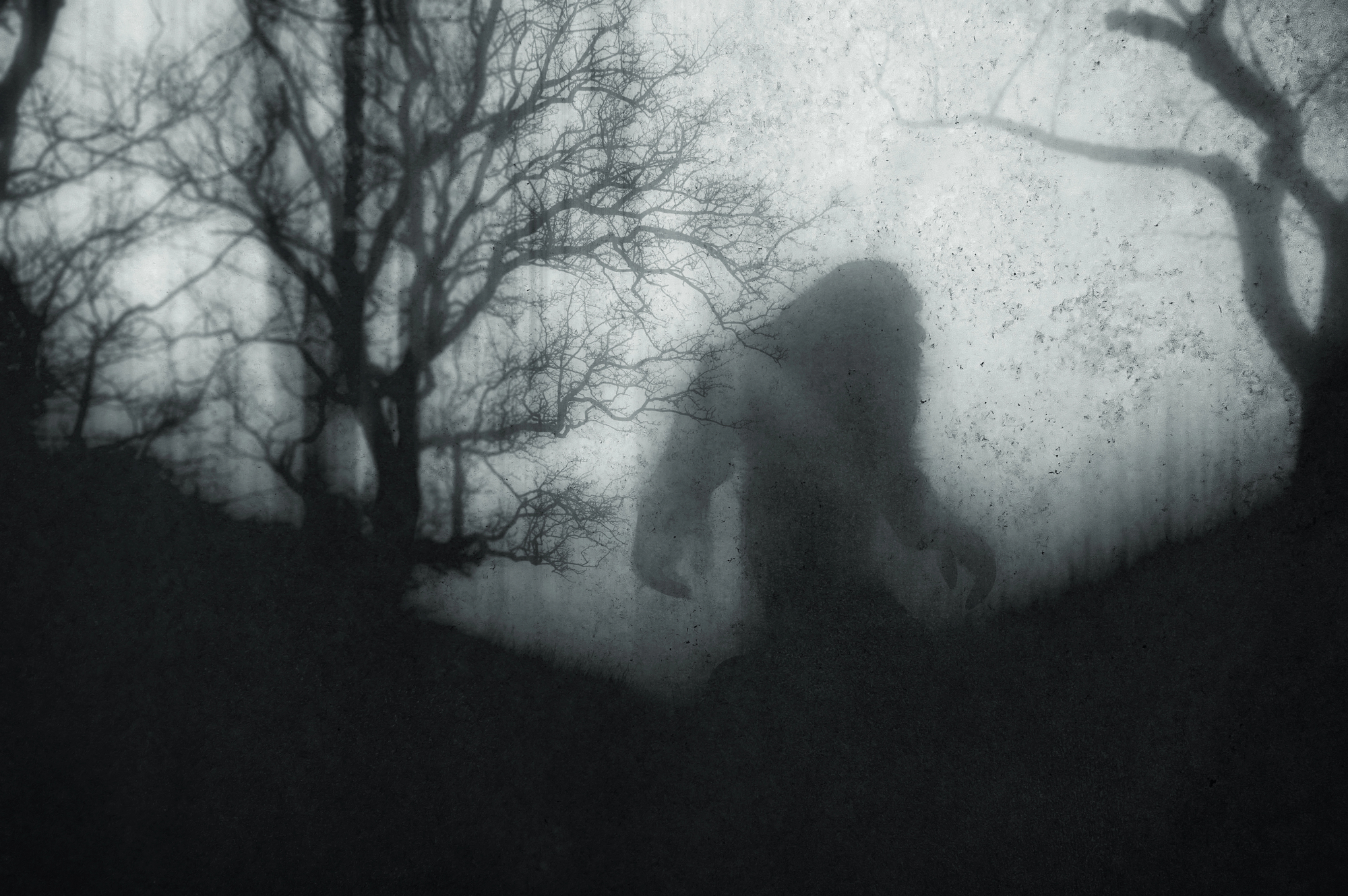
Often described as an eight-foot-tall creature with glowing eyes and a powerful, musky odor, Yucca Man is said to roam deep within Southern California’s arid terrains near Joshua Tree National Park, Yucca Valley, and Twentynine Palms.
Yucca Man is sometimes simplified as a desert variation of the Bigfoot (Sasquatch) Urban Legend. Yet, there are unique characteristics that separate this beast from his counterpart – most notably is Yucca Man’s affinity for military outposts and Native American legends of “hairy devils” that add another layer to this tale.
The earliest widely circulated Yucca Man encounter occurred in 1971, at the Marine base in Twentynine Palms. A guard reportedly awoke disoriented, with his rifle bizarrely bent, claiming that he had been confronted by a towering, red-eyed beast.
Over the next five decades, there have been an increased number of Yucca Man sightings in these regions. Eye witness reports claim eerie confrontations in the desert nights, strange footprints with some measuring over a foot long and spaced six feet apart, and disturbing auditory phenomena.
While no physical proof has ever been found, Yucca Man remains a deeply embedded Urban Legend of Southern California.
Sources:
Weird California. (n.d.). The Billiwhack Monster
Cox, W. T. (1910). Fearsome creatures of the lumberwoods, with a few desert and mountain beasts. Washington, DC: Judd and Detweiler.
Tryon, H. H. (1939). Fearsome critters. Cornwall, NY: The Idlewild Press.
“Charman of Ojai.” (2020). Ventura County Reporter
Seemann, C. (2018). “The ‘Char-Man’: A Local Legend of the Ojai Valley.” In North American Monsters. Utah State University Press.
Chupacabra. (n.d.). Wikipedia.
Ellstrand, N. (2025, March 12). Of Chupacabras and Coyotes. Naturally Riverside.
Radford, B. (2011). Tracking the Chupacabra: The Vampire Beast in Fact, Fiction, and Folklore. University of New Mexico Press.
Greenstreet, C. B. (1934, September 13). A monster lurks in Lake Elsinore. Los Angeles Times
Fresno Bee. (2018, October 19). What is Fresno CA Nightcrawler? Cryptid sightings, appearance. The Fresno Bee.
The Rampage Online. (2023, November 1). Fresno’s own local legend.
Eastern Sierra Now. (n.d.). Beyond the Beyond: Lone Pine Mountain Devil.
PBS SoCal. (n.d.). Lone Pine Mountain Devil, Lone Pine. In 10 Cryptids From SoCal Folklore That Rival the Urban Legends of Bigfoot and the Loch Ness Monster.
Cachinero, E. (2019, November–December). The Ong. Nevada Magazine.
Hartley, S. (n.d.). Date night with the Napa Rebobs. Napa Valley Register.
Guttilla, P. (2003). The Bigfoot files. Timeless Voyager Press.
Schlosser, S. E. (n.d.). Spooky California: Tales of Haunting, Strange Happenings and Other Local Lore.
Bell, H. (1930). On the old West Coast: Being further reminiscences of a ranger. New York, NY: Knopf.
“There’s something out there: The enduring legend of Tahoe Tessie.” (2021, May 4). SFGate.
Longreads. (2018, April 25). The Known Unknown: Tales of the Yucca Man.
Rogers, H. (2022, November 2). Haunting the Mojave: The Yucca Man. MOAH.
Stilwell, B. (2021, August 10). The ‘Yucca Man’ is a beast that stalks Marines at 29 Palms. We Are The Mighty.