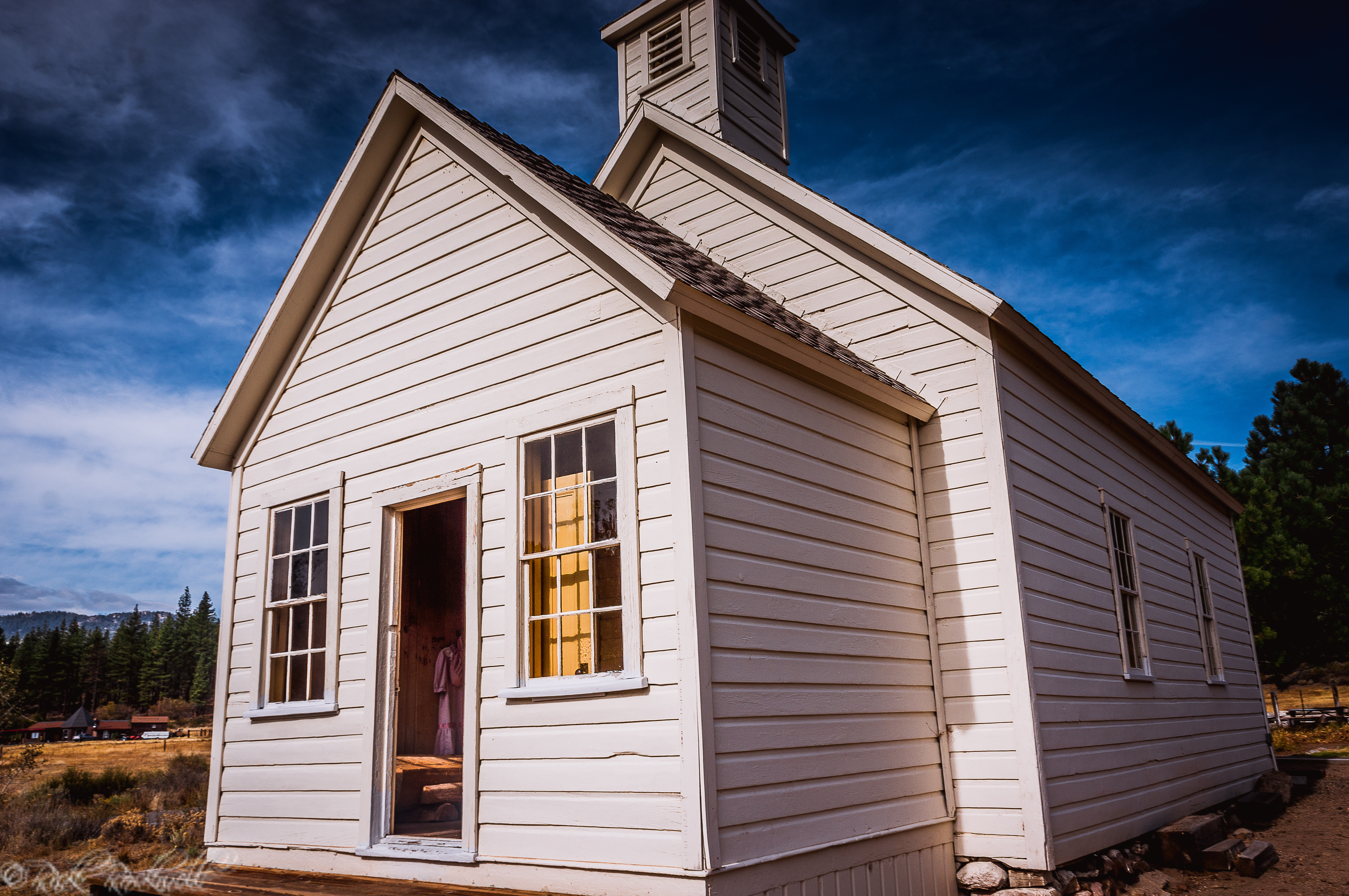
The Old Webster Schoolhouse is a carefully restored and preserved late-19th-century schoolhouse that was built beginning in 1882 and used as a school from 1883 into the late 1920s.
Also known as the Webster School House and the Markleeville Schoolhouse, this nearly 700-square-foot structure was built on a hilltop, overlooking the small rural town of Markleeville and the surrounding Sierra landscape. It’s a picturesque location that reminds us of a time gone by.
Today, the schoolhouse is part of the Alpine County Historical Complex, which makes it one of the easiest historic stops to visit while exploring Markleeville, Alpine County history, or the scenic roads southeast of Lake Tahoe.
Quick Facts About the Old Webster Schoolhouse
Detail | Information |
Historic name | Old Webster School / Markleeville Schoolhouse |
Also known as | Webster School House |
Location | Markleeville, Alpine County, California |
Address | 135 School Street, Markleeville, CA 96120 |
Part of | Alpine County Museum and Historical Complex |
Construction began | December 15, 1882 |
First classes | October 15, 1883 |
Historic use | One-room schoolhouse and community gathering place |
Current access | Open seasonally as part of the museum complex |
Typical season | Memorial Day Weekend through the end of October |
Typical hours | Thursday through Sunday, 10 a.m. to 4 p.m. |
Best for | California history, historic schoolhouses, Markleeville stops, Alpine County road trips |
Where is the Old Webster Schoolhouse Located
The Old Webster Schoolhouse is located at the Alpine County Museum and Historical Complex in Markleeville.
The official address for the museum is:
135 School Street
Markleeville, CA 96120
The complex sits on a knoll above town, which is part of what makes the schoolhouse such a memorable stop. From here, you can look out over Markleeville before or after walking through the historical complex.
Visiting the Old Webster Schoolhouse
The official Alpine County Museum page lists the museum with seasonal operating hours from Memorial Day Weekend through the end of October, Thursday through Sunday, 10 a.m. to 4 p.m.
The schoolhouse is part of the Alpine County Museum and Historical Complex, so the easiest way to plan a visit is to check the museum’s current seasonal hours before heading out.
A Need for a School
In 1864, Alpine County was officially created as silver mining, the region’s mining boom, and a growing number of ranchers brought more people into the area. The area’s first settlement, Woodford, had already been established in 1855.
One year before Alpine County was created, one of the region’s pioneers, Jacob Markley, was shot and killed after an argument over land-sale profits. The community honored his memory by embracing the town name of Markleeville.
When the silver mines started to decline, and silver took a hit in value, the county saw a mass exodus of residents. The population dropped from a high of more than 11,000 to just under 2,500 by 1873. Silver Mountain City, once the county seat, eventually declined toward ghost-town status, following the kind of boom-and-bust pattern seen in many California ghost towns. This led to Markleeville becoming the county seat in 1875.
Around this time, town residents were using various rooms throughout the area for a schoolhouse, including what eventually became a stable. Historical records describe Markleeville as having a superintendent and teacher before it had a proper school building, which made the need for an official schoolhouse even more evident.
With the town taking on the importance of county seat, and a modest number of residents remaining, the need for a permanent schoolhouse became clear.
Building the School
The town residents began raising funds to build a school. Events like dances and box socials were used to gather the townspeople and collect donations. Additionally, locals volunteered their services to the construction of the school, which began on December 15, 1882.
Anna M. Arnot, Superintendent of Schools, was a driving force behind the building of this “new school.” Local accounts also credit a Monroe family carpenter with helping lead the volunteer construction work, though sources differ on the first name.
According to an article in the Monitor Argus, dated Oct. 12, 1883, the school was described as “a neat and cozy one which all of us should feel proud of.”
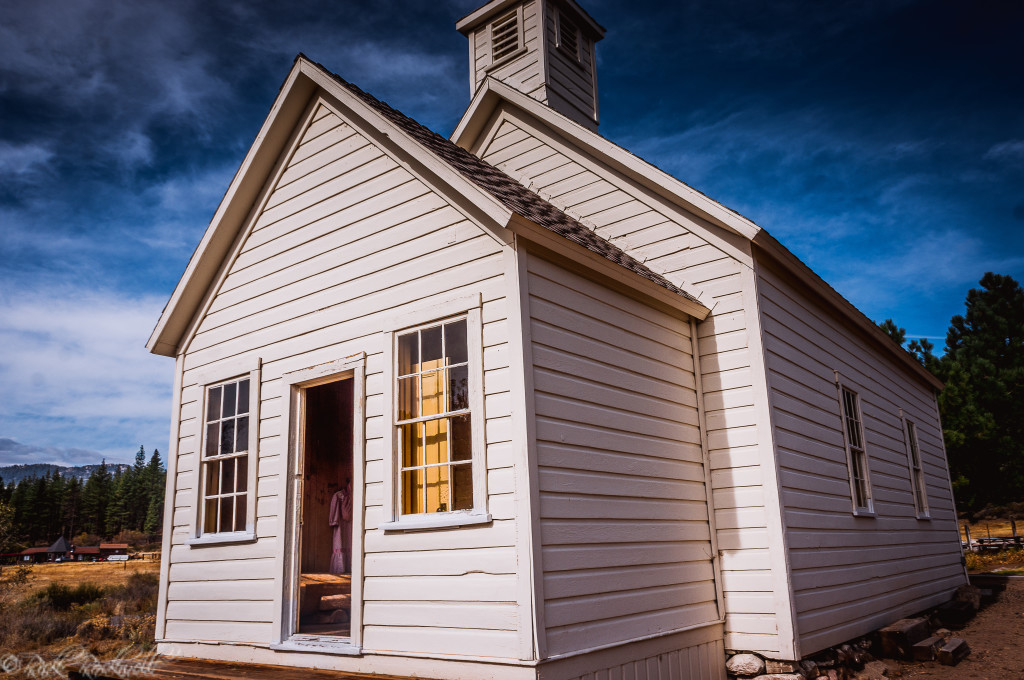
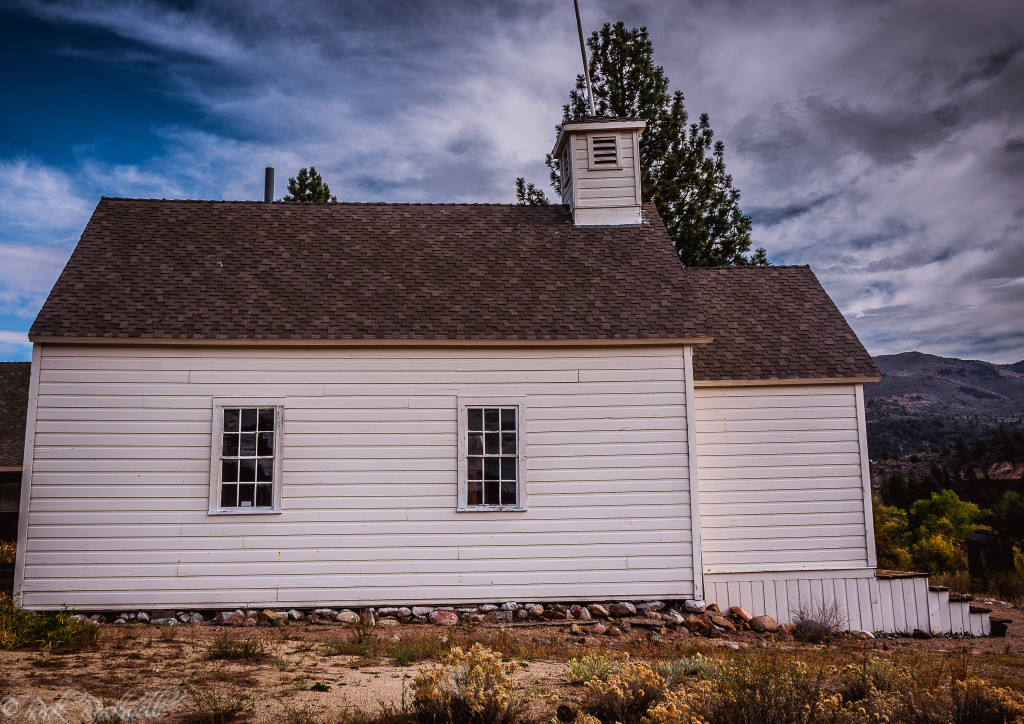
The schoolhouse was a common example of a standard wood-framed one-room schoolhouse from this era. It had a single room with a front and back door, was roughly 564 square feet in size and had two double-hung windows on both the east and west side walls. Additionally, two same-size windows were at the front of the schoolhouse.
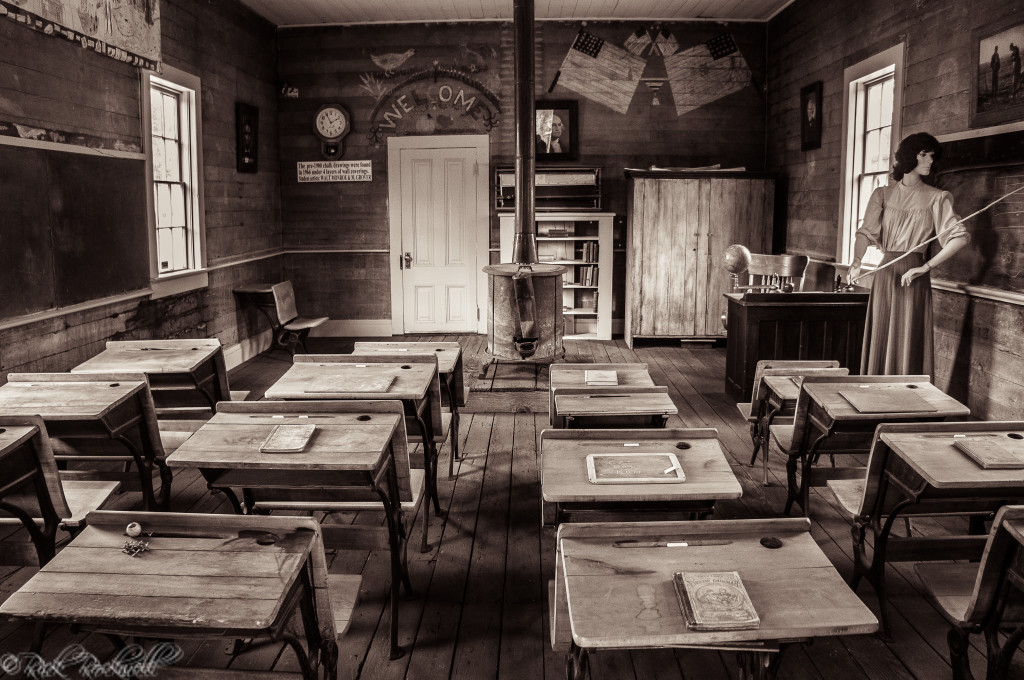
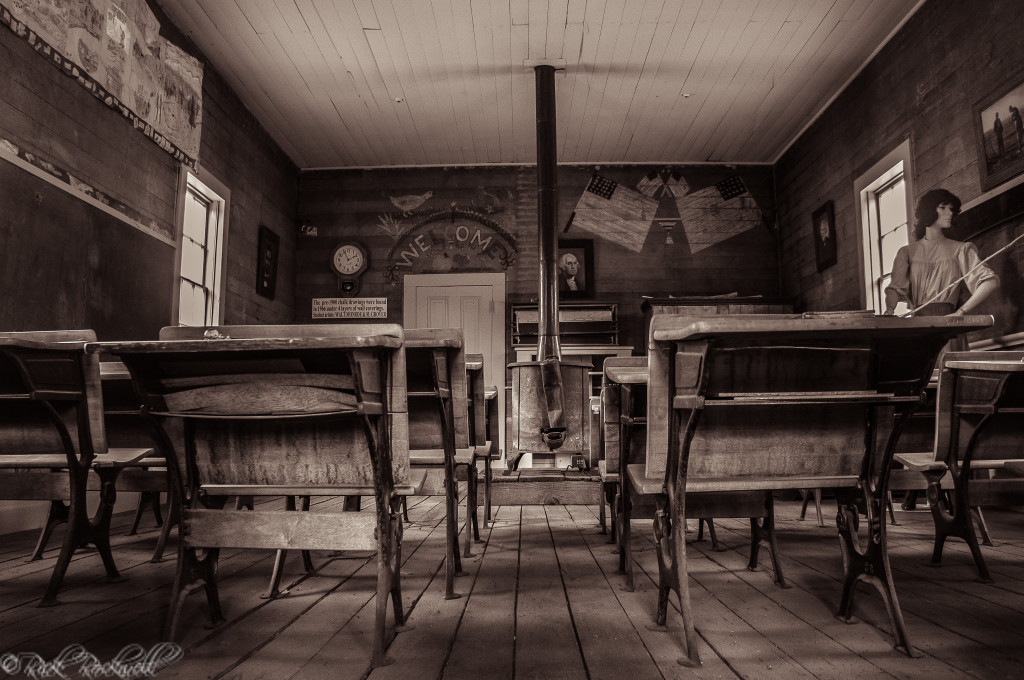
Initially, the back wall had a narrow brick chimney to provide heat for the school. However, in the 1890s, the chimney was removed and a cast iron stove was installed within the classroom. A local mason, Hank Matthews, built the stone platform for the wood stove. Also during this time, a foyer was added to the front of the school.
The foyer, or cloakroom, added roughly another 130 square feet to the overall schoolhouse. It was used as a transitional place from outdoors into the classroom. Additionally, lunches, shoes and coats were stored there.
The schoolhouse relied mostly on daylight, but also had three oil lamps that hung down the center of the room. Electricity didn’t come to town until the late 1940s.
Above the roofline was a bell tower that was used as the school bell and for town emergencies like fires. The bell remained part of Markleeville’s emergency warning system for decades and was still used as a community fire alarm into the 1960s.
First Day of School
The first day of school was October 15, 1883, and students ages 5 through 17 were taught there. Larkin, the teacher identified in historical records, was an educated and dedicated man who also held other roles in the community, including editor and publisher of the Alpine Argus, also known as the Monitor Argus.
The curriculum was based on each student’s ability and not their supposed grade level. In the first month of school, there was an average of 14 pupils in attendance and 25 cases of tardiness, which prompted Larkin to make the following comments:
“If parents will cooperate with the teacher by exercising a careful vigilance over the regularity and punctuality of their children in attending, the pupils will be incited to put forth their best efforts.”
— Monitor Argus, Nov. 2, 1883
Water was carried up to the classroom by buckets from the town ditch, which was roughly 50 yards away. Additionally, there was an outhouse and playgrounds near the schoolhouse.
Students brought their lunches to school, and historical records note that local mothers sometimes provided hot bread and soup.
In 1885, a school district census report stated that there were 37 pupils. Also that same year, the Great Fire of 1885 destroyed much of Main Street in Markleeville. Fortunately, the school was out of harm’s reach due to its location on the hill.
Abandoned and Repaired
By 1928, plans were being made for a new two-room schoolhouse to meet the changing needs of the town and its students. After the New Webster School opened around 1929, what was once a central meeting place for the townspeople eventually became a home for a local Washoe family. However, by the early 1960s, the Old Webster Schoolhouse was abandoned and left in a state of disrepair.
In 1966, the Alpine County Historical Society took an interest in this school and began raising funds to restore the beloved piece of history. Eventually, enough funds were raised and the restoration process was completed in 1968.
Materials were donated from historic towns and state parks, including Coloma and Columbia. Additionally, residents donated desks, chairs, clothes and other items from that era to be put on display.
Eventually, the Alpine County Historical Complex was built, with the schoolhouse being the centerpiece. Additional historic structures were brought to the complex, including the Silver Mountain City jail. Together, the buildings make the complex one of the best small stops for understanding Alpine County’s mining, school, and community history.
What Else to See at the Alpine County Historical Complex
The Old Webster Schoolhouse is the centerpiece of the Alpine County Historical Complex, but it is not the only historic structure worth seeing during the same stop.
The complex includes the Old Log Jail, Webster School House, Stamp Mill, Basque Bread Oven, Blacksmith Exhibit, Antique Machinery, and the Museum.
That makes the schoolhouse a natural stop to pair with the rest of the complex. Instead of visiting just one historic building, you can get a broader look at Alpine County’s mining, ranching, community, and cultural history in one place.
Visitors should also remember that this is a historic site. Alpine County asks visitors to help protect historic places in the area and notes that digging for artifacts is illegal.
Why the Old Webster Schoolhouse Still Matters
The Old Webster Schoolhouse matters because it preserves one of the most visible reminders of Markleeville’s early community life. It was not just a place where children learned their lessons. It was also a gathering place for the town.
Over the years, the schoolhouse hosted dances, dramas, musical performances, dinners, student recitations, ceremonies, and political fundraisers. For a small mountain town, that made the little schoolhouse an important civic and social space, not just a classroom.
The building also carries official historic recognition. California’s Office of Historic Preservation lists it as “Old Webster School, Markleeville Schoolhouse,” with a registration date of August 13, 1987, in Markleeville, Alpine County.
For a small mountain town, the preserved schoolhouse helps show how education, civic life, and community gatherings continued in Alpine County after the mining boom faded. It is a quiet hilltop building, but it still tells an important part of Markleeville’s story.
Is It Worth Visiting The Old Webster Schoolhouse?
Yes. The Old Webster Schoolhouse is one of my favorite historic schoolhouses in all of California. Each time I visit anywhere near Markleeville, I make my way over to see the schoolhouse. Its location provides wonderful views of the town and the Sierras.
The building itself has a charming presence to it. During open hours of operation, you can view inside the schoolhouse from the foyer. This is my favorite part about the Old Webster Schoolhouse because the interior carefully depicts what the schoolroom would’ve looked like in the late 19th century.
If you are anywhere near Markleeville, I highly recommend stopping by the Old Webster Schoolhouse. Take a few minutes to enjoy the views, walk around the historical complex, and look out over the town below. With the old buildings on the hill and charming Markleeville spread out beneath you, the whole place feels like a quiet glimpse into Alpine County’s past.
FAQ: Old Webster Schoolhouse in Markleeville
Where is the Old Webster Schoolhouse?
The Old Webster Schoolhouse is located in Markleeville, California, at the Alpine County Museum and Historical Complex. The official museum address is 135 School Street, Markleeville, CA 96120.
Can you visit the Old Webster Schoolhouse?
Yes. Visitors can see the Old Webster Schoolhouse as part of the Alpine County Museum and Historical Complex. Access generally follows the museum’s seasonal operating schedule.
When was the Old Webster Schoolhouse built?
Construction on the schoolhouse began on December 15, 1882, and the first classes were held on October 15, 1883. Markleeville residents raised money through local fundraisers and helped build the school through volunteer labor.
Is Old Webster Schoolhouse the same as Markleeville Schoolhouse?
Yes. California’s Office of Historic Preservation lists the historic resource as “Old Webster School, Markleeville Schoolhouse.” The county also refers to it as the Webster School House.
What was the Old Webster Schoolhouse used for?
The Old Webster Schoolhouse was used as a one-room schoolhouse for Markleeville children, but it also served as a community gathering place. The building hosted dances, dinners, plays, musical performances, student recitations, ceremonies, and political fundraisers.
What else can you see near the Old Webster Schoolhouse?
At the Alpine County Historical Complex, visitors can also see the Old Log Jail, Stamp Mill, Basque Bread Oven, Blacksmith Exhibit, Antique Machinery, and the Alpine County Museum.
Last verified: June 18, 2026
Sources
Alpine County Museum
https://alpinecountyca.gov/251/Museum
Alpine County Historical Complex
https://alpinecountyca.gov/661/Alpine-County-Historical-Complex
Webster School House
https://alpinecountyca.gov/663/Webster-School-House
Jacob Markley
https://alpinecountyca.gov/664/Jacob-Markley
Silver Mountain City
https://alpinecountyca.gov/649/Silver-Mountain-City
California Office of Historic Preservation: Old Webster School / Markleeville Schoolhouse
https://ohp.parks.ca.gov/ListedResources/Detail/P687
Alpine County Archives Holdings
https://www.alpinecountyca.gov/DocumentCenter/View/1046
National Register of Historic Places Registration Form: Old Webster Schoolhouse
https://npgallery.nps.gov/GetAsset/6578e697-5187-4e9f-9550-2fc05d52bfbc
Record-Courier, “Visiting Alpine County’s museum,” June 27, 2006
https://www.recordcourier.com/news/2006/jun/27/visiting-alpine-countys-museum/
Record-Courier, “Alpine County Museum turns corner,” July 17, 2025
https://www.recordcourier.com/news/2025/jul/17/alpine-county-museum-turns-corner/
WorldCat: Alpine Argus
https://search.worldcat.org/title/Alpine-Argus/oclc/32679480
Monitor Argus, October 12, 1883
Archive / print or microfilm source cited for the schoolhouse description; likely held through Alpine County Archives.
Monitor Argus, November 2, 1883
Archive / print or microfilm source cited for Larkin’s attendance comments; likely held through Alpine County Archives.