
Mare Island does not feel like a normal California historic site.
There is no single entrance gate where the story begins, no tidy visitor loop that explains everything in order, and no one landmark that fully captures what this place was. Instead, Mare Island spreads out across old shipyard roads, weathered Navy buildings, dry docks, chapel grounds, military artifacts, cemetery history, waterfront trails, active businesses, and quiet corners that still carry the weight of more than a century of naval life.
That unfinished, in-between feeling is what makes Mare Island different from cleaner, more curated California historic sites. It is part historic district, part working redevelopment zone, part Bay Area day trip, part former military landscape, and part open-air reminder of how much California’s coast shaped the country’s Pacific ambitions.
This guide explains what Mare Island is, why it matters, what you can see there today, why it’s one of my favorite places to explore, and how to plan a visit without expecting it to behave like a traditional museum or state park.
Quick Facts About Mare Island
Detail | Info |
Location | Vallejo, Solano County, California |
ZIP code | 94592 |
Best known for | Former Mare Island Naval Shipyard |
Historic importance | First permanent U.S. naval installation on the West Coast |
Naval establishment date | September 16, 1854 |
Naval shipyard closure | 1996 |
Best for | Naval history, Bay Area day trips, architecture, photography, quiet exploring, unusual California history |
Key stops | St. Peter’s Chapel, Alden Park, Historic Core, Dry Dock 1, Mare Island Naval Cemetery, Mare Island Preserve, San Pablo Bay Trail, Wet Mile |
Access note | Some areas are public, while others are private, active business, residential, redevelopment, or restricted areas |
Where Is Mare Island?
Mare Island sits in Vallejo, in Solano County, along the Mare Island Strait near the northern edge of San Pablo Bay. It is connected to Vallejo by bridge, but it still feels like a separate district once you cross over.
That separation is part of the appeal. Mare Island has its own rhythm and layout, shaped by its long life as a naval shipyard. Historic buildings sit near modern businesses. Former military roads pass chapel grounds, parks, old industrial areas, residential neighborhoods, and open space. In some areas, you can still feel the scale of the Navy yard. In others, the island feels like a low-key North Bay district slowly finding a new identity.
Getting to Mare Island in Vallejo
Mare Island is reached from Vallejo by crossing over from the Tennessee Street / Mare Island Way area. The California historical marker for the First U.S. Naval Station in the Pacific is listed near the entrance to the former Mare Island Naval Shipyard, at the main gate on the southwest corner of Tennessee Street and Mare Island Way.
Is Mare Island Open to the Public?
Parts of Mare Island are open to the public, but it is important to understand what that means.
Mare Island is not a single preserved military park where every historic building is open. It is a mixed-use former naval base with public roads, active businesses, residences, redevelopment areas, trails, open space, and historic sites that may only be available during tours or special access windows.
You can visit areas such as parks, trails, food and drink places, parts of the historic district, and the Mare Island Preserve when access is open. Guided tours are one of the best ways to understand the historic core because many of the most important places are scattered and not always obvious if you are exploring on your own.
The big rule is simple: do not assume an old building is abandoned or open just because it looks historic. Mare Island still has active uses, restricted areas, and private spaces. Check current access before planning around a specific building, museum space, tour stop, cemetery visit, chapel visit, or preserve hike.
Why Mare Island Matters
Mare Island matters because it was one of the most important naval places in the American West.
California’s historical marker identifies Mare Island Navy Yard as the first U.S. naval station in the Pacific. It was established on September 16, 1854, by Commander David G. Farragut on a site selected in 1852 by a commission headed by Commodore John D. Sloat. That alone gives Mare Island major historical weight, but the story goes further.
Mare Island also held several Navy firsts in the Pacific, including the Navy’s first shipyard, ammunition depot, hospital, Marine barracks, cemetery, chapel, and radio station in the region. That is why the island has so many different historical layers. It was not just a place where ships were built. It was a complete naval community, with medical care, burial grounds, religious life, military housing, industrial labor, communications, and wartime production all concentrated in one landscape.
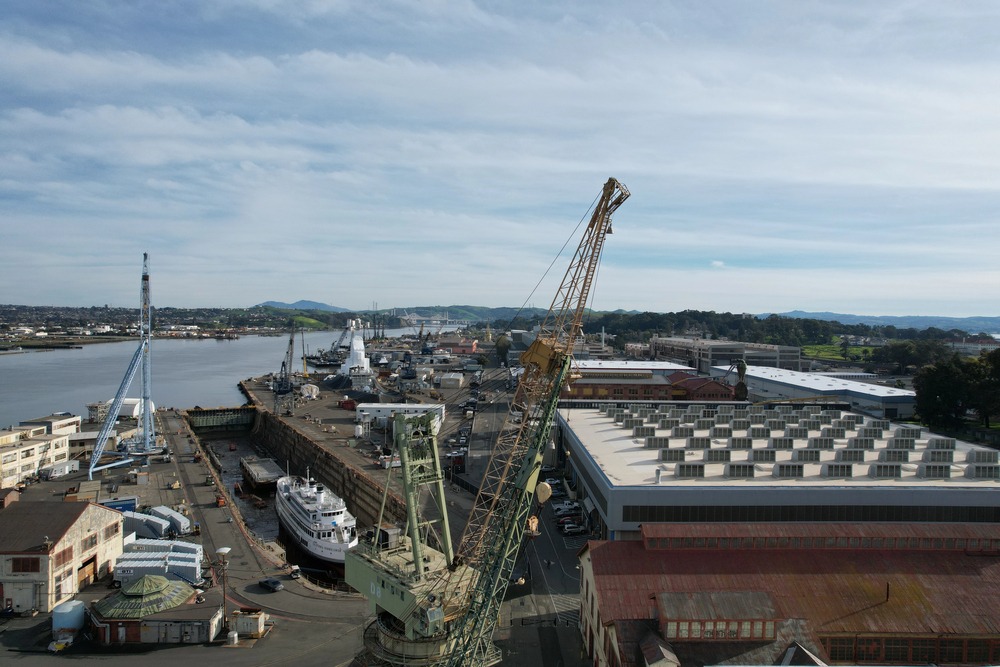
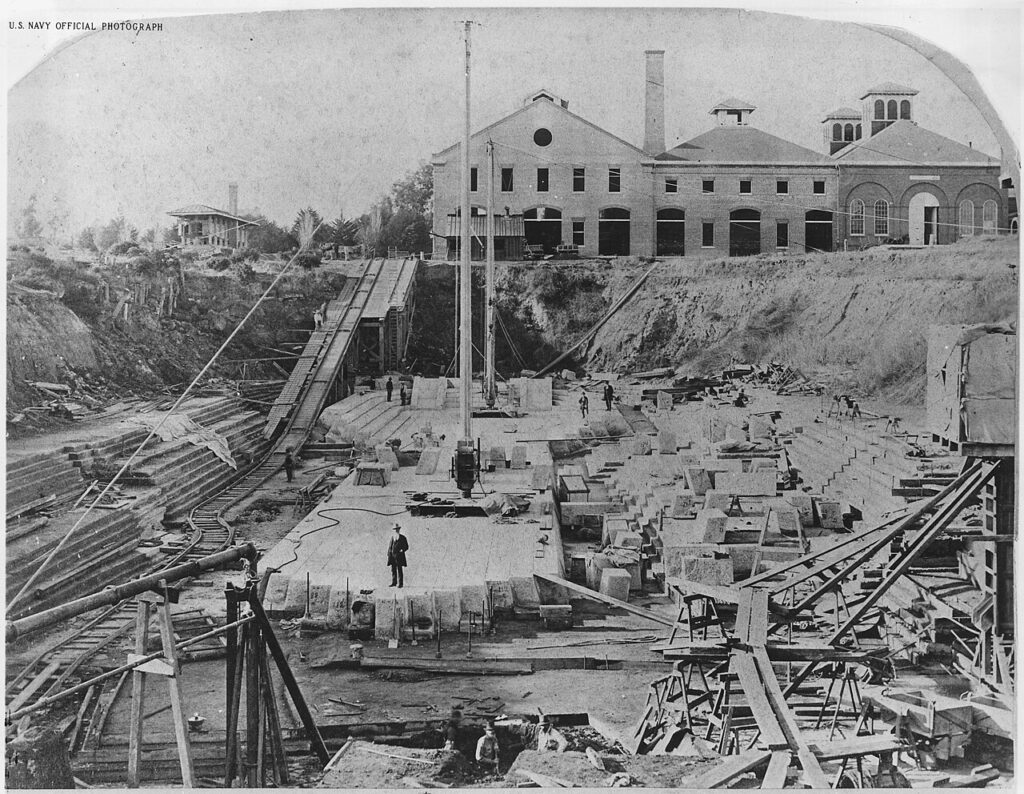
Mare Island is also widely recognized as the first U.S. naval base on the West Coast. The first U.S. warship built on the West Coast was constructed here in 1859, and the first West Coast dry dock was built at Mare Island between 1872 and 1891.
Those details help explain why Mare Island still feels different from many California historic sites. The island is not built around one preserved house, one battlefield, or one landmark. It is a whole working military world that gradually became a modern civilian district.
Mare Island History: From Naval Shipyard to Modern Landmark
Mare Island’s history stretches from Mexican-era California and early San Francisco Bay exploration to shipbuilding, wartime production, Cold War submarine work, and the long reinvention of a Navy yard that helped shape Vallejo for more than a century.
The Name and the Vallejo Story
The Mare Island story begins before the Navy arrived.
The National Park Service notes that Spanish ship captain Don Juan Manuel de Ayala touched here in 1775. Later, in the Mexican-era history of California, the island received its present name from General Mariano Guadalupe Vallejo in 1830.
The most repeated naming story connects Mare Island to a prized mare belonging to Vallejo. In one common version of the tale, Vallejo’s mare escaped or was found on the island, giving the place its name. Versions vary, so it is safest to frame this as local tradition rather than overstate every detail as settled fact.
Still, the name gives the island a different tone than many old military places. Before it became a Navy yard, it was tied to the ranching, military, and Mexican-era history of the North Bay.
The Navy Arrives
The U.S. Navy selected Mare Island in the early 1850s as it looked toward the Pacific. California had just entered the Union in 1850, and the Gold Rush had transformed San Francisco Bay into one of the most important regions on the West Coast. The Navy needed a permanent base that could support ships, repairs, supplies, and military expansion in the Pacific.
Mare Island became that place.
The Navy yard was established on September 16, 1854, under Commander David G. Farragut, who later became one of the most famous naval officers in American history. Newspaper attention came quickly. An 1857 Daily Alta California article titled “A Visit to Mare Island” shows that the new naval station was already a subject of public curiosity only a few years after its founding, with Farragut referenced in connection with the command.
That early attention matters. Mare Island was not hidden away from California’s growth. It was part of the public story of the state almost from the beginning: a symbol of the United States extending its naval reach westward across the Pacific.
Shipbuilding, Dry Docks, and a Working Navy Yard
Mare Island’s history is easiest to understand when you picture it as a working place.
Ships were built, repaired, launched, refitted, supplied, and maintained here. Dry docks, shipbuilding ways, industrial buildings, cranes, machine shops, rail connections, ammunition facilities, and worker neighborhoods all helped turn the island into a naval landscape.
The first U.S. warship built on the West Coast was constructed at Mare Island in 1859. The first West Coast dry dock followed, built over a long period from 1872 to 1891. That dry dock work alone tells you something about the island’s scale. Mare Island was not a temporary outpost. It was built for long-term Pacific naval power.
Small newspaper notices help fill in the yard’s everyday industrial life. A 1907 San Francisco Call item reported that Mare Island received an order to build coal barges for the San Diego coaling station. A 1920 San Diego Union and Daily Bee item reported that Mare Island Navy Yard had been connected with transcontinental railways. Those are not the biggest headline events in Mare Island history, but they help show how the yard functioned. It was tied to fuel, transportation, ship repair, military logistics, and the wider infrastructure of the Navy.
This is the part of Mare Island that is easy to miss if you only think of it as a historic district. The chapel, cemetery, and old buildings are important, but the heart of the island was labor: shipyard workers, sailors, engineers, machinists, officers, and families connected to a base that shaped Vallejo for generations.
War, Speed, and Shipyard Scale
Mare Island’s wartime history gives the island some of its most vivid numbers.
During World War I, the shipyard became known for rapid wartime construction, including the destroyer USS Ward, often cited as being built in just 17½ days. That kind of fact helps explain the pressure and pace of wartime production. Mare Island was not just maintaining ships. It could build them at remarkable speed when the country demanded it.
World War II expanded that role even further. The National Park Service notes that Mare Island produced 17 submarines, 4 submarine tenders, 31 destroyer escorts, 33 small craft, and more than 300 landing craft during the war, while also repairing damaged warships. That scale gives the island a different kind of gravity. For years, the roads and yards that feel subdued today would have been full of workers, machinery, noise, and urgency.
Alden Park still hints at that wartime world. The park is better known today as a tree-filled historic stop, but its World War II-era bunkers speak to the fear and preparedness that followed Pearl Harbor. Mare Island was a military target, an industrial engine, and a community all at once.
Cold War Mare Island
Mare Island’s importance did not end after World War II.
The island continued into the Cold War era, when submarine work became one of the shipyard’s defining roles. Mare Island Historic Park Foundation notes that several of the Navy’s “41 for Freedom” ballistic missile submarines were built on Mare Island, including USS Mariano G. Vallejo.
Newspaper coverage from 1960 also shows that Mare Island’s submarine work was still newsworthy in the Cold War era, with the Napa Valley Register reporting that the keel of the nuclear-powered submarine Plunger would be laid at the shipyard that March.
That Cold War layer is important because it prevents the story from stopping too early. Mare Island was not only a 19th-century Navy yard or a World War II production site. It remained part of American naval strategy into the submarine age, carrying the island’s military role deep into the second half of the 20th century.
Closure and Reinvention
Mare Island’s Navy era ended in 1996, after 142 years of military use.
The closure did not happen quietly in the life of Vallejo. By 1993, newspaper coverage was already treating the planned shutdown as a major turning point for a city long shaped by the Navy yard. The Los Angeles Times described Vallejo as a Navy town facing the loss of the shipyard, capturing how closely Mare Island and the city’s economy and identity were tied together.
When the base closed, it was not just an administrative change. Naval History Magazine later described a three-day “Mare Island Conversion Celebration,” a phrase that says a lot about the moment. The island was ending one era and beginning another through preservation, redevelopment, and a long civic transition.
Today, Mare Island is still changing. Historic preservation, redevelopment, housing, education, businesses, trails, open space, food and drink stops, tours, and public access all overlap here. That is why visiting Mare Island can feel a little strange in the best way. It is not frozen in the past, but the past is still everywhere.
Best Things to Do on Mare Island
Mare Island is best explored as a collection of stops rather than one single attraction. Some places can be visited independently when open, while interiors, tour routes, and parts of the historic core may depend on scheduled access.
Mare Island Stops
Stop | Best for | Notes |
St. Peter’s Chapel | Architecture, stained glass, Navy history | Best with tour or open chapel access |
Alden Park | Military artifacts, quiet walk, historic setting | Good short stop near the chapel |
Historic Core / Dry Dock 1 | Shipyard history, industrial scenery | Best understood on a guided tour |
Mare Island Naval Cemetery | Military history, reflective visit | VA currently lists sunrise-to-sunset visitation |
Mare Island Naval Hospital | Navy medical history, historic architecture | Access may be limited or exterior-view only |
Mare Island Preserve | Trails, bay views, open space | Check current City access details |
San Pablo Bay Trail | Walking, biking, views | Good outdoor add-on |
Wet Mile | Food, drink, casual visit | Good after historic exploring |
Take a Historic Tour
A guided tour is one of the best ways to understand Mare Island.
The historic core is spread out, and many of the most important pieces are not obvious unless someone explains what you are looking at. Mare Island Historic Park Foundation tours currently center on St. Peter’s Chapel and may include an outdoor walk through areas such as the Admiral’s Mansion, Alden Park, the Historic Core, the USS Vallejo Submarine Sail Memorial, the shipbuilding ways, and Dry Dock 1.
That kind of tour helps connect the parts of Mare Island that otherwise feel scattered: the chapel, officers’ areas, park, dry dock, industrial spaces, and submarine history.
Tour details can change, so do not build your whole trip around a specific stop or time without checking the current schedule first.
Visit St. Peter’s Chapel
One of Mare Island’s signature landmarks is St. Peter’s Chapel on Mare Island.
Built in 1901, the chapel is often described as the oldest Navy chapel in the country. It is especially known for its stained-glass windows and Tiffany Studios work, which make the small chapel one of the island’s most memorable interiors.
The chapel gives Mare Island a quieter kind of history. The shipyard story is usually told through dry docks, warships, and industrial production. St. Peter’s Chapel shows another side of naval life: ceremonies, grief, community, faith, officers’ families, and the human world that existed alongside the machinery.
MIHPF currently lists Open Chapel hours on the second and fourth Sundays from 11 a.m. to 2 p.m., but dates may change due to private events or other scheduling changes. Check the current schedule before planning your visit around chapel access.
Walk Through Alden Park
Alden Park is one of the easiest places to feel Mare Island’s history without needing a long tour or heavy explanation.
The park has a shaded, reflective feel, with trees, historic artifacts, and military objects that make it clear you are not in a normal neighborhood park. Mare Island Historic Park Foundation describes Alden Park as a tree-filled historic park with artifacts and World War II-era bunkers.
One of the best pieces of color attached to the park is the story that captains brought back seedlings and saplings from around the world at Alden’s request.
That detail gives the park a different texture. The trees are not just landscaping. They connect the island to the global movement of ships, sailors, officers, and supplies that passed through Mare Island.
Alden Park also works well because it sits near other major historic stops, making it a natural pairing with St. Peter’s Chapel or a guided tour.

See the Historic Core and Dry Dock 1
The Historic Core and Dry Dock 1 are where Mare Island’s industrial scale becomes easier to understand.
This is the part of the island that connects most directly to shipbuilding, repair work, dry docks, building ways, cranes, machinery, and the Navy yard’s physical power. Dry Dock 1 is especially important because Mare Island’s first permanent dry dock was one of the major engineering features that helped establish the base as a true Pacific naval facility.
This area is best understood with a guide or current access information. Some views may be possible from public areas or tours, but visitors should not assume they can wander into shipyard spaces or historic industrial buildings. Mare Island’s historic core still includes active, private, restricted, or redevelopment areas.
If you are interested in photography, this may be one of the most compelling parts of Mare Island, but it is also where respecting boundaries matters most.
Visit the Mare Island Naval Cemetery
The Mare Island Naval Cemetery is one of the island’s most reflective historic places.
It belongs to the quieter side of Mare Island’s story, but it is not separate from the larger naval landscape. The cemetery connects directly to the island’s long military life, including officers, sailors, families, and others tied to the Navy yard.
Newspaper records also show how Mare Island’s cemetery entered public memory long before it became a modern historic stop. In 1891, the San Francisco Call described remains being interred in the naval cemetery “side by side,” with one stone marking the resting place.
This is the kind of place that should be approached with more respect than curiosity. It is not just another stop on a checklist. It is part of the reason Mare Island feels multi-era: industry, war, medicine, faith, burial, and memory all existed close together here. It’s also one of my favorite cemeteries in all of California.
The VA currently lists the cemetery as open daily from sunrise to sunset, but visitors should still check current gate or access status before going. If you visit, follow posted rules and treat the site as a historic burial ground.
Learn About the Mare Island Naval Hospital
The Mare Island Naval Hospital is another major piece of the island’s full military world.
California’s historical marker notes that Mare Island had the Navy’s first hospital in the Pacific. That makes the hospital story more than a side note. It shows how the base supported not only ships and weapons, but also the bodies and lives of the people who served, worked, and lived around the yard.
During the 1918 influenza pandemic, Mare Island Naval Hospital became part of one of the Navy yard’s most serious public-health crises. Navy historical material describes a “Great Flu Crisis at Mare Island Navy Yard,” and newspapers were already reporting in September 1918 that a 40-day quarantine at Mare Island was expected to help prevent the spread of Spanish influenza, potentially affecting thousands of sailors and marines.
Period hospital images also show masked corpsmen and influenza wards at Mare Island in late 1918. The outbreak adds another layer to the hospital’s story: this was not just a Navy medical campus for routine care, but a place where staff had to respond to wartime injury, infectious disease, quarantine, and emergency medical pressure.
The hospital also adds to the island’s more atmospheric side. Old medical buildings, military history, and a closed-base setting naturally draw curiosity. However, access around former hospital areas may be limited, private, or exterior-view only, so this is a place where current access matters.
Explore the Mare Island Preserve
Mare Island Preserve gives the island an outdoor side that contrasts with the shipyard and historic core.
The City of Vallejo currently lists the Preserve as open daily from 6:30 a.m. to 7:30 p.m., with entry limited to no more than 50 people and 30 vehicles at one time. Because acreage and access descriptions can vary across sources and planning documents, check the City’s current preserve information before visiting.
This is the best Mare Island stop for readers who want trails, bay views, open space, birding, and a break from the military environment. It also helps show how the island is being reimagined. A former military landscape now includes public open space and shoreline access, even as restoration and access questions continue to change.
Before visiting, check current hours, limits, restoration work, fire recovery updates, road access, and rules.
Walk or Bike the San Pablo Bay Trail
For a more relaxed outdoor add-on, look at the San Pablo Bay Trail on the western side of Mare Island.
This is a good option if you want to stretch the visit beyond historic buildings and tour stops. The trail gives Mare Island a broader bay setting, with views that help place the island in the larger North Bay landscape. Depending on your plan, it can pair well with the Preserve, a morning history tour, or a late-day stop before heading to the Wet Mile.
As with other Mare Island outdoor areas, check current access and route details before assuming a trail or gate is open.
Eat and Drink Along the Wet Mile
The Wet Mile is one of the clearest signs that Mare Island is not only a former Navy yard.
Modern Mare Island includes breweries, distilleries, wineries, cafés, restaurants, studios, and other public businesses. This gives visitors an easy way to turn a history stop into a fuller day trip.
For brewery-focused searches, Mare Island Brewing Co. is one of the most relevant stops, set inside a restored Navy coal shed on the Mare Island waterfront.
A good Mare Island visit might start with a historic tour, continue through Alden Park or the preserve, and end with a drink or meal on the Wet Mile. That balance is part of what makes the island work today. You can spend the morning thinking about Farragut, dry docks, and shipyard workers, then finish the day in a modern business district that exists because the island is still being remade.
Check current business hours before going, especially if you are visiting on a weekday or building your trip around one specific place.
Look for Public Art and Historic Buildings
Mare Island also rewards slower looking.
Old Navy buildings, officers’ quarters, industrial structures, public art where present, and redevelopment areas give the island a complex visual character. It can be an excellent place for photography, especially if you like historic architecture, old military landscapes, and places that still feel in transition.
Just keep the same rule in mind: visible does not always mean public. Photograph respectfully, stay out of restricted areas, and avoid treating active businesses or residential streets like abandoned ruins.
Modern Movies and TV Shows Filmed on Mare Island
Mare Island’s reinvention around and after the Navy closure also brought Hollywood to the former shipyard.
As the Mare Island Naval Shipyard era was ending and redevelopment began, the island’s old Navy buildings, warehouses, dry docks, hospital grounds, mansions, and industrial spaces became useful film locations. One of the biggest early examples was Sphere, the 1998 underwater thriller starring Dustin Hoffman, Sharon Stone, and Samuel L. Jackson. The production used the former shipyard as a makeshift studio and built five large water tanks inside Building 599.
Mare Island also has a strong Robin Williams connection. Jack, Flubber, What Dreams May Come, and Patch Adams are all connected to Mare Island’s film history, giving the former Navy yard an unexpected place in several major 1990s productions.
More recently, Mare Island has continued to show up in film and television. The Master used Mare Island locations including an old hospital wing and an admiral’s mansion, while 13 Reasons Why used Mare Island sound stages and other Vallejo-area locations across the Netflix series. The dry docks also became an important location for Bumblebee, with the production reportedly reshaping the film’s ending after finding the site.
That film history fits the island’s larger story. Mare Island is not just preserved naval history. It is a former military landscape that keeps being reused — first for shipbuilding and defense, then for redevelopment, tours, trails, businesses, and even movie sets.

Suggested Mare Island Day Trip Itinerary
Mare Island is easiest to enjoy when you do not try to see everything at once. A half-day visit works well for most first-timers, while a longer visit gives you time to add trails or food and drink stops.
Half-Day Mare Island Visit
Start with St. Peter’s Chapel or a historic tour if one is available. This gives you the best foundation for understanding the island before you start wandering between individual stops.
After that, walk through Alden Park and take in the nearby historic setting. If your tour includes the Historic Core or Dry Dock 1, let that be the industrial anchor of the visit. If not, use public-access areas carefully and avoid restricted spaces.
If access is open and appropriate, add the Mare Island Naval Cemetery as a reflective history stop. Then finish with food or a drink along the Wet Mile.
Longer Mare Island Visit
For a fuller day, start with a morning tour or chapel/Alden Park visit. Use midday for the Historic Core, cemetery, hospital history, or other historic stops. In the afternoon, shift to the Mare Island Preserve or San Pablo Bay Trail for open space and bay views.
End the day along the Wet Mile or pair Mare Island with downtown Vallejo, Benicia, or nearby North Bay stops.
Because access changes, treat this as a flexible itinerary rather than a fixed route.
Mare Island Tours
Mare Island tours are worth considering because the island’s history is spread across many different places.
Mare Island Historic Park Foundation currently describes tours that include St. Peter’s Chapel and an outdoor stroll through Mare Island history, with possible stops such as the Admiral’s Mansion, Alden Park, Historic Core, USS Vallejo Submarine Sail Memorial, Building Ways, and Dry Dock 1. The foundation also notes that the chapel is historic and not wheelchair accessible.
That kind of detail matters for planning. If you have limited time or mobility concerns, check the current tour description before booking or showing up. Tour routes, times, prices, interior access, and specific stops can change.
If you only do one structured activity on Mare Island, make it a tour.
Tips Before You Go
- Check current tour availability before planning around a specific historic building.
- Confirm whether St. Peter’s Chapel, the museum, or other stops are open before visiting.
- Check Mare Island Preserve hours, limits, and rules through the City of Vallejo.
- Do not enter abandoned-looking buildings or restricted areas.
- Expect a mixed-use district, not a single curated attraction.
- Bring layers because waterfront areas can be windy.
- Wear comfortable shoes if combining historic stops with trails.
- Check business hours before planning around the Wet Mile.
Mare Island Legends, Ghost Stories, and Local Lore
On Mare Island, the ghost stories usually begin with the setting: old Navy buildings, a historic cemetery, former hospital grounds, World War II bunkers, shipyard shadows, and more than a century of deaths, accidents, war work, disease, and military life layered into one island.
The island has hosted paranormal-themed events and ghost walks over the years as many believe that Mare Island is a haunted place. One past Mare Island Ghost Walk described a roughly two-mile route through “hot spots of paranormal activity,” followed by a paranormal investigation of the cemetery and World War II ammunition bunkers.
The claims attached to those locations included voices, shadow people, feelings of being watched, and other classic haunted-site reports. That does not mean the ghost stories are verified fact. But it does explain why Mare Island has become part of Vallejo’s haunted-history landscape.
Mare Island’s cemetery is usually at the center of that reputation as many consider it to be a haunted cemetery. The Mare Island Naval Cemetery is the oldest naval cemetery west of the Mississippi River, with burials beginning in 1856 and continuing until 1921.
The VA notes that about 900 people are buried there, including the daughter of Francis Scott Key, three Medal of Honor recipients, and six Russian sailors from the Civil War era. That kind of history gives the cemetery real weight before any ghost story is even added.
The hospital history adds to that atmosphere, too. During the 1918 influenza pandemic, Mare Island Naval Hospital treated patients as the Navy yard faced a serious outbreak, and newspapers reported a possible 40-day quarantine to keep Spanish influenza from spreading through the base.
That history should be handled as documented public-health history, not turned into a ghost claim. But it does help explain why Mare Island’s hospital grounds and older medical buildings carry such a heavy reputation in local lore.
The old ammunition bunkers and wartime sites add another layer. Mare Island was not just a quiet base; it was a working naval yard with dangerous materials, wartime pressure, and industrial accidents. A 1917 newspaper report described a powder magazine explosion at Mare Island Navy Yard that killed six people and injured 38. That documented tragedy should not be turned into a ghost claim by itself, but it helps explain why the island’s darker history still feeds local lore.
Mare Island’s haunted reputation is also widespread among locals. The Mare Island Historic Park Foundation has promoted a Haunted Mare Island speaker-series event, describing it as a look into the island’s paranormal past with paranormal investigator Jeffrey Dwyer. Other seasonal Halloween programming has also used Mare Island’s setting.
That is the important distinction for visitors: Mare Island’s ghost stories are urban legends and haunted-tour material, but they sit on top of a very real historic landscape. The cemetery, hospital history, bunkers, shipyard accidents, influenza outbreak, and old naval buildings give the stories a setting that feels believable, even when the supernatural claims remain debated.

Is Mare Island Worth Visiting?
Yes, Mare Island is worth visiting especially if you like California history, old military sites, naval stories, architecture, photography, quiet exploring, and places that have a lot of depth.
There’s so much to do and see at Mare Island that you need to plan ahead or make multiple trips. I have done both over my half-dozen visits to the island.
Going on a guided tour is my first recommendation due to the lengthy military history of the island. I’ve also picnicked in the park, sat in the quiet solitude of the charming St. Peter’s Chapel, observed the abandoned hospital, strolled through the wonderful cemetery, hiked various trails and paths, photographed the island, and walked along the waterfront.
Two of my most memorable Mare Island experiences involved chance encounters. The first was watching a stampede of goats charge down the landscape to find their preferred grazing spot. For a moment, I thought I was hallucinating. But the sounds of a thousand stampeding goats, which can wake you up from a coma, snapped me back to reality and I immediately understood that I should probably move before getting run over.
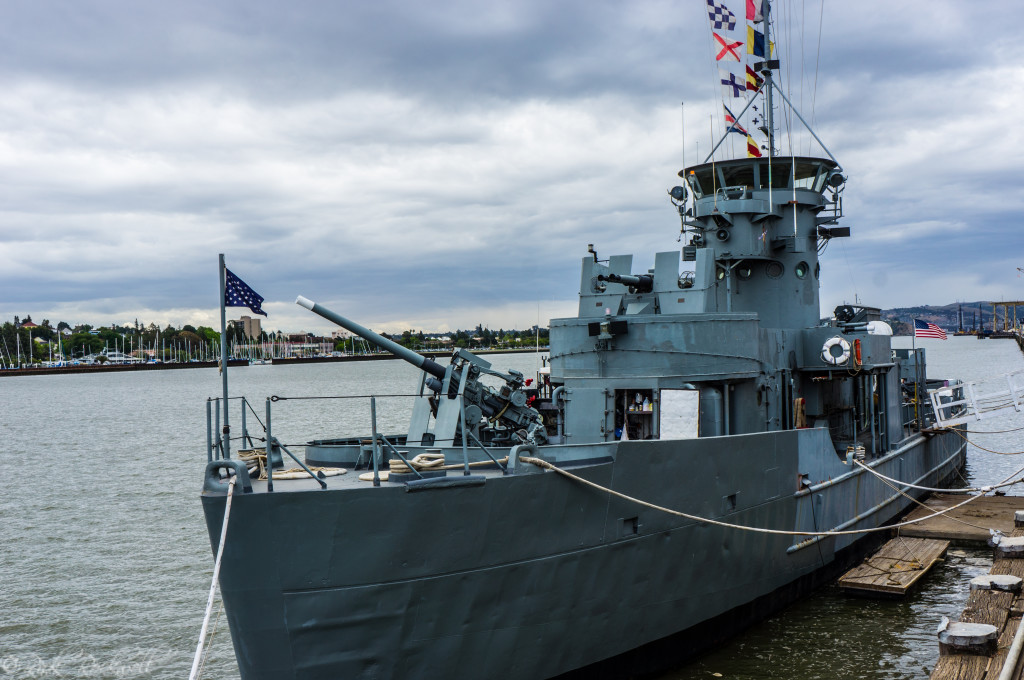
The most enjoyable experience I ever had at Mare Island was a chance encounter with a WWII veteran who came to visit the last remaining Mighty Midget ship that was open for tours at the time.
Jim had served in the war on a sister ship to this exact vessel. I was able to join the docents on “Jim’s tour” of the boat where he shared numerous stories about his time on these ships and what it was like during combat with Japanese aircraft. It was an experience that I will never forget. Rest in peace Jim and thank you for your service.
Ultimately, Mare Island’s layered history is what makes it such a fun, unique, and worthwhile experience. Honor the memories of our servicemen and women, enjoy peaceful strolls along the island, learn about California’s and America’s military history, and enjoy a meal or drink at the Wet Mile.
FAQ About Mare Island
What is Mare Island known for?
Mare Island is best known for the former Mare Island Naval Shipyard, the first permanent U.S. naval installation on the West Coast. It became a major shipbuilding, repair, and naval support facility and operated as a Navy base for 142 years.
Where is Mare Island?
Mare Island is in Vallejo, California, in Solano County. It sits along the Mare Island Strait near the northern edge of San Pablo Bay. Its ZIP code is 94592.
Is Mare Island open to the public?
Parts of Mare Island are open to the public, including public roads, some parks, trails, businesses, food and drink stops, and certain historic sites during tours or events. Not every historic building or former shipyard area is open, and some areas are private, active, residential, or restricted.
Can you tour Mare Island?
Yes, guided tours are available through historic organizations such as Mare Island Historic Park Foundation. Tour schedules, prices, routes, and access can change, so check current information before visiting.
What are the best things to do on Mare Island?
Some of the best things to do on Mare Island include visiting St. Peter’s Chapel, walking through Alden Park, taking a historic tour, seeing the Historic Core and Dry Dock 1, visiting the Mare Island Naval Cemetery, exploring the Mare Island Preserve, walking or biking the San Pablo Bay Trail, and stopping along the Wet Mile.
Is Mare Island a real island?
Yes. Mare Island is connected to Vallejo by bridge and separated by surrounding waterways, including the Mare Island Strait. It feels separate from the mainland, even though it is closely tied to Vallejo.
Is the Mare Island Museum open?
Visit Vallejo currently lists the Mare Island Museum as temporarily closed, while Mare Island tours are still available by appointment. Check the current status before visiting because museum and tour access can change.
Can you visit the Mare Island Naval Cemetery?
The VA currently lists the Mare Island Naval Cemetery as open daily from sunrise to sunset, with the City of Vallejo opening gates in accordance with National Cemetery Administration policy. Visitors should still check current gate or access status before going and treat the cemetery as a historic burial ground.
What happened to the Mare Island Naval Shipyard?
The Mare Island Naval Shipyard closed in 1996 after 142 years of Navy use. Since then, the island has been undergoing a long transition into a mixed-use district with historic preservation, businesses, residential areas, education, open space, trails, tours, and redevelopment.
Is Mare Island haunted?
Mare Island has a strong haunted-history reputation because of its naval cemetery, former hospital grounds, old military buildings, bunkers, shipyard accidents, and public ghost-tour history. The ghost stories should be treated as folklore and local lore, not verified fact.
Is Mare Island good for a day trip?
Yes. Mare Island works well as a Bay Area or North Bay day trip, especially for visitors interested in California history, Navy sites, unusual architecture, photography, trails, and quiet exploring. A half-day visit is enough for a tour and a few key stops, while a longer visit can include the preserve, trail, and Wet Mile.
Sources
California Office of Historic Preservation — First U.S. Naval Station in the Pacific
https://ohp.parks.ca.gov/ListedResources/Detail/751
National Park Service — Mare Island Naval Shipyard
https://www.nps.gov/places/mare-island-naval-shipyard.htm
National Park Service — World War II Shipbuilding in the San Francisco Bay Area
https://www.nps.gov/articles/000/world-war-ii-shipbuilding-in-the-san-francisco-bay-area.htm
Mare Island Historic Park Foundation — Historic Tours
https://mihpf.org/tours
Mare Island Historic Park Foundation — Open Chapel
https://mihpf.org/open-chapel
Mare Island Historic Park Foundation — Haunted Mare Island
https://mihpf.org/store/speakers-series-haunted-mare-island
City of Vallejo — Mare Island Preserve
https://www.vallejo.gov/our_city/about_vallejo/mare_island/mare_island_preserve
City of Vallejo — Mare Island
https://www.vallejo.gov/attractions___events/attractions/mare_island
Visit Vallejo — Mare Island History
https://www.visitvallejo.com/about-vallejo/mare-island-history
Visit Vallejo — Mare Island Museum
https://www.visitvallejo.com/listing/mare-island-museum
Mare Island Company — Explore Mare Island
https://www.mareislandco.com/explore
Mare Island Brewing Co. — Coal Shed Brewery
https://www.mareislandbrewingco.com/coal-shed
VA — Mare Island Naval Cemetery
https://www.cem.va.gov/cems/nchp/MareIslandNaval.asp
Navy History and Heritage Command — Great Flu Crisis at Mare Island Navy Yard
https://www.history.navy.mil/research/library/online-reading-room/title-list-alphabetically/i/influenza/great-flu-crisis-at-mare-island-navy-yard.html
Daily Alta California — “A Visit to Mare Island,” Dec. 13, 1857
https://cdnc.ucr.edu/?a=d&d=DAC18571213.2.3
San Francisco Call — Mare Island coal barge order, Nov. 15, 1907
https://cdnc.ucr.edu/?a=d&d=SFC19071115.2.36.12
San Diego Union and Daily Bee — Mare Island railway connection, Sept. 23, 1920
https://cdnc.ucr.edu/?a=d&d=SDDU19200923.2.139
Madera Weekly Tribune — Spanish influenza quarantine at Mare Island, Sept. 26, 1918
https://cdnc.ucr.edu/?a=d&d=MWT19180926.2.86
San Francisco Call — Naval cemetery burial detail, June 25, 1891
https://cdnc.ucr.edu/?a=d&d=SFC18910625.2.127
Napa Valley Register — Plunger keel-laying, Feb. 20, 1960
https://cdnc.ucr.edu/?a=d&d=NVR19600220.1.2
Sausalito News — Mare Island powder magazine explosion, July 14, 1917
https://cdnc.ucr.edu/?a=d&d=SN19170714.2.70
Los Angeles Times — Vallejo facing Mare Island closure, Sept. 26, 1993
https://www.latimes.com/archives/la-xpm-1993-09-26-me-39156-story.html
U.S. Naval Institute / Naval History Magazine — “Good-bye Mare Island,” 1996
https://www.usni.org/magazines/naval-history-magazine/1996/october/good-bye-mare-island
Brown Paper Tickets — Mare Island Ghost Walk event listing
https://www.brownpapertickets.com/event/464039