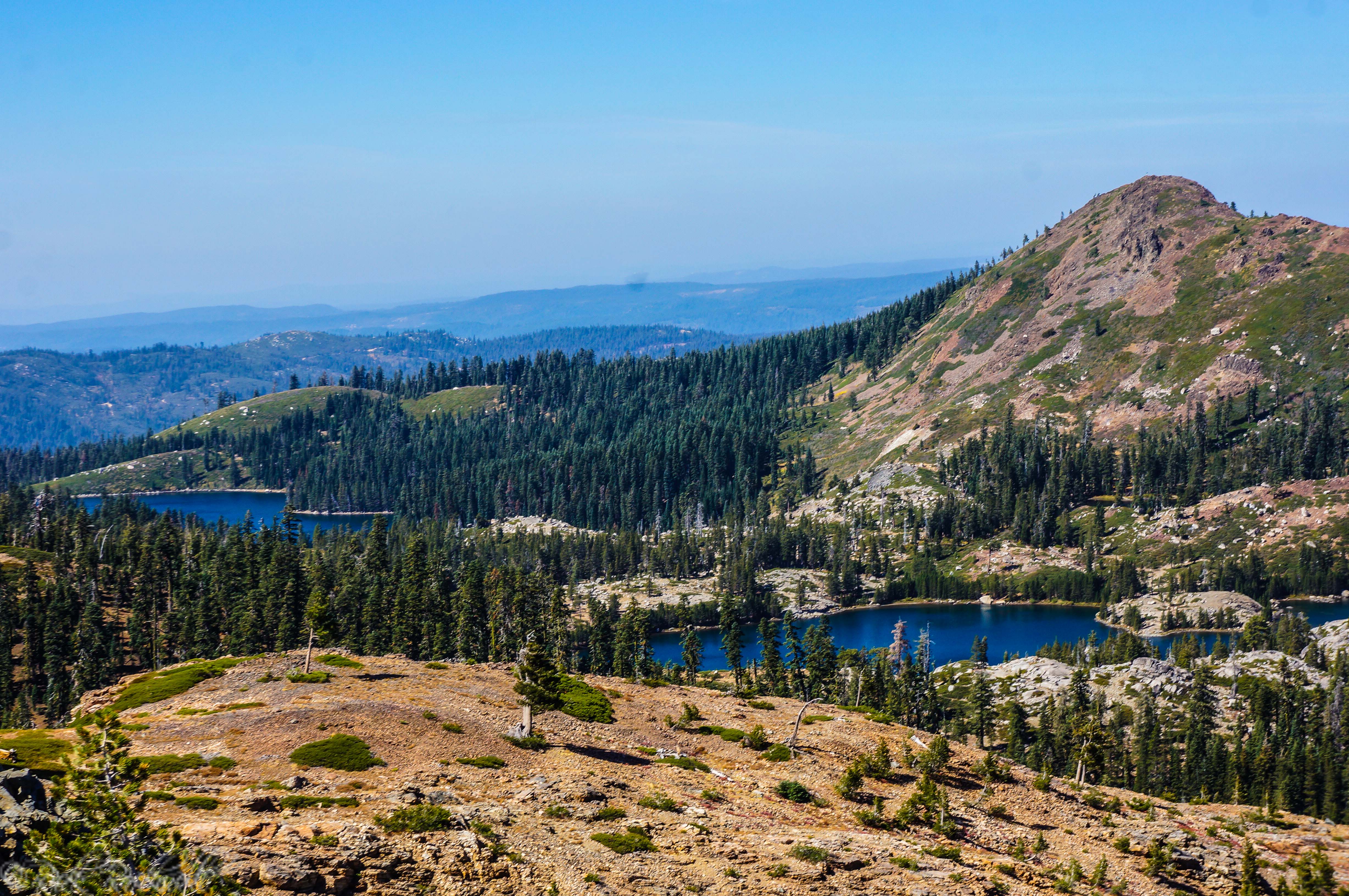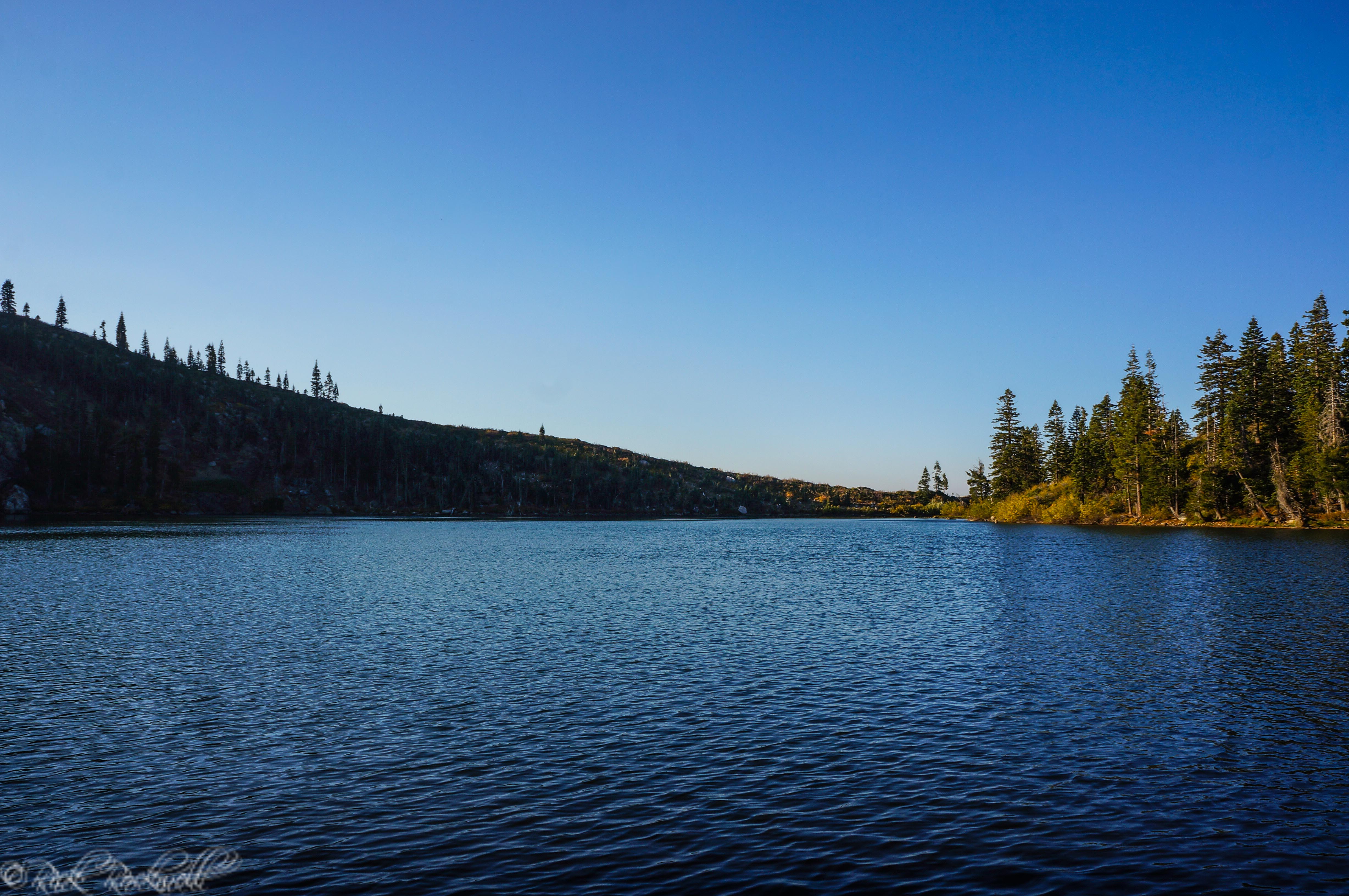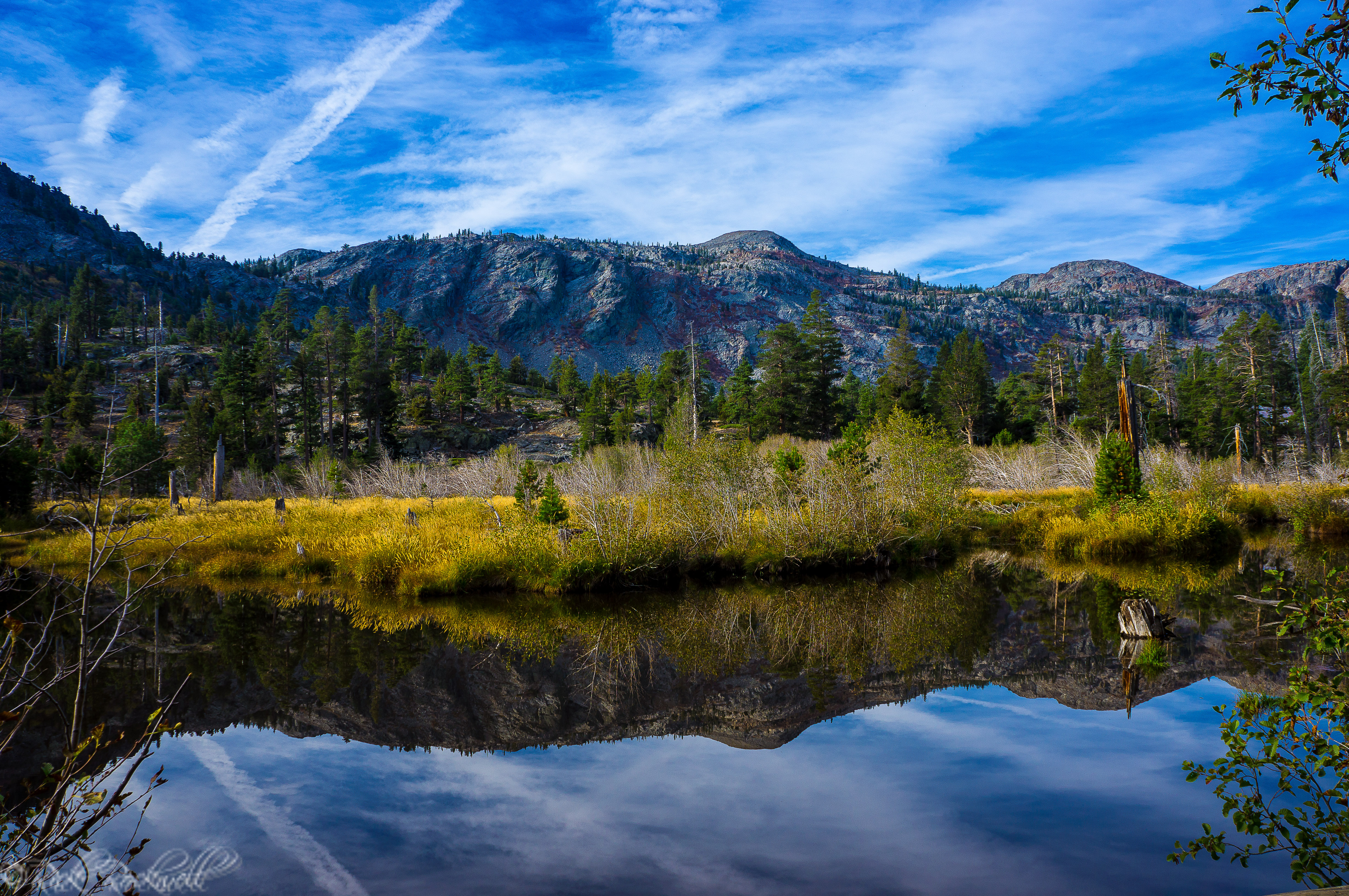
If you are looking for a South Lake Tahoe hike that gives you a little bit of everything, you would be hard-pressed to find an option better than the Glen Alpine Trail. This trail starts opposite of Fallen Leaf Lake near Lily Lake, quickly delivers waterfalls and serene creek scenery, passes through the historic Glen Alpine Springs Resort, and then opens the door to bigger adventures deeper into Desolation Wilderness.
It works just as well for casual hikers wanting a scenic half-day outing as it does for stronger hikers aiming longer destinations like Lake Aloha or Mount Tallac.
That diversity is exactly what makes Glen Alpine Trail stand out. Many Tahoe hikes are either a short family stop or an all-in mountain effort. Glen Alpine gives you both.
You can keep it easy and enjoy the lower section near Lily Lake, Modjeska Falls, and the old resort, or you can continue into a more rugged alpine landscape where the route branches toward lakes, passes, and summit approaches. In other words, this is a choose-your-own-adventure trailhead.
Glen Alpine Trail Quick Facts
- Location: Near Fallen Leaf Lake and Lily Lake, south of Lake Tahoe
- Trail type: Out-and-back trailhead with numerous destination options
- Best short stop: Modjeska Falls (0.5 miles)
- Best moderate goal: Grass Lake (2.3 miles)
- Longer destinations: Susie Lake, Gilmore Lake, Half Moon Lake, Lake Aloha, Dicks Pass, Mount Tallac
- Difficulty: Easy to hard, depending on turnaround point
- Permits: Day hikes in Desolation Wilderness; overnight permits required in advance
- Parking: Trailhead parking near Lily Lake; fills early in peak season
- Amenities: Vault toilets at trailhead; no potable water
- Rules: No campfires allowed
Where is the Glen Alpine Trailhead?
From Highway 50 – head north on Highway 89 roughly 3 miles until you make a left onto Fallen Leaf Lake Road. This becomes a narrow road that you need to drive carefully on. It winds around Fallen Leaf Lake for about 3.5 miles until you make a left at the Fallen Leaf Lake fire station onto Glen Alpine Rd. From there the narrow road will take you about .7 miles directly to the Glen Alpine Trailhead and Lily Lake.
Why Glen Alpine Trail Is Worth Hiking
As mentioned above, the Glen Alpine Trail begins at a choose-your-own adventure trailhead. In fact, before you even step foot on the trail, you can walk over to the Lower Glen Alpine Falls and enjoy a thrilling waterfall experience.
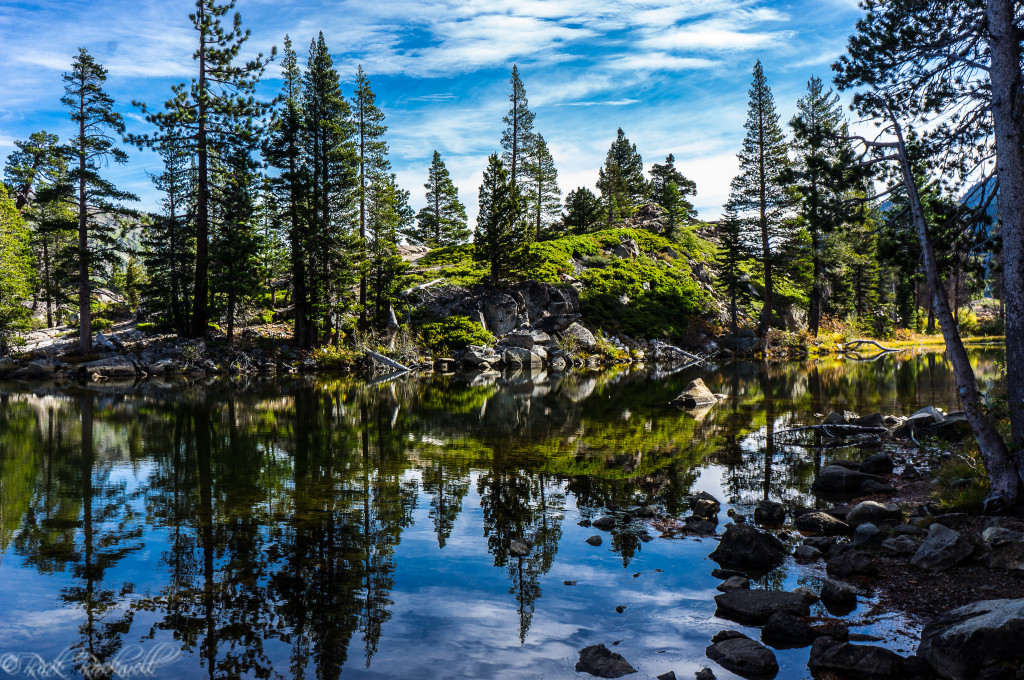
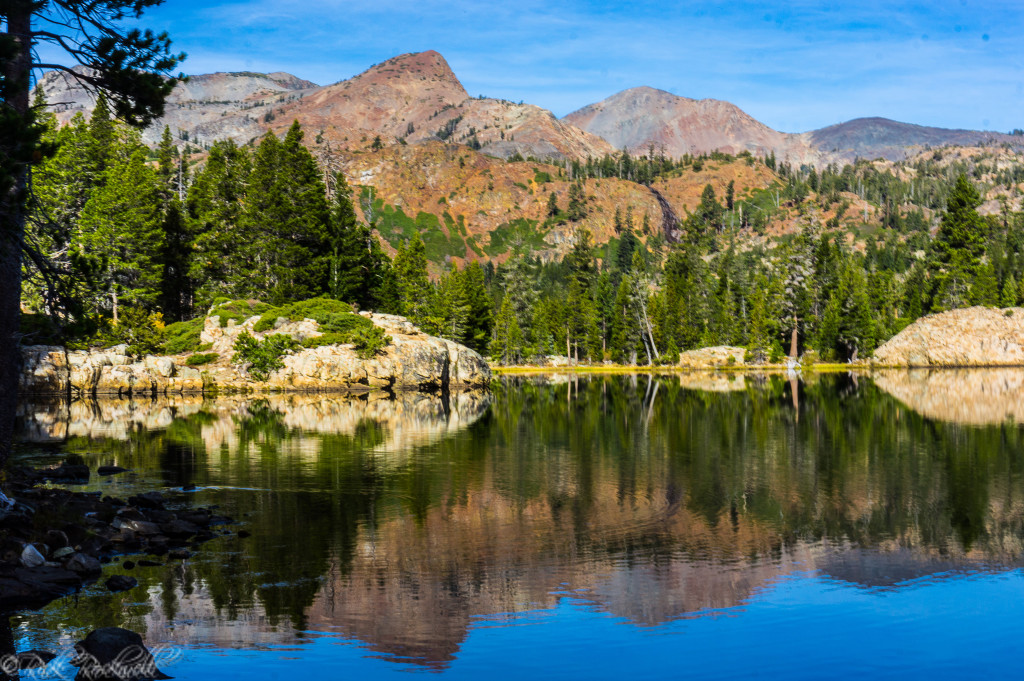
Once you get on the trail, the lower portion offers plenty of options to satisfy most casual to moderate hikers. The path begins near Lily Lake, where early light and calmer seasons can turn the shoreline into one of the prettiest scenes in the Fallen Leaf Lake region.
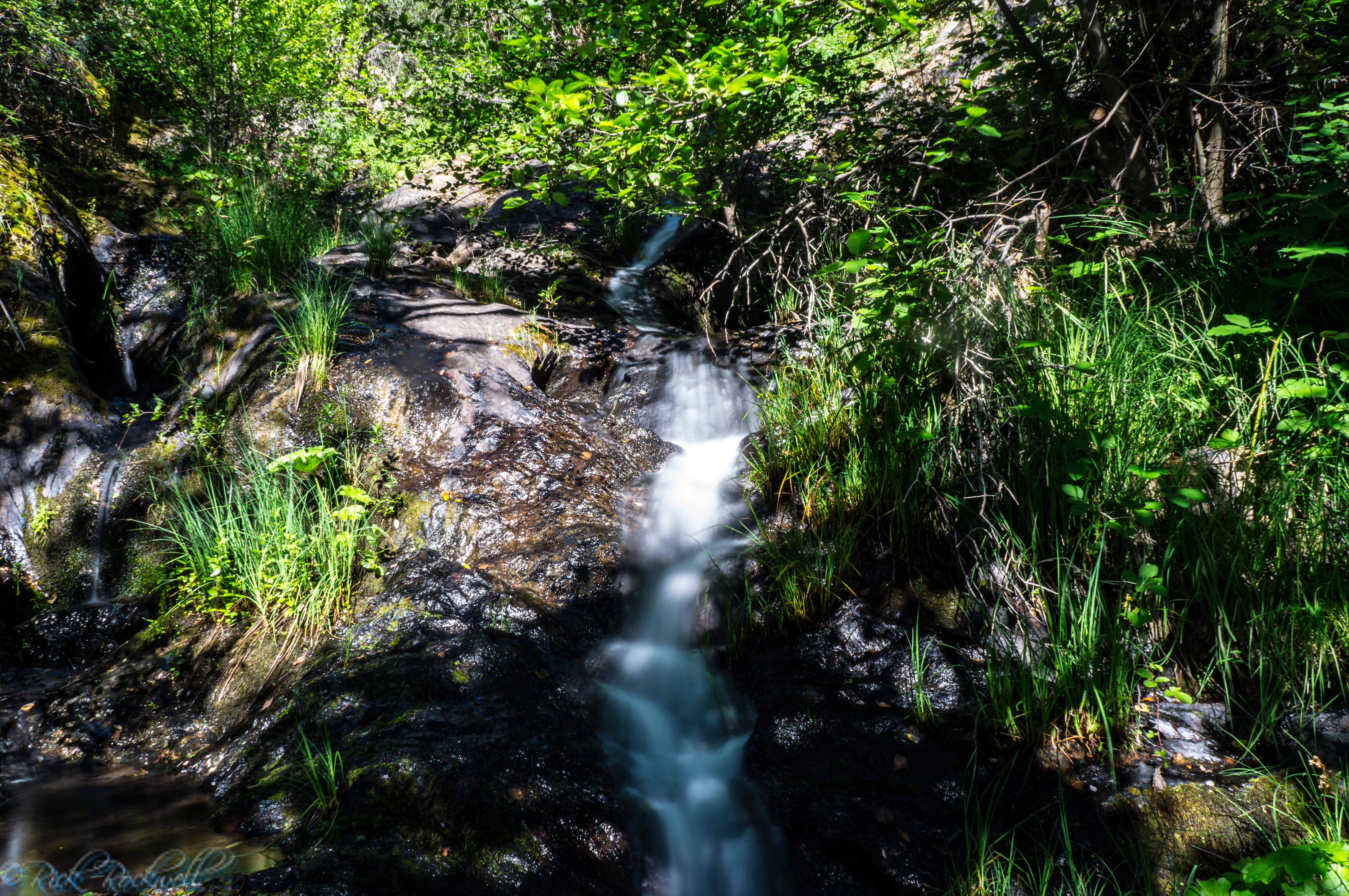
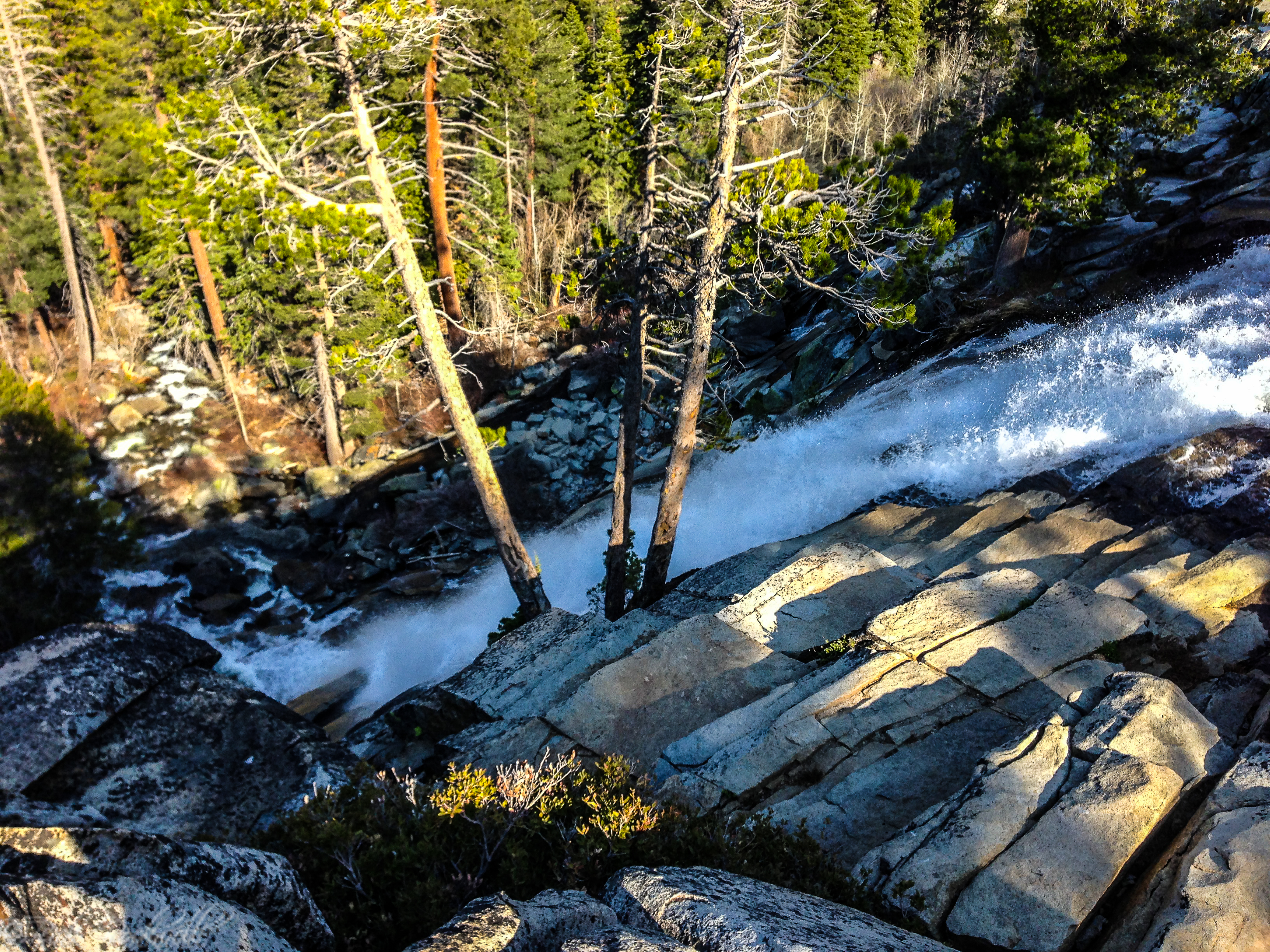
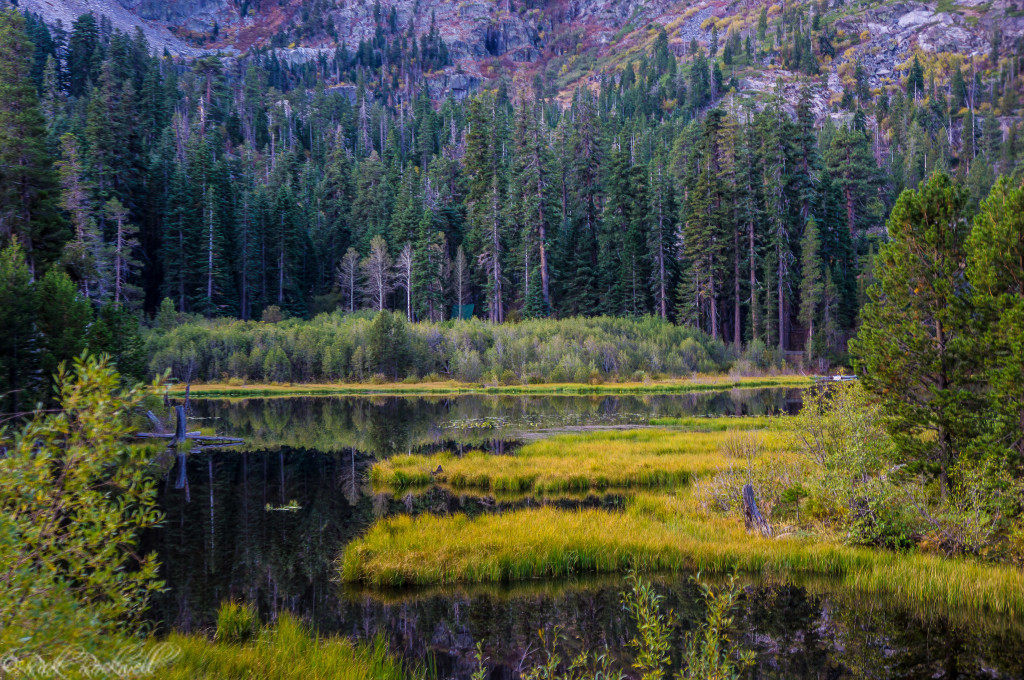
From there, the route climbs steadily on an old dirt-and-gravel corridor that once served the Glen Alpine Springs Resort. Within the first half mile or so, you reach Modjeska Falls, also called Upper Glen Alpine Falls, a rewarding early stop that helps this trail appeal to families and casual hikers.
At the one-mile mark from the trailhead, you reach the historic Glen Alpine Springs Resort area. Even hikers who do not plan to continue farther should consider going at least this far. The surviving structures, meadow setting, and interpretive history give the hike a sense of meaning that many trail guides overlook. It does not feel like just another Tahoe walk; it feels like a route through one of the basin’s old recreation landscapes.
Past the resort, the trail becomes more of a true mountain outing. The route steepens, the footing gets rockier, and the nearby wilderness starts to feel more immediate.
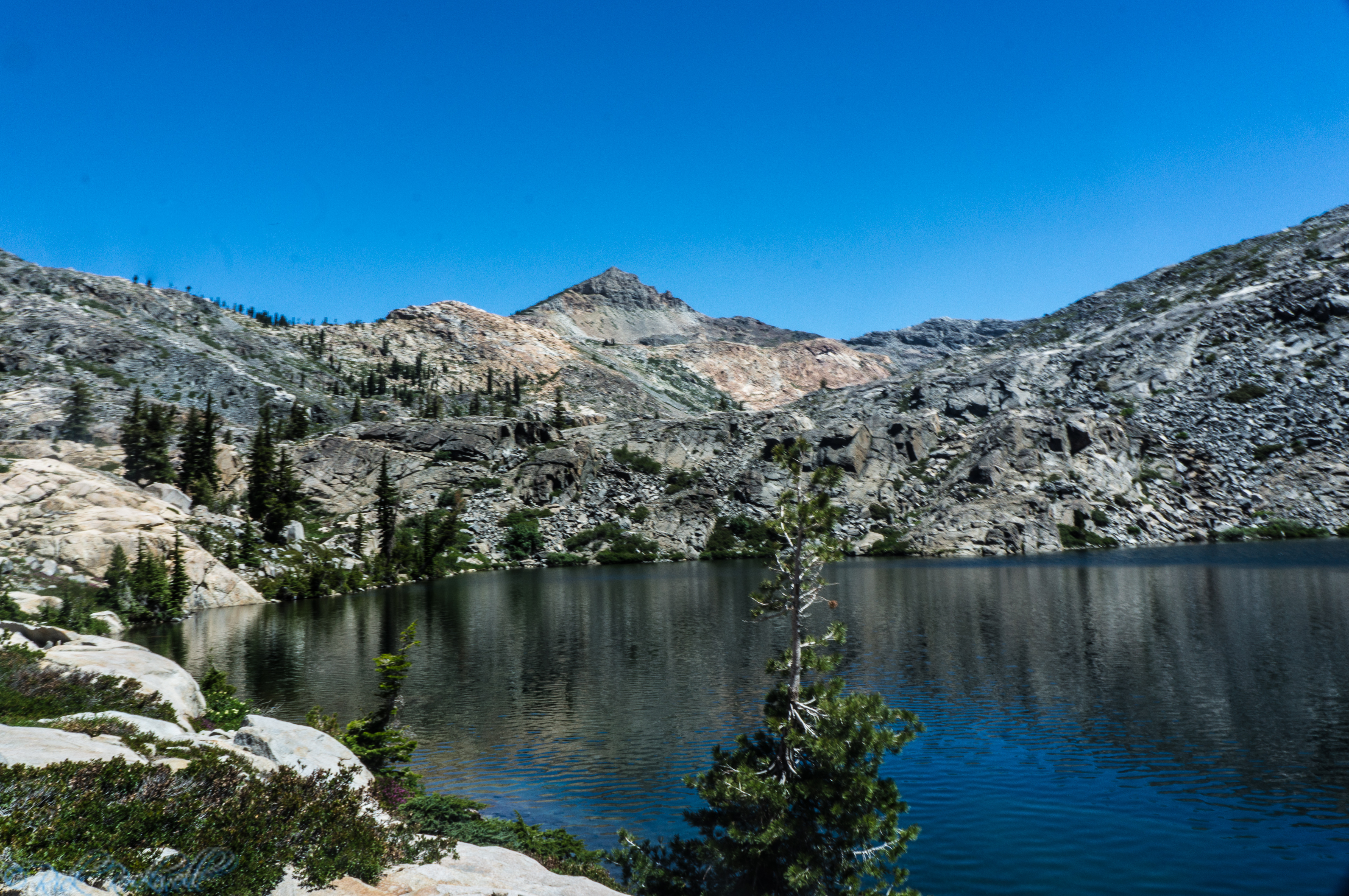
Continue to Grass Lake (2.3 miles from trailhead) and you get a scenic alpine destination that is realistic for many day hikers. Push farther, and Glen Alpine Trailhead becomes a launching point for longer trips toward Susie Lake, Gilmore Lake, Half Moon Lake, Lake Aloha, Dicks Pass, and the backside approach to Mount Tallac.
Glen Alpine Trail Difficulty and Distances
Glen Alpine Trail can be an easy scenic walk, a moderate day hike, or the opening segment of a harder Desolation Wilderness route:
|
Point of Interest |
Round Trip Miles |
Difficulty |
|
Lower Glen Alpine Falls |
Near Trailhead |
Easy |
|
Upper Glen/Modjeska Falls |
1 mile |
Easy |
|
Old Springs Resort |
2 miles |
Easy |
|
Angora Lakes |
4.2 miles |
Difficult |
|
Grass Lake |
4.6 miles |
Easy/Moderate |
|
Susie Lake |
7.4 miles |
Moderate |
|
Heather Lake |
9.8 miles |
Moderate |
|
Half Moon Lake |
11.0 miles |
Moderate |
|
Gilmore Lake |
7.8 miles |
Moderate |
|
Lake Aloha |
11.6 miles |
Difficult |
|
Dicks Pass |
10.8 miles |
Difficult |
|
Mt. Tallac |
11.4 miles |
Difficult |
Best Hike Options From Glen Alpine Trailhead
These options offer some of the best hikes from the Glen Alpine Trailhead:
Short Scenic Walk to Modjeska Falls
For many visitors, the best first-time Glen Alpine Trail experience is the short hike to Modjeska Falls. This stretch gives you creek scenery, a forested climb, and a satisfying waterfall without requiring a long commitment. It is a good option for families, casual hikers, or anyone mixing this stop into a larger day around Fallen Leaf Lake and Glen Alpine Falls.
Easy-to-Moderate History Hike to Glen Alpine Springs Resort
Continuing about a mile from the trailhead brings you to the old resort. This is where the hike begins to feel distinctly different from other Tahoe outings. Instead of just scenery, you get a direct connection to Tahoe’s historic resort culture.
Moderate Day Hike to Grass Lake
Grass Lake is one of the best target destinations for hikers wanting a half-day of adventure into the mountains. This hike comes in at roughly five miles round trip and it provides a punch for those looking for an adventure.
Punchy Hike Up To Angora Lakes
While the 4.2-mile round trip distance isn’t as far as the next options, the difficulty is comparable as the Lily Lake Trail found at the Glen Alpine Trailhead rises up 800 feet in elevation, requires some rock traversing, and packs quite the punch.
Longer Hikes: Susie Lake, Gilmore Lake, Half Moon Lake, and Lake Aloha
This is where Glen Alpine Trailhead really separates itself from simpler Tahoe hikes. For those of you who like longer, more strenuous hikes, these lakes clock in at 7 to 11 miles round trip.
Big-mountain Option Toward Mount Tallac
Many hikers associate Mount Tallac with its more famous main trail, but this hike from Glen Alpine Trailhead provides a different approach to the summit via the backside from Gilmore Lake. It’s a different view and perspective, which also punctuates this longer hike.
History Along the Trail: Glen Alpine Springs Resort
A big part of what makes Glen Alpine Trail stand out is the history waiting along the route. Roughly a mile from the trailhead, hikers enter the area of the former Glen Alpine Springs Resort, a site linked to the discovery of mineral spring water by Nathan Gilmore in 1863 and the rise of early recreation in the Tahoe Basin.
In the late 1800s and early 1900s, this was a real mountain destination rather than just a waypoint on the trail. Today, that past adds depth to the hike and helps explain why Glen Alpine feels different from many other Tahoe trailheads.
Permits, Parking, and What to Know Before You Go
- Parking fills fast: Glen Alpine Trailhead can get crowded during peak summer and fall weekends because it serves both casual hikers and Desolation Wilderness visitors.
- Basic facilities only: The trailhead is open 24 hours a day and has vault toilets, but there is no potable water available.
- Bring your own water: Many hikers expect water at a busy Tahoe trailhead, but that is not the case here.
- Wilderness permits are required: Anyone entering Desolation Wilderness needs a permit.
- Day hikers can use the kiosk: Day-use permits are typically available at the trailhead kiosk.
- Overnight permits are limited: Overnight permits are required year-round and are quota-controlled from late May through September.
- Bear safety rules apply: Hard-sided bear canisters are required for overnight trips in Desolation Wilderness.
- No campfires: Campfires are not allowed at the trailhead or in the wilderness area.
Best Time to Hike Glen Alpine Trail
Summer and early fall are the most popular seasons for Glen Alpine Trail, and for obvious reasons. Snow is typically gone from the lower route, the trailhead is easier to access, and the full range of hike options becomes more realistic.
The lower waterfalls also tend to be more impressive earlier in the season when runoff is stronger, while late summer and fall can bring drier conditions but beautiful light, calmer weather patterns, and a more relaxed feel around Lily Lake.
The lower trail can be rewarding even if you are not tackling a major hike. That is part of this trail’s appeal. Visitors planning a family-friendly Tahoe day can combine Glen Alpine Trail with nearby stops like Glen Alpine Falls, Fallen Leaf Lake, or the Tallac Historic Site area.
More ambitious hikers, on the other hand, can use this same trailhead for a deeper Desolation Wilderness outing. The best time really depends on what version of the trail you want.
Nearby Places to Pair With the Hike
One of the strongest internal-link opportunities for this page is the cluster of related Glen Alpine and Fallen Leaf content around it. Readers interested in this trail are highly likely to care about the following nearby stops:
Glen Alpine Falls: A very popular roadside waterfall stop that pairs perfectly with a shorter Glen Alpine outing.
Fallen Leaf Lake: One of the most beautiful and more relaxed lakes near South Lake Tahoe, with its own strong history and recreation activities.
Glen Alpine Springs Resort: The historical heart of the trail and an impactful layer to this region.
Angora Lakes: Two alpine lakes (upper and lower Angora) sitting above this region, but accessible via the Lily Lake Trail or a short drive up the ridge.
Angora Fire Lookout: Although this historic fire lookout is decommissioned, it provides panoramic views of the region.
St. Francis of the Mountains: A small but charming chapel near Fallen Leaf Lake.
Is The Glen Alpine Trail Worth Visiting?
Yes, because the Glen Alpine Trail is one of the most versatile hikes in the South Lake Tahoe area. In fact, it’s one of the best hikes in all of Tahoe.
It can be a short scenic walk, a rewarding day hike to Grass Lake, or the beginning of a much bigger Desolation Wilderness adventure. Along the way, it packs in waterfalls, forest and creek scenery, old-resort history, and access to some of the most beautiful alpine country in the Tahoe Basin.
That versatility is unparalleled in the Tahoe Basin and exactly why this trail should be added to your Lake Tahoe trip. There’s so much to see on this trail, I felt like I had done two or three hikes in one. I’m looking forward to venturing back out here again as it’s easily one of my favorite mountain trails in all of California.
FAQ About Glen Alpine Trail
How long is Glen Alpine Trail?
That depends on your destination. A short outing to Modjeska Falls is much shorter than a day hike to Grass Lake, while some mapping platforms list a fuller Glen Alpine route at about 6.8 miles round trip. From the same trailhead, hikers can also continue much farther toward Lake Aloha, Dicks Pass, or Mount Tallac.
Is Glen Alpine Trail hard?
The lower part of the trail is manageable for many hikers, but it is still rocky and steadily uphill. The hike becomes more difficult beyond the old resort area and especially on longer routes into Desolation Wilderness.
Can you hike to Grass Lake from Glen Alpine Trailhead?
Yes. Grass Lake is one of the most popular moderate destinations from the trailhead and one of the best goals for hikers who want more than a short waterfall walk.
Do you need a permit for Glen Alpine Trail?
A wilderness permit is required to enter Desolation Wilderness. Day hikers can self-register at the trailhead kiosk, while overnight visitors need to obtain an overnight permit before arriving.
Are dogs allowed on Glen Alpine Trail?
Yes, this trail is dog-friendly but state that the dogs should be on a leash. Always check trail conditions and requirements before embarking.
Is there parking at Glen Alpine Trailhead?
Yes, but it can fill up quickly, especially during peak season. Arriving early is one of the simplest ways to make the hike smoother and less stressful.
Sources
- U.S. Forest Service – Glen Alpine Trailhead
https://www.fs.usda.gov/r05/laketahoebasin/recreation/glen-alpine-trailhead - AllTrails – Glen Alpine Trail
https://www.alltrails.com/trail/us/california/glen-alpine-trail - Hiking Project – Glen Alpine Trail
https://www.hikingproject.com/trail/7018998/glen-alpine-trail - Recreation.gov – Desolation Wilderness Permit
https://www.recreation.gov/permits/233261 - U.S. Forest Service – Bear Canisters
https://www.fs.usda.gov/r05/laketahoebasin/alerts/bear-canisters - U.S. Forest Service – Desolation Wilderness
https://www.fs.usda.gov/r05/eldorado/recreation/desolation-wilderness - CalExplornia – Glen Alpine Springs Resort: Tahoe’s Earliest Resort Is Filled With History and Adventure
https://www.calexplornia.com/glen-alpine-springs-resort-tahoes-earliest-resort-is-filled-with-history-and-adventure/ - Lake Tahoe Info – Glen Alpine Springs Resort Historic Building Preservation
https://eip.laketahoeinfo.org/Project/FactSheet/03.01.02.0061 - Tahoe Quarterly – An Oasis of History High in the Hills
https://tahoequarterly.com/best-of-tahoe-2020/an-oasis-of-history-high-in-the-hills - Visit Lake Tahoe – Glen Alpine Trail / Glen Alpine Falls Trail
https://visitlaketahoe.com/things-to-do/hikes/glen-alpine-trail/