Last Updated on: June 12, 2026

Bunch Canyon Falls is not the biggest Auburn waterfall in Placer County, and it is definitely not the easiest one to reach. But that is also what makes it memorable. Hiding in the steep canyon country near Colfax, California, this small waterfall sits in the rugged Auburn State Recreation Area landscape around Yankee Jims Road, Bunch Canyon, Bunch Creek, and the North Fork American River corridor.

The location of this waterfall feels like an old Gold Rush-era secret. There is no signed trail, no easy overlook, and this is not an easy stroll down to the water. It’s a rough, but fascinating trek down the steep canyon slopes where you must be aware of the loose footing, slippery rocks and poison oak.

For experienced hikers, this is the kind of physical challenge that rewards with a wonderful setting of a narrow backroad, scattered wreckage below, mining-era echoes, and a canyon that still feels a little wild even though Interstate 80 is not far away. For casual hikers, it’s best to keep going down Yankee Jims Road to easier destinations and points of interest.

Quick Facts About Bunch Canyon Falls

  • Location: Near Colfax, Placer County, California
  • Region: Auburn State Recreation Area / North Fork American River area
  • Waterway: Bunch Creek / Bunch Canyon area
  • Trail Type: Unofficial off-trail scramble
  • Distance: Short, but steep; roughly 1,000 feet from road to creek
  • Difficulty: Advanced
  • Best Season: Spring or after recent rain
  • Waterfall Size: Roughly 15 feet by on-site estimate, depending on flow and viewpoint
  • Main hazards: Loose rock, steep slope, poison oak, brush, road closures, limited signage

Where Is Bunch Canyon Falls?

Bunch Canyon Falls is located near Colfax in Placer County, within the broader canyon landscape tied to Auburn State Recreation Area and the North Fork American River. Bunch Canyon itself is a mapped Placer County valley on the Colfax USGS quadrangle, which helps confirm that the name is not just a local nickname but part of the documented geography of the area.

Directions To Bunch Canyon Falls

From Sacramento, take I-80 East toward Colfax and exit on Canyon Way (Colfax/Grass Valley). Turn right onto Canyon Way and then drive 2.2 miles before turning left onto Yankee Jims Road. Drive 2.6 miles on YJR and park where the road curves to the left. There is a small parking area on the right side of YJR.

Important Access Update: Check Yankee Jims Road Before You Go

Before planning a trip to Bunch Canyon Falls, check the latest Yankee Jims Road conditions. Currently, Yankee Jims Road is closed to public traffic between Gillis Hill Road and Shirttail Canyon Road due to the Yankee Jims Bridge Replacement Project.

In other words, you will not be able to access most of Yankee Jims Road once turning onto it from Canyon Way.

Is There An Official Trail To Bunch Canyon Falls?

No. Bunch Canyon Falls does not have an official trail. In fact, finding where to pull over and park along Yankee Jims Road is a challenge in itself.

Prior to the 2.6-mile spot for road-side parking, there’s a sign stating Auburn State Recreation Area. This will help prepare you to keep a lookout for the parking area that’s coming up on the right side.

It’s perpendicular to the road and if you go too far into the parking area, you will go over the side and down at least 900 feet to the creek. In fact, after you park, you can look down to the creek and see old cars that have met this fate.
Bunch Canyon Falls

Bunch Canyon Falls

How Hard Is the Hike to Bunch Canyon Falls?

The hike to Bunch Canyon Falls is short, but difficult. That combination is important to know before heading out there. Once you park, walk roughly 50-75 feet north or south on YJR to find a safe passage down to the creek. There are no defined trails. You will have to forge your own path.  The 1000-foot trek down is filled with dirt, bushes, trees, loose rocks and patches of poison oak. I recommend this only for advanced hikers.

The difficulty of this hike comes from the steepness, lack of trail, loose footing, and brushy canyon terrain. The descent can feel sketchy, and the climb back up is even harder since it’s all uphill.  

That is the part many hikers underestimate. It is easy to look down into the canyon and think the falls are close enough for a quick stop, but off-trail canyon hiking can turn a short distance into a difficult and slow scramble.

This is best suited for experienced hikers who are comfortable with route-finding, steep terrain, and turning around when conditions are unsafe.

This hike is not recommended for families, kids, casual tourists, flip-flops, dogs, or anyone uncomfortable with off-trail scrambling. Even experienced hikers should avoid it after heavy rain, during high runoff, in extreme heat, or when the road corridor is closed.

What You’ll See at Bunch Canyon Falls

Although all the gold is most likely gone from this creek and canyon, the creek and waterfall are still small treasures for us adventurers, and history buffs, to enjoy.

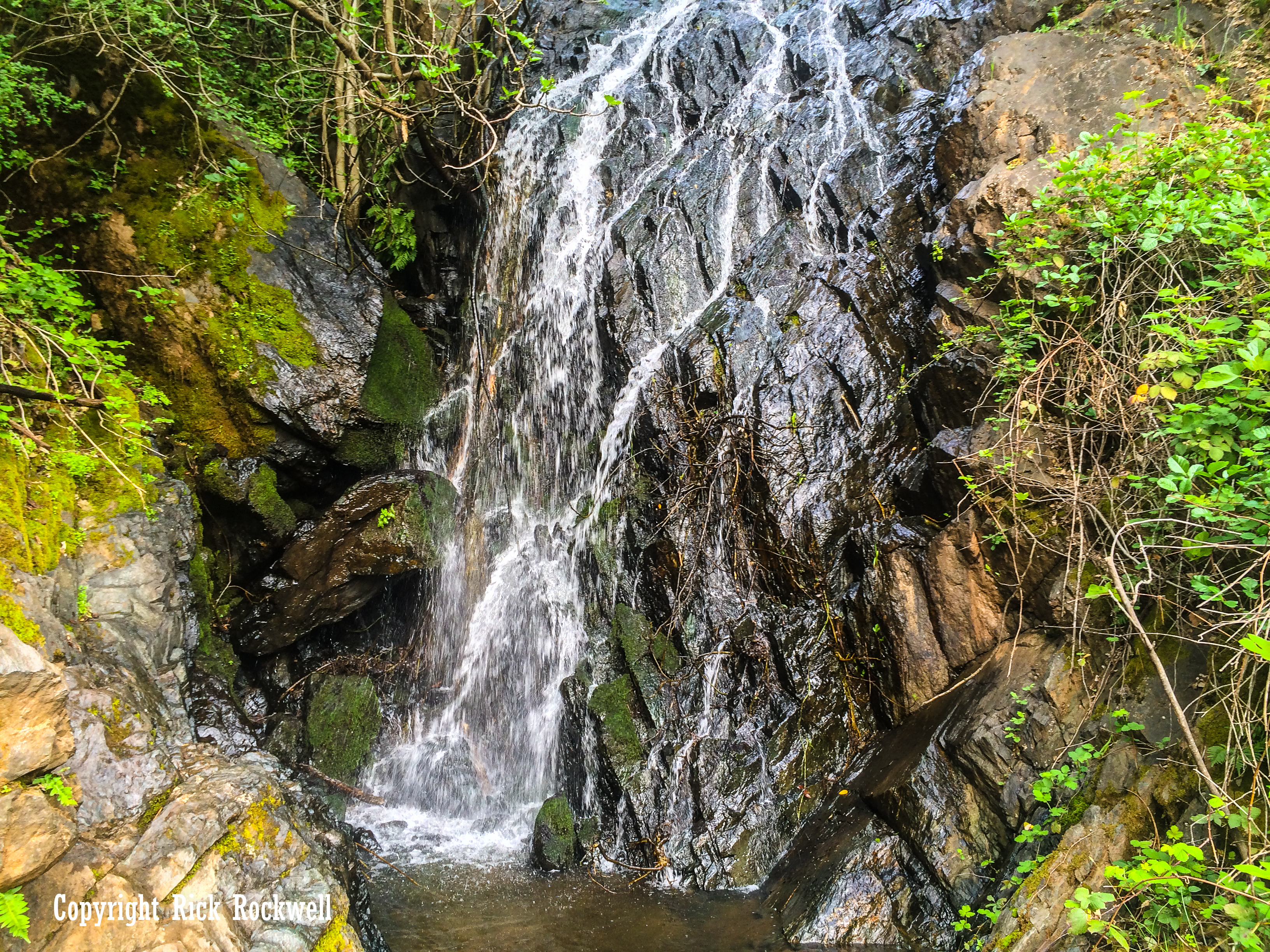
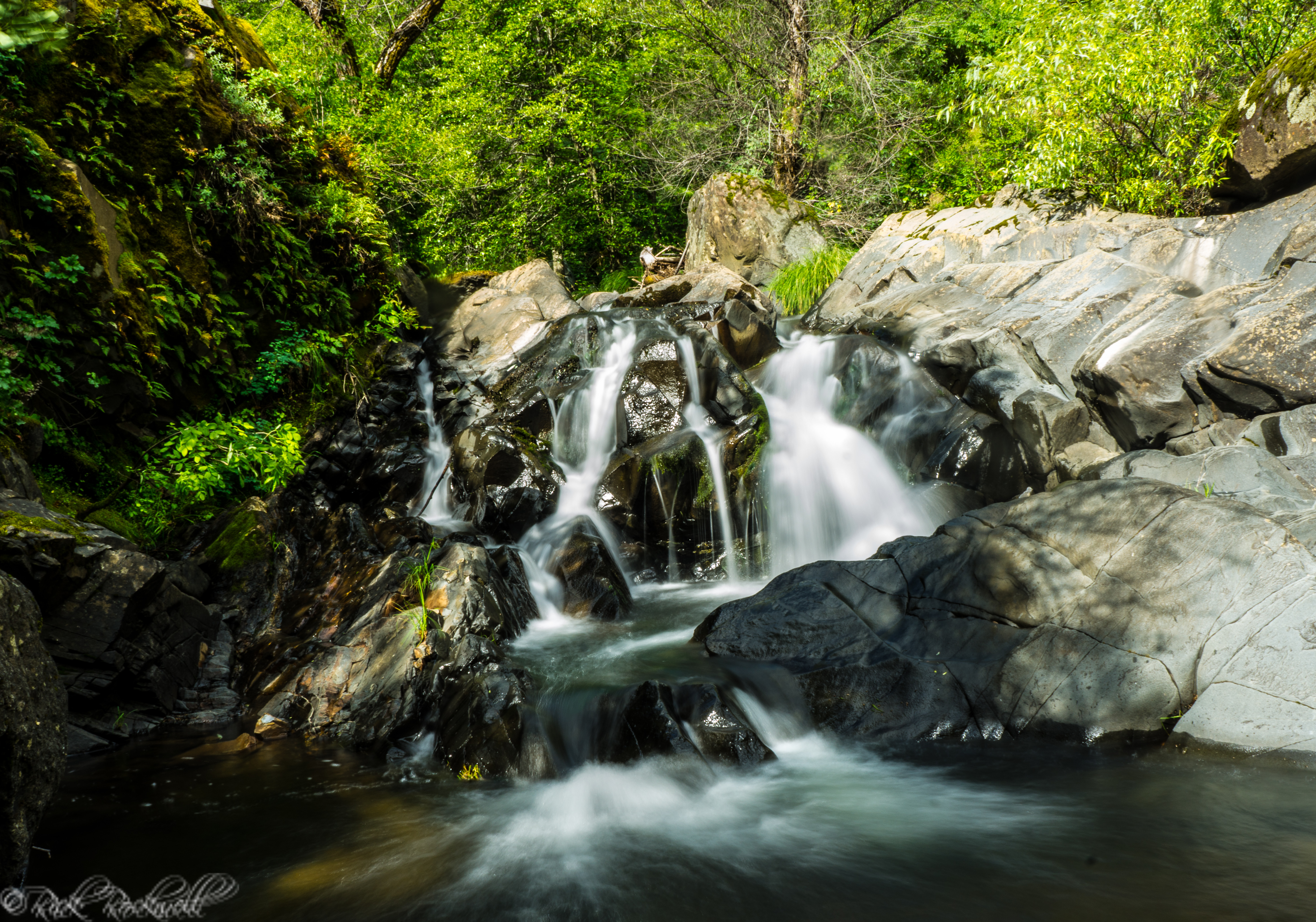
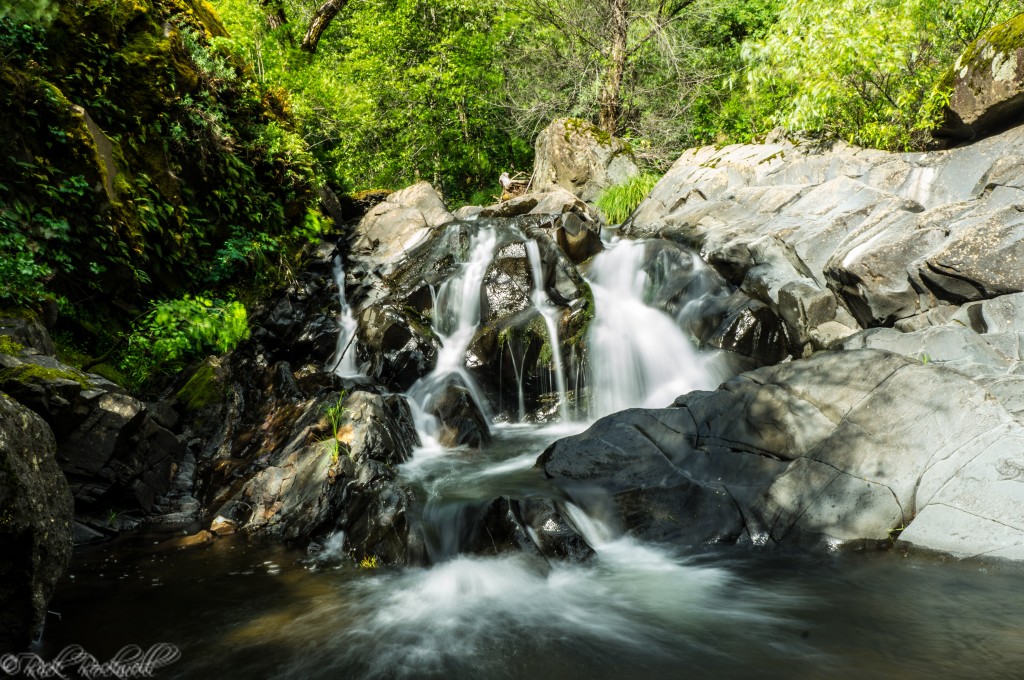
Bunch Canyon waterfall is a sweet little waterfall that packs quite the adventure just to get down to it. Depending on the water flow, you can set up your tripod on large stones in the middle of the creek, roughly 6-10 feet south of the cascade. The waterfall is at least 15 feet high. Additionally, unlike any other waterfall I’ve been to, there are older cars found north and south side of the waterfall.

Best Time to Visit Bunch Canyon Falls

The best time to visit Bunch Canyon Falls is usually spring, especially after a wet winter or a recent period of rain. That is when small seasonal waterfalls in Placer County are most likely to be flowing well.

Early spring can bring better water, greener hillsides, and cooler hiking conditions. Late spring may still be good in wet years, but poison oak and brush can become more noticeable. Summer is usually less ideal because the waterfall may have reduced flow, the canyon can be hot, and the climb back up can feel much harder.
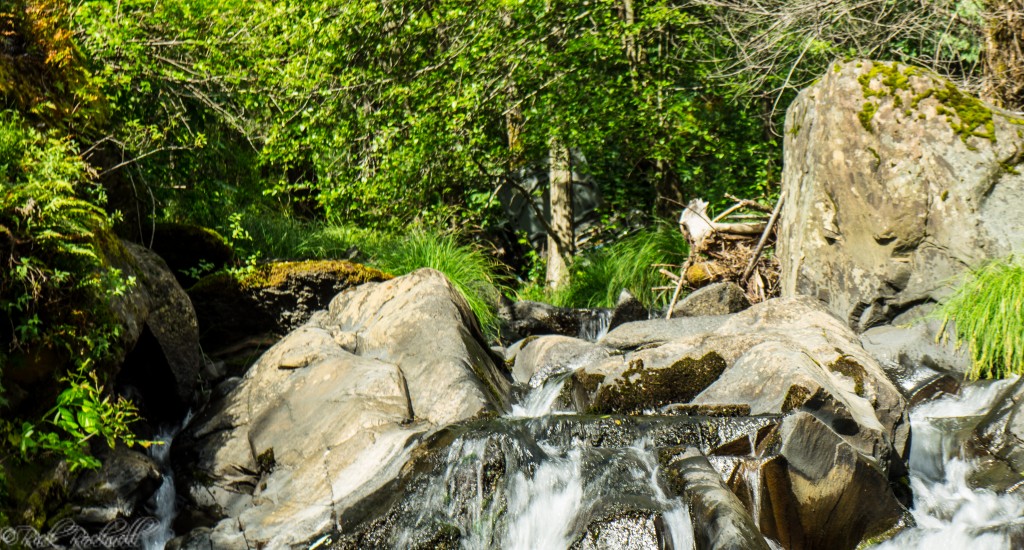
Roughly 20 feet north of waterfall is a car that went off YJR

Roughly 20 feet north of waterfall is a car that went off YJR

Safety Tips Before Visiting Bunch Canyon Falls

Bunch Canyon Falls requires more caution than a typical short waterfall hike. Before going, keep these safety tips in mind:

  • Check official Yankee Jims Road closure updates before leaving.
  • Do not enter closed construction zones or blocked road corridors.
  • Avoid the hike during rain, storms, high runoff, or icy conditions.
  • Wear sturdy hiking shoes with good traction.
  • Wear long pants because poison oak is common in foothill canyons.
  • Bring more water than you think you need, even though the route is short.
  • Do not rely on cell service.
  • Avoid hiking alone.
  • Turn around if the descent feels unsafe.
  • Do not treat the old vehicle wreckage or canyon debris as something to climb on or explore.
  • Leave no trash and avoid disturbing historic or archaeological materials.

The most important advice is simple: do not let the short distance fool you. A steep off-trail route can be more dangerous than a much longer maintained trail.

The Mystery Behind the Bunch Canyon Name

The origin of the name “Bunch Canyon” has been lost in time, but the name is established today through Bunch Creek, Bunch Canyon, and modern references to the Yankee Jims Road corridor.

It’s possible that the area got its name from the early miners who found gold along Bunch Creek.  That discovery prompted a camp to spring up overnight. Historical sources state that the camp was located about one half mile south of Colfax, was first named Alder Grove and then later changed to Illinoistown.

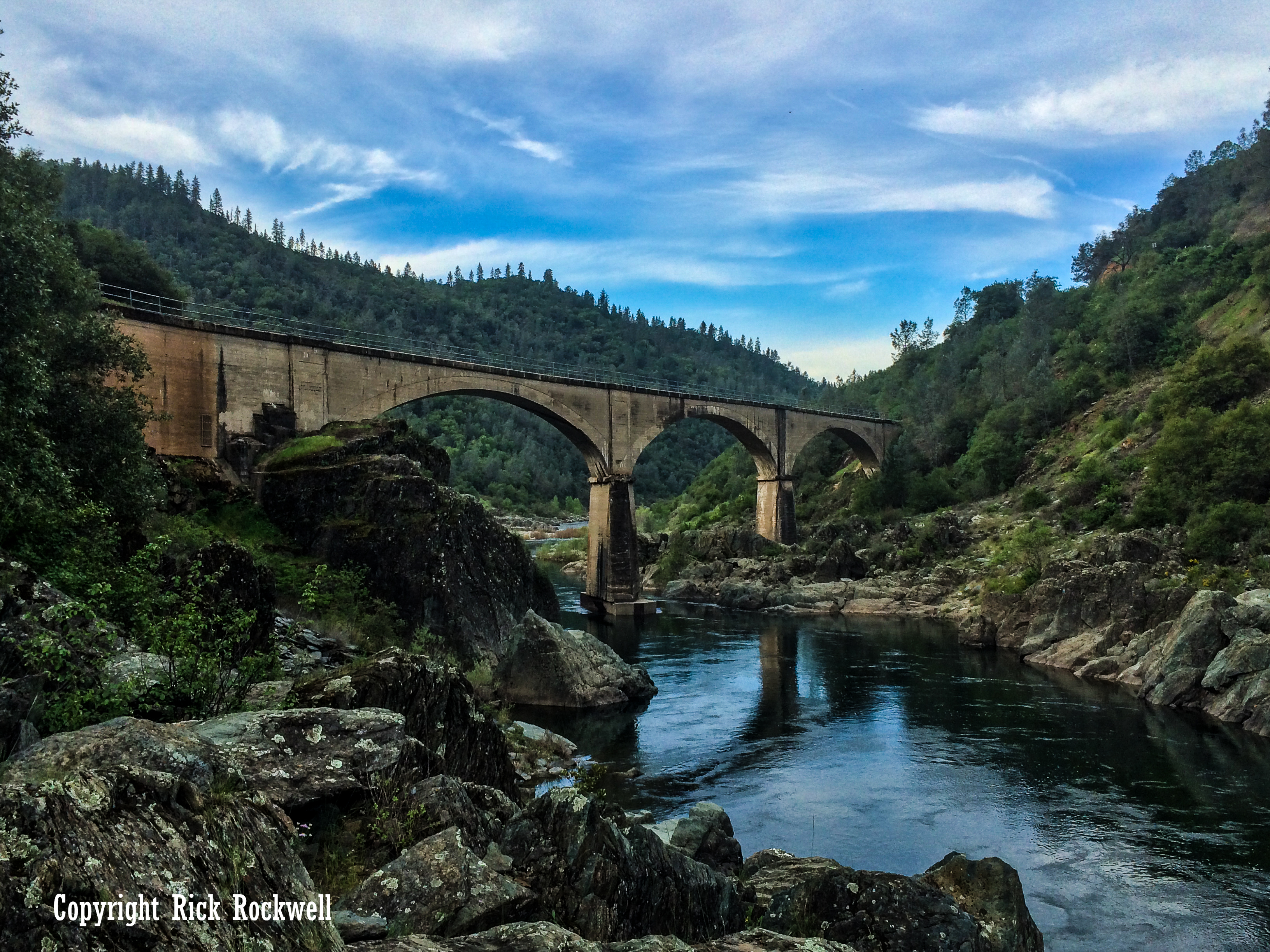
As the town grew, it became an important supply point in the Placer County gold fields. Then the railroad changed everything. In the mid-1860s, the Central Pacific Railroad pushed east from Sacramento toward the Sierra, bringing new traffic, business, and attention to the area.

A new railroad town soon developed nearby and took the name Colfax after Schuyler Colfax, who visited the region in 1865 while serving as Speaker of the House. He later became Vice President of the United States from 1869 to 1873. Over time, Colfax became the dominant community, while Illinoistown faded into the older history of the area.

Another possibility is that the name “Bunch” came from a person, family, mining claim, or landowner associated with the canyon. Gold Country place names often grew out of local personalities, claims, camps, ranches, and geographic features. However, no verified source found so far ties a specific Bunch individual to Bunch Canyon or Bunch Creek.

Yankee Jims Road and the Mining Camp That Still Shapes the Area

Yankee Jims Road is one of the most important pieces of context for Bunch Canyon Falls. Even if the road is currently affected by closures, its history helps explain the character of the landscape.

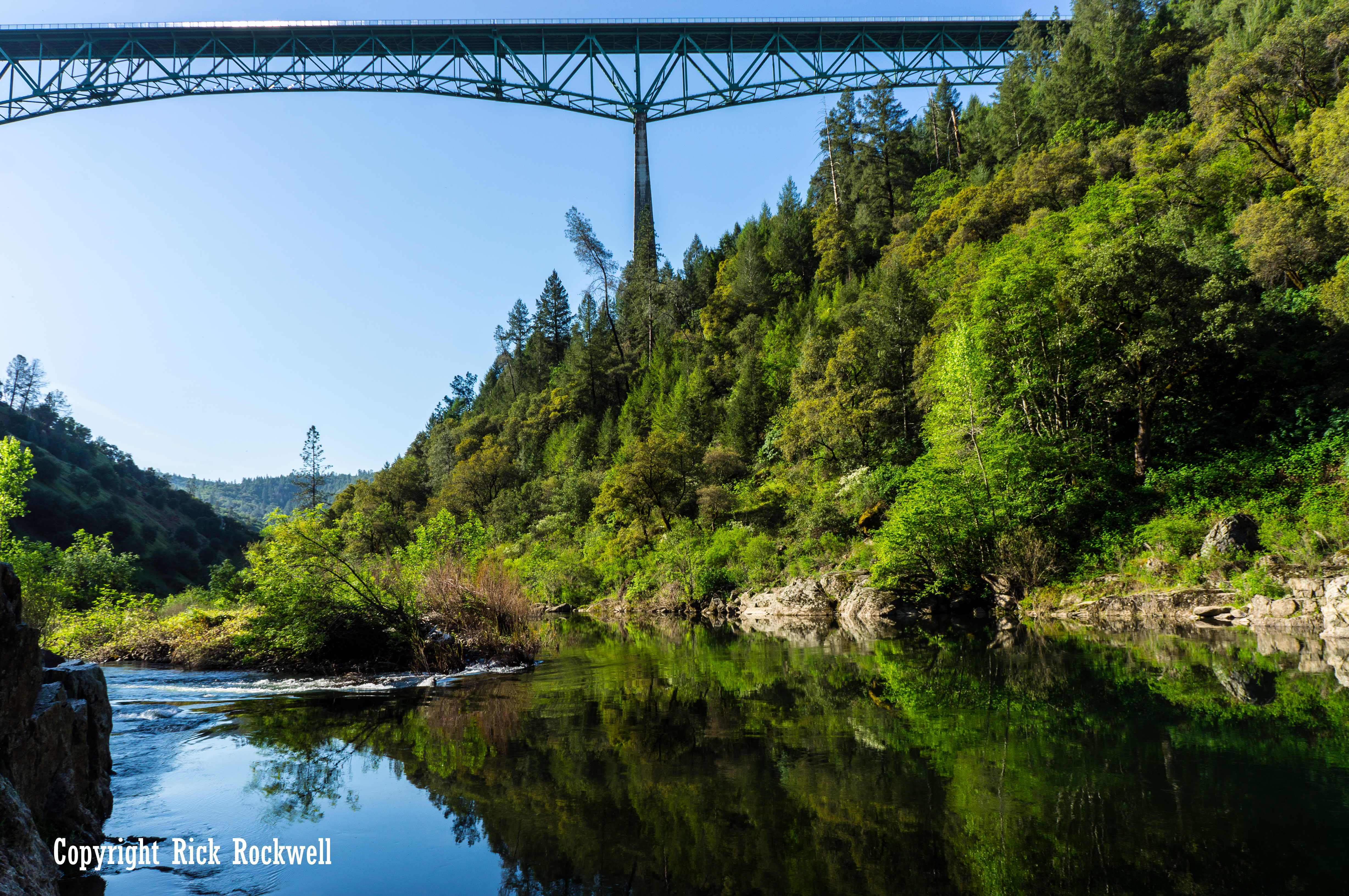
Yankee Jims was a Gold Rush mining town near the North Fork American River. Gold was discovered there by 1850, and named after one of California’s most dramatic urban legendsYankee Jims Robinson; a notorious bandit who was run out of the region two years later for his wicked ways.  
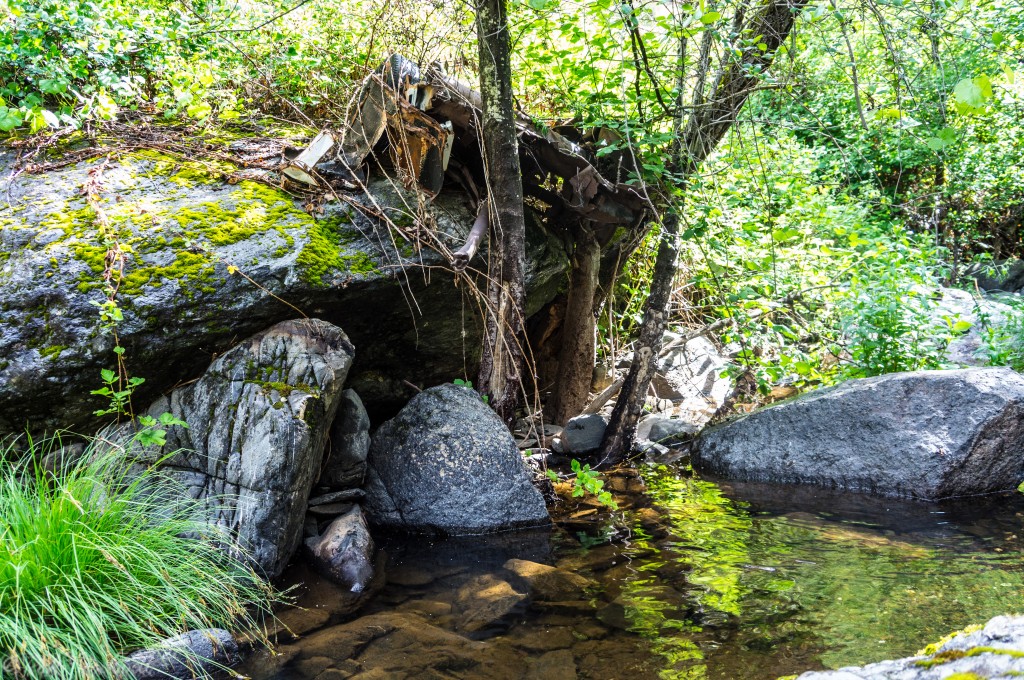
Roughly 10 feet south of the waterfall are remnants of a car that met its end.
Roughly 10 feet south of the waterfall are remnants of a car that met its end.
Things to Do Near Bunch Canyon Falls

Bunch Canyon Falls sits in a rugged corner of Placer County where hidden waterfalls, historic mining roads, old bridges, and Gold Rush towns are all within a short drive – making for great additions to a Bunch Canyon Falls trip.

Yankee Jims Bridge

Yankee Jims Bridge is one of the best-known nearby landmarks, though current access is affected by the bridge replacement project and road closure. The area remains historically significant because of its connection to Yankee Jim’s mining camp, the North Fork American River, and the old canyon road corridor.

Colfax

Colfax is the closest major town and a natural stop before or after exploring this part of Placer County. Its history reaches back to Alder Grove, Illinoistown, Gold Rush supply traffic, and the railroad era.

Stevens Trail

Stevens Trail is one of the best-known hikes near Colfax, offering a more established way to experience the North Fork American River canyon. It is a better option for hikers who want scenery and history without an off-trail waterfall scramble.

Codfish Falls

Codfish Falls is one of the more popular waterfall hikes in Auburn State Recreation Area. It offers a more recognizable trail experience than Bunch Canyon Falls, though visitors should still check seasonal conditions and river-area access.

Pennyweight Falls

Pennyweight Falls is another small waterfall destination tied to the Auburn-area canyon landscape. It fits well into a broader Placer County waterfall itinerary.

Devils Falls

Devils Falls gives waterfall seekers another rugged Placer County option, especially for readers interested in lesser-known locations with local history and canyon scenery.

Iowa Hill Road

Iowa Hill Road is one of Placer County’s most dramatic historic roads, climbing from Colfax toward the old mining community, living ghost town of Iowa Hill. Like Yankee Jims Road, it pairs steep terrain with Gold Rush history and a strong sense of place.

Mexican Gulch Falls

Mexican Gulch Falls is another little-known waterfall along the Yankee Jims Road corridor near Colfax, pairing a rough canyon setting with the same Gold Rush backroad character that makes this part of Placer County so interesting.

Auburn State Recreation Area

Auburn State Recreation Area is the larger recreation landscape surrounding many of these canyon adventures. It includes river access, hiking trails, mountain biking, horseback riding, camping, and historic sites across the North and Middle Fork American River region.

Is Bunch Canyon Falls Worth Visiting?

Bunch Canyon Falls is worth visiting for experienced hikers who chase waterfalls and love Gold Rush history. I thoroughly enjoyed my visits to this waterfall and the unique surroundings. Old, wrecked cars add an eerie appeal to this Canyon as if the history comes alive.  

This is not an easy waterfall to get to, so it’s not for everyone. Yet, if you can trek off-trail in challenging landscapes, then this is a great option to add to any Yankee Jims Road waterfall trip.

Closer view of Bunch Canyon Falls

FAQ: Bunch Canyon Falls

Where is Bunch Canyon Falls?

Bunch Canyon Falls is near Colfax in Placer County, California, in the rugged canyon landscape associated with Yankee Jims Road, Bunch Canyon, Bunch Creek, and Auburn State Recreation Area.

Is there an official trail to Bunch Canyon Falls?

No. Bunch Canyon Falls does not have a maintained official trail.

How hard is the hike to Bunch Canyon Falls?

The hike is short but difficult. The challenge comes from steep terrain, loose rock, brush, poison oak, and the lack of a maintained trail.

When is the best time to visit Bunch Canyon Falls?

Spring is usually the best time to visit because seasonal waterfalls in the Sierra foothills typically have better flow after winter rain and snowmelt. Avoid storms, high runoff, extreme heat, and closure periods.

Are dogs allowed at Bunch Canyon Falls?

Bunch Canyon Falls is not recommended for dogs because of the steep off-trail descent, loose footing, poison oak, and rough terrain.

Is Bunch Canyon Falls good for kids?

No. This is not a good hike for kids. The route is too steep, rough, and unofficial for a casual family waterfall outing.

How did Bunch Canyon get its name?

The origin of the name “Bunch Canyon” has not been definitively verified.

Is Bunch Canyon Falls in Auburn State Recreation Area?

Bunch Canyon Falls is associated with the broader Auburn State Recreation Area and North Fork American River region near Colfax.

Sources

California State Parks, Auburn State Recreation Area: https://www.parks.ca.gov/?page_id=502

California State Parks, visiting state parks with dogs: https://www.parks.ca.gov/Dogs

California State Parks, Yankee Jims closure notice: https://www.parks.ca.gov/post/56

Placer County, Yankee Jims Bridge replacement and road closure: https://www.placer.ca.gov/10266/Historic-Yankee-Jims-Bridge-project-set-

Yankee Jims Bridge Replacement Project: https://www.yankeejimsbridge.com/

City of Colfax history: https://colfax-ca.gov/community/history/

Colfax Area Historical Society, “Before Colfax, there was Illinoistown”: https://colfaxhistory.org/2022/08/24/before-colfax-there-was-illinoistown/

Colfax Area Historical Society archive page with Alder Creek / Bunch Creek discussion: https://colfaxhistory.org/page/2/

Historic Colfax history archive: https://historiccolfax.com/category/colfax-history/

USGS, Colfax Folio, California, Waldemar Lindgren, 1900: https://pubs.usgs.gov/publication/gf66

USGS PDF, Description of the Colfax Quadrangle: https://pubs.usgs.gov/gf/066/text.pdf

Foresthill Divide Museum / Mining and Scientific Press excerpts, 1905-1909: https://foresthillhistory.org/index_htm_files/F%20H%20D%20M%2C%201905%20-%201909.pdf

Placer County Board of Supervisors memorandum, Modular Rolled Girder Bridge Fabrication, August 27, 2024: https://www.placer.ca.gov/DocumentCenter/View/82547/19A

Meadow Vista Trails Association, Bunch Canyon / Yankee Jims Road trail notes: https://mvtrails.org/trails.htm

[mc4wp_form id="4451"]
Close
error: Content is protected !!